Know Before You Go
Whether you're preparing for your upcoming expedition or simply want to learn more about South Africa's rhinos and their conservation, these resources offer a closer look at the wildlife, landscapes and scientific research that make this journey extraordinary. Discover how researchers and wildlife veterinarians are working to protect threatened rhinos from poaching, explore the challenges of managing wild populations and learn how field observations and veterinary interventions contribute to their survival.
Why Is South Africa One of the Best Places in the World to Study Rhinos?
South Africa is home to the world's largest remaining populations of white and black rhinos, making its protected wilderness areas essential to their survival. In the Greater Kruger region, wooded savannas and open grasslands provide habitat for these powerful herbivores, which shape vegetation through their grazing and browsing. Yet despite extensive conservation efforts, rhinos remain threatened by poaching for their horns. Protecting them requires continuous monitoring, security operations and approaches that address immediate threats while safeguarding animal welfare.
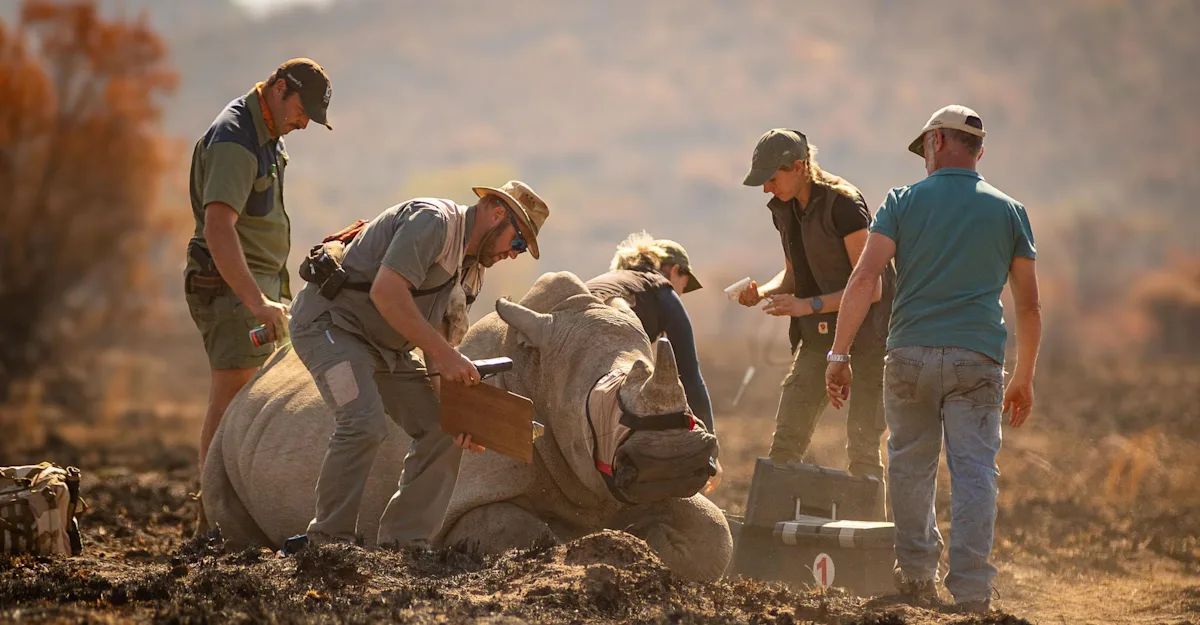
One increasingly important conservation strategy is horn trimming, in which wildlife veterinarians carefully remove most of a rhino's horn to reduce its value to poachers. Research in Greater Kruger has linked horn removal with substantial reductions in poaching, but the procedure also raises important scientific questions. Researchers are investigating whether horn trimming influences rhino movements, territories or social interactions and how its potential benefits compare with the effects on individual animals. Understanding these relationships helps conservation teams make informed decisions about managing threatened populations.
Participants join researchers and conservation professionals in Greater Kruger to track wild rhinos, document their behavior and investigate how they use protected habitats. A planned veterinarian-led horn-trimming operation may offer an opportunity to observe specialized conservation care and, when permitted, assist with approved biological measurements. Together, these activities provide insight into the scientific evidence and practical decisions involved in protecting rhinos in the wild.
Quick Facts: Rhino Conservation Research in South Africa
Location: Greater Kruger region, South Africa
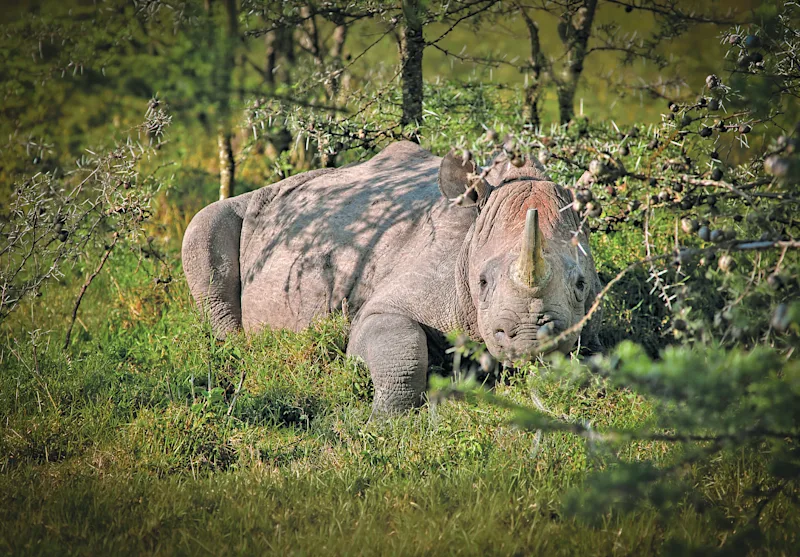
Primary species: White rhinos, with additional black rhino encounters possible at Tswalu Kalahari Reserve
Key activity: Rhino tracking, behavioral observations, habitat assessments, wildlife monitoring and potential supervised participation in a planned horn-trimming operation
Conservation focus: Poaching prevention, rhino welfare, behavioral responses to horn trimming and long-term population protection
What Wildlife Will I See on My South Africa Expedition?
South Africa's Greater Kruger and southern Kalahari regions offer opportunities to observe wildlife across two contrasting ecosystems. In Greater Kruger's wooded savannas, search for the Big Five—rhinos, elephants, lions, leopards and African buffalo—along with an abundance of other mammals and birds. At Tswalu Kalahari Reserve, red dunes, open grasslands and rocky foothills shelter desert-adapted species, including black rhinos, cheetahs and elusive nocturnal wildlife.
Wildlife you may encounter includes:
White rhino: A large, grass-grazing rhinoceros and the primary focus of the expedition's Greater Kruger research
Black rhino: A critically endangered browsing species that inhabits Tswalu's arid landscapes
African elephant: The world's largest living land mammal, frequently encountered in Greater Kruger's savannas
Lion: A social predator that hunts and rests across the region's grasslands and woodlands
Leopard: A solitary, elusive big cat often found resting in trees or concealed in dense vegetation
African buffalo: A powerful herd-forming herbivore that gathers around water sources and grazing areas
Cheetah: A swift predator of open landscapes, with opportunities for sightings in the Kalahari
Meerkat: A highly social mongoose that lives in cooperative groups and may be observed at a habituated colony
Gemsbok (oryx): A desert-adapted antelope recognizable by its long, straight horns and striking facial markings
Springbok: An agile antelope known for its distinctive leaping displays
Giraffe: The world's tallest land mammal, found browsing trees and shrubs across South Africa's savannas
Tswalu also offers opportunities to search for nocturnal wildlife, including:
Aardvark: A powerful burrowing mammal that feeds primarily on ants and termites
Aardwolf: A small, insect-eating member of the hyena family
Brown hyena: A largely nocturnal scavenger adapted to southern Africa's arid environments
Bat-eared fox: A small, large-eared canid that feeds heavily on insects
Pangolin: A rarely encountered, scale-covered mammal that feeds on ants and termites
Wildlife sightings depend on season, habitat and animal behavior and are never guaranteed. Nocturnal species, particularly pangolins, can be exceptionally difficult to find.
What Is the Climate Like During This Expedition?
Greater Kruger and Tswalu Kalahari Reserve experience predominantly dry winters and summer rainfall, with considerable temperature differences between the two regions. Greater Kruger generally has warmer mornings, while Tswalu's semi-arid landscape experiences greater temperature swings between day and night. May through October departures span the cooler dry season and the transition into warmer spring conditions.
Conditions | What to Expect |
|---|---|
Daytime Temperatures | Generally 70–90°F, depending on season and location. Temperatures can exceed 90°F in September and October. |
Overnight Temperatures | Typically 35–60°F, with the coldest conditions in the Kalahari. Winter nights can occasionally fall below freezing. |
Rainfall | Generally low during the expedition season, averaging approximately 0.2–1.2 inches per month, depending on location and month. Rain becomes more likely in September and October. |
Sun Exposure | Strong throughout the expedition, particularly during open-vehicle safaris and outdoor research activities. |
Elevation | Greater Kruger lies at relatively low elevations, while Tswalu's southern Kalahari landscape is higher, contributing to cooler nighttime conditions. |
Overall Conditions | Dry, sunny days, chilly winter mornings and evenings, warmer spring afternoons and substantial temperature differences between the two regions. |
Travelers should pack warm layers and a windproof jacket for early morning game drives, along with lightweight clothing and sun protection for warmer afternoons. Conditions can change quickly, particularly when traveling between Greater Kruger and Tswalu.
Frequently Asked Questions
Do I need research experience?
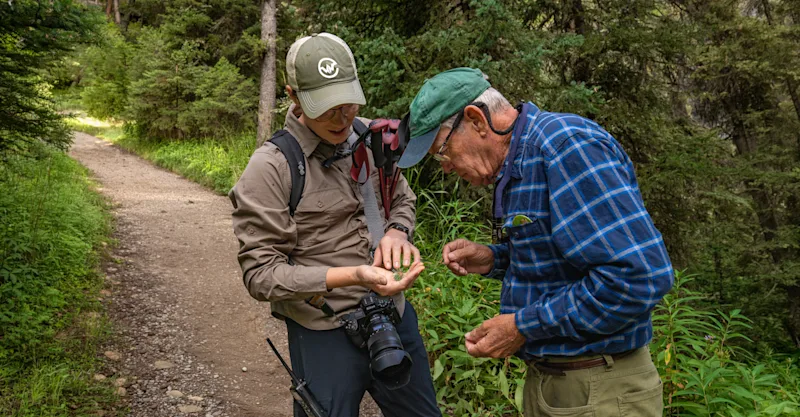
No prior research experience is required. Local researchers and wildlife veterinary professionals provide guidance in observing rhinos, documenting their movements and recording field data. Participants learn how behavioral observations and habitat assessments contribute to conservation decisions, while any involvement in veterinary activities takes place under professional supervision.
What type of research will I assist with?
Participants help track wild rhinos and document feeding, resting, movements, social interactions and habitat use. Field activities may include recording wildlife sightings and locations, comparing observations across different habitats and assisting with approved biological measurements during a planned horn-trimming operation. Veterinary participation depends on the animal's welfare, the team's priorities and whether the operation proceeds during the departure.
What is the conservation impact of this research?
Research helps conservation teams understand how rhinos use protected landscapes and respond to management interventions. Behavioral observations and location records support habitat management and long-term monitoring, while veterinary research contributes to evaluating horn trimming as an anti-poaching strategy. Together, these findings help reserve managers balance immediate protection needs with animal welfare and the survival of wild rhino populations.
How physically demanding is the expedition?
Most research and wildlife viewing takes place from 4x4 safari vehicles traveling over rough tracks, with drives lasting up to two hours at a time and occasional longer journeys. Some activities may involve walking up to 3–4 miles at a slow pace over uneven or rugged terrain, standing for extended periods, and bending or kneeling during approved research tasks. Participants should be able to carry personal field equipment and enter and exit safari vehicles without assistance.
Can weather affect research activities?
Yes. Cold winter mornings, hot afternoons, rain and changing wildlife movements can influence daily schedules. Veterinary operations also depend on reserve management priorities and animal welfare considerations. Researchers and guides adjust activities according to field conditions, and horn trimming cannot be guaranteed on every departure.
What happens in case of an emergency?
Participant safety is a priority on all expeditions. Field staff follow established safety procedures during wildlife research, veterinary activities and safari excursions. If medical care is required, staff coordinate appropriate assistance and transportation to a medical facility.
What immunizations & travel vaccinations do I need?
Participants should consult a healthcare provider or travel medicine specialist well before departure to review routine vaccinations and South Africa-specific health recommendations. Depending on individual circumstances, travel routes and season, additional vaccinations or malaria prevention may be advised. Travelers should also prepare for sun exposure, insect bites and changing temperatures during outdoor activities.
What Should I Pack for My South Africa Expedition?
Pack for cool pre-dawn safari drives, warm afternoons and outdoor research activities in Greater Kruger and the southern Kalahari. Lightweight, neutral-colored clothing is useful for wildlife observation, while warm layers are essential during winter mornings and evenings. Comfortable footwear and sun protection are important for both vehicle-based excursions and occasional walks.
Recommended items include:
Lightweight, breathable shirts and pants in neutral colors
Long-sleeved shirts and long pants for sun and insect protection
Warm fleece or insulated jacket
Windproof outer layer for open safari vehicles
Lightweight waterproof rain jacket
Comfortable walking shoes or hiking boots with good traction
Moisture-wicking socks
Warm hat and gloves for cold morning drives
Wide-brimmed sun hat or cap
Sunglasses
Sunscreen and SPF lip balm
Insect repellent
Refillable water bottle
Small daypack
Binoculars
Camera
Headlamp or flashlight
Personal medications
Temperatures can change considerably between early morning and midday, especially during the winter months. Dressing in layers makes it easier to stay comfortable during long field outings and while traveling between Greater Kruger and Tswalu.
What Will I Experience on My South Africa Expedition?
Begin your journey in Johannesburg before flying to Greater Kruger, where wooded savannas shelter the Big Five. Join local researchers to track wild rhinos, observe their behavior and learn how conservation teams protect these threatened animals. If a planned veterinarian-led horn-trimming operation proceeds, observe specialists caring for a rhino and, when permitted, assist with approved biological measurements under professional supervision. Between research outings, explore the bush on guided game drives in search of elephants, lions, leopards and buffalo.
Continue by small aircraft to Tswalu Kalahari Reserve, where red dunes, open grasslands and rocky foothills provide habitat for desert-adapted black rhinos, cheetahs, oryx and springbok. Explore with expert guides and trackers, visit a habituated meerkat colony when conditions permit, and venture out after dark to search for aardvarks, brown hyenas, aardwolves and bat-eared foxes.
Guided nature walks reveal animal tracks, native plants and other signs of life in the Kalahari. If scheduling allows, visit a protected rock art site to learn about the region's human history before returning to Johannesburg for your departure.
What Does Daily Fieldwork Look Like?
Research days in Greater Kruger begin early, when rhinos and other wildlife are often active. Travel by 4x4 with local researchers and guides, searching for individual rhinos and recording their locations, movements, feeding habits and interactions. Some observations involve remaining with an animal for an extended period, documenting behavior and habitat conditions that help scientists build a clearer picture of its daily life.
Field activities vary with wildlife movements and research priorities. A planned horn-trimming operation may provide an opportunity to observe veterinary monitoring and assist with approved biological measurements under professional supervision. Because these procedures depend on veterinary and reserve management needs, weather and animal welfare, participation cannot be guaranteed. Between outings, discuss observations with the research team and learn how field data inform rhino conservation strategies.