To Save a Rhino, Trim Its Horn

In South Africa, removing rhino horns is helping to protect the animals from poachers.
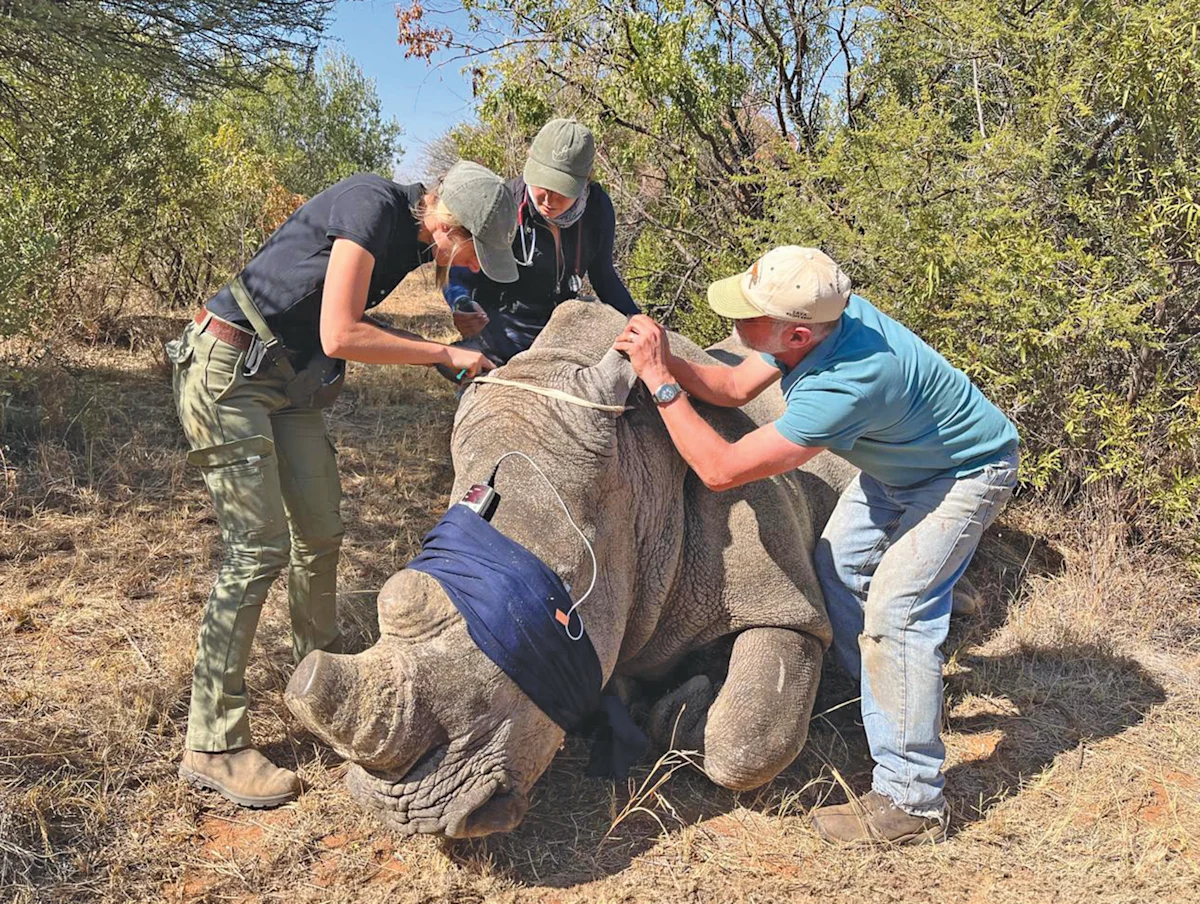
Just before the chainsaw revs to life in the wilds of South Africa, a rhino lies on its side, blindfolded and immobile. Surrounding it is a team of professionals—scientists, a veterinarian, field assistants—intently focused on the animal before them. The helicopter that ferried the person who darted and tranquilized the rhino has departed, while the ground team administers oxygen, takes blood, and prepares for what will come next: removing the rhino’s horn to safeguard the animal from poachers.
“It’s very intense,” says Dr. Ellie Milnes, a board-certified wildlife veterinarian and the Principal Investigator for the new Earthwatch Expeditions South Africa Rhino conservation trip. “There’s a lot of emotions, and it can look quite brutal.”
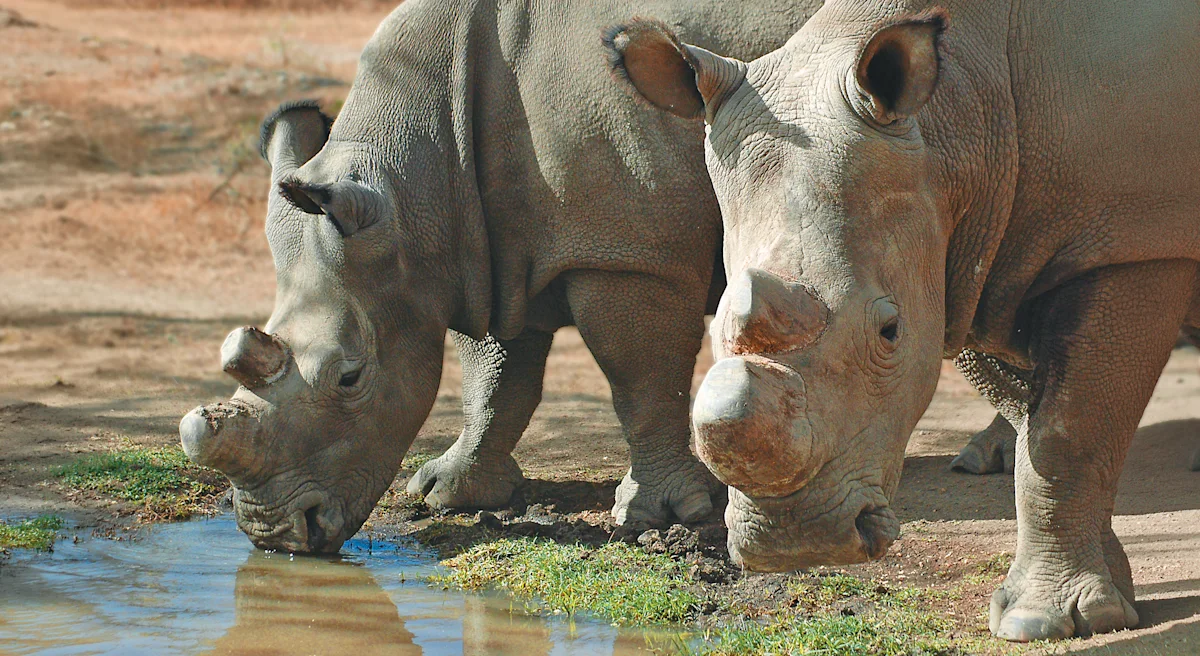
The blade cuts through most of the rhino’s horn—its most defining feature and, because of the illegal trade in rhino horn, its most endangering. The procedure doesn’t physically hurt the rhino. Horns are made primarily of keratin, the same protein found in human hair and fingernails, and removing it is akin to trimming your nails. But to poachers, rhino horns are lucrative black-market products, coveted by buyers in the illegal wildlife trade.
That doesn’t lessen the hard truth of the matter. “To cut off the thing that defines a rhino is a hard thing to do,” Milnes says. “Even when you know why you’re doing it.”
A Teenage Obsession
Milnes was only 15 when she had her first wildlife conservation experience. Traveling from her home in rural England to Kenya with Earthwatch Expeditions, she studied flamingos at Lake Bogoria. The scientists on the expedition treated her as part of the research team, offering training and instruction before sending her into the field to collect data alongside the rest of the group. This formative experience revealed a career path she hadn’t even known existed.
“They treated me like an equal, and as a teenager, I hadn’t expected that,” she says.
More adventures with Earthwatch Expeditions followed. Milnes studied crocodiles in Botswana’s Okavango Delta and carnivores in Madagascar. She worked her way up from participant to field assistant in Madagascar. “It was my first glimpse into the possibility of dreaming up a career and then being in it,” she says.
Called to Medicine
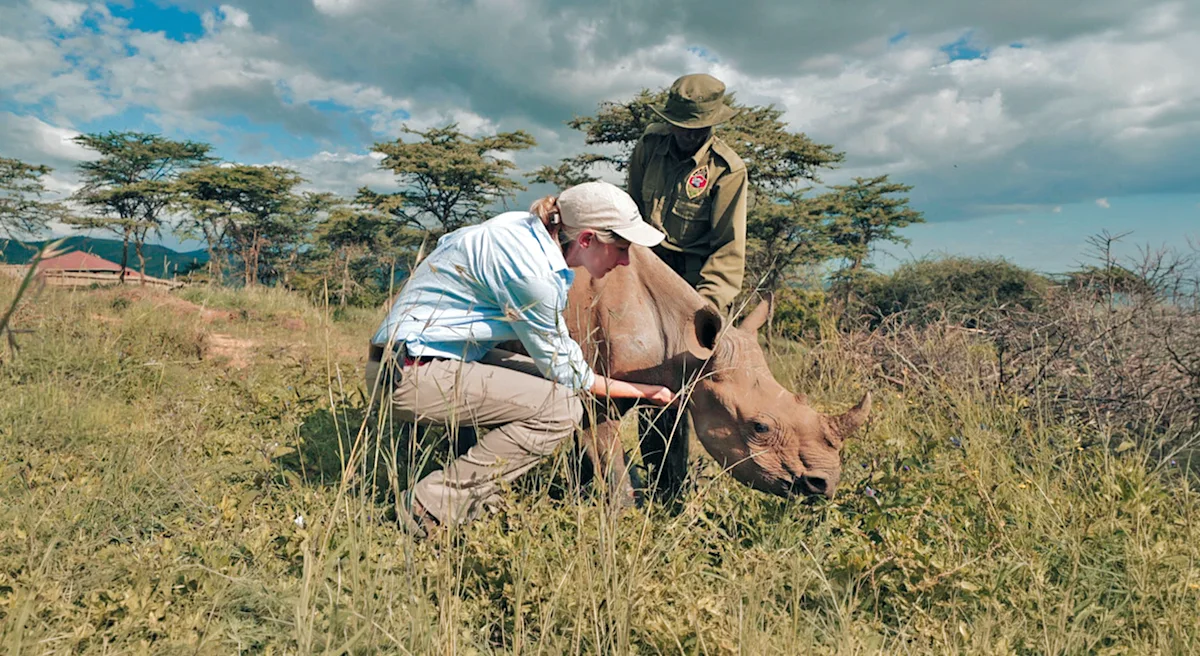
Knowing she wanted to work in wildlife conservation, Milnes completed veterinary school at the University of Cambridge, then spent several years working with large domestic animals in New Zealand, suturing horse wounds by headlamp at midnight and managing health problems in dairy herds. The work gave her the practical large-animal experience she knew she would need before specializing in wildlife.
Further training in zoological and wildlife medicine followed, along with conservation work involving species from chimpanzees and cheetahs to rattlesnakes and rhinos. Eventually, the career Milnes had first glimpsed as a teen became her own.
Why Trim the Horn?
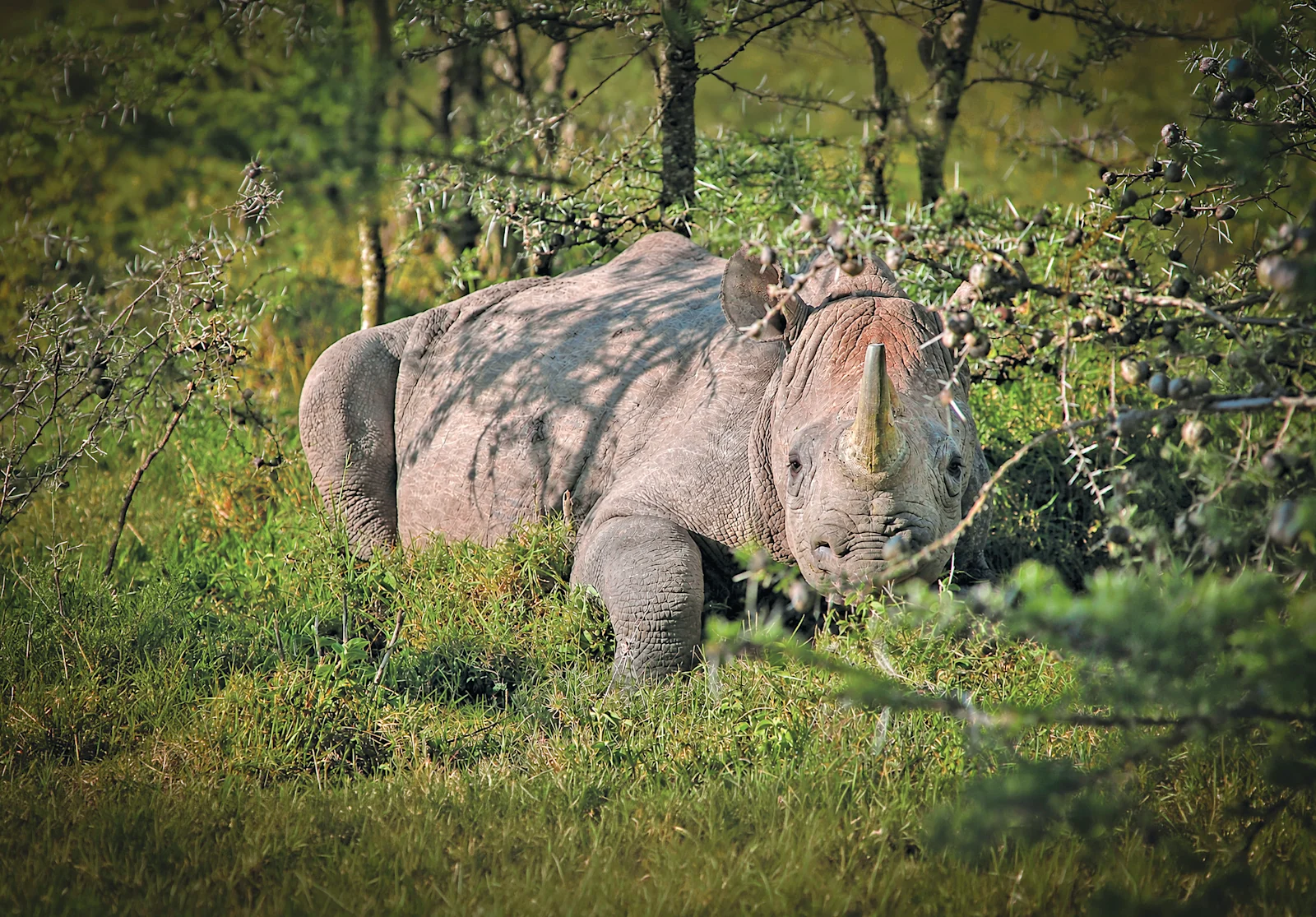
South Africa is home to most of the world’s white rhinos, a species classified as “Near Threatened” by the International Union for Conservation of Nature (IUCN), making what happens there critical to the animal’s future. South Africa is also at the center of the poaching crisis. In 2025, poachers killed 352 rhinos across the country. That was down 16% from the previous year, but the national improvement masked a sharp reversal in Kruger National Park, where the number killed rose from 88 in 2024 to 175 in 2025.
Rhinos are poached overwhelmingly for their horns. Horn trimming attempts to reduce the reward: Remove most of the horn while leaving the animal alive, and there is less incentive for a poacher to kill it.
The strategy has been used for years, but measuring its effectiveness has been challenging. Rhino protection rarely depends on a single intervention. Reserves also employ rangers, surveillance, tracking dogs, aircraft, and other security measures, making it difficult to determine which investments are changing the odds for the animals. In 2025, researchers published one of the most extensive attempts to answer that question. The results offered unusually strong evidence for horn trimming.
The 78% Difference
That study, published in Science, examined seven years of data from 11 reserves in South Africa’s Greater Kruger region, a landscape that holds roughly a quarter of Africa’s rhinos. Researchers documented 1,985 rhinos poached there between 2017 and 2023. During the same period, conservation teams trimmed the horns of 2,284 rhinos across eight of the reserves.
Where horn trimming was implemented, poaching fell by an average of 78%. The intervention accounted for just 1.2% of the money spent on rhino protection across the study area.
Notably, the study did not suggest that trimming could replace rangers or other protections. Some trimmed rhinos were still killed for the horn portion remaining at the base, or for regrowth, and detecting and arresting poachers remains essential. But the findings showed that substantially reducing the amount of horn available could reduce a rhino’s risk of being killed for it.
Preparations in the Field
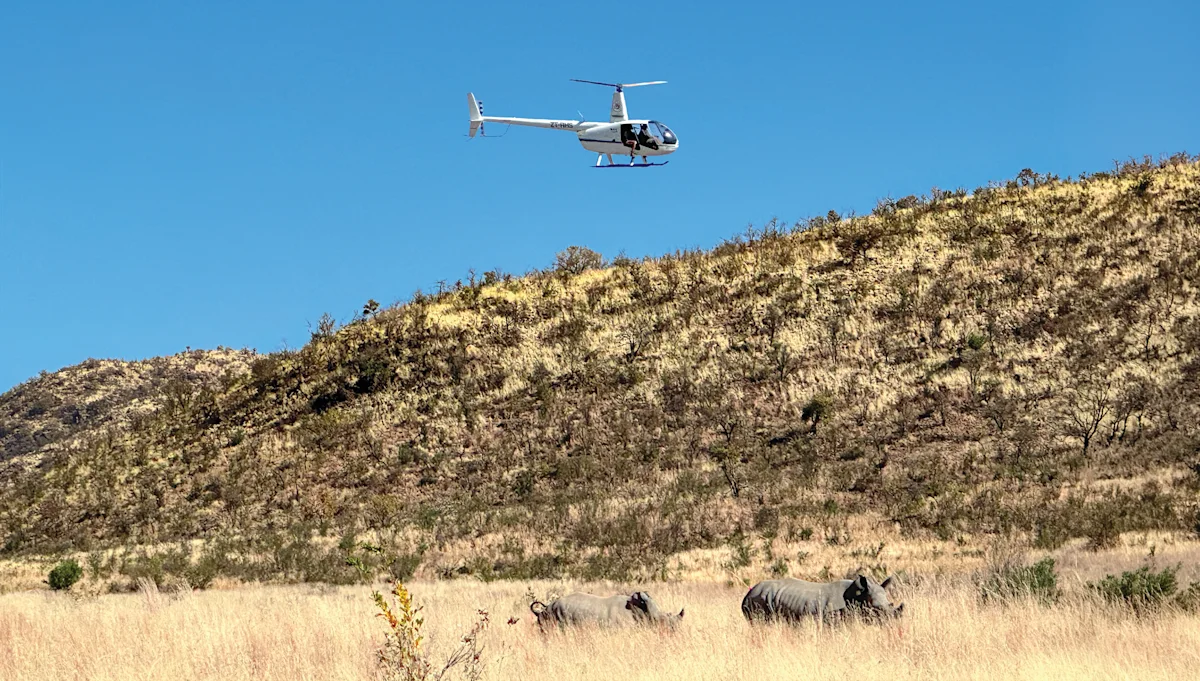
For Milnes, the complexity of a horn-trimming operation begins with the weather. A helicopter is generally used to find and dart the animals. Misty weather may inhibit flying. Rain creates a different problem. If the ground becomes too wet, vehicles may not be able to reach a rhino after it has been immobilized.
Paperwork and equipment must be ready before anyone goes up. Permits are secured. Veterinary drugs are prepared. Vehicles and personnel are coordinated. The team calculates how much oxygen will be needed based on the number of rhinos it expects to handle. There are blindfolds, nets and chainsaws. The chainsaws need spare chains. Blindfolds must be replaced regularly because thorns and field conditions tear them up. All that preparation must happen for the relatively short period when the animal is on the ground. Once the dart takes effect, the team needs everything within reach.
While the Rhino Is Down
For someone joining the operation, Milnes says, the sudden proximity can be startling—and exhilarating. The animal’s eyes are lubricated and covered with a soft blindfold. The team checks that the rhino has not fallen on a rock. Field assistants are essential. Milnes describes turning to the people around her and handing out jobs: “Come here, hold the oxygen, turn this blood sample for me.”
Much of Milnes’ attention is on the drugs keeping the rhino immobilized. Rhinos are particularly sensitive to the potent opioids used in wildlife anesthesia, and their oxygen levels can fall dramatically. The animal must be sufficiently immobilized that it cannot move while people are working around its head, while the veterinary team closely manages its breathing, oxygenation and other physiological responses.
While cutting off the horn is the most dramatic element of the operation, anesthetizing the animal and monitoring its well-being is the most fraught. Details that can seem small beside a several-thousand-pound animal must be managed carefully. A stalk of grass against an eye is unacceptable, as it can cause damage. The same goes for a rock beneath its body, the fit of the blindfold, and the direction the rhino will be facing when it wakes.
How Often to Trim
Once the trimming occurs, the portion of the horn that remains will regrow, though how quickly regrowth happens varies among individual animals. Milnes says nutrition, environmental conditions and genetics may all play a role, and scientists still have much to learn about horn growth.
In practice, roughly 18 months is a common interval between trims. A rhino protected today can gradually become a more attractive target as its horn returns, so maintaining that protection may require another helicopter operation, another dart and another period of immobilization just a year and a half later.
When Junior’s Nearby
A mother with a dependent calf requires another layer of planning. Milnes works mostly with white rhinos, which can be highly social. If a cow with a young calf needs to be treated, the team generally immobilizes both animals, darting the mother first, followed by the calf, so the pair is not separated. The team tries to have them asleep and awake at roughly the same time, rather than leaving a conscious calf separated from its mother during the procedure.
The same effort to reduce stress carries into other veterinary work. During rhino translocations, Milnes says, colleagues have sometimes rubbed a mother’s dung around her calf’s nose. Amid the unfamiliar smells of vehicles, people and transport, the familiar scent can help settle the animal.
Helping Hands
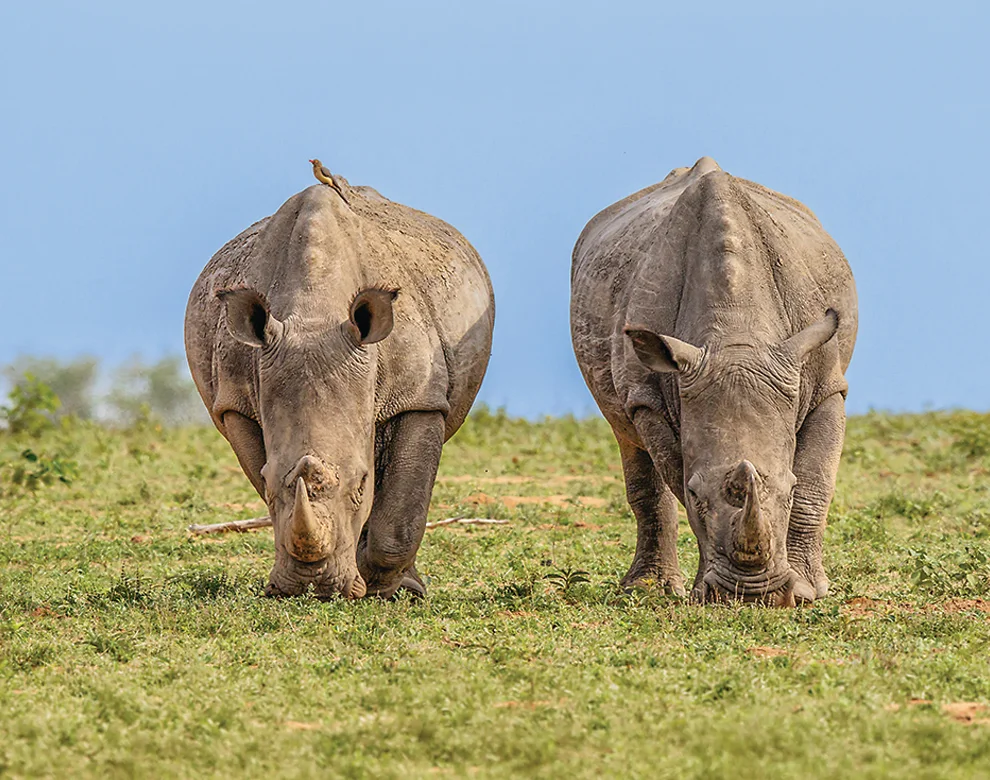
In 2027, Earthwatch Expeditions participants can join Milnes and her colleagues in South Africa, contributing directly to rhino conservation work, including helicopter scouting and horn-trimming operations. The expedition offers participants a hands-on role supporting the field team and helping to collect data during wildlife operations.
Just as Milnes did when she was a teenager, these participants will become essential members of the field team, helping to conduct operations and collect the data scientists rely on. “It really helps to have extra pairs of hands in the field to collect data for me, to monitor animals and to move them,” she says.
She has continued to seek out such experiences for herself. In 2022, already a board-certified wildlife specialist, Milnes joined shark scientist Demian Chapman on an Earthwatch Expeditions project in Florida. She had experience handling giraffes, buffalo and elephants but little with marine animals. Working with Chapman’s team, she learned how researchers captured sharks and collected blood samples. The experience reinforced something she had learned on her first expedition: There is always more to learn.
After the Operation
Once the horn has been trimmed and the samples collected, the veterinary team makes its final checks and begins moving people and vehicles away. It’s important that the rhino is facing away from the vehicles and that the fleet is far enough away that its noise and presence won’t disturb the animal as it reawakens. The team removes the blindfold, and the veterinarian administers the drugs to reverse the anesthesia. Shortly afterward, the rhino gets back on its feet, joins its fellow rhinos and carries on.
Its horn is shorter, but it will begin growing again. If poaching remains a threat, another team may return in roughly 18 months to repeat the operation. Milnes hopes that will not always be necessary. Asked what successful rhino conservation would look like 10 or 20 years from now, her answer is strikingly uncomplicated.
“We would love nothing more than to just let rhinos be rhinos in the wild,” she says. “But if there’s any intervention you can do that will prevent another rhino from being killed, then you do it.”