Itinerary
Day 1: Gather in Nairobi for Your Kenyan Wildlife Expedition
Arrive in Nairobi and transfer to Emara Ole Sereni
Meet your Expedition Leader and fellow travelers
Enjoy a welcome dinner before your journey into rhino country
Arrive in Nairobi, Kenya's bustling capital, set on the highlands at the edge of the Great Rift Valley.
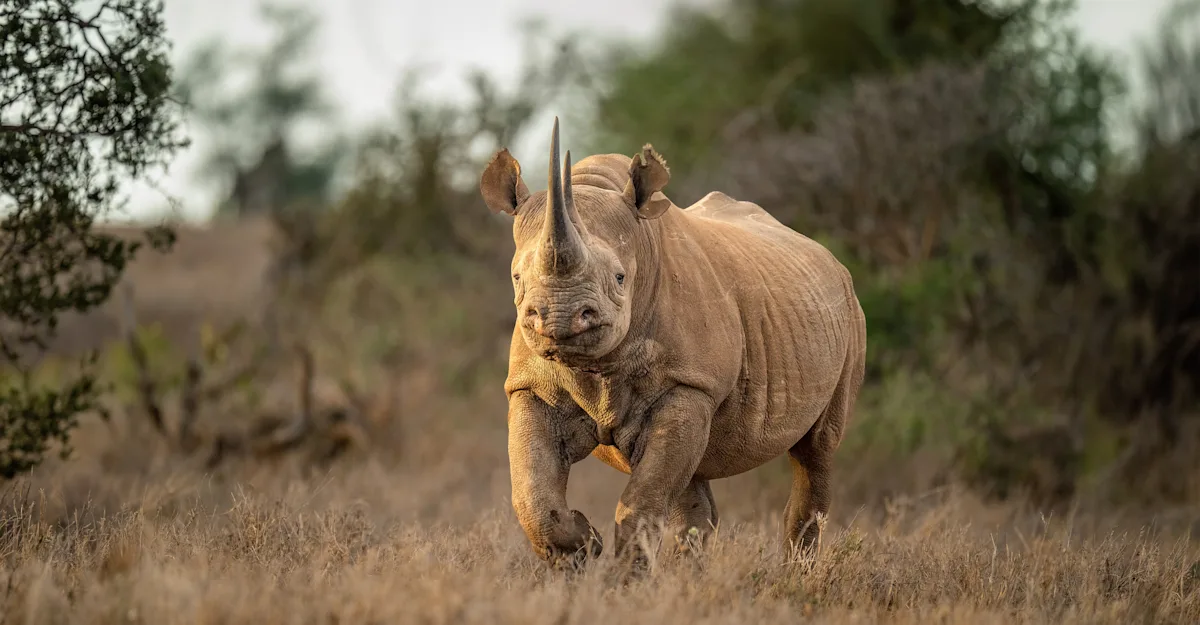
Known as the safari capital of East Africa, Nairobi is a gateway to the country's extraordinary wildlife reserves and conservancies. Your journey begins here before heading north to the Laikipia Plateau, where endangered black rhinos roam the grasslands and acacia woodlands beneath Mount Kenya.
This evening, gather with your Expedition Leader and fellow travelers for a welcome dinner. Get to know your travel companions and hear about the journey ahead: tracking endangered black rhinos beneath Mount Kenya, exploring one of East Africa's most celebrated wildlife conservancies and visiting a community-led elephant sanctuary in Kenya's remote northern highlands.
Spend your first night at Emara Ole Sereni, an upscale hotel overlooking the wild grasslands of Nairobi National Park.

Day 2: Fly to Rhino Country Beneath Mount Kenya
Fly north to Ol Pejeta Conservancy on the Laikipia Plateau
Search for rhinos, elephants, giraffes and predators on an afternoon safari
Meet the Kenyan research team and prepare for your fieldwork
Fly north from Nairobi toward the Laikipia Plateau, where the broad slopes of Mount Kenya rise above acacia woodlands and open grasslands. Your destination is Ol Pejeta Conservancy, a stronghold for endangered black rhinos and home to lions, elephants, giraffes and a remarkable variety of other wildlife.
After arriving, head out on your first safari drive. Scan the sweeping plains for elephants and giraffes, watch for lions and other predators, and keep your eyes peeled for your first glimpse of an endangered black rhino.
Your home for the next six nights is Nat Hab's private Rhino Camp, a secluded, solar-powered retreat with spacious safari tents, en suite bathrooms and private verandas. This evening, meet the Kenyan scientists leading your field research and hear the story of Ol Pejeta's remarkable rhino recovery. Discover the challenge ahead: ensuring the conservancy has enough suitable habitat to support its growing population.

Days 3 to 7: Track Black Rhinos and Discover the Science Behind Their Recovery
Search for black rhinos on foot and identify individuals by their distinctive ear notches
Measure vegetation, document wildlife activity and investigate habitat restoration
Explore Ol Pejeta, visit the last two northern white rhinos and meet a neighboring community
For five days, experience Ol Pejeta from a perspective few safari travelers ever have: on foot with Kenyan scientists, following research transects through acacia scrub and open grasslands. Scan the brush for black rhinos, examine tracks and dung, and learn to recognize individuals by the unique notches in their ears. Your observations contribute to long-running research into how rhinos and other large mammals use the conservancy.
The research also draws your attention to the vegetation beneath your feet and overhead. Measure trees and shrubs that black rhinos browse, count seedlings and assess grass cover. Look for signs of feeding by elephants and giraffes, whose appetites also influence the landscape. Examine recovering vegetation and discover how long-term research has changed habitat management, from ending the use of fire to protecting areas where plants can regenerate.
Beyond the transects, examine camera-trap images for evidence of wildlife movements. Join nighttime surveys and, when available, view thermal drone footage that reveals animals hidden in the darkness.
Between research sessions, enjoy the wider spectacle of an African safari. Search for lions, elephants, giraffes and other wildlife on game drives across Ol Pejeta's sweeping plains. On a private visit to the world's last two northern white rhinos, hear from conservation experts about the challenges of protecting them and the reproductive science being used in efforts to save their subspecies.
Visit a neighboring community to meet residents and learn how rhino conservation affects local livelihoods, another important dimension of the research.
Each evening, return to Rhino Camp for meals prepared over the fire and time to share the day's discoveries beneath the African sky. The sequence of activities will depend on research priorities, wildlife movements and field conditions.
Days 8 to 9: Meet Rescued Elephants in Kenya's Remote Northern Highlands
Fly north to Namunyak Conservancy beneath the rugged Mathews Range
Visit Reteti Elephant Sanctuary and meet the Samburu keepers raising orphaned elephants
Search for wild elephants on guided bush walks and game drives
After breakfast, we leave Ol Pejeta and fly north into a strikingly different region of Kenya. Rocky hills and rugged ridgelines rise above Namunyak Conservancy, where wild elephants travel through an important corridor beneath the Mathews Range.
Here, the focus shifts from rhino research to elephant rescue and rehabilitation. At Reteti Elephant Sanctuary, go behind the scenes of a project owned and operated by the local Samburu community. Watch orphaned elephant calves at feeding time and meet the keepers responsible for their daily care. Hear their rescue stories and learn how they're prepared for a possible return to the wild.
Outside the elephant sanctuary, explore Namunyak on guided bush walks and game drives, scanning the rocky terrain for roaming elephants and other wildlife. Between outings, enjoy the seclusion and comfort of Nat Hab's Elephant Conservation Camp amid the wild scenery of northern Kenya.

Day 10: Return to Nairobi After Your Kenyan Wildlife Adventure
Leave Namunyak Conservancy and the Mathews Range behind
Fly back to Nairobi
Connect with your onward flight home
Our Kenya adventure comes to a close today, but you’ll leave with memories of searching for black rhinos, following wildlife tracks across the savanna and watching rescued elephant calves.
Bid farewell to the rugged landscapes of Namunyak and fly south to Nairobi for your connecting flights home.