Support Scientists Studying and Protecting South Africa's Elephants

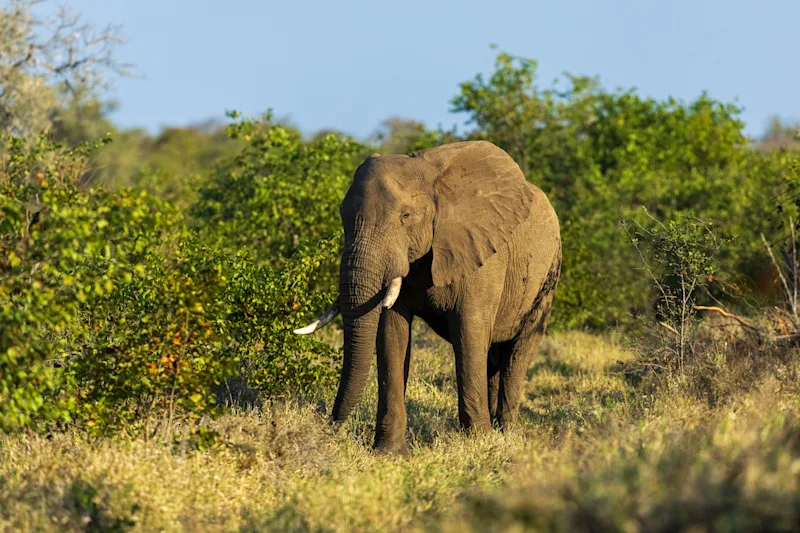
Branches snap and part as an elephant, opens in new tab bull emerges from a thicket in Hluhluwe-iMfolozi, one of Africa’s oldest protected areas. A small notch in his ear signals to researchers which lumbering local has stepped into view.
For researchers, a guest’s photograph can link that moment to encounters years earlier; add field notes from repeated sightings, and scientists have a clearer view on where elephant families gather and when they separate. GPS data from collared elephants adds where they go between sightings, places they return to, and how the elephants move near the boundaries of protected areas.
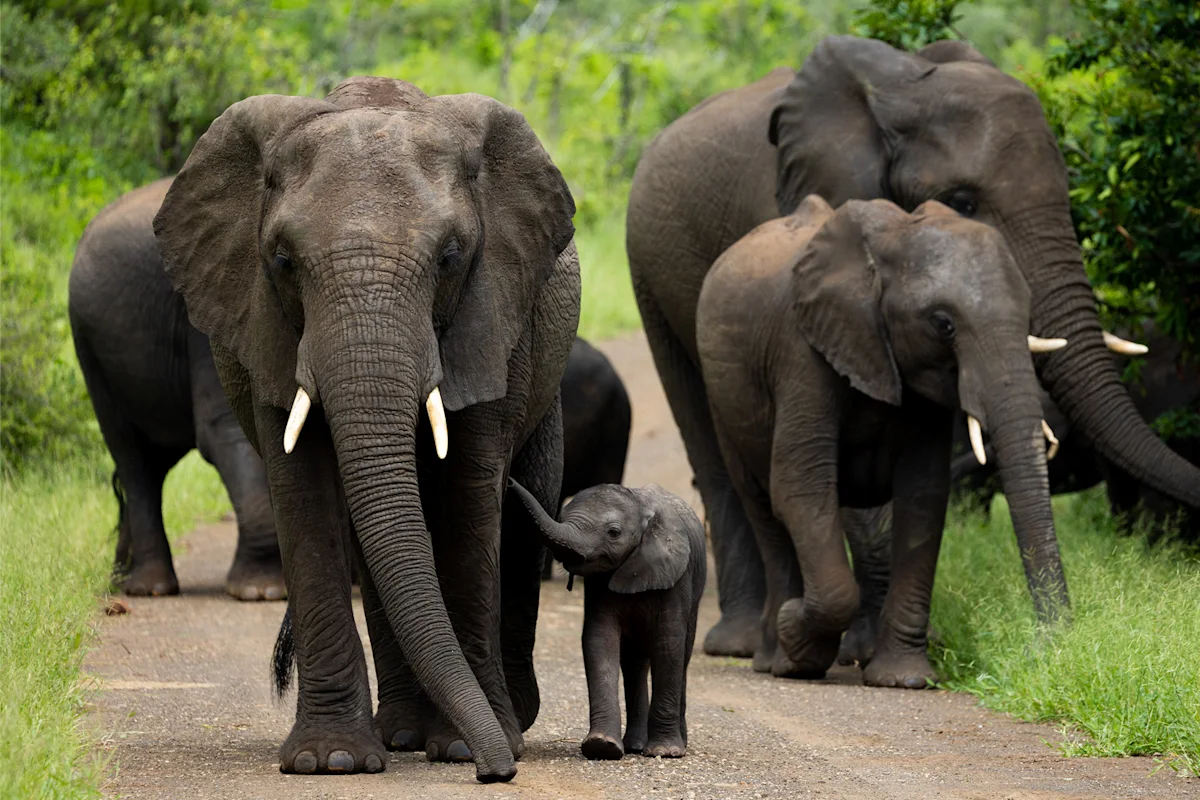
In the wooded valleys of Hluhluwe-iMfolozi Park and across Greater Kruger’s savanna, guests observe and photograph elephant families alongside researchers and wildlife veterinarians on Sustaining Elephants in South Africa, an Earthwatch Expedition by Nat Hab.
How Did Elephants Return to Hluhluwe-iMfolozi Park?
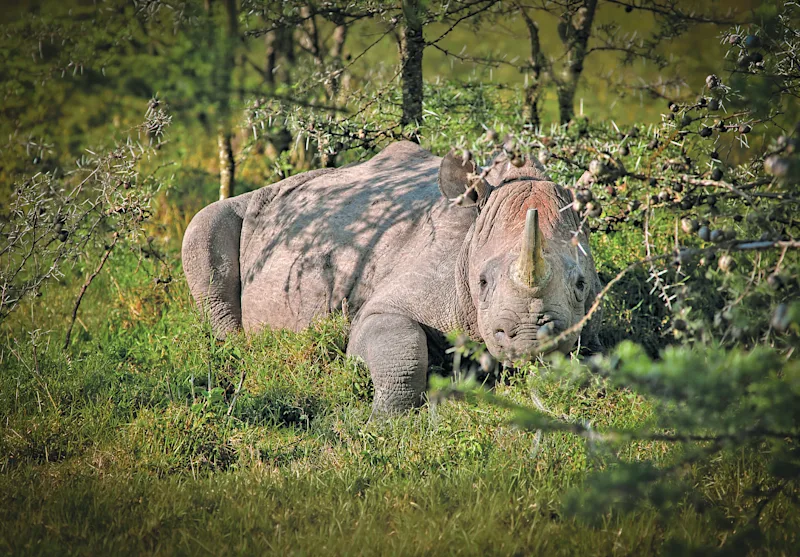
In KwaZulu-Natal, central grasslands give way to open woodland in the south and denser woodland and patches of forest in the hilly north. White rhinos graze in open areas, and giraffes browse among the trees.
Over a century ago, hunting driven by the ivory trade eliminated elephants from the hilly 370 square miles that is now Hluhluwe-iMfolozi Park. Starting in 1981, wildlife managers brought them back.
Between 1981 and 1996, wildlife managers moved 200 young elephants in 12 groups from Kruger National Park to Hluhluwe-iMfolozi Park. The first calf born to a reintroduced female arrived in 1990.
At the end of 2023, the park had an estimated 864 elephants. In March 2026, KwaZulu-Natal’s provincial conservation agency identified Hluhluwe-iMfolozi as one of four reserves above their estimated carrying capacities.
What do elephant researchers study in Hluhluwe-iMfolozi Park?
By 2016, research published in the Journal of Applied Ecology, opens in new tab documented multigenerational elephant families the Hluhluwe-iMfolozi. African Wildlife Vets reports, opens in new tab that 40 elephants were fitted with tracking collars in Hluhluwe-iMfolozi during its 2024–2025 financial year, to study their movement, space use and population dynamics. Today, park researchers use this data to study how a population founded by young elephants developed multigenerational families, and how they use their habitat and interact with one another.
How does travel support elephant research in Hluhluwe-iMfolozi Park?
On Earthwatch Expeditions by Nat Hab’s Sustaining Elephants in South Africa itinerary, guests add to this data, by collecting field observations and identification photos alongside researchers in Hluhluwe-iMfolozi Park. Research outings take place in different sections of the park, from our Hilltop Camp and Hlatikulu Bush Lodge accommodations.
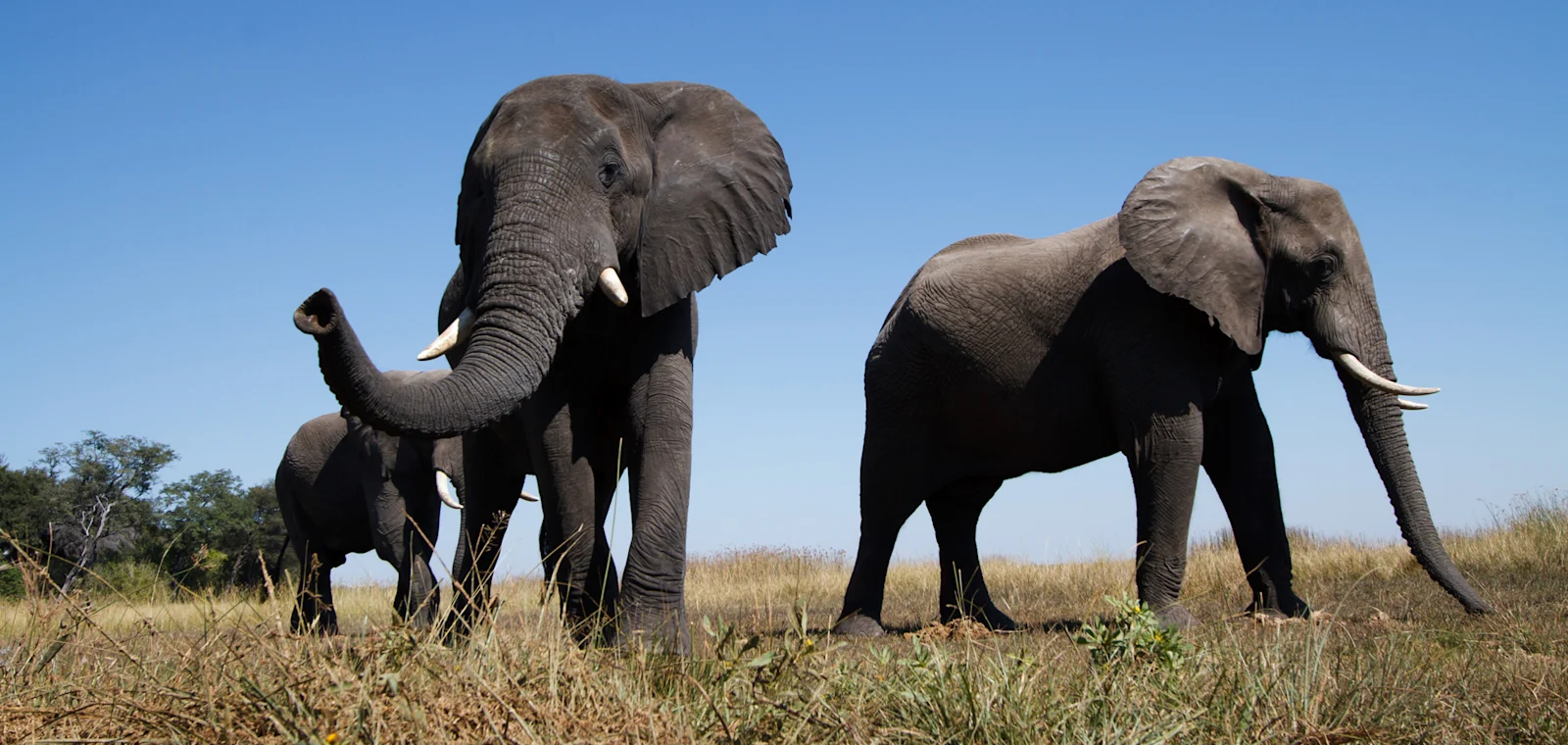
Find and observe elephant families: Researchers sometimes use location data from GPS-collared elephants to find herds. Guests may spend two or three hours watching and photographing a familial group feed, rest, travel and interact.
Photograph individual elephants: Guests learn to recognize a distinctive scar or the curve of a tusk; we take standardized photographs that can help researchers recognize the same elephant in later sightings. The images support an AI-assisted identification system in development for larger data sets and faster analysis.
Record behavior and habitat: Guests document group size, calf relationships and social interactions, along with where elephants feed, travel and gather. They use rangefinders, thermal cameras and GPS during field sessions and note habitat and weather conditions.
Photos and observations help researchers determine which elephants spend time together, how they move through the park and which habitats they use.
How does elephant research in the Kruger area differ?
Greater Kruger encompasses Kruger National Park and adjoining reserves. The national park alone covers roughly 7,700 square miles. Several adjoining reserves have removed fences, allowing elephants to move across more of the varied landscape. The region’s savanna has distinct wet and dry seasons, rivers and artificial waterholes. Researchers study how elephants use this larger ecosystem, including where they return to feed.
The Kruger elephants: From January 2012 to October 2021, South African conservation organization Elephants Alive collected GPS data from 41 elephants in Greater Kruger, including 29 bulls and 12 females.
The research: Using hourly GPS records, researchers compared the places elephants returned to with maps of water sources, terrain and soil nutrients. To focus on likely feeding sites, they excluded return visits within about 550 yards of mapped water bodies, where elephants return to drink.
In a study published in Ecology and Evolution, opens in new tab, elephants tended to return to likely foraging sites near water and on moderately sloping ground. Among the sites they revisited, they came back more often to places at intermediate distances from water and with higher soil phosphorus concentrations. On Earthwatch Expeditions by Nat Hab’s Sustaining Elephants in South Africa, guests have a rare opportunity to see how veterinarians fit a GPS collar. Depending on conditions and the team’s needs, guests may help take measurements, monitor vital signs or oxygen levels, or help keep the elephant cool during the procedure.
How does data protect South Africa’s elephants?
Assess how a reintroduced population develops: During fieldwork that began in 2016, researchers followed 16 adult females fitted with radio-tracking collars and observed their family groups. Individual families numbered seven to 15 elephants, while the largest cow-calf group observed numbered 109. Recognizing the same females across sightings showed how families formed larger gatherings and later separated. The study also estimated that the park’s elephant population grew by 7.1% per year from 1996 to 2014. The researchers reported that park managers began using contraception in 2014 to slow that growth.
Identify habitat elephants use repeatedly: Mapping return visits helps researchers identify parts of the landscape that elephants rely on over time and gives managers a starting point for assessing which areas may be especially important to conserve.
Inform decisions near reserve boundaries: Tracking can show when a collared elephant approaches or crosses a protected-area boundary. That information can help managers decide when a response may be needed. Where elephants move near communities, crops and water infrastructure can be at risk, and conflict can endanger both people and elephants.
Ready to join scientists studying South Africa’s elephants?
With room for just 6 guests the 11-day April through October Earthwatch Expeditions by Nat Hab’s Sustaining Elephants in South Africa journey offers an intimate glimpse into the world of South African elephant conservation. Spend time with elephant families and the scientists who study them, from the wooded valleys of Hluhluwe-iMfolozi to the savanna of Greater Kruger.