The Shark Fisher & the Scientist

In Belize, shark fishers and scientists are finding that conservation and fishing don't have to work at cross-purposes.
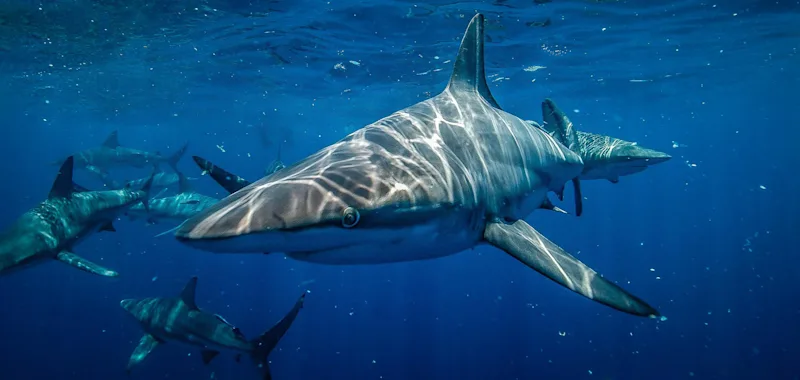
In 2018, shark scientist Dr. Demian Chapman traveled to Riversdale, a small village on Belize's Caribbean coast, to meet men who made their living catching the animals he had spent two decades studying. Sitting across the table was Hector Martinez, who had fished sharks for nearly a decade, following in his father's footsteps.
Both men were concerned about an apparent decline in shark populations, and each had reason to be wary of the other. Chapman had evidence that Belize's sharks were under pressure. Hector and the Riversdale fishermen knew such evidence could lead to fishing restrictions and a direct hit to their livelihoods.
Beverly Wade, then a senior Belize Fisheries Department official, had brought the two sides together. Her instinct was that they had more in common than not. How could they protect a finite resource on which so many species and livelihoods depended?
Quickly, the conversation turned practical. The scientists were having trouble catching tiger sharks in their surveys, and the fishermen offered common-sense advice. Set the lines deeper.
“That showed me exactly how helpful we could be to one another,” Chapman later said. “They know things about sharks I don't, and vice versa.”
Same Gear, Different Job
A collaboration was born. In 2018, Riversdale fishers began accompanying Chapman's team into the field. By 2019, Chapman and his colleagues were hiring Hector and several others to assist with research during shark-fishing season.
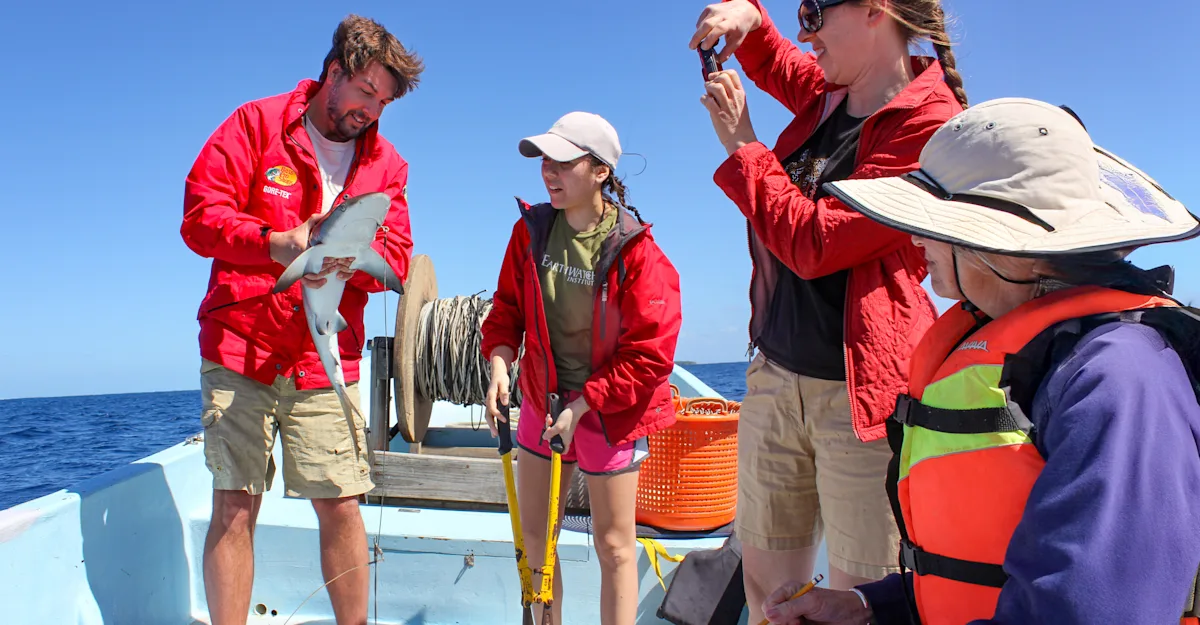
Much of the work was familiar to the local anglers: choosing fishing grounds, setting longlines and hauling sharks alongside the vessel. But instead of killing the shark for sale, researchers measured it, collected samples and data, attached a tag and released it. The arrangement also gave fishers a new source of income while more sharks lived. Earthwatch reports that Belize's shark catch fell nearly 50% from 2018 to 2019.
The Trouble with Invisible Lines
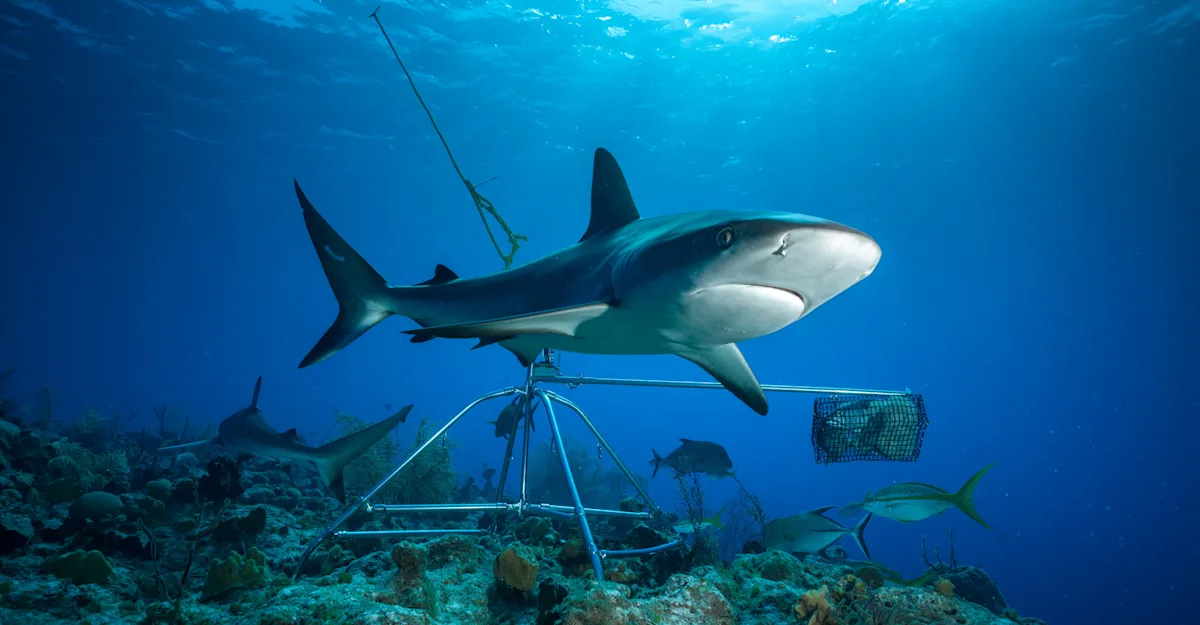
But the research aim wasn't just to reduce commercial shark catch. The team also wanted to understand why Caribbean reef sharks were declining at Glover's Reef, a protected coral atoll with a no-take zone where fishing was prohibited.
Researchers documented a decline in the relative abundance of Caribbean reef sharks at Glover's Reef from 2009 to 2019. A likely problem was the reserve's boundaries. Caribbean reef sharks moved beyond them into waters where shark fishing was permitted, leading researchers to hypothesize that fishing along the edges contributed to the decline.
A Seat at the Table
The scientists could identify a population trend, but changing it meant addressing fishing pressure, a move that would affect Hector and his peers. It also meant the men Chapman worked beside could no longer be treated merely as sources of local knowledge. If the research was going to change fishing rules, the fishermen needed a role in deciding what happened next.
Before the Glover's Reef study was published, Chapman and his colleagues shared their findings with the Belize Fisheries Department and the National Shark Working Group, which brings together government officials, scientists, conservation organizations and fishers. Hector joined the working group as a fishing representative and became vice chair of the Belize Shark Fishers Association. The shark fisherman Chapman had first met was now helping to collect scientific data and using it to inform decisions about the fishery.
Two Miles of Breathing Room
The working group recommended additional protection. Belize prohibited shark fishing within a two-mile band around Glover's Reef Atoll, Lighthouse Reef Atoll and Turneffe Atoll, expanding the waters where sharks could move without encountering legal shark fishing. Hector supported the changes.
“We felt good about that because it was based on their findings that sharks were depleted in Belize,” he told Mongabay. “They gave a good reason for [making the changes] and we're also part of that so we agreed to all of it.”
Different Ways of Knowing the Same Water
The research partnership continued after the management changes. Earthwatch Expeditions participants now work alongside scientists and local field teams to set and haul longlines, measure and tag sharks, and collect data on their movements and numbers.
Hector has continued participating in shark tagging and research, contributing to repeated surveys that become more valuable with time. Chapman compares the effort to tending a garden. “You don't plant a garden and walk away,” he said. “You have to tend it.”
Shark Economics 101
Hector stopped fishing for sharks commercially after joining Chapman's research team. Yet he has also said that if the research work disappeared, he might return to shark fishing. He must make a living, and his knowledge is valuable in multiple realms.
On a commercial fishing day, knowing where sharks gather can lead to animals being landed and sold. On a research day, that same knowledge can help scientists capture, measure and release them while generating income for the fisher.
“Every day that shark fishers are out on the water, not catching sharks and instead doing research, is a day you might be saving 100 sharks,” Hector has said.
Same Hands, Different Outcome
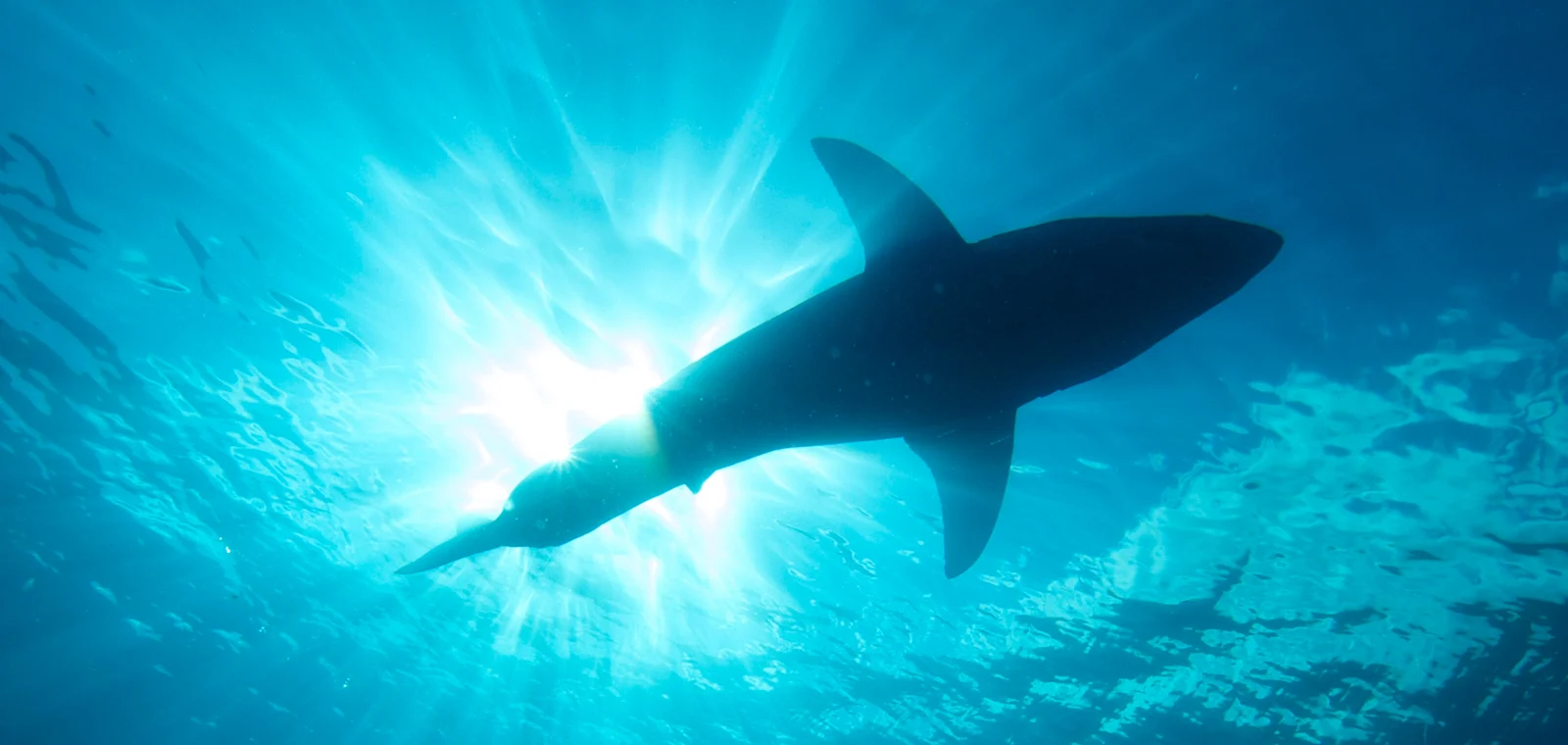
None of this eliminates the underlying tension. Sharks can be ecologically important predators and commercially valuable animals at the same time. A fishing restriction can benefit a population and impose a cost on a fisher. What the Riversdale collaboration shows is that those facts do not require scientists and fishers to be at odds.
Hector's knowledge came from a family and community where fishing has been learned through practice and passed between generations. Chapman's team brings tags, cameras, genetic analysis and decades of population records to Belize's coastal waters.
Together, this knowledge has done more than generate a better shark survey. The collaboration has reduced commercial shark catch while fishers are employed in research, brought fishermen into the production of scientific data and given them a role in turning research into new protections for Belize's sharks.