Know Before You Go
Whether you're preparing for your upcoming expedition or simply want to learn more about Baja California Sur, these resources provide a closer look at the marine life and ecosystems you'll encounter along the way. Learn about humpback whales, bottlenose dolphins and whale sharks, explore the waters where researchers conduct their studies and discover how environmental change is shaping the future of Baja's coastal ecosystems.
Why Is Baja California Sur One of the Best Places in the World to Study Marine Giants?
Baja California Sur is one of the best places in the world to study humpback whales, bottlenose dolphins and whale sharks. Nutrient-rich waters in the Sea of Cortez and along the Pacific coast support exceptional marine biodiversity, making the region a global hotspot for marine wildlife.
The area is also an important center for marine conservation research. Scientists monitor how whales, dolphins and whale sharks respond to changing ocean conditions, including marine heatwaves, coastal development and tourism activity. Participants on Earthwatch's Whales, Dolphins & Whale Sharks of Baja expedition contribute to this research by helping scientists observe wildlife and support long-term monitoring efforts.
With abundant wildlife, accessible marine habitats and ongoing scientific studies, Baja California Sur offers a unique opportunity to contribute to research while helping scientists better understand a rapidly changing ocean ecosystem.
Quick Facts—Sea of Giants: Monitoring Marine Life in Baja
Location: La Paz and Todos Santos, Baja California Sur, Mexico
Primary species: Humpback whales, bottlenose dolphins and whale sharks
Key activity: Boat- and land-based marine wildlife monitoring
Conservation focus: Marine ecosystem change, sustainable wildlife tourism and long-term marine monitoring
What Wildlife Will I See on a Sea of Giants Expedition?
Humpback whales, bottlenose dolphins and whale sharks are the primary focus of the expedition, but Baja California Sur supports an extraordinary range of marine wildlife shaped by nutrient-rich ocean currents and the meeting of desert and sea. Wildlife sightings on the Sea of Giants expedition may include whales, dolphins, whale sharks, California sea lions, mobula rays and a variety of seabirds.
Wildlife sightings vary with ocean conditions, migration timing and weather, making each day on the water different.
Participants may encounter:
Humpback whales migrating along Baja's Pacific coast
Bottlenose dolphins traveling through La Paz Bay and coastal waters
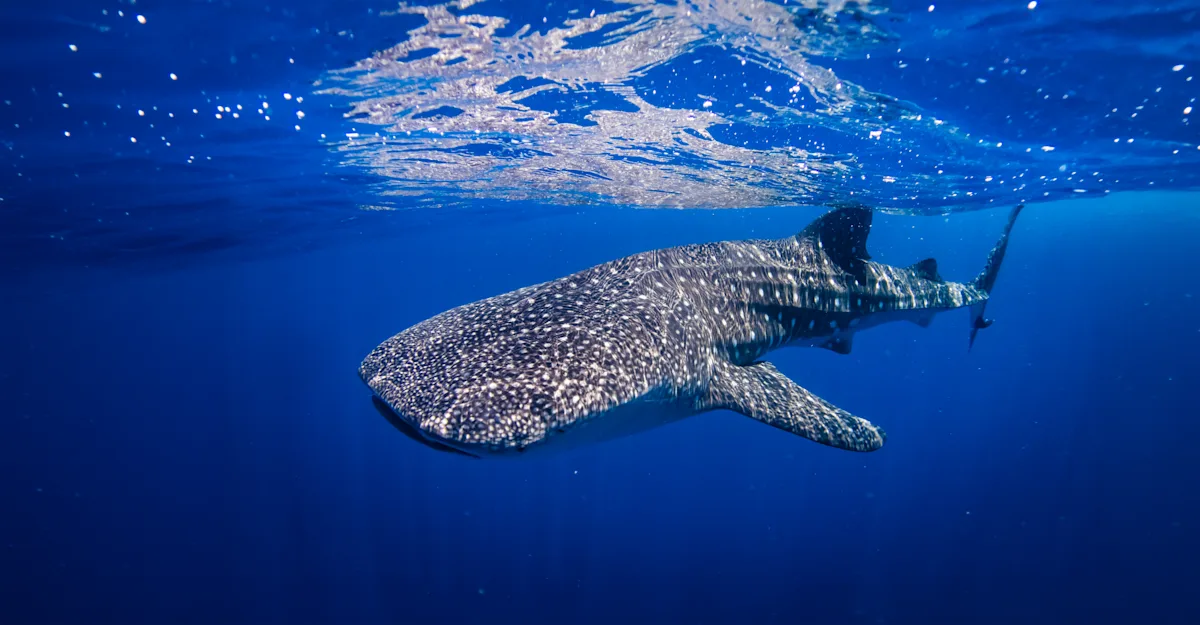
Juvenile whale sharks gathering seasonally near La Paz
California sea lions resting on rocky islets and swimming through shallow bays
Mobula rays leaping from the water in large schools
Seabirds such as frigatebirds, pelicans, gulls and other coastal species
Tropical fish and reef life while snorkeling in protected bays
The Sea of Cortez is one of the most biologically productive marine ecosystems in North America, supporting rich food webs that attract whales, sharks, dolphins and other marine wildlife throughout the year.
What Is the Climate Like During a Baja Expedition?
Baja California Sur has a warm, dry coastal climate with strong sun exposure and generally mild winter temperatures. Conditions on the water can change quickly, with wind and ocean conditions influencing daily fieldwork.
Condition | What to Expect |
Daytime Temperatures | 70–90°F |
Nighttime Temperatures | 55–70°F |
Sun Exposure | Strong, especially on open water |
Wind | Common in coastal and offshore areas |
Rainfall | Generally low, though brief showers are possible |
Sea Conditions | Can range from calm to rough depending on weather |
Fieldwork takes place in exposed marine and coastal environments where heat, wind and sun can feel more intense during long hours outdoors.
Frequently Asked Questions
Do I need research experience?
No prior research experience is required. Scientists and field staff provide training and guidance in marine wildlife observation, photo-identification methods and field data collection techniques used throughout the expedition.
What type of research will I assist with?
Participants assist scientists studying humpback whales, bottlenose dolphins and whale sharks in Baja California Sur. Activities may include photographing whales and dolphins for identification studies, recording behavioral observations, assisting with hydrophone deployment and monitoring whale shark tourism activity.
What is the conservation impact of this research?
This expedition supports long-term marine monitoring focused on how climate change, tourism and coastal development affect marine wildlife behavior and habitat use. Data collected in the field contributes to ongoing research used to support marine conservation planning and sustainable wildlife tourism management.
How physically demanding is the expedition?
Participants should be comfortable spending long days outdoors in warm, sunny and sometimes windy conditions. Fieldwork includes extended time on small boats, hiking to coastal observation points over uneven terrain and, in some cases, optional snorkeling activities in open water.
Can weather affect research activities?
Yes. Ocean conditions, wind and weather strongly influence daily schedules and marine wildlife activity. Boat-based surveys and whale shark work are especially dependent on suitable conditions, and research plans may shift throughout the expedition.
What happens in case of an emergency?
Participant safety is a priority on all expeditions. Field teams follow established safety procedures during all marine and land-based activities. Boats are equipped with appropriate safety equipment, and staff maintain communication while in the field. If medical care is required, staff coordinate transportation to the nearest appropriate facility.
Do I need travel insurance?
Travel insurance is strongly recommended and should include coverage for trip cancellation, interruption, medical expenses and emergency evacuation. Earthwatch provides travel medical insurance for participants.
What immunizations & travel vaccinations do I need?
Participants should consult a healthcare provider before travel and ensure routine vaccinations are up to date before visiting Mexico. Guests should also prepare for strong sun exposure, dehydration risks and extended time outdoors.
What should I bring?
Participants receive a detailed packing list before departure outlining recommended clothing, field gear and personal supplies. Essential items include sun-protective clothing, quick-drying layers, footwear suitable for boats and rocky terrain and gear appropriate for marine fieldwork. Snorkeling equipment and wetsuits will be provided for those who do not bring their own.
What Should I Pack for a Baja Expedition?
Participants should pack for warm, sunny marine conditions and active days spent both on the water and along Baja’s rugged coastline. Strong sun exposure, wind and changing ocean conditions make lightweight layers and secure gear especially important.
Recommended items include:
Lightweight, quick-drying shirts and pants
Long-sleeved sun-protective clothing
Lightweight waterproof jacket or windbreaker
Closed-toe shoes with good traction for boats and rocky terrain
Sandals or water shoes with secure straps
Wide-brimmed hat
Polarized sunglasses with a securing strap
Sunscreen and SPF lip balm
Small daypack or dry bag
Refillable water bottle
Swimsuit and towel
Snorkeling gear if participating in optional in-water activities
Motion sickness medication if prone to seasickness
Layering is helpful during boat-based fieldwork, when wind and ocean spray can make conditions feel cooler than expected. Dry bags and secure straps are recommended to protect electronics and loose gear on the water.
What Will I Experience on Whales, Dolphins & Whale Sharks of Baja?
Participants assist scientists with ongoing marine wildlife research across the waters of Baja California Sur, contributing to studies focused on humpback whales, bottlenose dolphins and whale sharks. Work may include photographing whales and dolphins for identification catalogs, recording behavioral observations, listening to whale vocalizations through hydrophones and documenting how marine wildlife responds to tourism activity and changing ocean conditions.
Traveling between La Paz Bay, offshore waters and Pacific coastal lookouts near Todos Santos, participants experience Baja’s striking desert-meets-ocean landscape while contributing to long-term marine conservation research.
What Does Daily Fieldwork Look Like?
Fieldwork combines boat-based marine surveys with land-based observation from coastal research sites. Mornings are often spent on the water searching for whales, dolphins and whale sharks while assisting scientists with behavioral observations, photography and environmental data collection.
Afternoons may shift to cliffside observation points overlooking the Pacific, where participants scan for whale activity from shore and help document movement and behavior. Depending on weather and wildlife conditions, some days may also include hydrophone work, whale shark tourism assessments or snorkeling activities in protected coastal waters.


