Itinerary
Itinerary
Day 1: Arrive in La Paz on the shores of the Sea of Cortez
Meet the research team and fellow participant scientists over a welcome dinner
Walk the Malecon as frigatebirds wheel above the bay and fishing boats return at dusk
Arrive at La Paz International Airport in Baja California Sur where you are met and accompanied on your transfer to our hotel in the historic center of the city, our base for the week ahead. On the eastern edge of the Baja Peninsula, La Paz sits between desert mountains and the protected waters of the Sea of Cortez, where whale sharks gather seasonally in the bay and fishing skiffs launch each morning from the shoreline.
This evening, meet the research team and your fellow participant scientists over a welcome dinner introducing the journey ahead. Before returning to the hotel, walk the Malecon de La Paz, the city’s waterfront promenade fronting the bay. Families gather here in the evenings as frigatebirds wheel overhead, fishing boats return to shore, and the last light settles across the water as we look toward Espiritu Santo Island offshore.

Day 2: Snorkel with sea lions and prepare for marine fieldwork
Cruise past ochre cliffs, volcanic outcrops and desert shoreline into the Sea of Cortez
Swim among curious sea lions in the clear shallows near San Rafaelito
Learn the project’s methods for behavioral observation, photo-identification and hydrophone research
This morning, board a boat and head into the Sea of Cortez for a first look at the marine environment of La Paz Bay. Cruise past ochre cliffs, volcanic outcrops and desert shoreline toward San Rafaelito, a rocky islet marked by a weathered lighthouse where sea lions haul out above the tide line. Conditions permitting, we enter the water to snorkel as sea lions dart through the shallows, amiable and curious about us. Then we continue across the bay toward Balandra Beach, a gorgeous protected cove of turquoise crystalline water and white sand shorelines backdropped by dry desert mountains. Spend time swimming, walking the shoreline, or simply soaking up the stillness before we gather for lunch on the beach followed by the return journey to La Paz.
Back at the hotel, meet with the scientific team for a detailed introduction to the research project and the field methods you will use throughout the expedition, including behavioral observation, photo-identification, hydrophone deployment and whale shark tourism assessments.
Days 3 to 6: Collect data on whales, dolphins and whale sharks across Baja
Photograph dolphin fins, humpback flukes and whale shark markings for long-term identification studies
Record behavior, movements and underwater vocalizations during boat and clifftop surveys
Assess how boats and swimmers affect whale sharks alongside scientists and local operators
The next four days hold exciting discoveries as we work along marine scientists to collect important data. Daily schedules will shift with weather conditions, wildlife activity and research priorities, though boat-based surveys will generally take place in the mornings when wind and water conditions tend to be calmest. We divide our time between La Paz Bay and the Todos Santos area across the Baja Peninsula, where we monitor humpback whales from coastal lookouts. Participant scientists can expect to join the research team for these activities:
Boat-Based Surveys in La Paz Bay
Head into the bay aboard small research vessels searching for dolphins, humpback whales and other marine wildlife. Working alongside the research team, collect GPS, environmental, behavioral and respiratory data while documenting marine mammal activity. Photograph dolphin dorsal fins and humpback whale flukes for long-term identification studies that allow researchers to recognize and monitor individual animals over time. You may also record short videos used to verify behavioral observations collected during surveys.
Listening Beneath the Surface
Hydrophones are periodically lowered beneath the surface to capture humpback whale songs and dolphin vocalizations traveling through the water around the boat—sounds few people ever hear outside active marine research or in wildlife documentaries.
Whale Shark Tourism Research
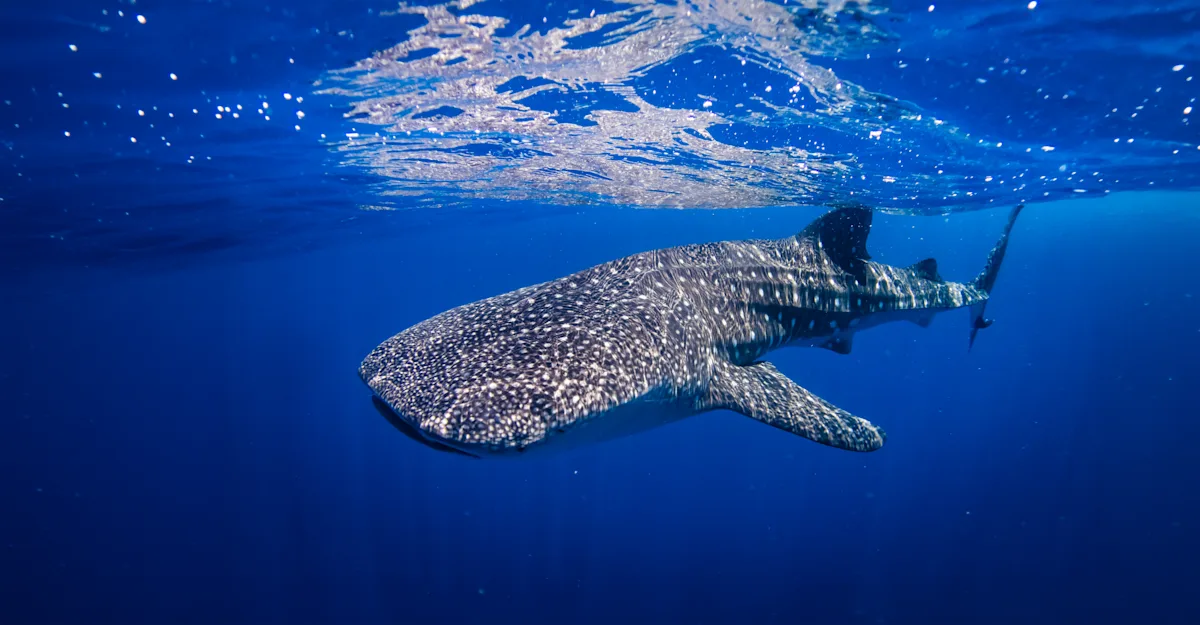
Join a whale shark tourism assessment in La Paz Bay alongside local tour operators. Researchers evaluate compliance with wildlife-viewing regulations established by Mexico’s environmental agency, SEMARNAT, while documenting how boats and swimmers influence whale shark behavior. When weather conditions allow, and depending on the presence of whale sharks,, you may also enter the water with underwater cameras to photograph these animals—the world's largest fish—for identification studies utilizing their unique spot and stripe patterns.
Observing Whales from Coastal Lookouts
On two research days, travel west across the peninsula to the Punta Lobos research site near Todos Santos, where coastal cliffs drop sharply into the ocean. Using binoculars, you'll record group size, movement patterns and environmental conditions. You may also assist drone operators documenting focal groups from above and communicate animal movements to research teams working offshore. After morning surveys from the clifftop, break for lunch in the town of Todos Santos before returning to conduct more observations in the afternoon. Todos Santos is recognized as a Pueblo Magico, or "magical town," an official designation awarded by the Mexican government to towns that possess deep cultural richness, historical relevance and natural beauty. Todos Santos is celebrated for its colonial architecture, cobblestone streets, local artisan culture, small galleries and shops, and its appealing oceansidesetting, backdropped by dramatic mountains.
Evenings with the Research Team
At the end of each day, review photographs, discuss field observations and process research data with the scientific team over dinners in La Paz and Todos Santos. On Day 6, gather with the research team for a final dinner overlooking the Sea of Cortez, reflecting on the week’s sightings, discoveries and significance of the fieldwork we've been conducting. After days spent tracking marine mammals, photographing dolphin fins, listening to whales sing beneath the surface, and charting the skin patterns of whale sharks, our conversations now carry a deeper understanding of the wonder, fragility and importance of these "ocean giants" that our work is dedicated to protecting.
Day 7: Depart with a firsthand understanding of marine research in Baja
Transfer to La Paz for homeward flights
We conclude our expedition knowing our observations, photographs and field studies have made a meaningful contribution to ongoing research tracking how whales, dolphins and whale sharks are responding to a rapidly changing ocean. And we take with us a deeper understanding and personal connection to the dedicated scientists working to protect these species, and these waters, for the future. After breakfast at your hotel, a transfer is included to La Paz International Airport for flights home.