Itinerary
Itinerary
Day 1: Gather in San Jose before your pollinator research expedition
Meet your Field Guide and fellow travelers over a Costa Rican welcome dinner
Learn how the week’s fieldwork will examine pollinators across Monteverde’s farms, forests and conservation sites
Arrive in San Jose, the capital of Costa Rica, where you are met and transferred to our hotel near the airport. This evening, gather with your Field Guide and fellow travelers for a welcome dinner featuring regional Costa Rican cuisine. Learn about the week ahead in Monteverde, a landscape where high-altitude tropical cloud forests, agricultural lands and conservation sites intersect—and about the ongoing field research you’re soon to join.

Day 2: Discover Monteverde’s pollinators through its orchids
Drive into the Tilaran Mountains past dairy farms, forested ridges and views of the Gulf of Nicoya
Visit the Monteverde Orchid Garden, where some flowers are no larger than a thumbnail
Meet the scientists leading the project at the Tropical Agroforestry Institute
Leave the broad Central Valley this morning and drive into the Tilaran Mountains. As the winding road ascends, we pass dairy farms, forested ridges and sweeping views of the Gulf of Nicoya before reaching the cool, misty highlands of Monteverde, Costa Rica’s most renowned mountain landscape. Stop for lunch along the way before continuing to our base for the week.
This afternoon, visit the Monteverde Orchid Garden, where hundreds of species occupy a surprisingly small space. Some flowers are no larger than a thumbnail. Others resemble insects, stars or delicate ribbons. Many depend on a single pollinator species to reproduce, making them a fitting introduction to the ecological relationships so significant to the biodiversity of this region. Later, continue to the Tropical Agroforestry Institute (TAI), the scientific hub where we will be based. Researchers, students and conservationists gather here to study sustainable agriculture, tropical ecology and pollinator communities across Costa Rica. Meet the scientists leading the project over dinner, and hear how bee populations vary among farms, forests and across elevations throughout Monteverde.

Day 3: Collect bees and document the plants that sustain them
Sweep aerial nets through flowering vegetation across farms, forest edges and restoration plots
Visit a center housing colonies of 20 native stingless bee species
Sample stingless-bee honey and learn how pollinator conservation supports local livelihoods
Our fieldwork focus launches this morning, with the research team analyzing conditions and setting our agenda for the day. Research locations change with flowering cycles, weather and project priorities. You may sweep aerial nets through patches of blooming vegetation to collect bees and other pollinators for identification, photograph flowering plants for submission to iNaturalist, or help document the connections between specific pollinators and the plants they visit. Our research sites span elevations ranging from roughly 650 to 4,900 feet above sea level.
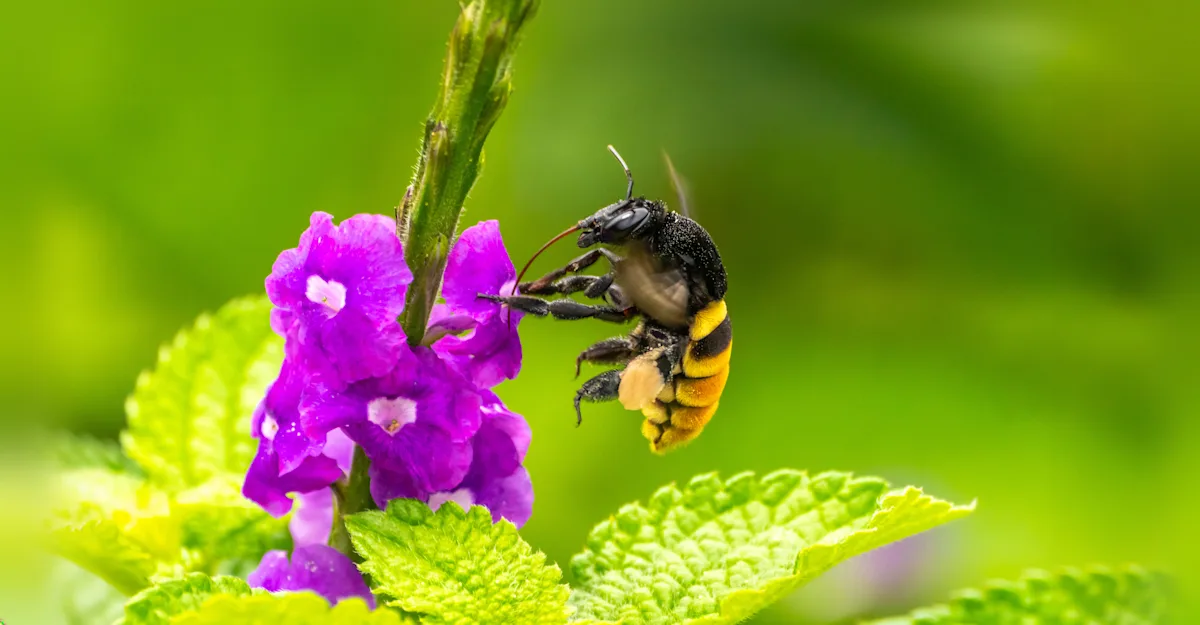
One morning may find you examining squash and pumpkin blossoms in home gardens, documenting the insects that visit each flower. On another, you may assist researchers as they deploy brightly colored pan and vane traps in restoration plots to compare pollinator communities across recovering habitats. On certain days, a light honey solution is sprayed onto vegetation to lure stingless bees, drawing them in for observation and collection before they are identified in the lab. The work takes place over a patchwork of farms, forest edges and recovering habitats that support distinct pollinator communities. The data collected helps researchers understand which plants support the greatest diversity of bees and how pollinator populations vary across Monteverde's landscape.
Return to the Tropical Agroforesty Institute (TAI) for lunch, then visit a local stingless bee center established in 2023. Inside, colonies representing 20 native species occupy nesting boxes that reveal dramatically different architectures and behaviors. These bees produce honey, pollinate forests and crops throughout the region, and have been valued for centuries by Indigenous communities, particularly the Maya, for their medicinal honey. Sample it, along with traditional foods, and learn how local families are reviving regional food traditions through the production of spices, preserves and other products, supporting local livelihoods and pollinator conservation. The visit concludes with a farm-to-table dinner highlighting ingredients grown and produced on site.
Day 4: Study bees, visit a coffee farm visit and explore the cloud forest after dark
Track bee activity and flowering cycles across farms, forest edges and mountain slopes
Follow coffee from ripe cherries to roasted beans on a family-owned shade-grown farm
Search for glass frogs, giant moths, kinkajous and other nocturnal wildlife on a guided night walk
Spend another morning in the field following researchers through Monteverde’s farms, forest edges and mountain trails as we track bee activity and flowering cycles across the landscape. No two field days are exactly alike. One morning may focus on surveying blossoms buzzing with pollinators after overnight rain, while another has us monitoring crop flowers in family gardens or searching for bee activity along cooler cloud forest slopes.
Later this afternoon, visit a small family-owned coffee farm tucked into the mountains beneath towering shade trees and patches of old-growth forest. Unlike industrial sun-grown coffee plantations, shade-grown farms like this create habitat for birds, insects and pollinators while helping retain soil and moisture on steep hillsides. Walk through the entire process from harvesting coffee cherries to roasting beans, breathing in the scent of drying coffee and fresh earth while learning how biodiversity and farming are deeply connected in Costa Rica’s highlands.
After a private dinner at the farm, head to Bajo del Tigre Forest Reserve for a guided night walk through the cloud forest with a naturalist guide. As darkness envelops us, species that spent the day hidden begin to emerge. Search leaves and branches for glass frogs and other amphibians that thrive in the cool, humid conditions. Watch for sleeping birds perched in the understory, giant moths drawn from concealment, and insects that become active after sunset. Our guides may also help us spot nocturnal mammals such as kinkajous or opossums moving through the forest. Our experience is a vivid reminder that much of the activity in the cloud forest takes place after dark. Pollinators, predators and prey all change their behavior as daylight fades, revealing a side of Monteverde most daytime visitors never encounter.
Day 5: Learn how scientists identify tropical bee species
Search blooming plants for pollinator activity across changing elevations and habitats
Study preserved bees at the Tropical Agroforestry Institute
Compare wing veins, body hairs and other features scientists use to identify species
After a slower start this morning following last night’s cloud forest walk, return to the field with the research team to continue tracking pollinator activity across Monteverde’s farms, forests and conservation areas. Spend the day searching for bee activity among blooming plants, documenting species interactions and helping scientists build a clearer picture of how pollinator communities shift across elevations and habitats.
Back at TAI this evening, the focus turns from the field to the lab. Join our lead scientist for a closer look at the astonishing diversity of tropical bees and the conservation questions driving the project. Then sit down at microscopes to examine preserved specimens up close, studying the tiny anatomical details scientists use to distinguish one species from another—minute differences in wing veins, hairs and body structures often invisible to the naked eye. You’ll learn why some collected bee specimens are preserved in ethanol for later study. In tropical ecosystems, many bee species look nearly identical in the field and can only be accurately identified through microscopic examination. This painstaking work helps researchers understand which species are most vulnerable to climate change and habitat loss, and which habitats are most important to protect.
Day 6: Hike through cloud forest alive with orchids, hummingbirds and quetzals
Follow trails lined with bromeliads, mosses, ferns and flowering epiphytes
Watch for hummingbirds and resplendent quetzals moving through the canopy
Reach the windswept elfin forest where the extinct golden toad once lived
Spend the morning in the field with the research team before gathering for a picnic lunch at Centro Científico Tropical. Founded in 1962, CCT was one of Costa Rica's pioneering conservation organizations, playing a central role in establishing the reserve and helping to protect more than 26,000 acres of cloud forest that now serves as a globally important center for research, conservation and biodiversity. This afternoon, follow a local naturalist guide on trails lined with orchids, bromeliads, mosses and ferns as clouds drift in veils of mist through the trees. Moisture beads on leaves overhead while epiphytes blanket trunks and branches, drawing water directly from the mist. Depending on the day's route, the hike may extend toward the Continental Divide, where weather and vegetation shift dramatically across the mountain crest. Nearby lies the elfin forest, a windswept habitat of stunted, moss-covered trees and the former home of the now-extinct golden toad, a species that was found nowhere else on Earth. Keep watch for hummingbirds darting between flowers, and, with luck, we might spy a resplendent quetzal moving through the canopy in flashes of emerald and crimson. Back at TAI this evening, dinner is followed by a talk explaining Monteverde’s impressive transformation from remote farming region to internationally recognized conservation landscape—and how science, ecotourism and local communities continue to work together to shape its future.
Day 7: Plant native seedlings after a final morning of pollinator fieldwork
Return to the farms, forests and mountain slopes for one last research session
Plant native species raised for future habitat restoration across Monteverde
Watch sugarcane crushed in a traditional trapiche mill before a farewell dinner
This morning marks our final session of pollinator fieldwork in Monteverde—a last opportunity to head into the forests, farms and mountain slopes where the week’s research has taken place. After lunch at TAI, visit the nursery where scientists cultivate native plants used in habitat restoration studies throughout the region. Walk among rows of young shrubs and flowering species while learning how researchers determine which plants best support diverse bee communities and healthier ecosystems over time. You’ll also have the chance to plant seedlings that may eventually become part of future restoration sites in the Monteverde landscape.
We then continue to a locally owned sugarcane farm where traditional production methods are still employed. Watch freshly cut cane fed through a trapiche mill to extract its sweet juice, then follow the process as it’s slowly cooked down into raw sugar and traditional sweets. The air is redolent with the scent of caramelizing sugar as we sample local treats and learn how sugarcane production influenced generations of rural Costa Rican communities and agriculture.
As the sun drops behind the lush mountains of Monteverde, gather for a private farewell dinner hosted exclusively for our group. Traditional forest foods and regional ingredients take center stage as we celebrate the week's discoveries with our fellow participant scientists, research team and naturalist guides.
Day 8: Depart with a firsthand understanding of pollinator research in Costa Rica
Drive from Monteverde to San Jose for homeward flights
Our Costa Rica expedition comes to a close today—we've gained firsthand experience in tropical pollinator research and a deeper understanding of the cloud forest habitat, sustainable farming practices and conservation efforts connected through pollination science in Costa Rica.
After an early breakfast, we drive back to the airport in San Jose to connect with outbound flights. We may have been here just a week, but our efforts contribute to a much wider body of work focused on protecting the amazing biodiversity of Costa Rica's highlands.