Know Before You Go
The Gulf of Maine is warming faster than nearly every ocean region on Earth, and this expedition gives you access to the secluded research areas that are helping scientists understand—and help mitigate—the impacts.
Prepare for your upcoming trip and learn more about Acadia National Park with these resources, which offer a deeper look at the wildlife, habitats and research that make this landscape so important to conservation research. Explore Acadia's coastal ecosystems, learn how climate change is affecting forests and shorelines and discover how scientists are working to protect biodiversity in a changing world.
Why Is Acadia One of the Best Places in the World to Study Climate Change in Coastal Ecosystems?
In Acadia National Park, fog drifts across spruce-covered headlands while Atlantic waves crash against granite shores. Here, along one of the fastest-warming marine regions on Earth, scientists are tracking how climate change is reshaping coastal forests, wildlife populations and the interconnected ecosystems that link ocean and land.
The Gulf of Maine is warming faster than nearly every ocean region on Earth, creating measurable changes throughout Acadia's forests, shorelines and mountain habitats. Researchers are investigating how wildlife moves resources between ecosystems, where climate-sensitive plants may find refuge and which habitats are most likely to support biodiversity in the future.
This combination of dramatic coastal landscapes, long-term ecological monitoring and active conservation research makes Acadia a meaningful place for participants to contribute to science while helping researchers understand how ecosystems respond to a changing climate.
Quick Facts: Exploring Wild Wonders of Maine’s Acadia
Location: Acadia National Park, Maine
Research partner: Schoodic Institute at Acadia National Park
Key activity: Ecological monitoring and habitat surveys
Conservation focus: Climate adaptation, ecosystem resilience and biodiversity conservation
What Wildlife Will I See on a Climate Change Expedition in Acadia?
Acadia sits at the meeting point of ocean, forest and mountain ecosystems, creating habitat for a remarkable diversity of wildlife. While the expedition focuses on ecological monitoring and climate research, participants may encounter a variety of species that help tell the story of how Acadia's ecosystems are changing.
Whales abound on the Maine coast, including humpbacks, minke and fin (though they are typically farther offshore)
Harbor porpoises feeding the region's cold, nutrient-rich waters
Atlantic puffins nesting on offshore islands during July departures
Harbor seals hauled out along rocky coastlines and offshore ledges
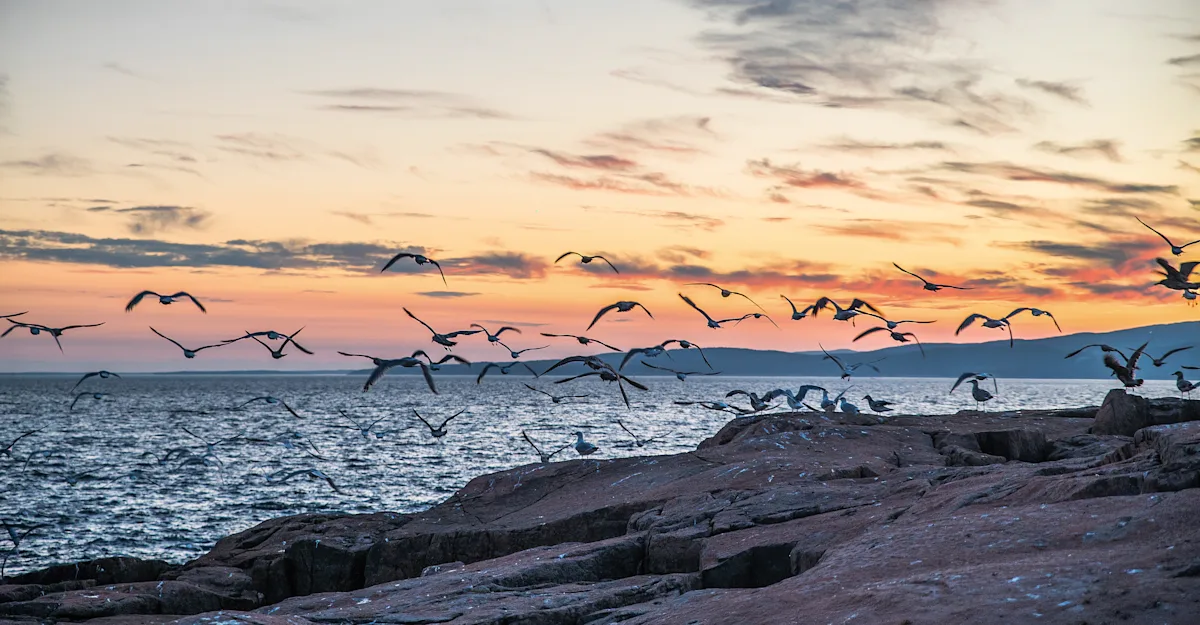
Gulls, cormorants and other seabirds that forage in the Gulf of Maine
Mussels, crabs, sea urchins and other intertidal species found in Acadia's rocky shoreline habitats
Red foxes, mink and river otters that move between coastal forests and the shoreline
Warblers and other migratory songbirds that travel through Acadia along the Atlantic Flyway
Crows and other corvids that transport marine prey inland and help connect ocean and forest ecosystems
Spruce-fir forest birds such as chickadees, thrushes and vireos that inhabit Acadia's coastal woodlands
Acadia lies along a major migratory corridor and supports an exceptional diversity of wildlife within a relatively compact landscape. The connections between these species and their habitats are a central focus of the research conducted throughout the expedition.
What Is the Climate Like During This Expedition?
Summer in coastal Maine is generally mild, though conditions can change quickly due to the influence of the Atlantic Ocean. Participants should be prepared for sunshine, fog, wind, rain and rapidly changing weather throughout the week.
Condition | What to Expect |
Daytime Temperatures | 60–80°F |
Nighttime Temperatures | 50–65°F |
Rainfall | Periodic rain showers possible throughout the season |
Fog | Common along the coast |
Wind | Frequent near shorelines and exposed summits |
Seasonal Notes | Conditions can vary significantly between coastal, forest and mountaintop habitats |
Mountain summits and exposed shorelines often feel cooler than inland areas, particularly during windy or foggy conditions.
Frequently Asked Questions
Do I need research experience?
No prior research experience is required. Scientists and field staff provide training and guidance in ecological monitoring, species identification and data collection methods used throughout the expedition.
What type of research will I assist with?
Participants assist scientists studying climate change impacts on Acadia's coastal ecosystems. Activities may include monitoring rare northern and arctic-alpine plants, documenting marine prey transported into forests by wildlife, reviewing wildlife-camera images and collecting habitat data used to identify potential climate refugia.
What is the conservation impact of this research?
This expedition supports long-term research investigating how climate change affects Acadia's interconnected ecosystems. Data collected by participants helps scientists identify climate refugia, monitor biodiversity and better understand how coastal forests, wildlife and marine ecosystems are responding to environmental change.
How physically demanding is the expedition?
Participants should be comfortable walking on uneven terrain that may include forest trails, rocky shorelines, exposed bedrock, roots and dense vegetation. Fieldwork may involve several hours outdoors in variable weather conditions while conducting surveys and monitoring activities.
Can weather affect research activities?
Yes. Weather conditions, tides and research priorities can affect daily schedules and fieldwork plans. Researchers regularly adapt activities to maximize safety and scientific opportunities.
What happens in case of an emergency?
Participant safety is a priority on all expeditions. Field staff follow established safety procedures and maintain communication during field activities. If medical care is required, staff coordinate transportation to the nearest appropriate medical facility.
Do I need travel insurance?
Travel insurance is strongly recommended and should include coverage for trip cancellation, interruption, medical expenses and emergency evacuation. Earthwatch provides travel medical insurance for participants.
What immunizations & travel vaccinations do I need?
Participants should consult a healthcare provider before travel and ensure routine vaccinations are up to date before visiting Maine. Participants should also prepare for extended outdoor activity in coastal environments.
What should I bring?
Participants receive a detailed packing list before departure outlining recommended clothing, field gear and personal supplies. Essential items include sturdy walking shoes, layered clothing, rain gear and gear appropriate for outdoor fieldwork in variable coastal weather.
What Should I Pack for a Climate Change Expedition in Acadia?
Participants should pack for changing coastal conditions, active days outdoors and fieldwork across forests, shorelines and mountain habitats. Layering is important, as temperatures can vary considerably throughout the day.
Recommended items include:
Comfortable hiking shoes or trail shoes
Lightweight field clothing
Long pants
Fleece or lightweight insulating layer
Waterproof rain jacket
Hat and sunglasses
Sunscreen
Refillable water bottle
Small daypack
Binoculars
Camera or smartphone
Insect repellent
Because weather in Acadia can shift quickly, reliable rain gear and layered clothing are among the most important items to bring.
What Will I Experience on Exploring Wild Wonders of Maine’s Acadia?
Participants assist scientists studying how climate change affects Acadia's forests, coastlines and wildlife. Fieldwork may include monitoring rare plant communities, documenting wildlife activity, reviewing camera-trap images and searching for evidence of marine prey transported inland by animals such as foxes, mink and river otters.
Beyond the research, participants experience some of Acadia's most memorable landscapes and cultural sites, including Cadillac Mountain, the Schoodic Peninsula, the Gulf of Maine and the Abbe Museum. Wildlife cruises, working waterfront experiences and time spent at Schoodic Institute help connect the science to the broader story of coastal Maine.
What Does Daily Fieldwork Look Like?
Fieldwork takes place across a variety of habitats, including coastal forests, rocky shorelines, mountain summits and long-term monitoring sites. Participants may help document plant communities, measure habitat conditions, identify wildlife captured on camera traps and record observations used in ongoing ecological studies.
Research activities vary from day to day and are shaped by weather, tides and scientific priorities. Some days focus on understanding how wildlife connects ocean and forest ecosystems, while others explore climate refugia that may help vulnerable species persist as temperatures continue to rise. Throughout the expedition, participants work alongside researchers to better understand how climate change is affecting Acadia from sea to summit.


