Know Before You Go
Whether you're preparing for your upcoming expedition or simply want to learn more about Costa Rica's sea turtle conservation efforts, these resources will help you explore one of the most important nesting regions in the eastern Pacific. Learn about the sea turtles that nest along Costa Rica's beaches, discover the challenges they face and see how researchers are working to protect these remarkable marine reptiles for future generations.
Why Is Costa Rica One of the Best Places in the World to See Sea Turtles?
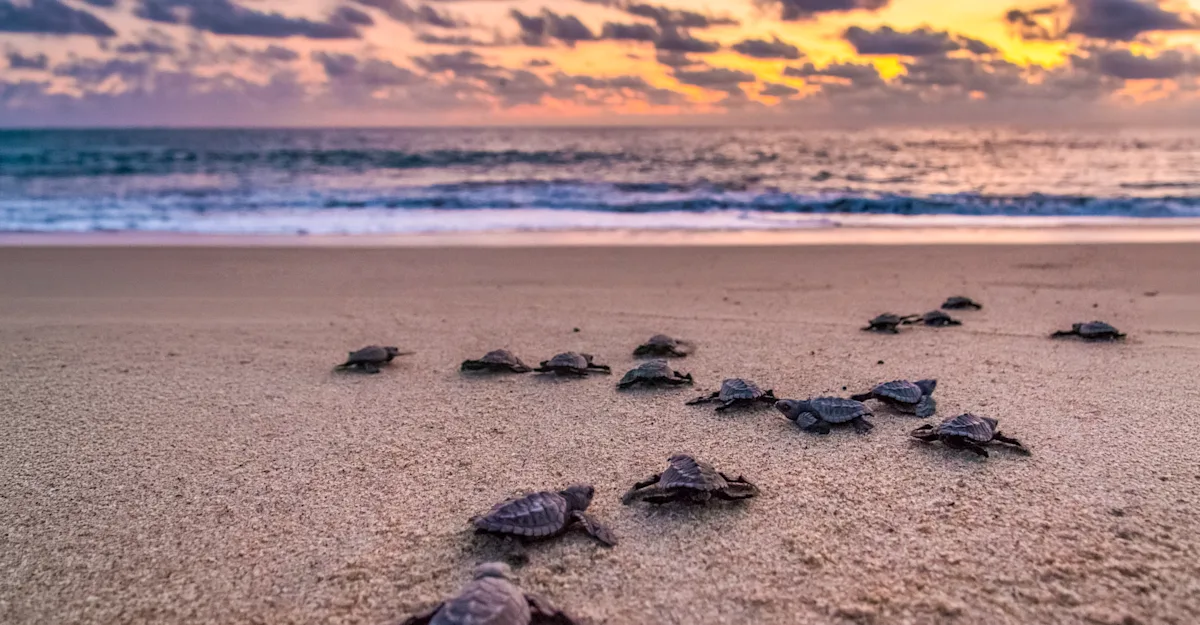
Costa Rica protects several of the most important sea turtle nesting beaches in the Eastern Pacific, providing critical habitat where females return each season to lay their eggs. Weeks later, hatchlings emerge from the sand and move toward the ocean, guided by the reflection of moonlight on the water.
Researchers study nesting activity here to understand how climate change, beach conditions and ocean health affect turtle survival. Because nesting occurs at night, conservation patrols offer the rare opportunity to observe wild sea turtles while supporting research that helps protect them.
Quick Facts: Saving Sea Turtles in Costa Rica
Location: Guanacaste Province, Pacific coast of Costa Rica
Research partner: The Leatherback Trust
Primary species: Leatherback, olive ridley, hawksbill and green sea turtles
Key activity: Nighttime nesting patrols and boat-based turtle research
Conservation focus: Nest monitoring, juvenile turtle research and environmental data collection
What Wildlife Will I See on a Sea Turtle Conservation Project in Costa Rica?
While sea turtles are the primary focus, Costa Rica’s Pacific coast supports a diverse mix of coastal, marine and forest wildlife that you are likely to encounter throughout your stay. These nesting beaches and surrounding forests form a dynamic ecosystem shaped by tides, currents and seasonal weather patterns. Many species move between ocean, shoreline and forest habitats, offering varied wildlife sightings during both day and night.
Most Likely
Sea turtles (nesting females or hatchlings, depending on season)
Dolphins (especially during boat excursions)
Howler monkeys (often heard before they are seen)
White-faced capuchin monkeys (frequently seen moving through the trees)
Iguanas (commonly seen basking in the sun near forest edges and open areas)
Pelicans and frigatebirds flying offshore
Herons and egrets along wetlands and estuaries
Shorebirds such as sandpipers and plovers feeding along the tide line
Ghost crabs and hermit crabs, especially during night patrols
Tropical fish observed during boat or snorkeling activities
Medium Likelihood
Spider monkeys moving through the canopy
Coatis foraging along forest edges
Raccoons on beaches at night
Rays (including mobula or devil rays) offshore
Parrots and parakeets in the coastal forest
Motmots perched in shaded vegetation
Tree frogs (active after dark)
Basilisk lizards near water or forest edges
Rare
Small sharks (reef species offshore)
Boa constrictors and other snakes (occasionally seen in forested areas)
Crocodiles (present in the region but not typically seen in main guest areas)
Hawksbill turtles (less common than green or olive ridley turtles)
Daytime nesting turtles (occasionally observed but not expected)
What Is the Climate Like While Saving Sea Turtles in Costa Rica?
Costa Rica’s Pacific coast has a warm tropical climate year-round, with high temperatures, humidity and strong sun exposure. Fieldwork takes place on exposed beaches and nearshore environments, where participants experience direct sun during the day and warm, humid conditions during nighttime patrols, with little temperature variation between day and night.
Rainfall varies seasonally, with drier conditions typically from December through April and more frequent, short bursts of rain from May through November. Because research takes place outdoors for extended periods—often at night or in full sun—participants should be prepared for heat, humidity, sun exposure and occasional rain in any season.
Condition | What to Expect |
|---|---|
Daytime Temperatures | 80–95°F |
Nighttime Temperatures | 60–70°F |
Humidity | High |
Winds | Moderate |
Rain | Short, frequent showers May–November; drier December–April |
Frequently Asked Questions
Do I need research experience?
No prior research experience is required. Scientists and project staff provide training in research methods and data collection.
What type of research will I assist with?
Participants assist with sea turtle research across both coastal and marine habitats. Activities may include nighttime beach patrols, monitoring nesting turtles and nests, and participating in boat-based surveys to study juvenile turtles in nearshore feeding areas.
What is the conservation impact of this research?
This expedition supports sea turtle conservation through ongoing research with The Leatherback Trust. Data collected during patrols helps scientists monitor nesting activity, measure hatchling success and guide conservation efforts.
How physically demanding is the expedition?
Participants should be comfortable walking up to 6–8 miles during nighttime beach patrols on soft sand and spending extended periods outdoors in warm, humid conditions.
Fieldwork may include walking in low-light conditions, kneeling or crouching to assist with nest monitoring and boarding small boats for offshore research. Participants should also be prepared for shifting sleep schedules due to nighttime research activities.
Can weather affect research activities?
Yes. Weather conditions such as heavy rain, high tides or strong surf may affect patrols or fieldwork.
Researchers adjust schedules as needed to maintain safety and continue monitoring turtle populations.
What happens in case of an emergency?
Participant safety is a priority on all expeditions. Field staff follow established safety procedures and maintain communication during research activities.
If medical care is required, staff coordinate transportation to the nearest appropriate facility.
Do I need travel insurance?
Travel insurance is strongly recommended and should include coverage for trip cancellation, interruption, medical expenses and emergency evacuation. For this program, travelers are required to purchase medical evacuation (medevac) coverage.
Earthwatch Expeditions provides travel medical insurance for participants.
What immunizations & travel vaccinations do I need?
Participants should consult a healthcare provider before travel, as routine vaccinations are recommended for Costa Rica and additional vaccines such as hepatitis A or typhoid may be advised.
Mosquito-borne illnesses such as dengue, Zika and chikungunya are present, so participants should take precautions and review current health guidance before departure.
What should I bring?
Participants receive a detailed packing list before departure outlining recommended clothing, field gear and personal supplies.
Essential items include lightweight clothing, footwear suitable for walking on sand and a headlamp with a red-light setting for nighttime patrols.
What Should I Pack for a Sea Turtle Conservation Project in Costa Rica?
Participants should pack for warm coastal conditions and nighttime fieldwork. Recommended items include:
Lightweight shirts and pants
Long-sleeved shirts and long pants for nighttime patrols
Comfortable footwear such as sneakers or sturdy sandals for walking on sand
Headlamp with a red-light setting (to minimize disturbance to nesting turtles)
Wide-brimmed hat
Sunglasses
Sunscreen
Insect repellent
Refillable water bottle
Small daypack
Bring several pairs of socks for nighttime patrols, as they help protect feet from sand abrasion and insect bites. A lightweight rain jacket is recommended during the rainy season.
What Will I Experience While Saving Sea Turtles in Costa Rica?
Costa Rica’s Pacific coast supports some of the most important sea turtle nesting beaches in the Eastern Pacific, where leatherback, olive ridley, hawksbill and green sea turtles return each year to lay their eggs. Participants assist scientists with conservation research both on protected nesting beaches and offshore in juvenile feeding areas, helping monitor turtles, protect nests and collect data that supports long-term conservation.
What Does Daily Fieldwork Look Like?
Fieldwork follows the natural rhythms of the turtles, with nighttime beach patrols focused on locating and documenting nesting activity. Daytime work may include boat-based research, coastal observation and data collection in marine habitats, depending on conditions and research priorities.
By contributing to field research alongside The Leatherback Trust, participants directly support conservation efforts along Costa Rica’s Pacific coast.


