Itinerary
Itinerary
Day 1: Arrive on a coast vital to Eastern Pacific leatherbacks
Cross Guanacaste’s dry tropical forest to an ecolodge near the beach
Join your Field Guide for dinner and an introduction to the week’s turtle research
Learn why this coastline remains critical nesting habitat for endangered leatherbacks
Arrive at Liberia International Airport where you are met by your Field Guide and transferred to the far northwest corner of Costa Rica's Guanacaste Peninsula near Playa Bahia Salinas. This coastline supports one of the most important nesting populations of leatherback sea turtles in the Eastern Pacific. The drive crosses Guanacaste’s dry tropical forest, where low-branching trees and scrub open into pasture before giving way to denser vegetation near the humid coast.
Settle in at your lodge within walking distance of the beach, then gather this evening for a welcome dinner. Your Field Guide introduces the journey ahead, explaining how scientists monitor nesting turtles, why this beach remains critical nesting habitat for leatherbacks, and how decades of data have shaped conservation efforts across the region. Leatherback nesting in the Eastern Pacific has declined by more than 90% since 1980, making each nest here especially significant.

Day 2: Measure juvenile sea turtles in Bahia Matapalito
Travel by boat into the bay’s warm, shallow waters
Help researchers measure turtles, check tags and record identifying details
Snorkel above feeding grounds where rays and schools of fish move across the sea floor
Board a boat this morning and travel into the protected waters of Bahia Matapalito in Santa Rosa National Park, where dry forest meets open sea, and shallow, warm waters support abundant marine life. This habitat is critical for juvenile sea turtles. Working with researchers, help locate turtles and bring them alongside the boat for study. Measure and document each one, check for tags, and record identifying details that track turtle growth and movement over time. As you swim or snorkel, look for turtles passing below you in the water, as they navigate through their feeding grounds. You may also watch rays glide along the sea floor and fish gather in shifting schools, while the coastline stays in view. A traditional Costa Rican lunch is served aboard the boat or on the beach. Exact plans may shift with weather and sea conditions, wildlife behavior and research priorities, so we are prepared to stay responsive to what unfolds during the day.
Day 3: Discover volcanic geological wonders, waterfalls and sea turtle beaches
Explore one of Costa Rica's most geologically active protected areas
Hike dry-forest trails overlooking headlands, beaches and the Pacific
Watch for dolphins, rays and seasonal whales from the beach
After breakfast, depart for Rincon de la Vieja National Park, one of Costa Rica's most geologically active protected areas. Centered around a massive volcanic complex, the park is known for steaming fumaroles, bubbling mud pots, mineral-rich hot springs and tropical dry forest that supports remarkable biodiversity. Walk forest trails with your Expedition Leader, watching for howler monkeys, white-faced capuchins, coatis, toucans, motmots and other wildlife while learning how volcanic forces continue to shape this dynamic landscape. Continue to nearby Oropendola Waterfall, where a short forest trail descends into a narrow volcanic canyon. Here, the Rio Blanco plunges more than 80 feet into a striking turquoise pool surrounded by moss-covered cliffs and lush vegetation. Enjoy free time to swim, relax or simply take in the scenery before lunch at a local restaurant.
This afternoon, continue to Playa Grande on Costa Rica's Pacific coast. One of the country's most important nesting beaches for endangered leatherback sea turtles, Playa Grande borders Las Baulas National Marine Park, where broad sandy beaches, mangroves and coastal forest provide habitat for a rich diversity of wildlife. As evening settles over the Pacific, prepare for tomorrow's first sea turtle fieldwork experience.
Accommodations


Days 4 to 6: Monitor nesting leatherbacks on one of their last major beaches
Patrol the shoreline after dark, watching for turtles emerging from the surf
Help check tags, take measurements and document nesting events under red light
Learn how decades of field data guide leatherback conservation across the Eastern Pacific
Playa Grande is one of the last major nesting sites for Eastern Pacific leatherback turtles, a population that has declined by more than 90% since 1980. Protected within Las Baulas National Marine Park, it supports one of the longest-running sea turtle research programs in the region. We work alongside scientists from The Leatherback Trust, which leads this long-term study in partnership with Earthwatch Expeditions. Their team has monitored turtles here for decades, building the dataset that guides conservation of leatherbacks across the Eastern Pacific.
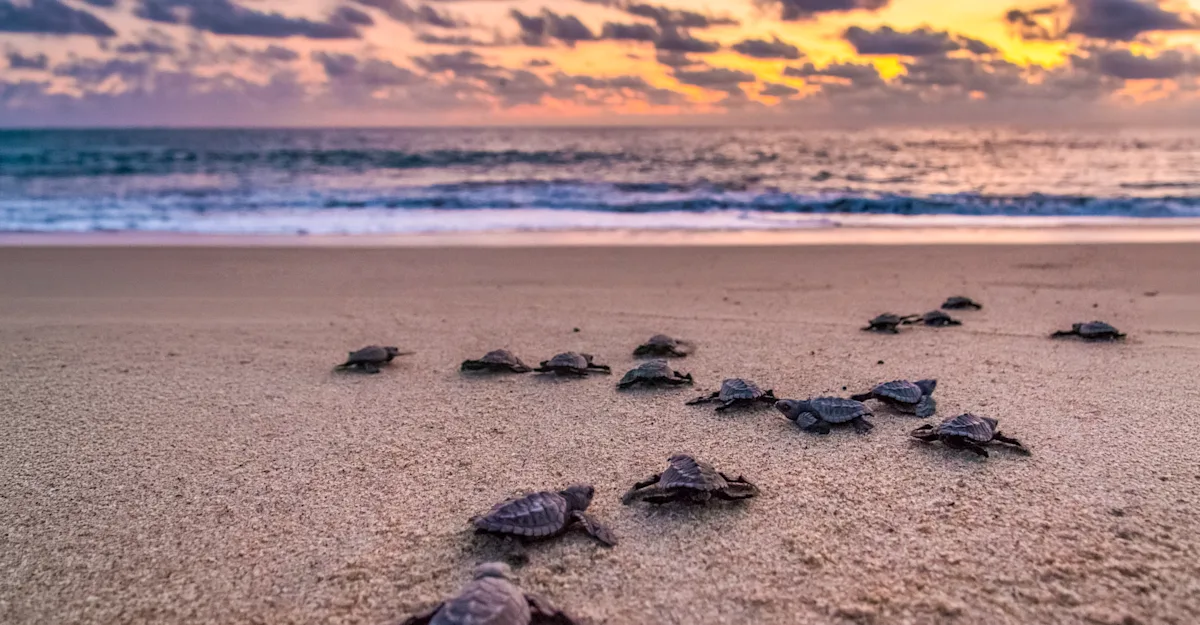
Each night, patrols run in two shifts—from sunset to midnight and midnight to sunrise. In small groups, walk the shoreline, watching the surf for movement as turtles come ashore to nest. When one emerges, we follow at a respectful distance. Under red light, assist with measuring, checking tags and recording each nesting event. Stand just behind the turtle as she lays her eggs, counting and documenting them. Some nights are active, with multiple turtles on the beach; others require patience, and we may see few to no turtles.
Late afternoons include a science talk or time in the hatchery, monitoring nests and early hatchling development—occasions that connect our fieldwork to broader research and conservation impact. Mornings and early afternoons are open and at your leisure. Rest up, or explore more of our environs—kayak the Tamarindo Estuary, ride along the coast or visit nearby beaches and towns. By sundown, it's time to return to the shoreline. On our final evening, gather for a farewell dinner with your Lead Scientist, research team, Field Guide and fellow travelers to celebrate the week's work.
Accommodations
Day 7: A final morning of turtle tracking
Join a final morning survey for tracks, nests and overnight turtle activity
Transfer to Liberia for homeward flights
Spend a final morning on Playa Grande, returning to the beach with a more practiced eye. Tracks, nests and subtle shifts in the sand reveal turtle activity that unfolded overnight. Depending on timing, you may join one last survey or help check active nests. Later, it's time to transfer to Liberia’s international airport for onward flights, departing with a deeper understanding of sea turtle conservation work and the role of long-term research in protecting these endangered species across the Eastern Pacific.