Know Before You Go
Whether you're preparing for your upcoming expedition or simply want to learn more about the Peruvian Amazon, these resources offer a closer look at one of the most biologically diverse regions on Earth. Discover the wildlife that inhabits the Amazon's rivers and rainforests, learn how researchers monitor ecosystem change and explore the connections between conservation, biodiversity and Indigenous communities in this extraordinary landscape.
Why Is the Amazon One of the Best Places in the World to Study Wildlife and Ecosystem Change?
The Amazon is one of the most biologically diverse regions on Earth, where river channels shift, forests flood and wildlife moves with the rhythm of the water. Seasonal flooding reshapes habitats across vast areas, influencing where species live, feed and reproduce.
These changes also affect the livelihoods of Indigenous Cocama communities, whose knowledge and sustainable use of natural resources are closely tied to the health of the forest and waterways. This combination of biodiversity, environmental change and community-based conservation makes the Amazon a powerful setting for participants to contribute to long-term scientific research.
Quick Facts: Ultimate Amazon Research Adventure
Location: Peruvian Amazon near Iquitos
Research partners: Amazon Eco & University of Kent–DICE
Primary species: Amazon river dolphins, birds, primates and freshwater fish
Key activity: Boat-based wildlife monitoring, forest transects and ecological data collection
Conservation focus: Biodiversity monitoring, ecosystem change and community-based conservation
What Wildlife Will I See on an Amazon Riverboat Expedition?
The Amazon supports an exceptional diversity of wildlife across river, forest and canopy ecosystems, with research taking place across aquatic and terrestrial habitats. These interconnected ecosystems—rivers, flooded forests and upland rainforest—support one of the most complex and species-rich environments on Earth.
Participants may encounter:
Amazon river dolphins in freshwater channels
Macaws, parrots and other tropical birds flying above the canopy
Primates such as squirrel monkeys and howler monkeys in the forest canopy
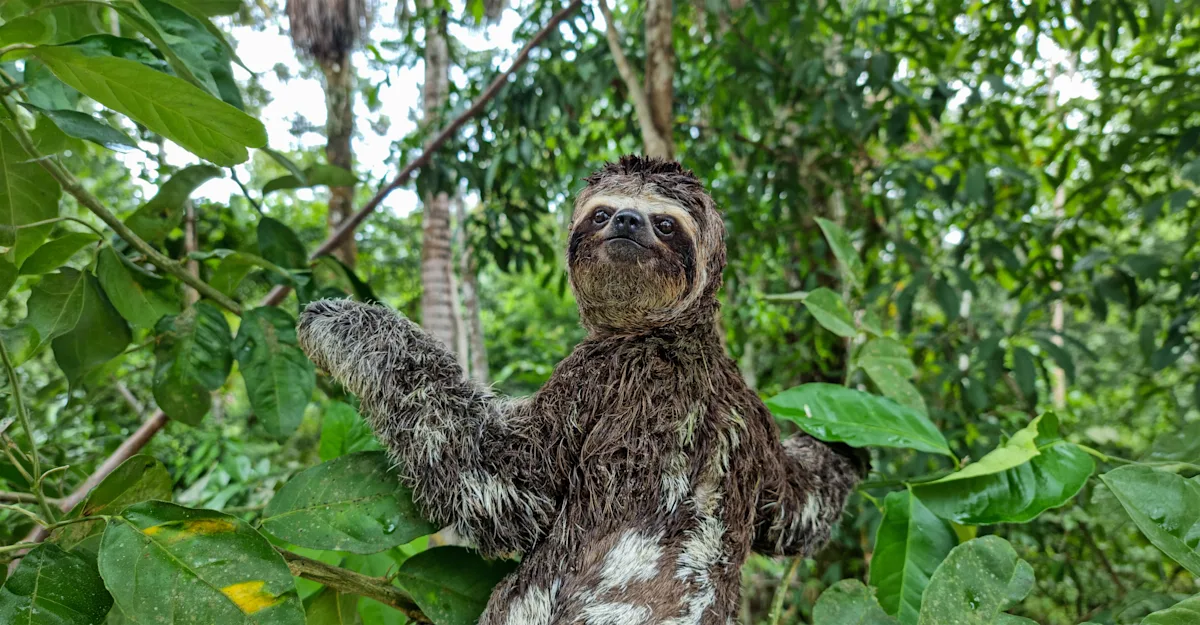
Sloths resting in riverside trees
Caiman during nighttime surveys
Freshwater fish such as piranha and other species during sampling
Bats, amphibians and reptiles in forest and river habitats
What Is the Climate Like in the Amazon?
The Amazon has a hot, humid tropical climate year-round, with consistent warmth, high humidity and frequent rainfall. Conditions can feel especially intense on the water, where sun exposure is direct and shade is limited.
Rain can occur at any time, often in short, heavy bursts, and river levels shift seasonally, influencing where research takes place and how participants access field sites.
Condition | What to Expect |
|---|---|
Daytime Temperatures | 82–95°F |
Nighttime Temperatures | 75–82°F |
Humidity | High year-round |
Winds | Light to moderate |
Rain | Frequent showers possible year-round |
Seasonal Notes | River levels rise and fall with seasonal flooding cycles |
Frequently Asked Questions
Do I need research experience?
No prior research experience is required. Scientists and field staff provide training in research methods and data collection.
What type of research will I assist with?
Participants assist with wildlife monitoring and ecological research across river and rainforest habitats. Activities may include dolphin surveys, bird counts, fish sampling, terrestrial wildlife monitoring and nighttime surveys for caiman.
What is the conservation impact of this research?
This expedition supports conservation through ongoing research in the Peruvian Amazon. Data collected in the field helps scientists monitor wildlife populations and understand how environmental changes affect ecosystems and local communities.
How physically demanding is the expedition?
Participants should be comfortable spending extended time outdoors in hot, humid conditions, stepping in and out of small boats and walking short distances on uneven, muddy forest trails.
Can weather affect research activities?
Yes. Weather conditions such as rain, flooding or river conditions may affect fieldwork and daily schedules.
Researchers adjust plans as needed to maintain safety and continue monitoring wildlife and ecosystems.
What happens in case of an emergency?
Participant safety is a priority on all expeditions. Field staff follow established safety procedures and maintain communication during research activities.
If medical care is required, staff coordinate transportation to the nearest appropriate facility.
Do I need travel insurance?
Travel insurance is strongly recommended and should include coverage for trip cancellation, interruption, medical expenses and emergency evacuation.
Earthwatch Expeditions provides travel medical insurance for participants.
What immunizations & travel vaccinations do I need?
Participants should consult a healthcare provider before travel, as vaccinations such as yellow fever and hepatitis A may be recommended for travel to the Amazon region.
Participants should review current health guidance before departure, including risks such as malaria and dengue.
What should I bring?
Participants receive a detailed packing list before departure outlining recommended clothing, field gear and personal supplies.
Essential items include lightweight clothing, appropriate footwear for boat and forest conditions and insect protection.
What safety measures are in place during the expedition?
Participants travel aboard a research riverboat operated by trained crew members certified in emergency procedures. Life vests are provided and must be worn during all small-boat activities, and the vessel is inspected for safety by the Peruvian Coast Guard.
Swimming is not permitted during the expedition due to safety considerations related to river conditions and wildlife.
What Should I Pack for an Amazon Riverboat Expedition?
Participants should pack for hot, humid conditions and activities on both water and forest terrain, with gear suited for rain, mud and strong sun exposure. Recommended items include:
Lightweight shirts and pants
Long-sleeved shirts for sun and insect protection
Rubber boots for muddy forest trails
Closed-toe, non-slip shoes for boat decks
Headlamp or flashlight
Wide-brimmed hat
Sunglasses
Sunscreen (SPF 30+)
Insect repellent
Refillable water bottle
Small daypack
Dry bags for electronics
A lightweight rain jacket is recommended, as rain can occur at any time and conditions can shift quickly between sun and heavy showers.
What Will I Experience While Ultimate Amazon Research Adventure?
Participants travel by riverboat through remote rainforest waterways, working alongside scientists to monitor wildlife and collect ecological data across multiple habitats. The experience combines river travel, forest exploration and hands-on research, offering a direct connection to both the science and the landscape.
What Does Daily Fieldwork Look Like?
Fieldwork takes place throughout the day and night, with activities rotating between boat-based surveys, forest transects and nighttime wildlife monitoring. Participants may assist with dolphin surveys, bird counts, fish sampling and caiman searches, depending on research priorities and environmental conditions.


