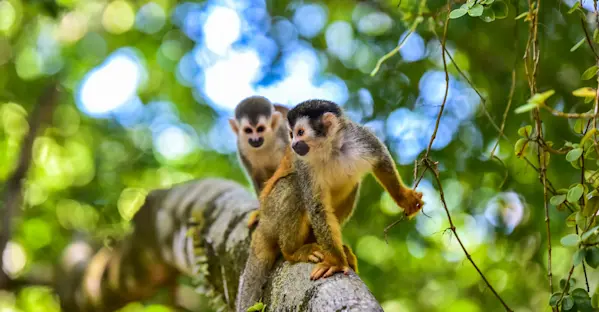





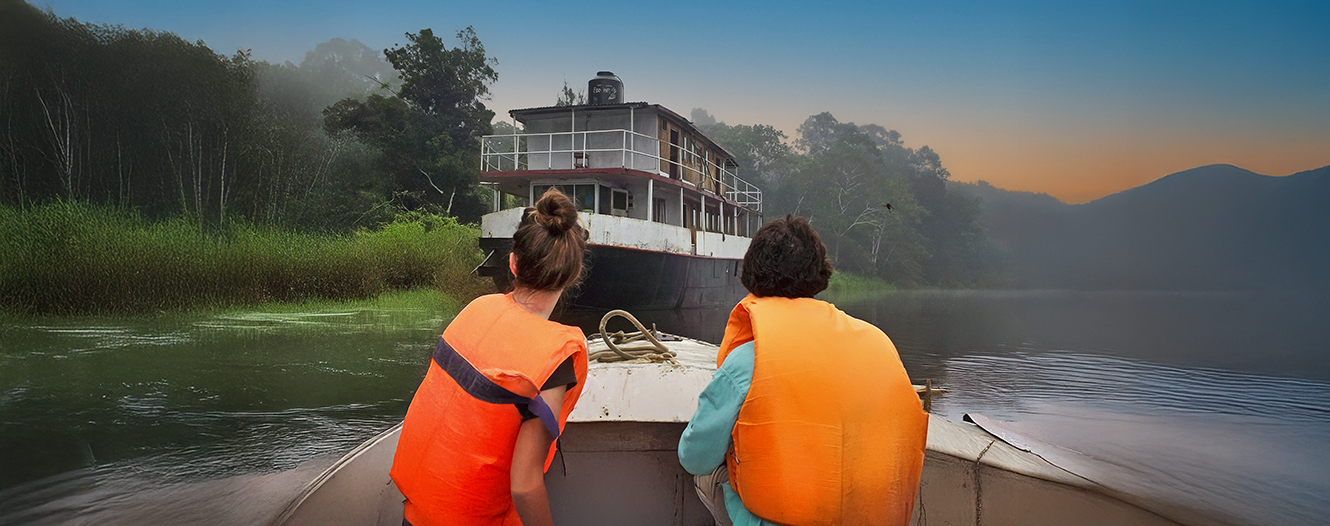
At first light on the Yarapa River, participants gather along the deck of a restored wooden riverboat, notebooks in hand, ready to record the first data of the day. Macaw pairs lift from their roosts, primate calls reverberate across the canopy and the soft exhalation of pink and gray river dolphins breaks the river’s surface. These early-morning observations—collected by participants—form the backbone of a dataset that has helped scientists track ecosystem change for nearly two decades.
A Flooded Forest in Transition
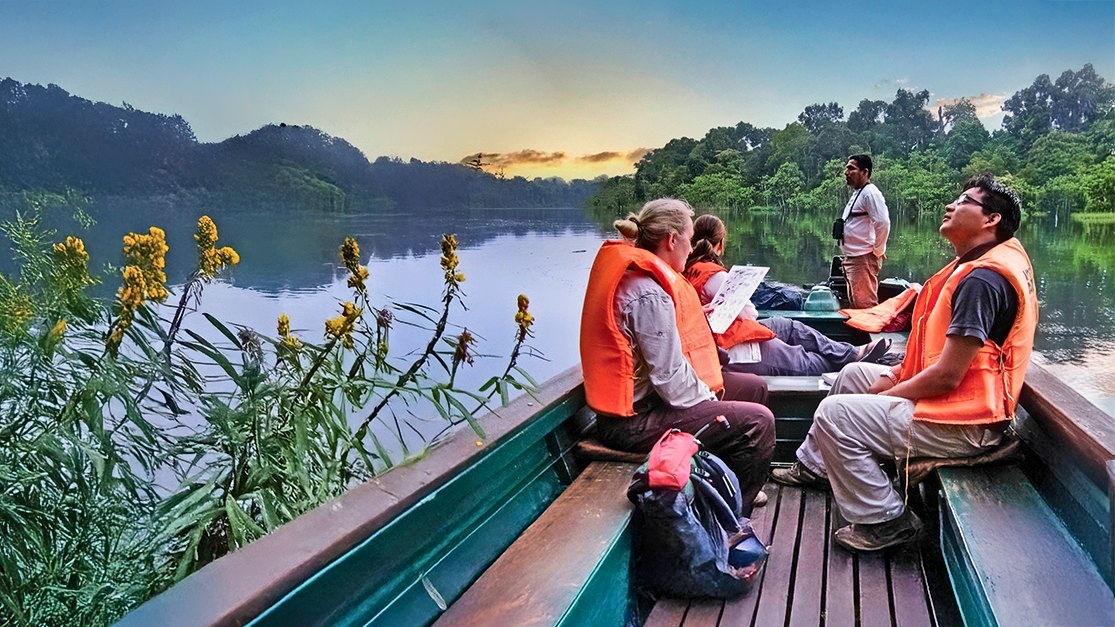
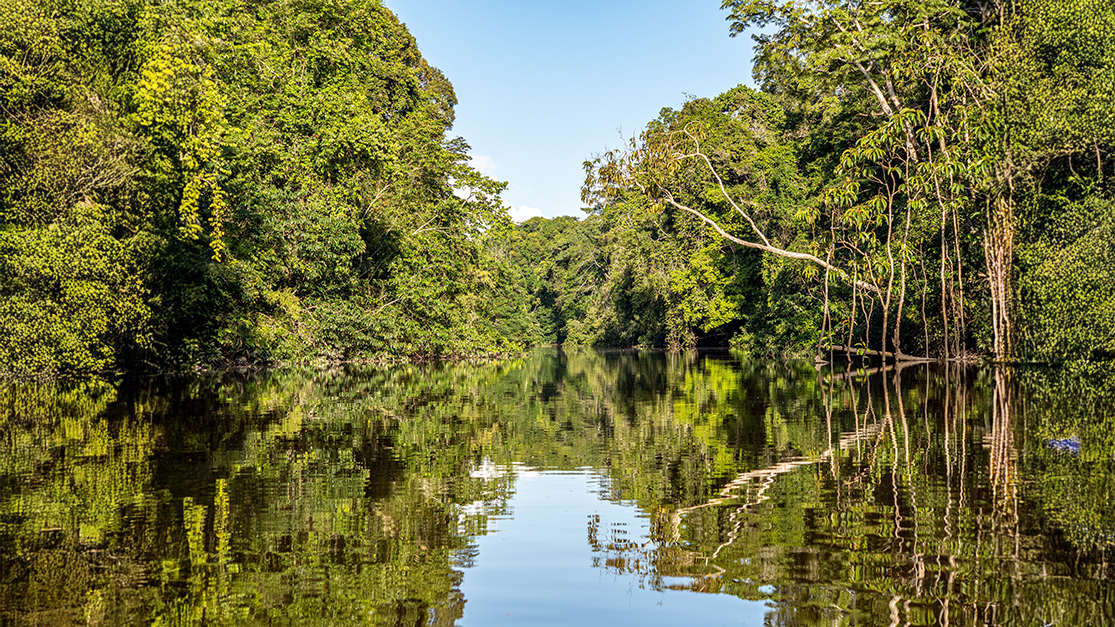
Pacaya-Samiria, one of Peru’s largest protected areas, is governed by an annual flood pulse that transforms forests into wetlands and back again. This cycle shapes wildlife movements, nutrient flow and the cultural rhythms of the Cocama communities who have stewarded the region for generations.
But the rhythm is shifting. Severe droughts now precede record-breaking floods, and species that once followed predictable patterns are responding in new and sometimes abrupt ways. In one extreme flood year, terrestrial mammal populations declined by nearly 90%—a stark indicator of hydrological instability.
Understanding these rapid changes requires more than a single research team. It requires consistent, hands-on monitoring year after year—much of it carried out by participants.
What Participants Document Day to Day
Each day’s work provides essential data points:
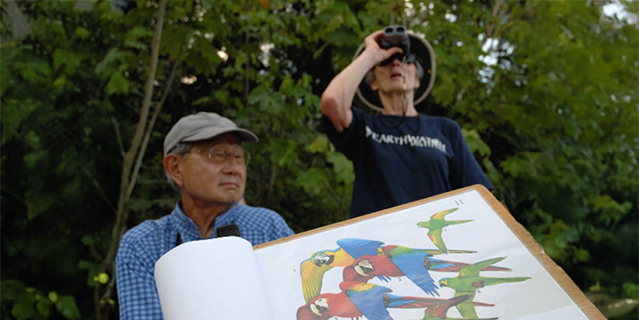
—Bird surveys at dawn track macaws, herons and other indicator species whose movements can signal ecological shifts.
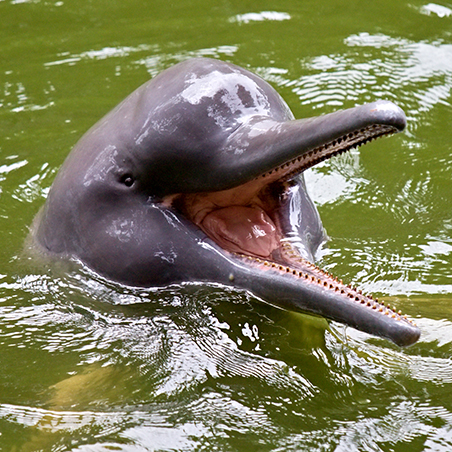
—River transects led by researchers and supported by participant observers record the distribution and behavior of pink and gray river dolphins (Inia geoffrensis and Sotalia fluviatilis).
—Night spotlighting, often a favorite activity, documents caimans and other nocturnal species along river channels.
—Forest trail monitoring records game species and amphibians sensitive to changing flood levels.
These repeated measures feed into one of the longest-running wildlife datasets in the floodplain forest—initiated in 2006 and carried forward each season through the work of scientists and Earthwatch participants.
In recent seasons, participant-collected data helped document previously unrecorded interactions between pink and gray river dolphins, demonstrating how hands-on field contributions can reveal new patterns even in well-studied species.
Community Partnership at the Center
Participants also play a role in Earthwatch’s collaboration with Cocama community partners. Their involvement supports local monitoring capacity, and the data they help collect is woven directly into community and regional conservation planning.
Cocama knowledge—paired with long-term datasets strengthened by participant contributions—demonstrates Earthwatch’s commitment to integrating Indigenous knowledge with scientific research. Together, this information helps inform decisions at a critical time, especially as the proposed Hydrovía Amazónica dredging project threatens to alter river channels and aquatic habitats on a large scale.
Why Participant Action Matters Now
What happens in Pacaya-Samiria is part of a much larger story. Hydrological instability—longer droughts, stronger floods and shifting wildlife ranges—reverberates across interconnected food webs and the communities that depend on them.
For many participants, contributing to that understanding is transformative. As one participant shared, “Waking up to dolphins outside my door still gives me chills.” Moments like these deepen the connection between personal experience and scientific purpose.
That combination—curiosity paired with contribution—is what makes these field experiences so impactful.
Looking Ahead
The Amazon is entering a period of accelerated ecological change. Long-term datasets, strengthened by participant observations, are critical for predicting future shifts and guiding conservation decisions. Support for extended, multi-decade research has declined in recent years, underscoring the importance of sustained efforts like this one.
Every measurement gathered—whether a macaw pair in flight, a dolphin surfacing at dusk or a caiman’s eyes reflecting under a spotlight—adds another layer to our understanding of a forest in transition.
As Earthwatch teams continue documenting these changes, one truth stands out: the future of conservation depends on people willing to step into the field, collect data and help science keep pace with a rapidly changing world.
You Can Help Protect the Amazon
By joining Surveying Wildlife in the Upper Amazon, you’ll support hands-on research that informs conservation planning for wildlife, waterways and local communities.
Explore upcoming expeditions and take part in meaningful field research.