

© Nat Hab guest Lisa Hacker
Have you ever imagined being eye to eye with one of the most majestic, curious, and charismatic creatures of the sea—the Pacific gray whale? If not, it’s time to consider an extraordinary journey to San Ignacio Lagoon in Baja California Sur, Mexico, where these gentle giants gather each winter in the sheltered lagoons of the Pacific coast.
Once hunted to the brink of extinction, gray whales have made a remarkable recovery. Their comeback story is one of the greatest triumphs of marine conservation, and today, they are known for their intelligence, resilience and surprising friendliness toward humans.
The Longest Mammal Migration on Earth
Each year, between 11,700 and 14,450 Eastern North Pacific gray whales migrate between their feeding grounds in the cold waters of Alaska’s Bering and Chukchi seas and their traditional breeding and birthing lagoons in Baja—a round trip of up to 12,000 miles. This epic journey is the longest migration of any mammal on Earth.
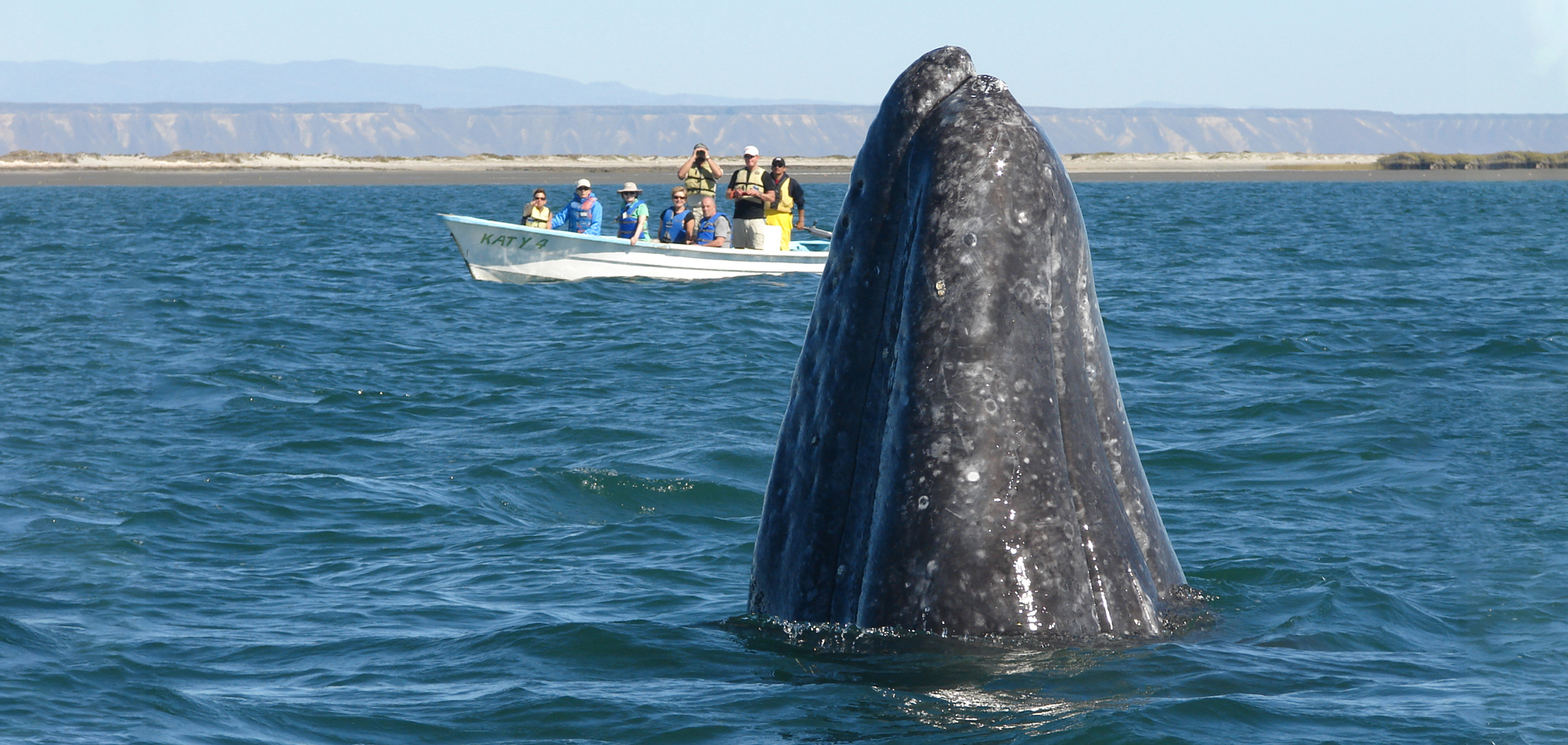
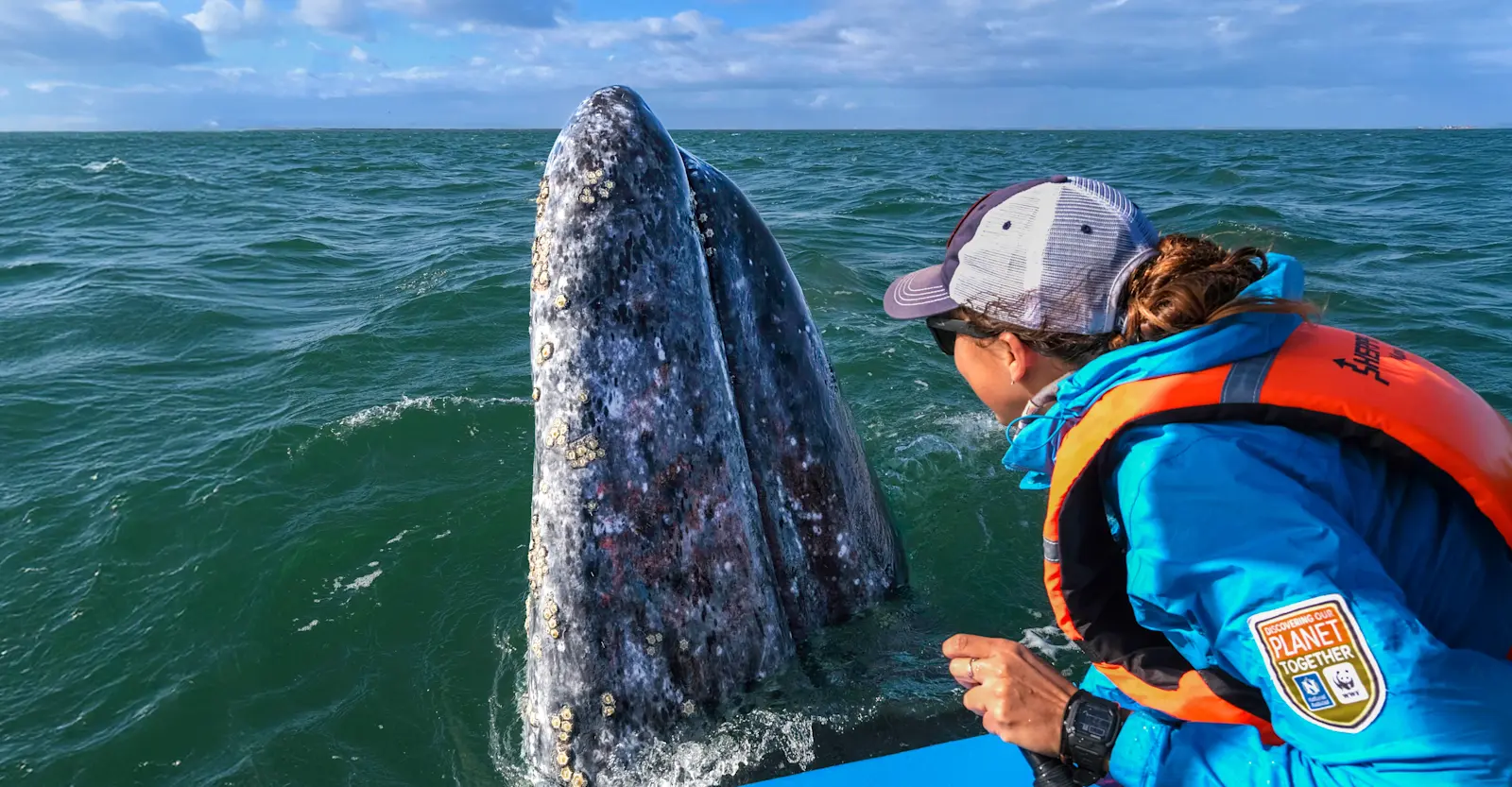
From late December to April, hundreds of whales return to San Ignacio Lagoon, one of the few places in the world where gray whales regularly approach small boats on their own terms. Mothers with calves often swim directly up to small boats—known locally as pangas—lingering long enough for curious travelers to be eye-level with their barnacle-encrusted heads.
Intimate Encounters in San Ignacio Lagoon
Unlike the distant glimpses typical of many whale-watching excursions elsewhere in the world, Nat Hab’s whale encounters are up close and unforgettable. With permits strictly regulating boat numbers and time on the water, each of our six small-group panga excursions offers rare, respectful interactions with these sociable leviathans.
A spray of mist from a nearby blowhole catches the sunlight. A fluke rises and disappears beneath the surface. These are moments that leave an indelible mark on your memory.
Understanding Gray Whale Behavior
Gray whales are highly communicative. They emit a range of low-frequency sounds—moans, whines and rumbles—that may carry for miles underwater. They also use physical cues like breaching, spyhopping and lobtailing to interact with their environment and each other. Watching a whale launch itself skyward or slap the water with its massive tail is not only thrilling but may also signal complex social behavior.
Their social structure, especially in Baja’s lagoons, includes mother-calf bonding, mating displays and even apparent playfulness toward humans. Scientists believe these interactions—especially the whales’ approach behavior—may be a combination of curiosity, social learning and perhaps even trust built over generations in these protected waters.

Kuyima Whale Camp
Stay at Kuyima Whale Camp on the Lagoon’s Edge
Set directly on the shores of San Ignacio Lagoon within El Vizcaíno Biosphere Reserve, Kuyima Whale Camp places guests in one of Baja’s most intimate gray whale habitats, where desert dunes meet tidal flats and whale blows echo across the water.
Natural Habitat Adventures has partnered with the local community to support a full refurbishment of the camp while preserving its low-impact spirit and deep local roots. Community-owned and operated through the nearby ejido, the camp has long played an important role in conservation and sustainable tourism in the region.
Guests stay in newly rebuilt hard-sided cabanas positioned directly along the lagoon shoreline, each with large windows, sliding glass doors and private porches overlooking the water. Inside, simple natural materials, insulated walls and comfortable beds create a cozy retreat after time on the lagoon. Private bathrooms feature flushing toilets and water-conscious bucket showers designed for this arid environment.
Meals and evening presentations take place beneath the camp’s open-air palapa overlooking the lagoon. Fresh local seafood, handmade tortillas and Baja-inspired cuisine are served between whale-watching excursions, while solar power, local employment initiatives and hospitality training programs reinforce the camp’s ongoing commitment to sustainability and community partnership.
Discover Baja’s Desert Wilderness & Wildlife
Beyond whales, the Vizcaíno Reserve offers a diverse landscape filled with life. Birders can watch for brown pelicans, ospreys and migratory shorebirds. Lucky guests may also spot bottlenose dolphins leaping through the surf or catch a glimpse of a Baja coyote.
Between excursions, your Expedition Leaders—seasoned naturalists trained by WWF—offer insights into the ecology, geology and cultural history of the region. You’ll learn about the importance of mangroves, the intricacies of marine food webs, and the conservation efforts that helped bring gray whales back from the brink.

© Gustavo Ybarra, WWF
A Whale of an Adventure, Unlike Any Other
If you’ve joined whale-watching tours elsewhere—say, on crowded boats off the coast of New England or Hawaii—prepare for a very different experience. Here, you’re not peering through binoculars at a distant tail fluke. You’re looking a whale in the eye. You’re engaging in a rare interspecies connection.
And with up to six panga outings included in each departure, you have multiple chances to witness these moments—no two are ever the same.
Ready to Meet the Whales?
Join Natural Habitat Adventures and WWF for an unforgettable journey into one of the most biologically rich and spiritually moving destinations on Earth. Come face to face with Baja’s gray whales and experience one of the most profound wildlife encounters nature offers.