

Botswana encompasses a wide range of ecosystems, from the seemingly barren Makgadikgadi Pans to the Okavango Delta’s intricate network of wetlands and waterways. This part of Africa supports a wide array of wildlife. As I traveled through Botswana with a friend, I witnessed wildlife interactions that continue to fuel my passion for conservation. Camera in hand, I captured five of my favorite moments in photographs.
My top five wildlife moments included:
1. A Lilac-Breasted Roller Foraging for Scorpions
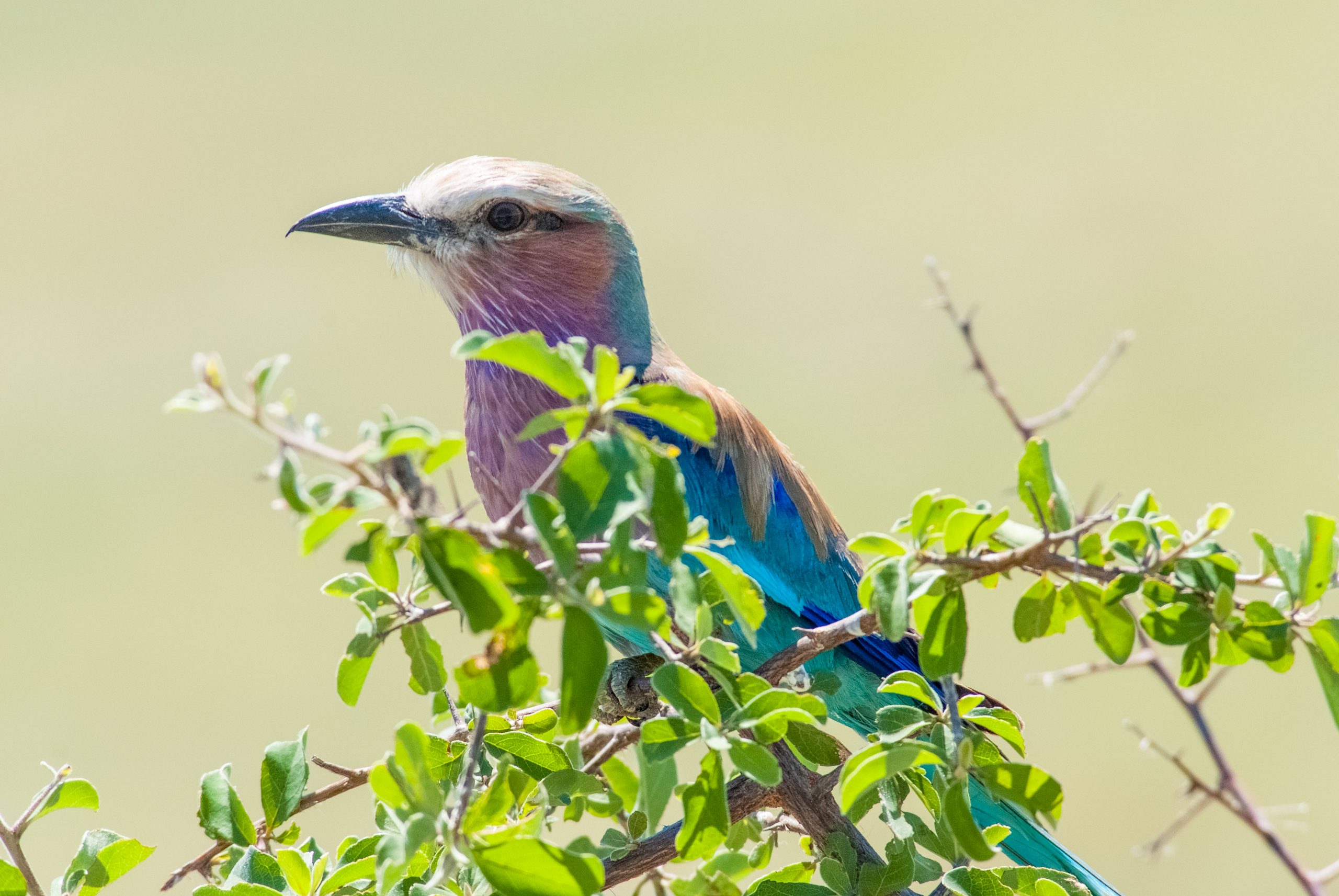
A lilac-breasted roller scans the horizon in the Central Kalahari. © Rachel Kramer
When we first arrived in the Kalahari, our eyes had to adjust to the neutral palette surrounding us. We were encircled by dry grasses and broad bands of Earth glowing white beneath the noonday sun. As the afternoon cooled, wildlife began to emerge.
A lilac-breasted roller (Coracias caudatus) provided the first splash of color. Its turquoise wings, lilac breast and russet back stood in sharp contrast to the muted desert landscape. It seemed fitting that one of Botswana’s most recognizable birds should be among the first species to welcome us.
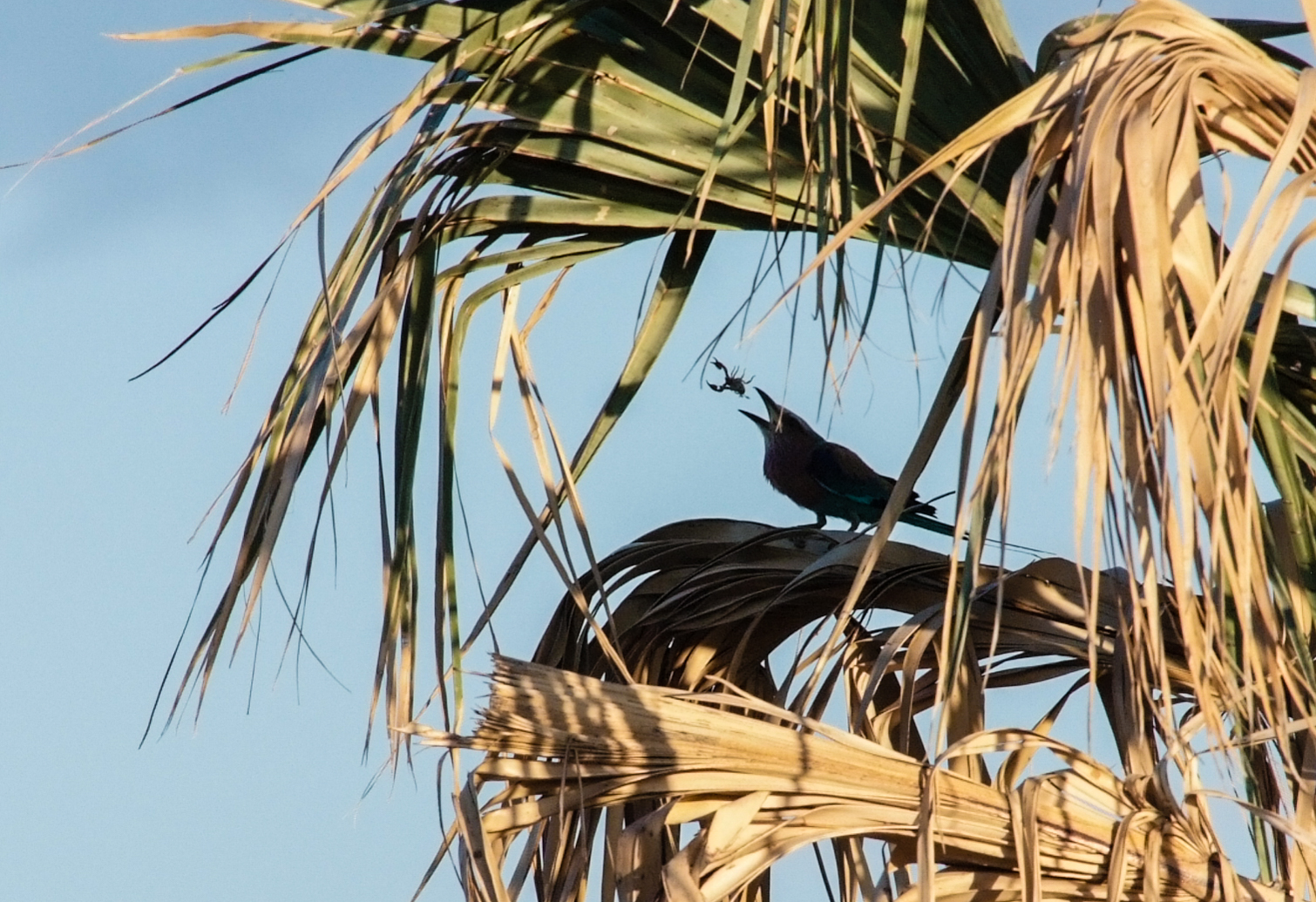
A lilac-breasted roller tosses its scorpion prey. © Rachel Kramer
Later that afternoon, we watched another roller forage for food. After catching a desert scorpion, the bird balanced on a palm branch and tossed its prey—pincers, stinger and all—into the air several times.
Rollers commonly beat or toss larger prey before swallowing it, a behavior that can help subdue the animal and remove or disable dangerous parts. We captured the scorpion and roller in silhouette just before the prey went down the hatch.
2. Meerkat Family Interactions
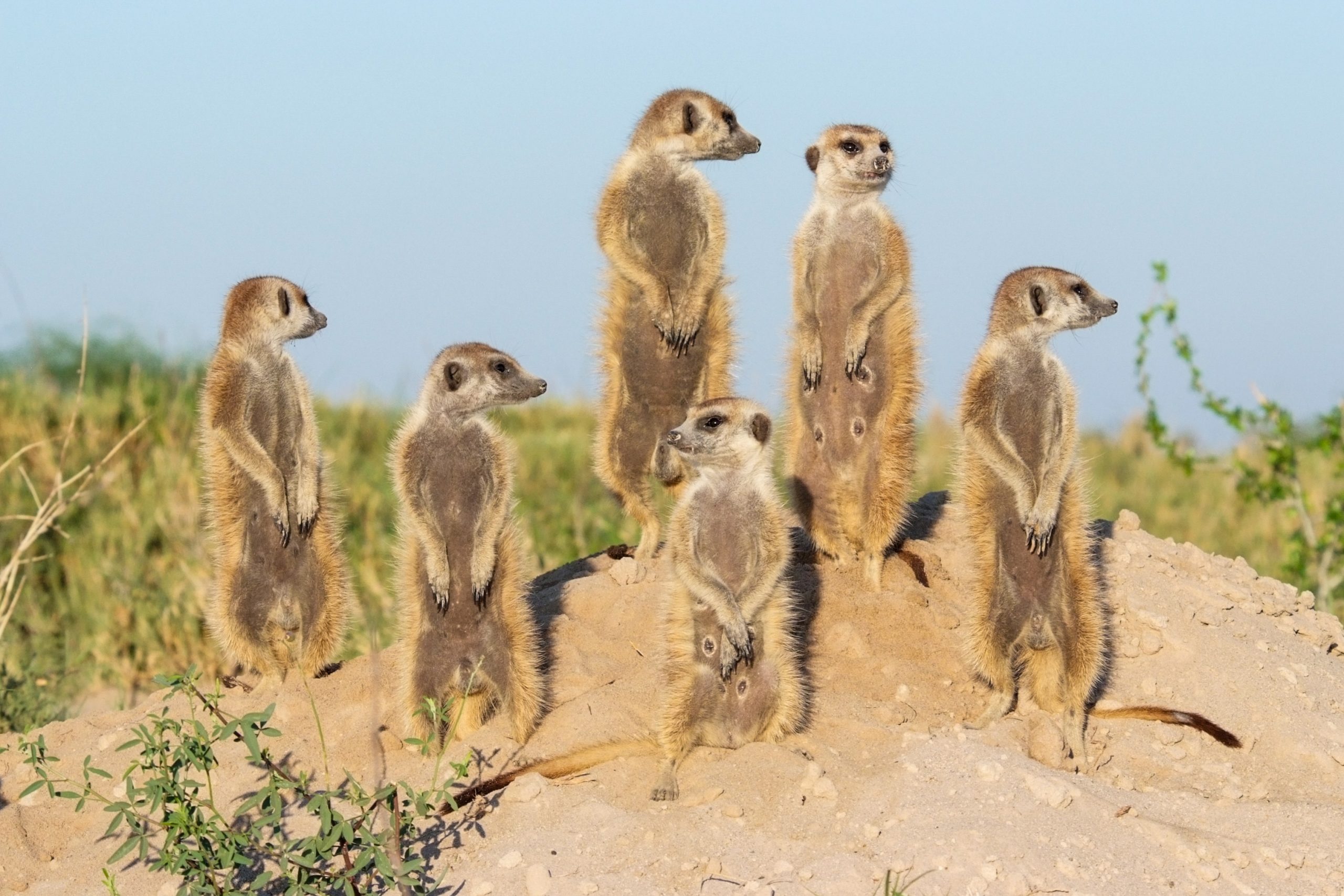
Meerkats in Makgadikgadi Pans National Park. © Rachel Kramer
In the Kalahari’s Makgadikgadi Pans National Park, we spent precious time observing meerkat (Suricata suricatta) family behavior. These small carnivores, members of the mongoose family, dig extensive underground burrow systems with multiple entrances.
Meerkats are highly social cooperative breeders that live in groups typically dominated by one breeding pair. Other members help raise the young, maintain burrows, forage and watch for danger. They also devote considerable time to grooming and other interactions that reinforce social bonds.
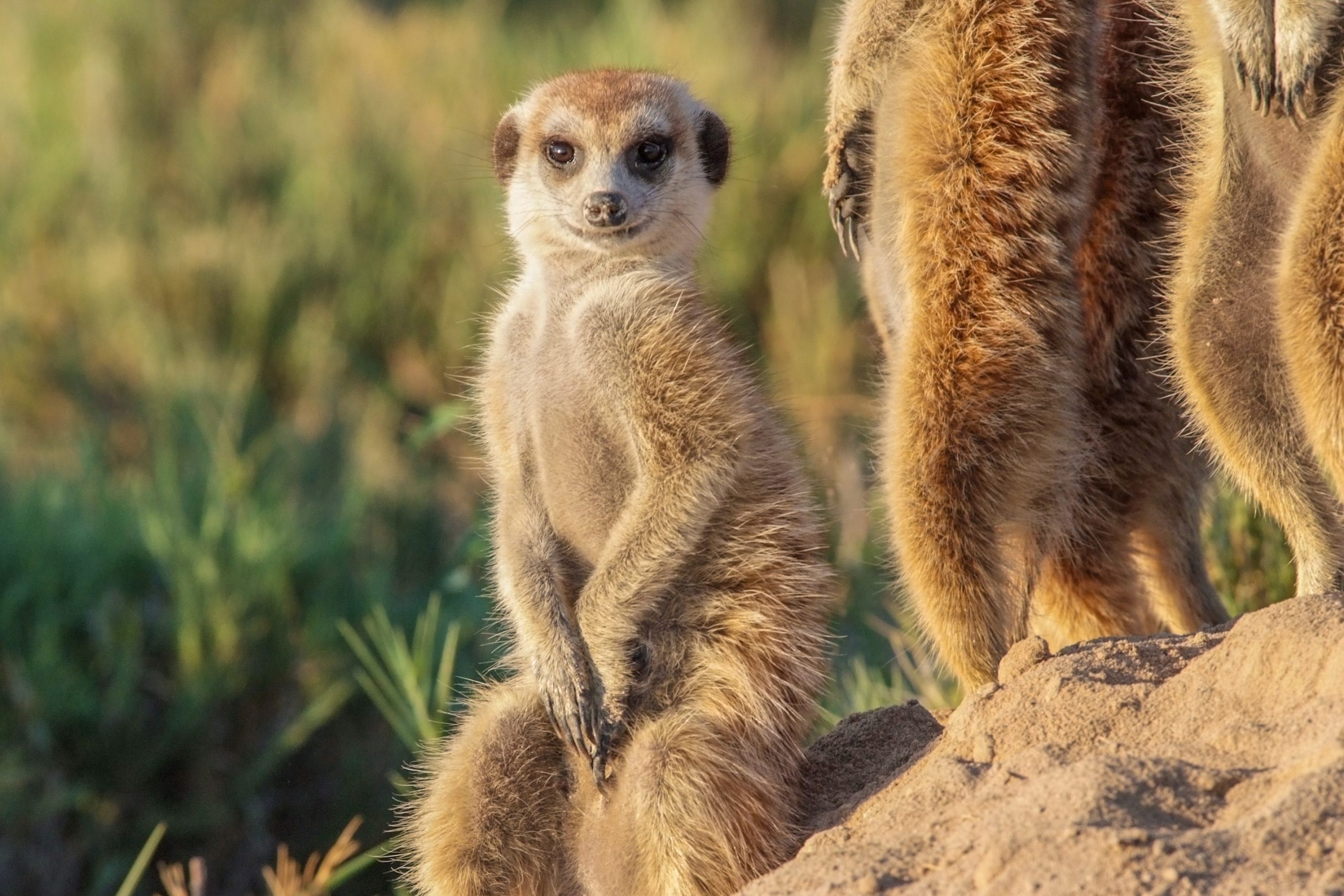
Meerkats use their tails for balance as they stand upright and scan the horizon for predators and other threats. After cold desert nights, they often sit on their hind legs with their bellies exposed to the early morning sun, warming themselves before beginning the day’s activity.
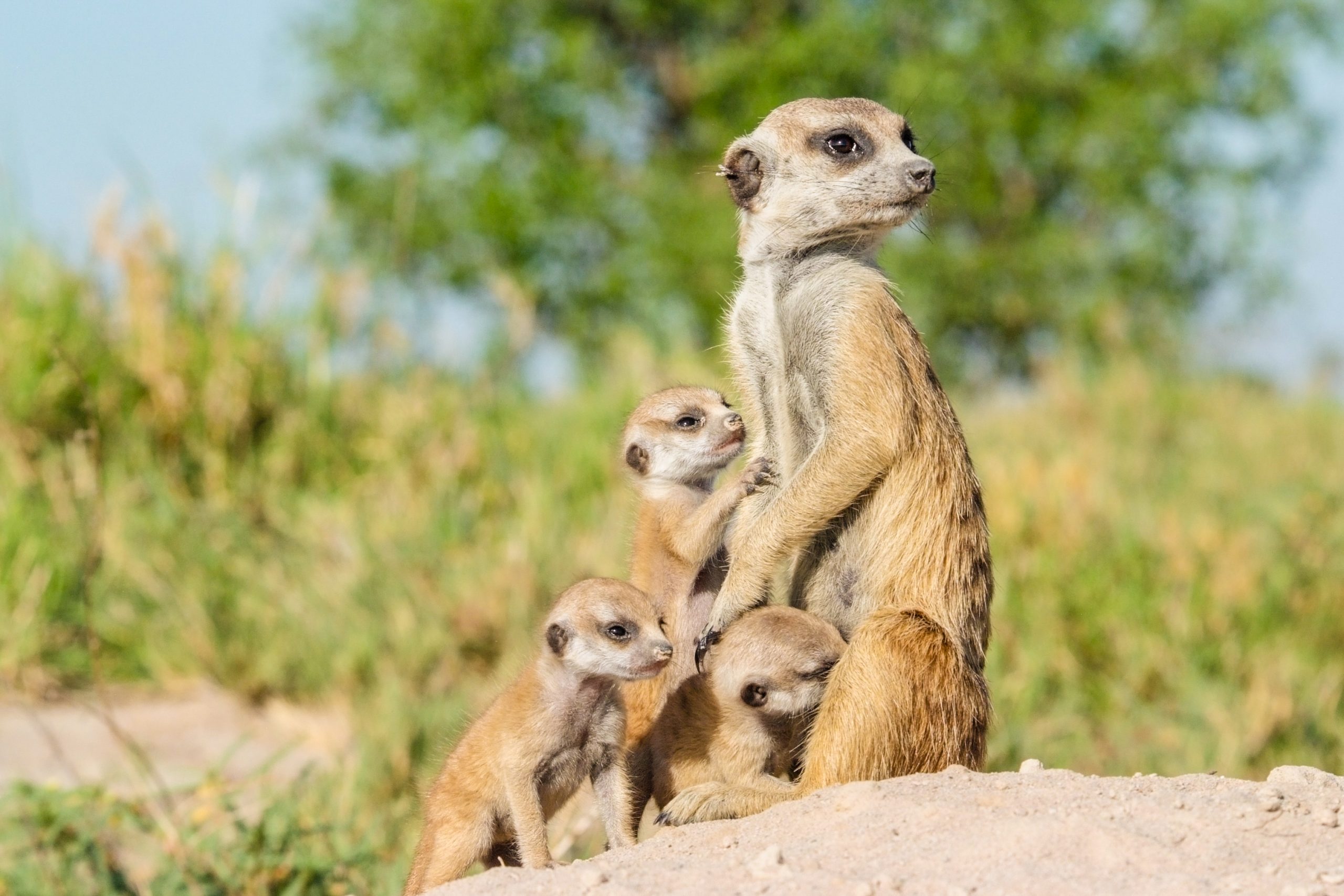
A meerkat watches over pups at the den while the rest of the group forages. © Rachel Kramer
Meerkat predators include martial eagles, jackals and other carnivores. When adult members of the group leave to forage, one or more helpers may remain at the burrow to care for the pups.
The babysitter watches for danger and ushers the pups underground if a threat approaches. The pups we observed were quite a handful for the attentive adult left to guard the den.
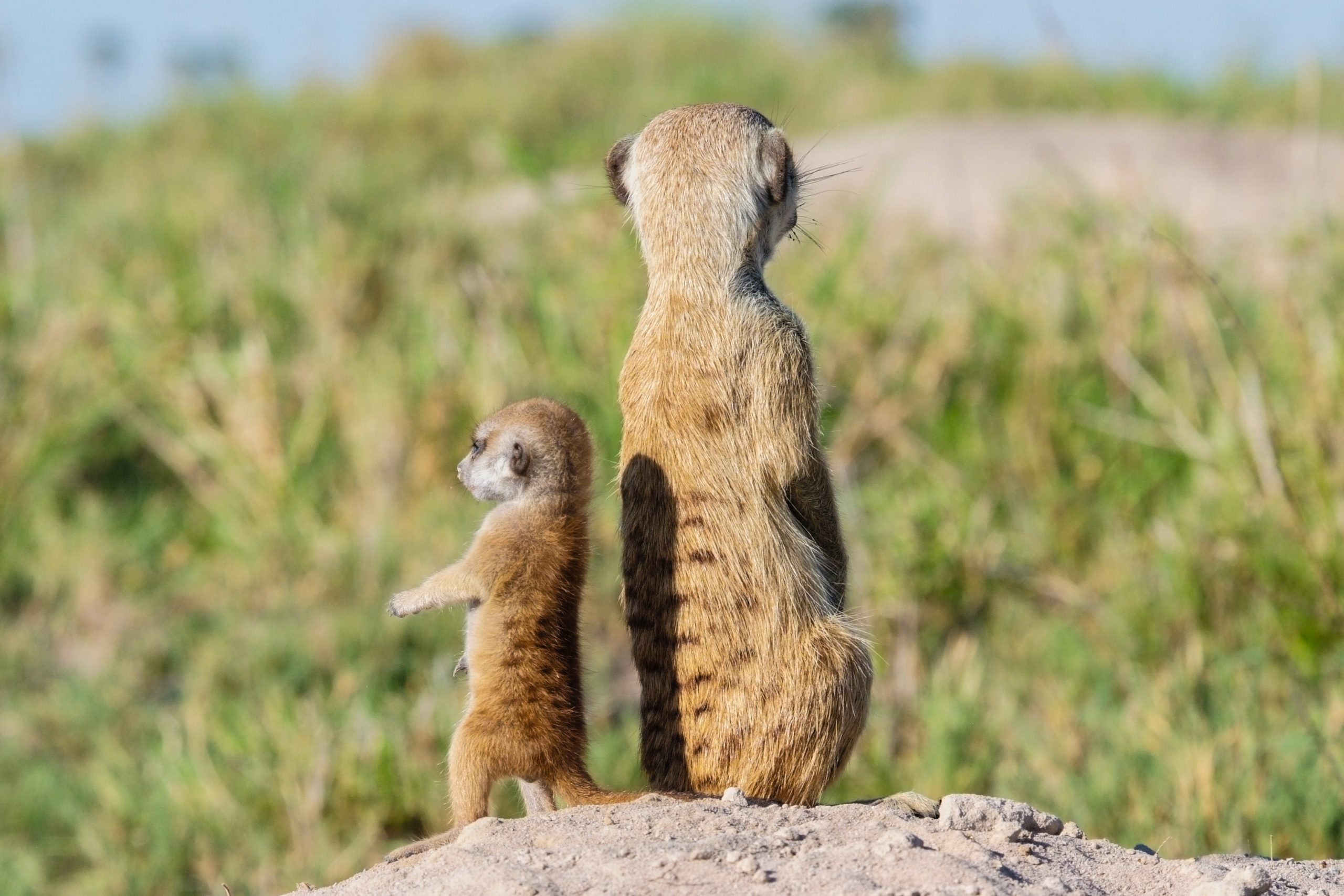
A young meerkat pup learns to stand upright, using its tail for balance. © Rachel Kramer
Meerkat pups learn partly through observation and often imitate the behavior of older members of the group. We watched as one young pup attempted to stand upright, wobbling on its hind legs and using its tail to stay balanced.
At the base of each meerkat’s front paw is a long, nonretractable claw. Meerkats use these claws to excavate burrows and dig for prey. Their diets consist mainly of insects and other invertebrates, though they also eat lizards, eggs and small animals.
We spent an early morning following a group as it foraged for scorpions among dry grass hummocks. Meerkats have some resistance to scorpion venom and learn to disable dangerous prey before eating it. Rustling, squishing and crunching sounds rose from the grass as they dug scorpions from the sand, removed their stingers and devoured them.
3. Bat-eared Fox Parenting
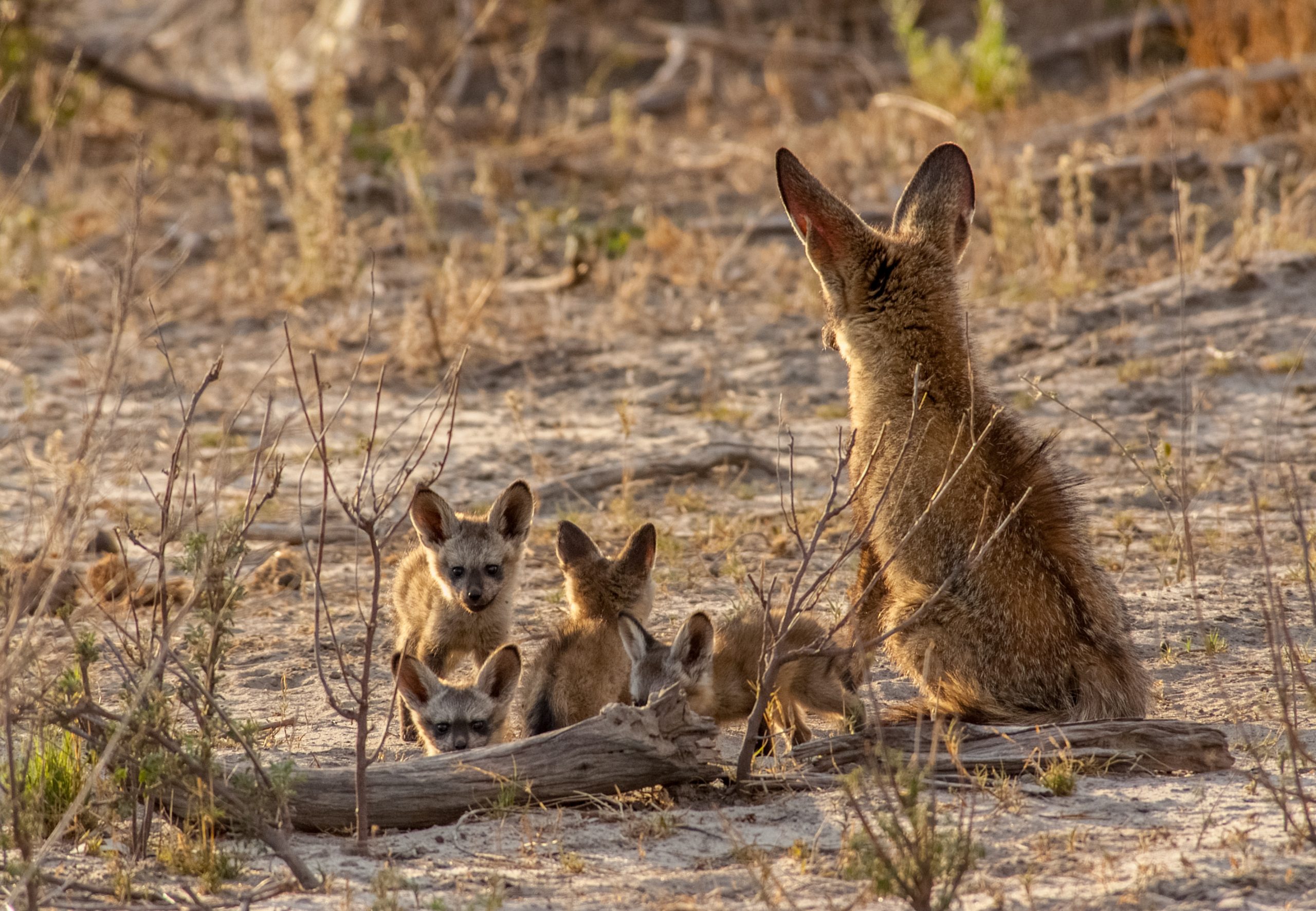
A parent bat-eared fox keeps watch as its young kits explore the world around them. © Rachel Kramer
Much to our delight, a family of bat-eared foxes (Otocyon megalotis) emerged from its den near sunset. As four young kits explored the area around them, one parent remained alert nearby.
Bat-eared foxes often form monogamous pairs, and both parents may help raise the young. Males can play a particularly active role, guarding, grooming and caring for the kits while females forage.
The foxes use their enormous ears to detect the movements of insects underground. Their diet consists largely of termites and other invertebrates, which also provide much of the moisture they need to survive in arid environments.
We watched the kits investigate their surroundings while the adult scanned for possible danger. The youngsters moved with a mix of curiosity and caution, never straying far from the den or their watchful parent.
4. A Hyena Steals a Leopard’s Kill
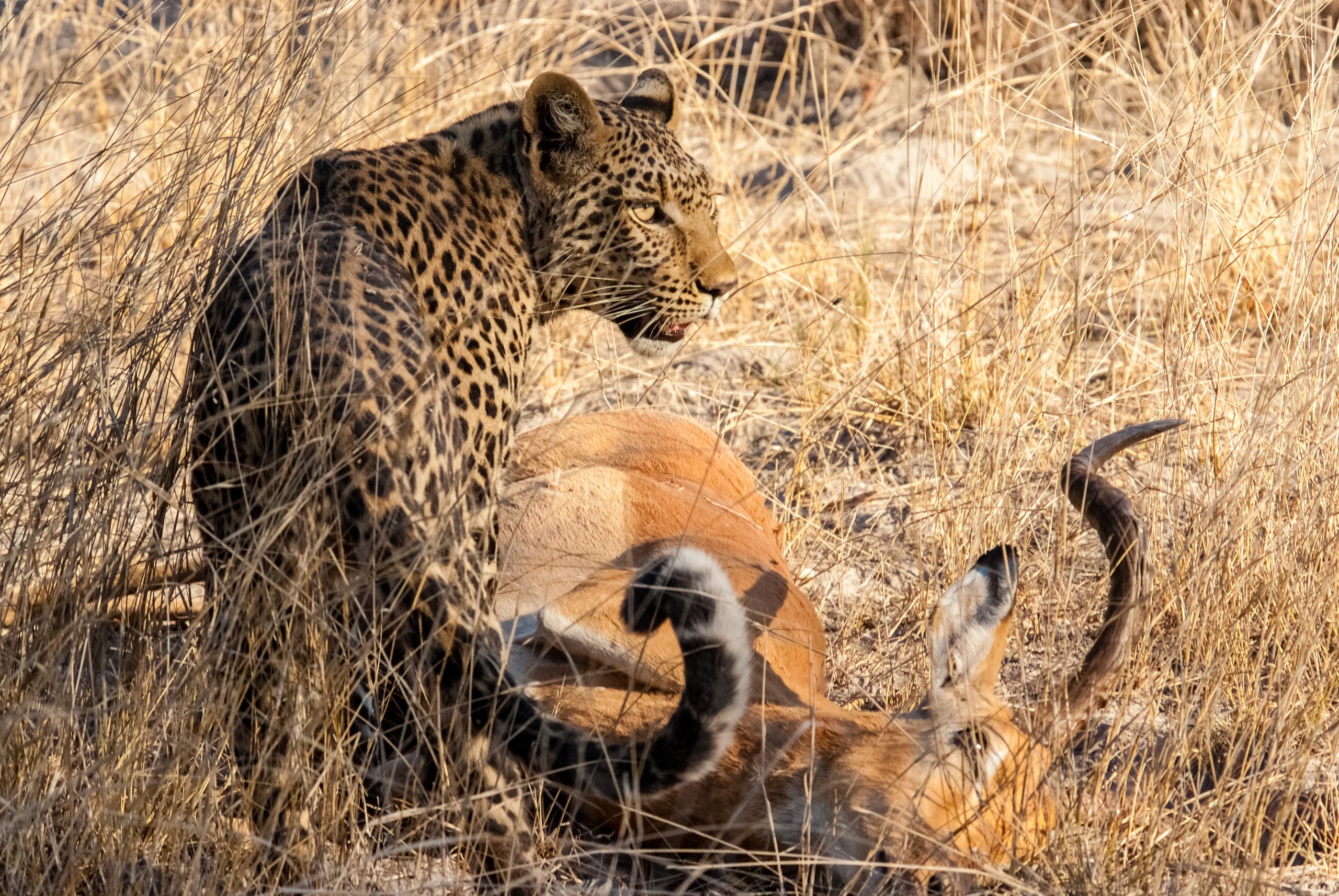
A young female leopard guards her kill in the Okavango delta. © Rachel Kramer
On our first evening in the Delta, we encountered a young female leopard (Panthera pardus) with a fresh impala kill. Leopards are highly adaptable hunters whose prey varies according to habitat and availability. This female had reportedly been observed with kills ranging from adult impalas to young vervet monkeys.
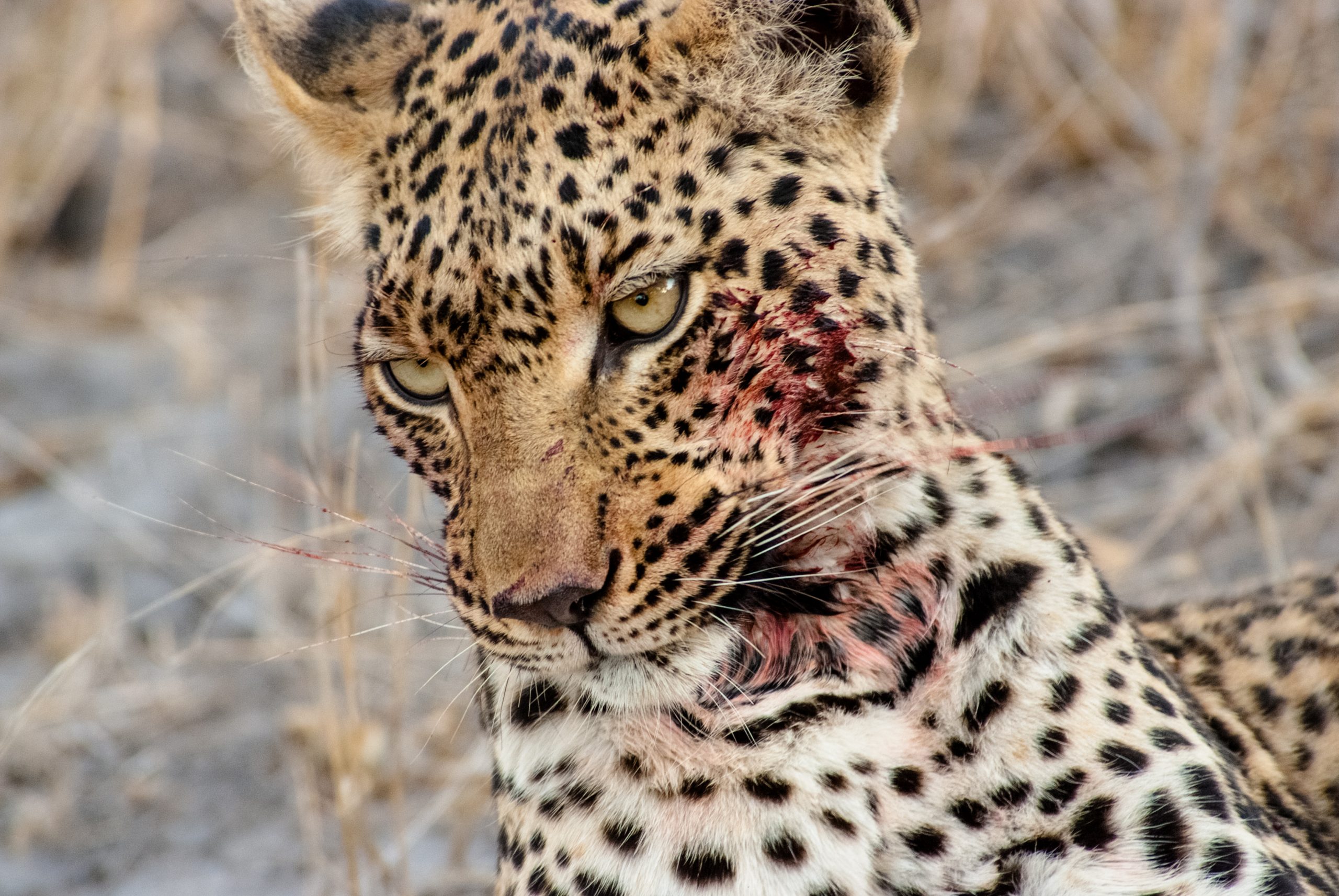
After removing a morsel from her kill, a leopard cleans her face. © Rachel Kramer
Leopards often drag prey into trees, placing it beyond the reach of many scavengers and competing predators. Unable to move this impala to a high branch, the leopard fed on the ground, pulling pieces from the carcass while remaining alert to her surroundings.
As the sun descended, she opened the impala’s stomach cavity. Within minutes, we heard the pounding of feet behind us. The leopard retreated into a nearby tree as a spotted hyena (Crocuta crocuta), apparently drawn by the scent, approached and took possession of the kill.
The snapping of jaws and cracking of bone were startlingly loud. From the tree, the leopard watched the much heavier hyena consume the carcass she had worked to secure.
We returned to camp as darkness fell, struck by how quickly the balance had shifted. One moment, we had been observing a successful hunter. The next, another powerful predator had claimed the meal.
5. Black-Backed Jackals Defend Their Den
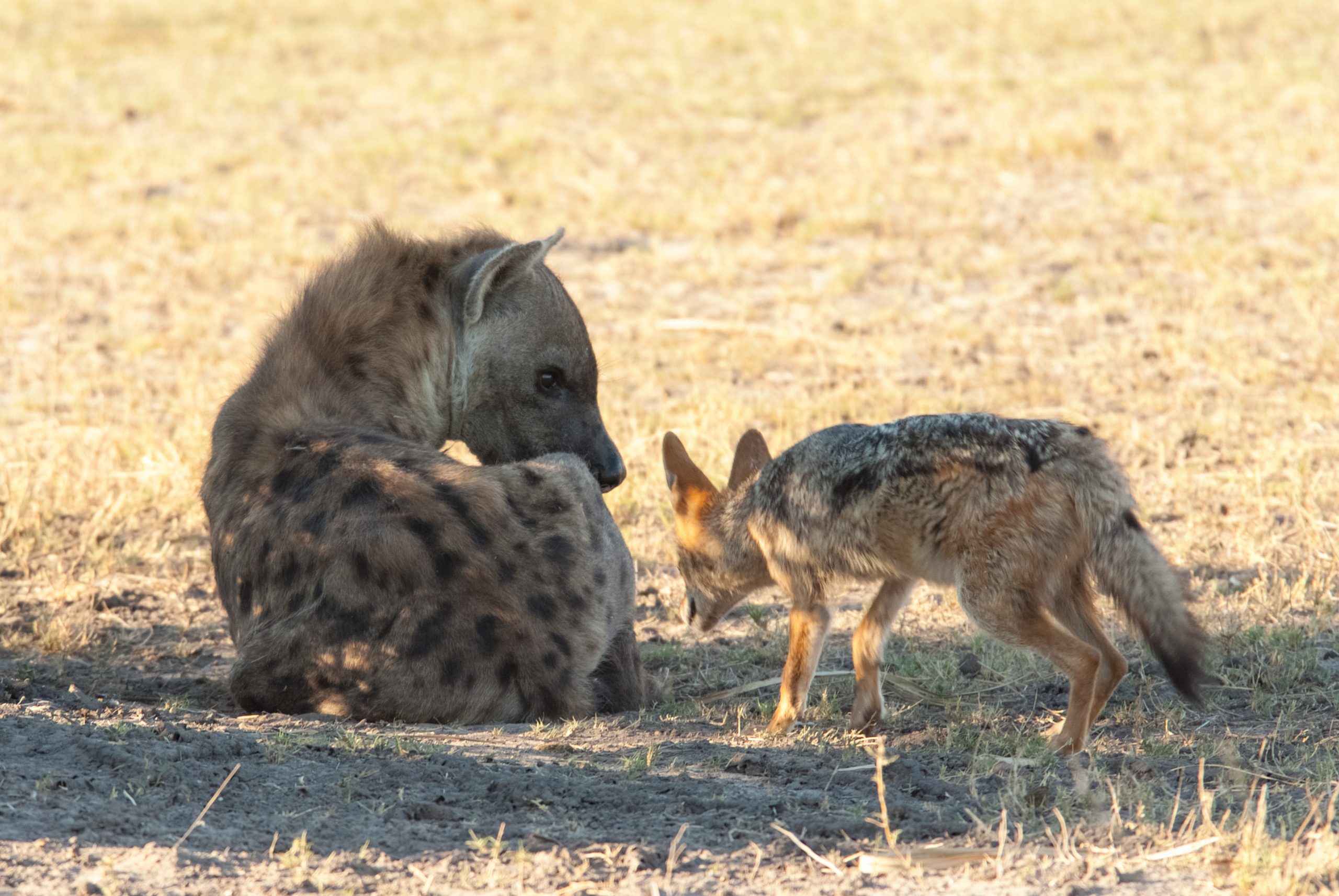
A spotted hyena and a black-backed jackal face off in the Okavango Delta. © Rachel Kramer
As we watched a pair of black-backed jackals (Lupulella mesomelas) near their shaded den, a spotted hyena approached and settled into a patch of shade nearby. The jackals appeared uneasy with such a large predator close to their young.
One of the adults moved toward the hyena, repeatedly approaching, barking and retreating. Despite the considerable size difference, the jackal continued harassing the hyena until it eventually stood and moved away.
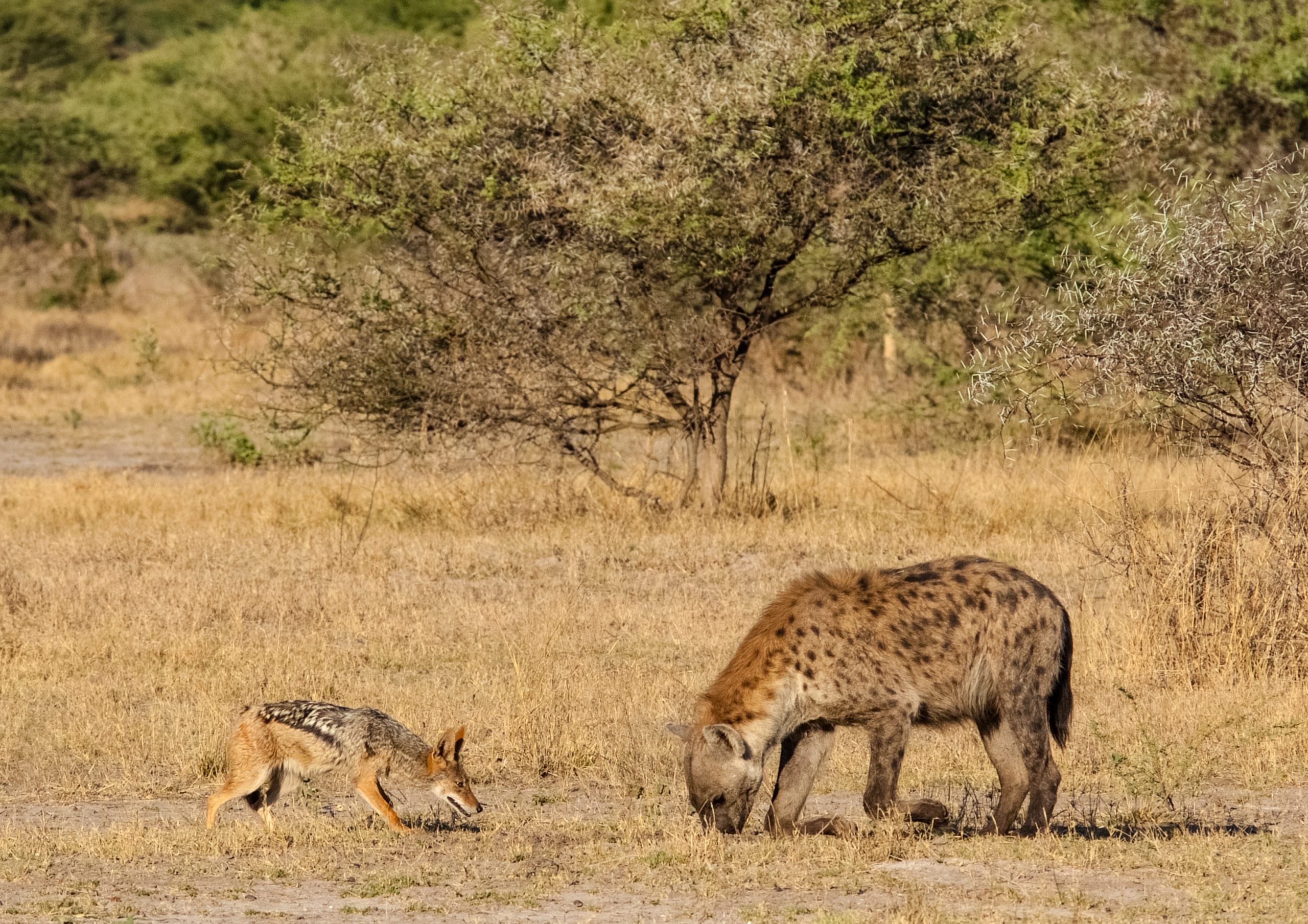
A black-backed jackal drives a spotted hyena away from its den. © Rachel Kramer
Black-backed jackals generally form monogamous pairs and defend territories together. Larger carnivores—including leopards, spotted hyenas, lions and cheetahs—may kill jackals and pose a threat to their pups.
Outmatched in size and strength, the jackal nevertheless persisted, following the hyena and driving it farther into the bush and away from the den.
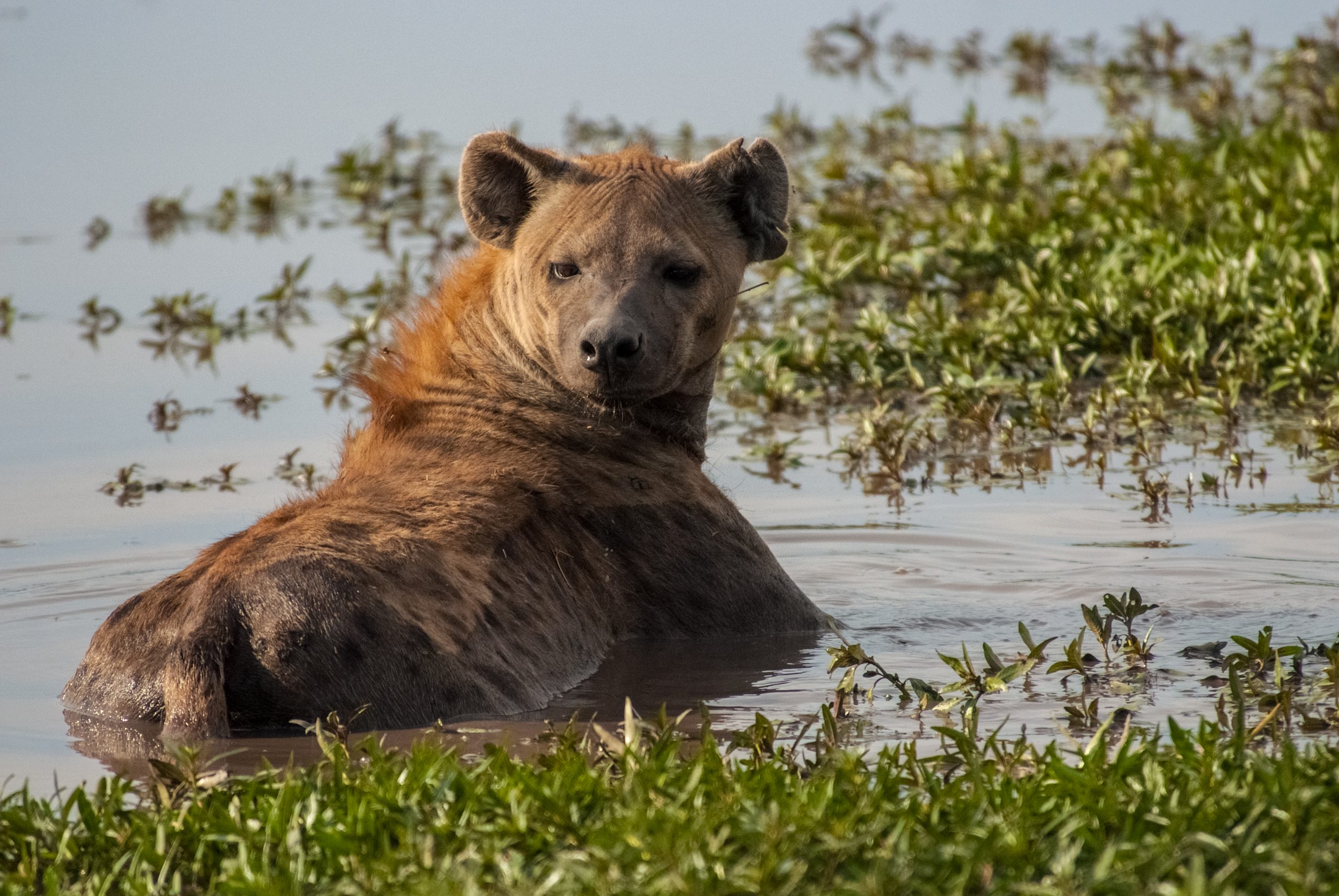
An adult spotted hyena cools off in a flooded pool in the Okavango Delta. © Rachel Kramer
The following day, we witnessed a quieter side of spotted hyena behavior. When not stealing leopard kills or approaching jackal dens, the hyenas we encountered appeared content to rest and cool themselves in shallow pools.
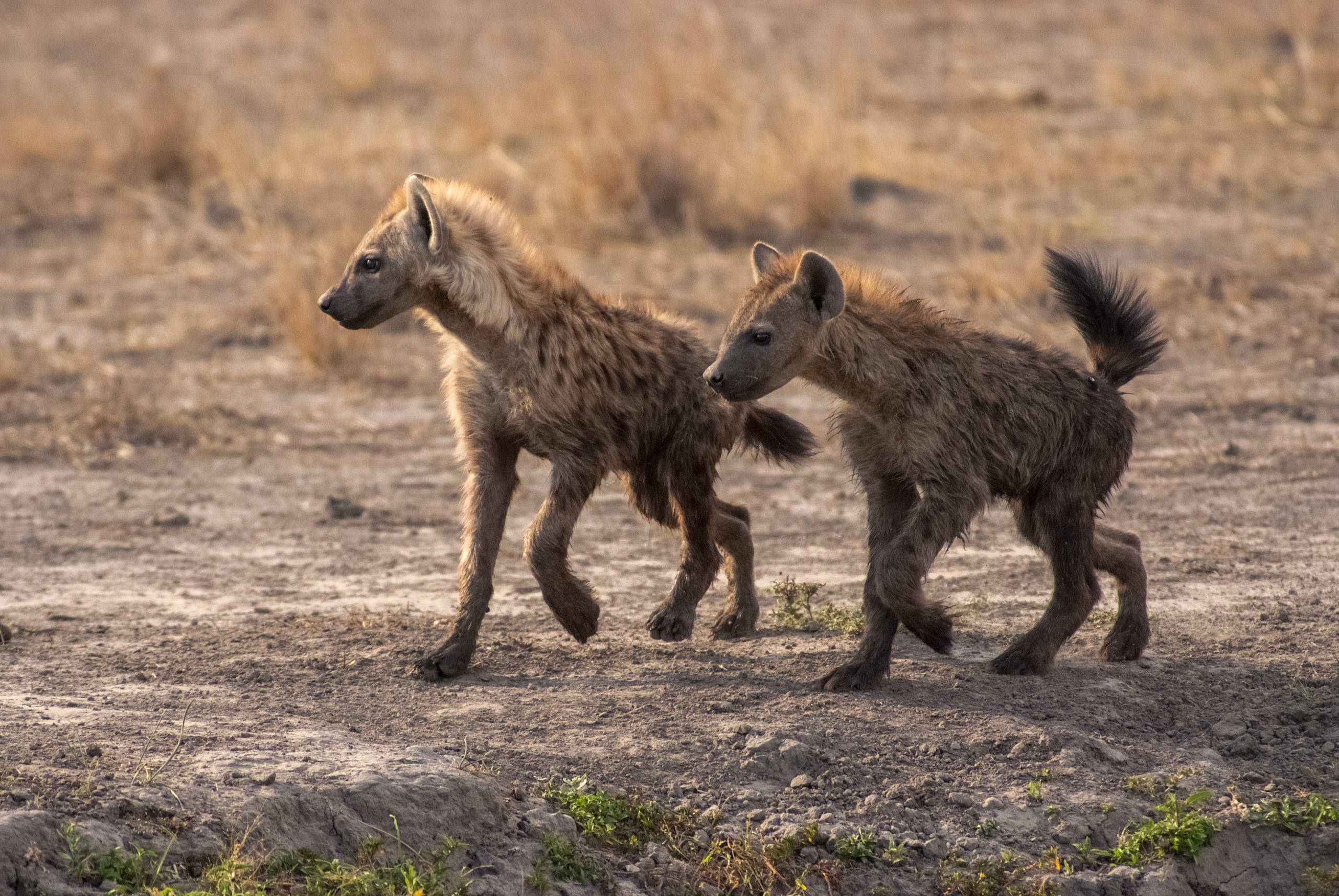
Two juvenile spotted hyenas make their way toward a mud hole in the Okavango Delta. © Rachel Kramer
Bonus Moment: Elephants Sheltering the Next Generation
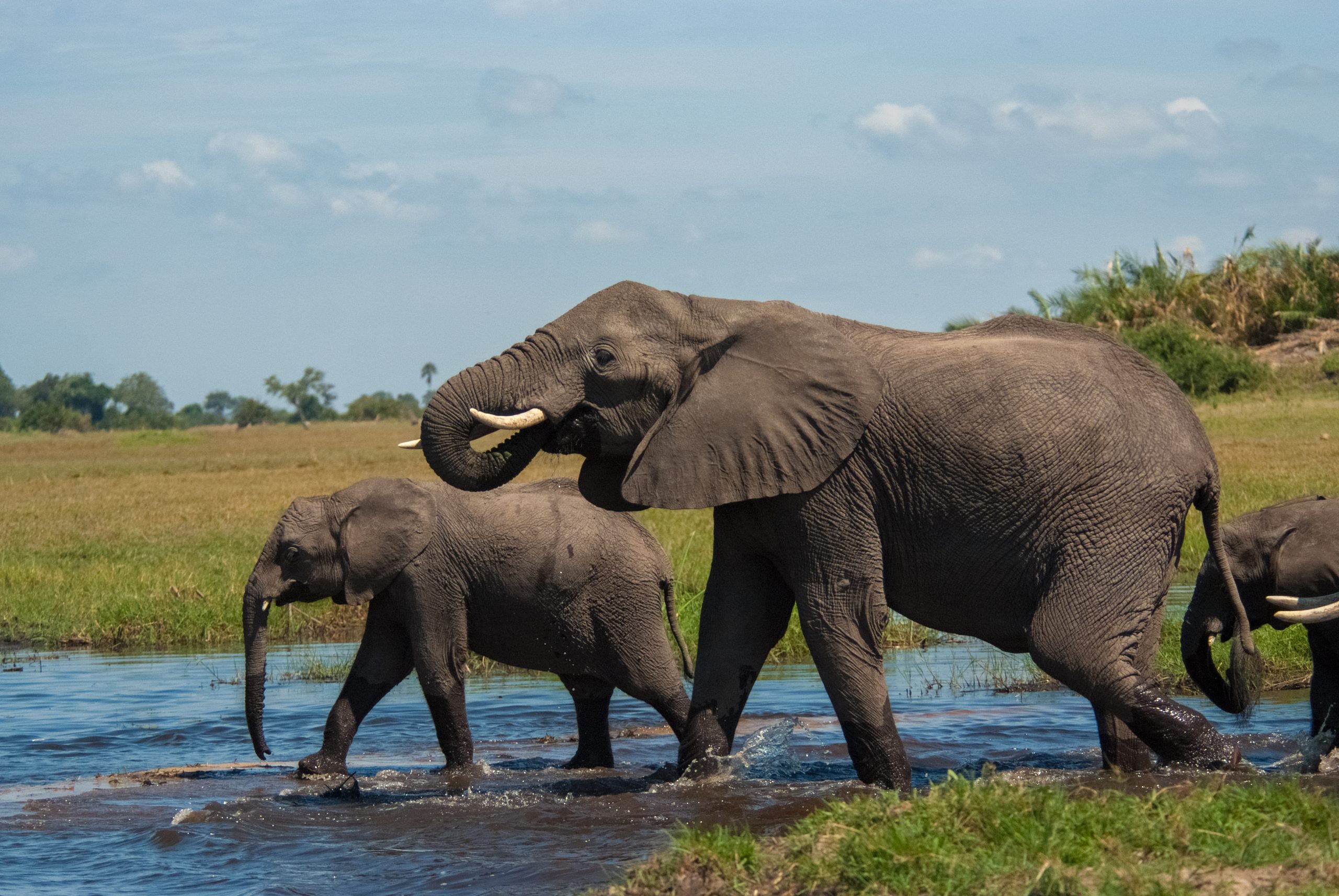
A female elephant leads a juvenile to water in the Okavango Delta. © Rachel Kramer
The Okavango Delta forms part of the home range of one of the world’s largest populations of African savanna elephants (Loxodonta africana). Seasonal floodwaters and permanent channels provide drinking water and support the vegetation elephants depend on.
An adult elephant may consume hundreds of pounds of grasses, bark, roots, leaves and fruit in a single day. During the dry season, the Delta’s remaining water and vegetation can draw large concentrations of elephants into the region.
Elephants have a gestation period of approximately 22 months—the longest known pregnancy among living mammals. Females typically give birth to a single calf and may wait several years before reproducing again.
While in the Delta, we observed how closely female elephants attended to younger members of their family groups. Adults guided juveniles toward drinking areas, positioned themselves between calves and potential danger and helped younger elephants reach vegetation.
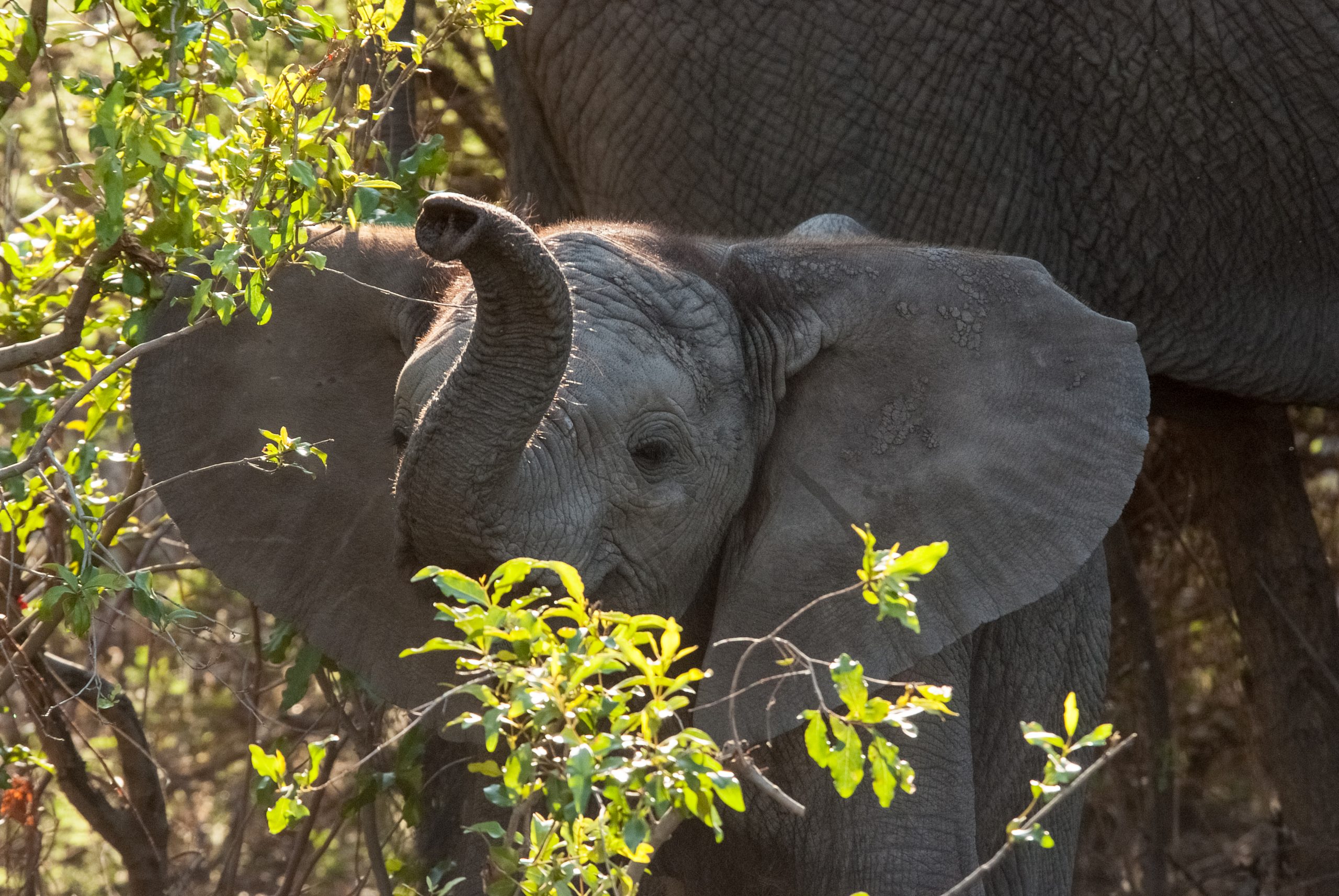
A baby elephant enjoys the early morning sun in the Okavango Delta. © Rachel Kramer
Elephant family groups are generally composed of related females and their young, led by an experienced matriarch. Calves receive attention not only from their mothers but also from other females, which may help guard, guide and comfort them.
These close family relationships were among the most affecting behaviors we observed. Yet even cohesive elephant groups cannot protect themselves from every threat.
But females in an elephant family group cannot protect themselves or their calves from every threat. Poaching and illegal ivory trade remain concerns, while roads, fences and expanding development can restrict elephants’ movement across the region. WWF, TRAFFIC, governments and other conservation partners are working to reduce wildlife crime, protect connected habitat and support communities that live alongside elephants.
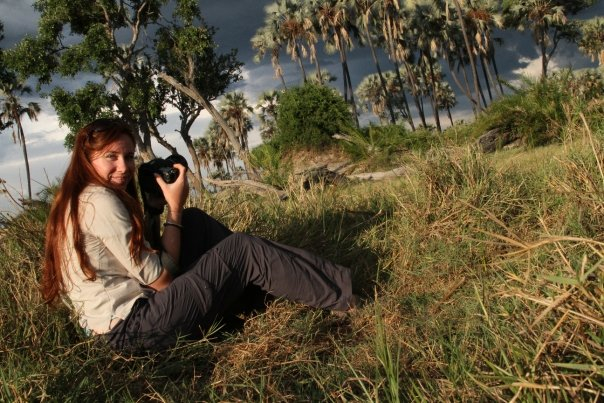
Waiting for subjects in the Okavango Delta. © Kristan Norvig
Bearing witness to these and other remarkable animal interactions in Botswana’s Kalahari and Okavango Delta reinforced my commitment to a career in conservation. Today, I’m proud to work to advance policies and programs that build capacity to combat poaching and help to ensure the sustainability of trade.
By Rachel Kramer