

Our Cessna was 5 minutes north of Maun, Botswana, when the landscape changed dramatically. Gone was the dry savanna scrub that had defined the Kalahari and so much of Botswana. In its place were the unmistakable signs of water. We were in Botswana during the low-water season, but some rivers and water holes persist throughout the year. And in areas where the water had receded, we could see the branching hippo highways and other signs of its seasonal presence.

View of the Okavango Delta, Botswana. © WWF-US / Jeff Muller
Where Water Draws Wildlife
It wasn’t long after this change in landscape that we saw our first herds of elephants. Although we had encountered occasional signs of lone elephants during our time in the Kalahari—a footprint here, some droppings there—we were finally seeing the animals themselves. And not just a single herd, but many, on either side of the plane, along with African buffalo, giraffes and hippos—the types of large mammals we could identify from high in the sky.
The presence of so many animals was a reminder that water is life. And nowhere was this more apparent than here in Botswana. After three memorable days in the Kalahari, where we observed animals adapted to a water-scarce, near-desert environment—lions, gemsbok, cheetahs and springbok, to name a few—we were now entering the Okavango Delta, where the seasonal arrival of water supports an abundance of life.
Not long after we landed and crossed the river to our camp, wildlife appeared in every direction. A woodland kingfisher flew over the water as we arrived, red lechwe wandered below the boardwalk, and baboons and vervet monkeys moved through the camp. Tree squirrels skittered nearby as I walked toward my tent, a skink darted along a tree trunk and a family of warthogs waited below the boardwalk at my front door.

Vervet monkey, Okavango Delta, Botswana © WWF-US / Jeff Muller
Among the Elephants of the Okavango Delta
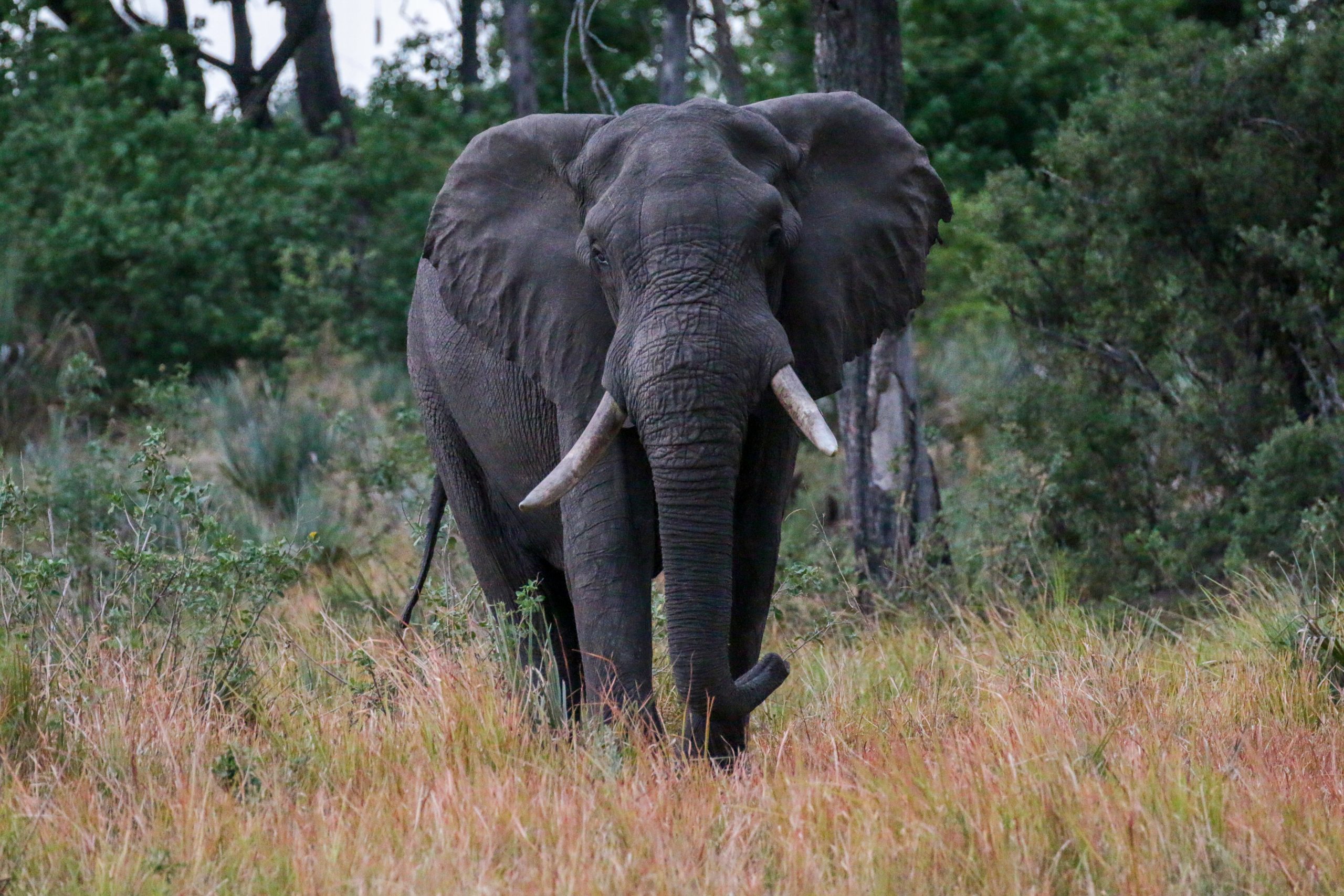
And then there were the elephants, which we saw on our first game drive and throughout the rest of the journey as we moved between camps in the Delta. Males and females, young and old, they held our attention every day. The Okavango’s year-round water and seasonal floodwaters attract large numbers of elephants, making this region vital to their survival.

Elephants, Okavango Delta, Botswana. © WWF-US / Jeff Muller
The Beating Heart of KAZA
The Okavango Delta lies at the heart of KAZA—the Kavango Zambezi Transfrontier Conservation Area—which stretches across portions of five countries: Angola, Botswana, Namibia, Zambia and Zimbabwe. Covering an area roughly the size of France, KAZA supports the world’s largest contiguous transboundary population of African savanna elephants.
The first coordinated aerial survey across the five KAZA countries, conducted in 2022, estimated that approximately 227,900 elephants live within the conservation area—more than half of Africa’s remaining savanna elephants. The survey found that the overall population appeared stable, though numbers and mortality rates varied considerably across the region.
Conservation That Benefits People and Wildlife
For KAZA to succeed—and for its elephants to receive coordinated protection across national borders—there must be meaningful economic benefits for the people who share this landscape with wildlife. Nature travel can help provide those benefits by supporting local employment, community enterprises and conservation initiatives.
At every camp we visited, I spoke with staff members and heard versions of this story again and again. The journey changed the way I saw Botswana, but I also returned home knowing that my travel supported people whose livelihoods are closely connected to the continued presence of elephants and other wildlife.
That knowledge made an already meaningful experience feel even more consequential.
By Jeff Muller, WWF
Meet the African elephants and other iconic wildlife of the Okavango Delta on our sustainable Botswana safaris.