Our Beautiful, Singular, Habitable World

The question of whether Earth is alone in harboring life has captivated humanity for millennia. Likewise, other planets that could support human communities have stoked our imaginations for decades, resulting in books,, opens in new tab films and other artworks that show us thriving on distant celestial bodies. In recent years, scientists have turned to the moon, Mars and even Earth-like planets in other solar systems that seem to show promise for future emigrations.
Young M-dwarf stars, opens in new tab are a case in point. Researchers have discovered that mysterious dips in starlight have turned out to be massive rings of plasma swirling in the stars’ magnetic fields. These structures act like built-in, space-weather monitors, reshaping how we think about whether planets around these common stars can survive—or even host life. And astronomers have discovered that a scorching-hot planet 320 light-years away shares a striking chemical similarity with its host star, a breakthrough that could help scientists predict what distant, rocky planets are made of and identify worlds with conditions favorable for life.
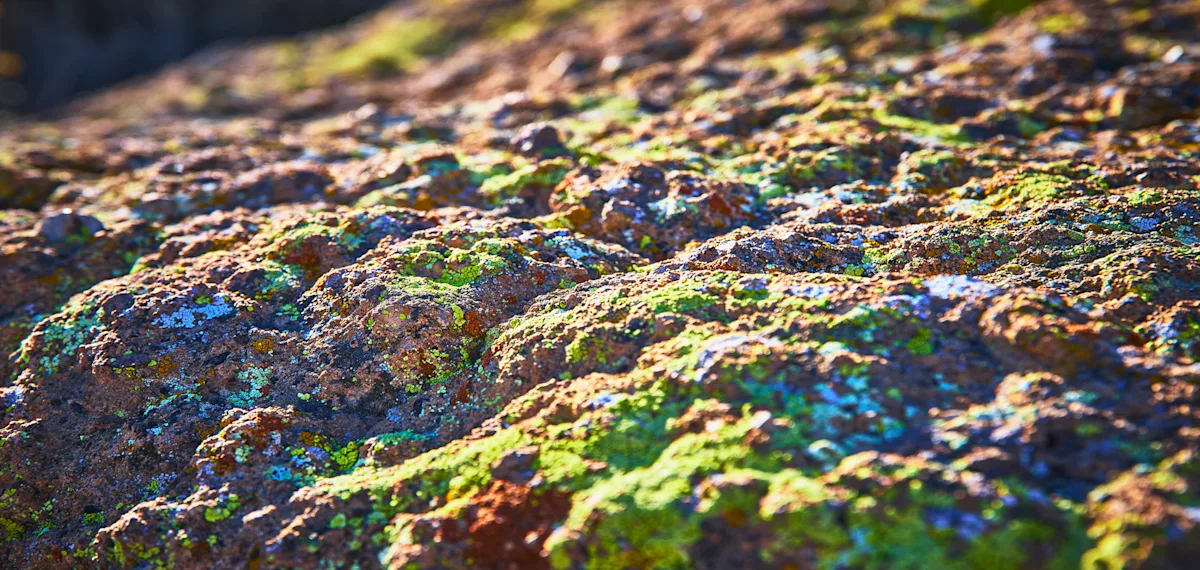
Down here on Earth, we’re finding more evidence that life is possible on other worlds. Lichen from the Mojave Desert has stunned scientists by surviving months of lethal UVC radiation,, opens in new tab suggesting life could exist on faraway planets orbiting volatile stars. The secret? A microscopic “sunscreen” layer that protects their vital cells—even though Earth’s atmosphere already filters out such rays.
Here’s the scary part, though: behind all our musings about the ability to live elsewhere: the Earth is a blue-and-green oasis covered with oceans, forests and life, while Venus is a yellowish sphere that is not only inhospitable but also sterile. The difference between the two, however, depends on only a few degrees of temperature. Recently, a team of astronomers has achieved a world’s first by managing to simulate the entirety of the “runaway greenhouse process,” which can transform the climate of a planet from idyllic and perfect for life to a place more than harsh and hostile. On Earth, a global average temperature rise of just a few tens of degrees, subsequent to a slight rise of the sun’s luminosity, would be sufficient to initiate this phenomenon and to make our planet uninhabitable.
But first, let’s take a look at how our Earth managed to maintain enough oxygen to support life in the first place, why complex life took so long to emerge and how we can identify similar chemical relationships on distant planets and other ocean-bearing worlds.
The 2.3-billion-year-old secret that kept Earth habitable
More than 2 billion years ago, Earth underwent a dramatic transformation as oxygen began building up in its atmosphere. But that change left scientists with a major mystery: how did the planet maintain enough oxygen to remain habitable over millions of years?

Researchers have just uncovered evidence that the answer may lie in an ancient recycling system within Earth’s oceans. By studying rocks from South Africa, they found that changes in ocean chemistry helped create a natural cycle in which biological activity supported the continued accumulation of atmospheric oxygen.
This research, published in the journal Nature Communications, opens in new tab in August 2026, involved scientists from the University of California, Riverside. Their findings suggest that phosphorus, a nutrient essential for life, played a central role in sustaining the oxygen levels that would eventually help make more complex organisms possible.
About 2.3 billion years ago, Earth experienced the Great Oxidation Event,, opens in new tab a major turning point when oxygen became a lasting component of the atmosphere. Scientists have understood this transition for decades, but explaining how oxygen remained sufficiently abundant afterward has been much more difficult. The UC Riverside researchers identified a feedback loop that may help explain what happened. As oxygen spread into the oceans, it altered the chemistry of seawater and increased concentrations of sulfate, a compound containing sulfur and oxygen. Certain microbes used this sulfate to break down organic material more efficiently. In the process, they released phosphorus back into the water, making this vital nutrient available to other organisms.

With more phosphorus available, biological productivity increased. That meant more organic carbon could eventually become buried in seafloor sediments rather than being broken down. Because the decomposition of organic matter can consume oxygen, burying more carbon helped favor the continued buildup of oxygen in the atmosphere. This created a reinforcing cycle in which rising oxygen levels encouraged chemical changes that supported biological growth, which in turn helped maintain atmospheric oxygen.
To investigate this process, the scientists examined ancient rock samples from South Africa using a technique that provides a more detailed picture of phosphorus availability in prehistoric oceans. Earlier research could determine how much phosphorus was present in ancient rocks, but those measurements revealed little about whether organisms could actually use it. Some phosphorus becomes trapped in minerals, making it effectively inaccessible to living things. The researchers addressed this limitation by separating phosphorus according to the minerals that contained it. They accomplished this by dissolving different mineral components one at a time, allowing them to distinguish phosphorus that had been available for biological activity from phosphorus locked away in mineral structures.
The new approach provides a clearer way to reconstruct ancient nutrient cycles and understand how they influenced atmospheric oxygen—a crucial distinction because the total amount of phosphorus in an ocean does not necessarily indicate how much is available to sustain life. Separating the phosphorus that was available to organisms from phosphorus that was essentially locked away gives us a much clearer picture of nutrient levels in ancient oceans than we had before.

The findings also point to a more complicated history of Earth’s atmosphere than scientists previously recognized. Rather than remaining relatively steady after the Great Oxidation Event, oxygen levels may have risen and fallen much more dramatically. These fluctuations likely continued to influence ocean chemistry and the movement of essential nutrients through marine environments over tens of millions of years. Such results could also change how scientists interpret the evolution of early life.
One long-standing question is why complex organisms took so long to appear after oxygen first became a significant part of Earth’s atmosphere. Limited oxygen has often been considered a possible explanation for this delay. However, if oxygen remained relatively abundant during extended periods of Earth’s early history, it raises the possibility that other environmental conditions or biological limitations played a greater role in slowing the emergence of complex life.
Although the research focuses on events billions of years in the past, its implications extend to the oceans we depend on today. Climate change, opens in new tab is already contributing to declining oxygen levels in parts of the world’s oceans. If oxygen loss continues, it could disrupt phosphorus recycling and reduce the amount of this essential nutrient available to marine organisms. Such changes could limit biological productivity and make ocean ecosystems less resilient to environmental stress.

The findings may also help scientists search for signs of life beyond Earth. Worlds with oceans are considered promising places to investigate potential habitability, but the presence of water alone does not guarantee that conditions can support life over long periods. Understanding how biological processes, nutrients and oxygen interacted throughout Earth’s history could help researchers identify similar chemical relationships on distant planets and other ocean-bearing worlds.
Alien “space weather stations” that reveal habitable planets
How much does a star (like our sun) determine what its planets (such as Earth) are like? And could that influence whether those worlds can support life? Scientists at Carnegie Science, opens in new tab in Washington, D.C., are investigating a new way to tackle this question by using naturally occurring “space weather stations” that appear around some young stars.
M-dwarf stars are cooler, dimmer and smaller than our sun, yet most of them host at least one rocky planet about the size of Earth. Many of these worlds are not considered friendly to life. They may be too hot, lack stable atmospheres, or be exposed to frequent flares and intense radiation. Still, they offer valuable opportunities to study how stars influence the environments around their planets. They do so both through light, which we’re good at observing, and through particles—or space weather—like magnetic storms and solar winds, which are more challenging to study at great distances. Unfortunately, directly placing instruments around distant stars to measure space weather is not possible. Or is it?

The Carnegie Science researchers focused on an unusual class of M dwarfs known as “complex periodic variables.”, opens in new tab These young stars spin rapidly and show repeated dips in brightness. Scientists were unsure whether those dips were caused by dark spots on the star or by material orbiting nearby.
For a long time, say the scientists in their paper published in The Astrophysical Journal Letters, opens in new tab in July 2025, no one knew quite what to make of these little, oddball blips of dimming. But they were able to demonstrate that the blips reveal something about the environment right above the star’s surface. The science team created “spectroscopic movies” of one of the stars, showing that the dimming comes from large clouds of relatively cool plasma trapped within the star’s magnetosphere., opens in new tab These plasma clumps are carried along by the star’s magnetic field, forming a doughnut shaped structure called a torus.
The plasma torus provides a way to know what’s happening to the material near the stars, including where it’s concentrated, how it’s moving and how strongly it is influenced by the star’s magnetic field—in essence, becoming a space weather station. It’s estimated that at least 10% of M dwarfs may have these plasma structures during their early stages. That means astronomers could use them to better understand how stellar particles influence planetary environments.
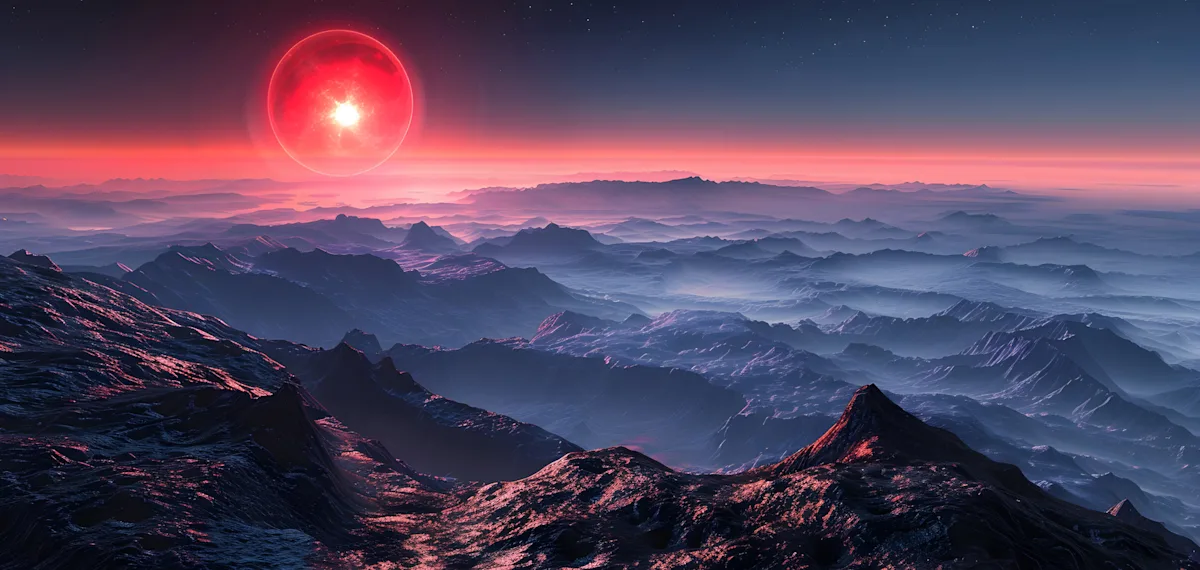
While the researchers don’t know yet if any planets orbiting M dwarfs are hospitable to life, they do feel confident that space weather is going to be an important part of answering that question.
A planet 320 light-years away potentially identifies habitable worlds
A scorching-hot planet nearly 320 light-years from Earth has provided the first direct evidence for a fundamental assumption about how planets form. Astronomers discovered that WASP-189 b, opens in new tab shares an important chemical characteristic with its host star, supporting a long-standing idea that also helps scientists investigate potentially habitable worlds. The breakthrough came from the first simultaneous measurement of gaseous magnesium and silicon in the atmosphere of an exoplanet (a planet orbiting a star that is not our sun), using the cutting-edge instruments of the Gemini South telescope, opens in new tab in the Chilean Andes, part of the International Gemini Observatory.
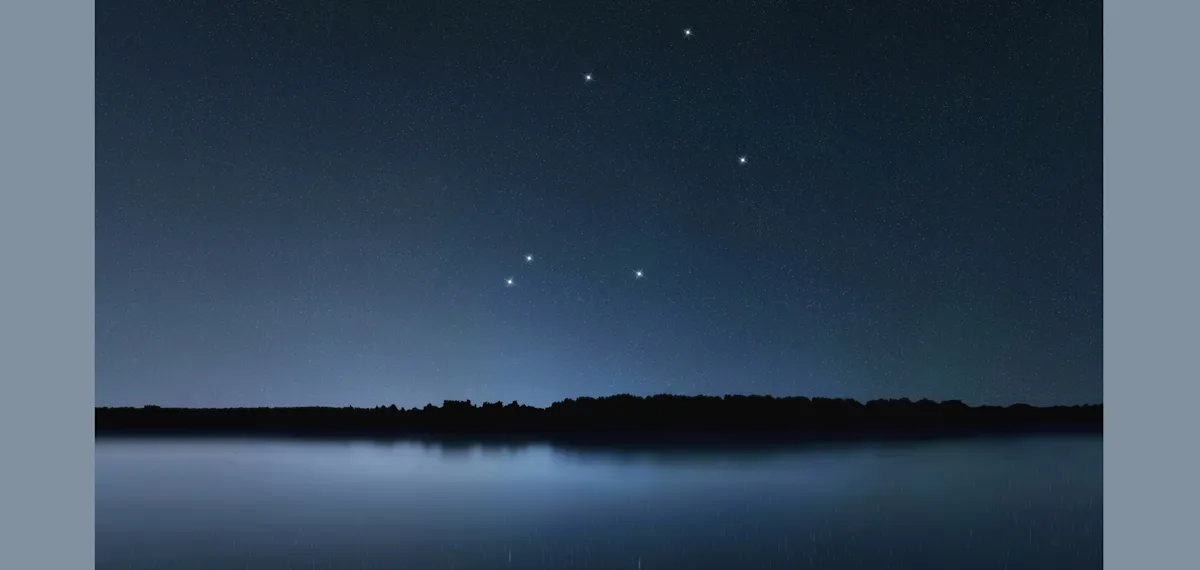
Located nearly 320 light-years away in the Libra constellation,, opens in new tab WASP-189 b belongs to an extreme category of planets called “ultrahot Jupiters.” These enormous worlds reach temperatures so intense that even materials normally found in solid rock can turn into gas. Elements such as iron, magnesium and silicon can, therefore, be detected in their atmospheres. Astronomers identify these substances through spectroscopy, a method that separates light into different wavelengths to reveal the chemicals present.
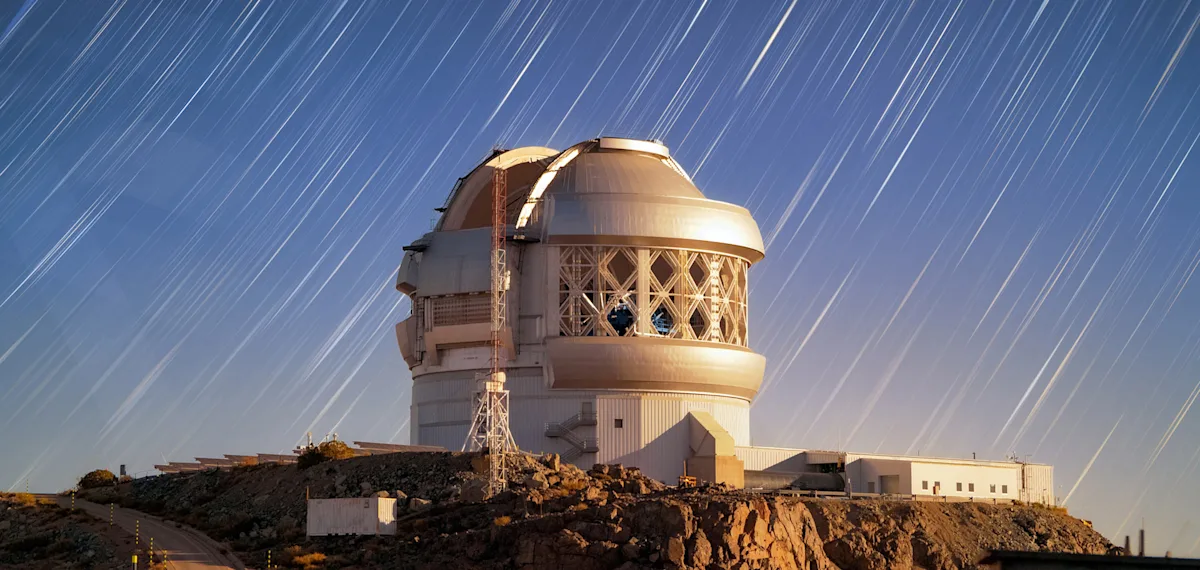
Now, for the first time, as explained in the journal Nature Communications, opens in new tab in February 2026, researchers were able to measure magnesium and silicon together in the atmosphere of a planet beyond our solar system. Their observations revealed that the proportion of magnesium to silicon on WASP-189 b closely matches the ratio found in its parent star. This result provides the first direct observational support for a widely used assumption about the chemical relationship between stars and their planets, offering a valuable new way to investigate planetary origins and evolution.
Astronomers believe that giant planets such as WASP-189 b formed within enormous disks of dust and gas surrounding young stars. These structures, called protoplanetary disks, provide the raw materials from which planets develop. The chemical makeup of a giant planet’s outer atmosphere is thought to retain clues about the environment where it originally formed. Because stars and their surrounding disks originate from the same cloud of material, scientists have long assumed that they contain similar proportions of rock-forming elements. In particular, the ratios of these elements in a disk are expected to resemble those measured in its central star.
This relationship has become an important tool for predicting the composition of rocky exoplanets. Until now, however, the assumption was supported primarily by evidence from our own solar system. Astronomers had not directly measured the same relationship in a planet orbiting another star. The discovery involving WASP-189 b provides that missing observational evidence, strengthening the scientific basis for using stellar chemistry to understand the materials from which distant planets form.
The implications reach beyond understanding how planets are assembled. This chemical relationship is also important in astrobiology, which investigates the possibility of life beyond Earth and the environmental conditions that could support it, including habitable environments within our solar system.
By studying the elements present in a star, astronomers may be able to estimate the relative amounts of rock-forming materials available to its planets. These materials influence a planet’s chemical environment, geological activity and internal structure, all of which can affect whether conditions suitable for life might develop.
Earth provides a familiar example. The elements that make up our planet help determine processes such as plate tectonics,, opens in new tab the generation of its protective magnetic field and the movement of essential chemicals into the atmosphere, oceans and soil. Together, these processes contribute to the environment that allows life to thrive. As researchers work toward studying smaller, rocky exoplanets in greater detail, establishing a reliable connection between stellar chemistry and planetary composition becomes increasingly important. The WASP-189 b findings provide a significant step in that direction.

The scientific team expects that future observations using multiple wavelengths and similarly precise instruments will uncover a wider range of elements in exoplanet atmospheres. Building a more complete picture of their chemical compositions could reveal additional clues about how planets form, how they change over time and which conditions might favor habitability. By connecting the chemistry of a distant planet to that of its star, astronomers now have new evidence supporting a principle that could help guide the search for potentially habitable worlds throughout the galaxy.
Mojave lichen prove life could thrive on distant exoplanets
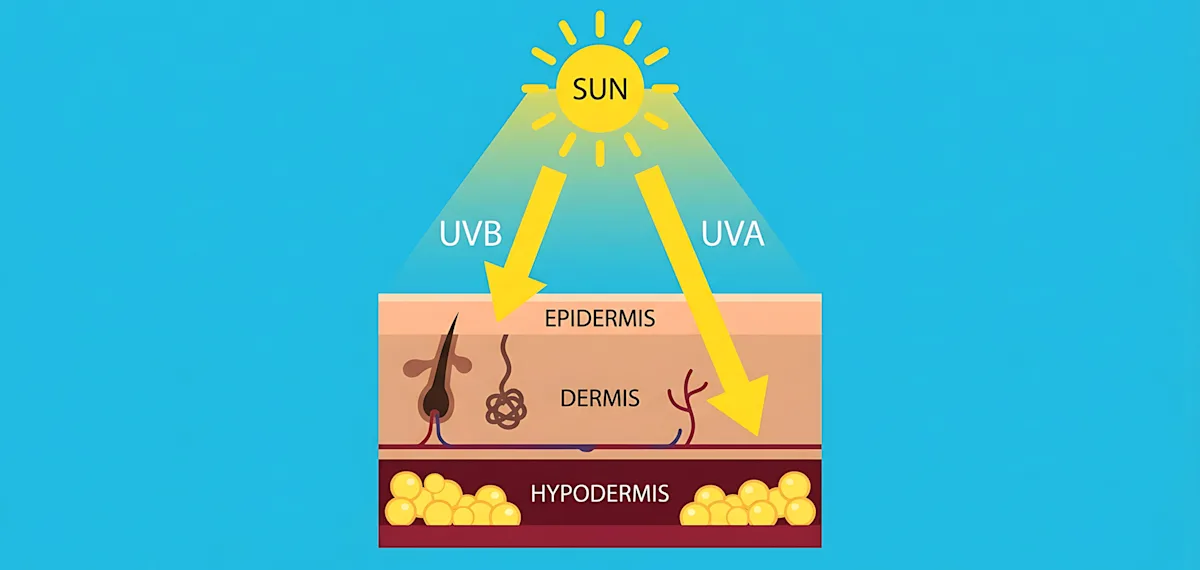
Life on Earth has evolved to withstand solar radiation known as UVA and UVB rays, which encompass longer wavelengths of ultraviolet radiation. UVC rays represent the shorter, more damaging wavelengths; these are filtered by Earth’s atmosphere and, therefore, do not reach the surface. UVC radiation is so lethal to life, in fact, that it is used to sterilize air, water and surfaces of microorganisms like bacteria and viruses. Even a brief exposure to UVC radiation will damage an organism’s DNA and prevent it from reproducing.
Scientists have wondered, then, whether many of the Earth-like planets discovered in recent years could possibly harbor life, since many of them revolve around stars—known as M and F stars—that emit intense UVC radiation, especially during solar flares. Then, on December 25, 2021, the James Webb Space Telescope, opens in new tab—which can see extremely far into space—was launched, shifting excitement from finding life on Mars to exoplanets that have an atmosphere and liquid water.
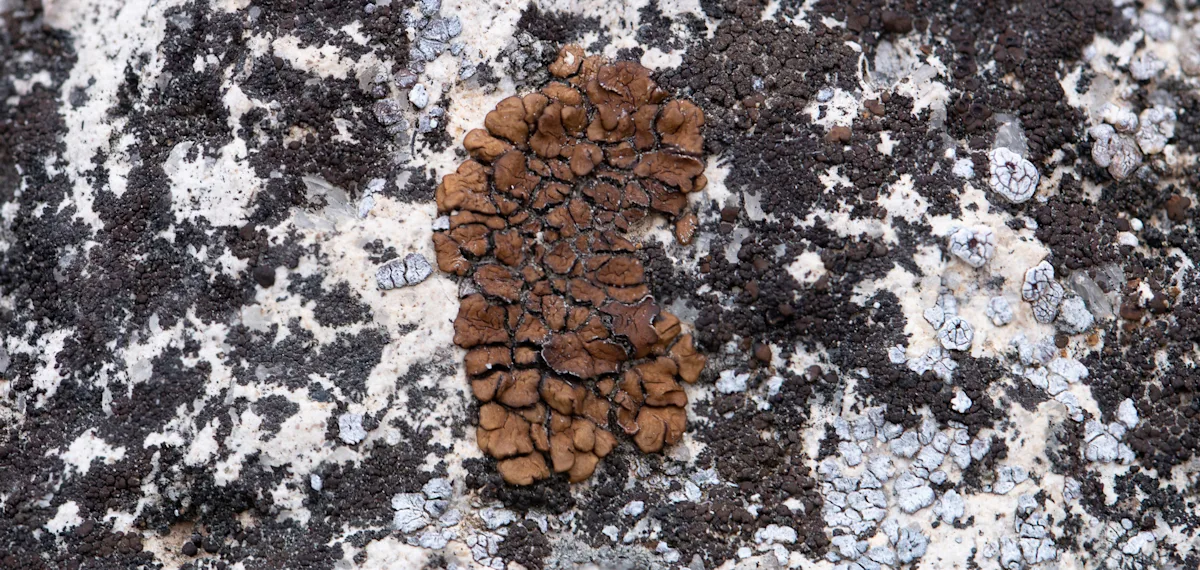
One study conducted by researchers at Nevada’s Desert Research Institute, opens in new tab got its start after a curious observation. As a scientist was walking in the Mojave Desert, he noticed that the lichens (Clavascidium lacinulatum) growing there weren’t green; they were black, although they’re photosynthetic and contain chlorophyll. He pondered what pigment they could be wearing. That pigment turned out to be the world’s best sunscreen.
The researcher and his associates collected the lichen and then placed it next to a UVC lamp in a controlled laboratory setting for three months. Remarkably, half of the algal cells in the lichen remained viable and replicated when rehydrated. To explore how this was chemically possible, the researchers conducted two experiments that demonstrated how lichen acids are the natural world’s equivalent of the additives used to make plastics UV-resistant. They investigated the lichen’s protective layer by cutting a cross section of it and found that the top layer was darker, like a human’s suntan. Lichen is composed of algae or cyanobacteria living symbiotically with fungi; when the algal cells were separated from the fungi and protective layer, exposure to the same UVC radiation killed the cells in less than a minute.
The discovery that lichen has evolved this protective layer to UVC radiation was surprising because it isn’t necessary for their survival. Earth’s atmosphere was already filtering out UVC rays by the time lichen appeared, so the protection is a mere bonus, thanks to their remarkable UVA and UVB protection.
Some of the damage that occurs from exposure to intense solar radiation is the result of chemical reactions with the atmosphere, particularly the production of ozone when nitric oxide, oxygen and UV radiation interact. To test the lichen’s protection under different atmospheric conditions, the researchers placed it in an oxygen-free box with the UVC light and found that the radiation damage was further reduced. The scientists concluded that the lichen’s top layer—less than a millimeter thick—assures that all the cells below are protected from radiation. This layer is photostable and even protects the cells from harmful chemical reactions caused by the radiation, including reactive oxygen. This study, published in the journal Astrobiology, opens in new tab in June 2025, offers evidence, then, that planets beyond Earth and beyond our solar system may be habitable. In fact, they may be teeming with colonial microorganisms that, like the lichens in the Mojave Desert, are “tanned” and virtually immune to UVC stress.
It doesn’t take much to switch from habitable to hell
The idea of a runaway greenhouse effect, opens in new tab is not new. In this scenario, a planet evolves from a temperate state like that on Earth to a true hell, with surface temperatures above 1,832 degrees Fahrenheit. The cause? Water vapor,, opens in new tab a natural greenhouse gas., opens in new tab Water vapor prevents the solar irradiation absorbed by Earth to be reemitted towards the void of space, as thermal radiation. It traps heat like a rescue blanket. A dash of greenhouse effect is useful; without it, Earth would have an average temperature below the freezing point of water, looking like a ball covered with ice and hostile to life.
Conversely, too much greenhouse effect increases the evaporation of oceans and, thus, the amount of water vapor in the atmosphere. There is a critical threshold for this amount of water vapor, beyond which the planet cannot cool down anymore. From there, everything gets carried away until the oceans end up getting fully evaporated and the temperature reaches several hundred degrees.

In December 2023, a team of astronomers from Switzerland’s University of Geneva published a study in the journal Astronomy and Astrophysics, opens in new tab showing that the Earth is not far from an apocalyptical scenario. Until now, other key studies in climatology have focused solely on either the temperate state before the runaway or the uninhabitable state post-runaway. This was the first time a team has studied the transition itself with a 3D, global climate model, checking how the climate and the atmosphere evolve during that process.
With their new climate models, the scientists calculated that a very small increase of the solar irradiation—leading to a rise of Earth’s temperature by only a few tens of degrees—would be enough to trigger this irreversible runaway process on Earth and make our planet as inhospitable as Venus. A current climate goal is to limit global warming on Earth, induced by greenhouse gases, to only 2.7 degrees Fahrenheit by 2050. One of the questions of this research was to determine if greenhouse gases can trigger the runaway process just as a slight increase of the sun’s luminosity might do. If so, the next question would be to determine if the threshold temperatures are the same for both processes.
We’re not that far from disaster. Assuming this runaway process would be started on Earth, an evaporation of only 32 feet of the oceans’ surface would lead to a 1 bar (roughly equivalent to the standard atmospheric pressure at sea level on Earth, or 14.7 pounds per square inch) increase of the atmospheric pressure at ground level. In just a few hundred years, we would reach a ground temperature of more than 932 degrees Fahrenheit. Later, we would reach 273 bars (or 3,959 pounds per square inch) of surface pressure and more than 2,732 degrees Fahrenheit, when all of the oceans would end up totally evaporated, conclude the researchers.
One of the key points of the study describes the appearance of a very peculiar cloud pattern, increasing the runaway effect and making the process irreversible. From the start of the transition, some very dense clouds develop in the high atmosphere. This discovery is a key feature for the study of climate on other planets, and, in particular, on exoplanets.
Our habitable world, here and now
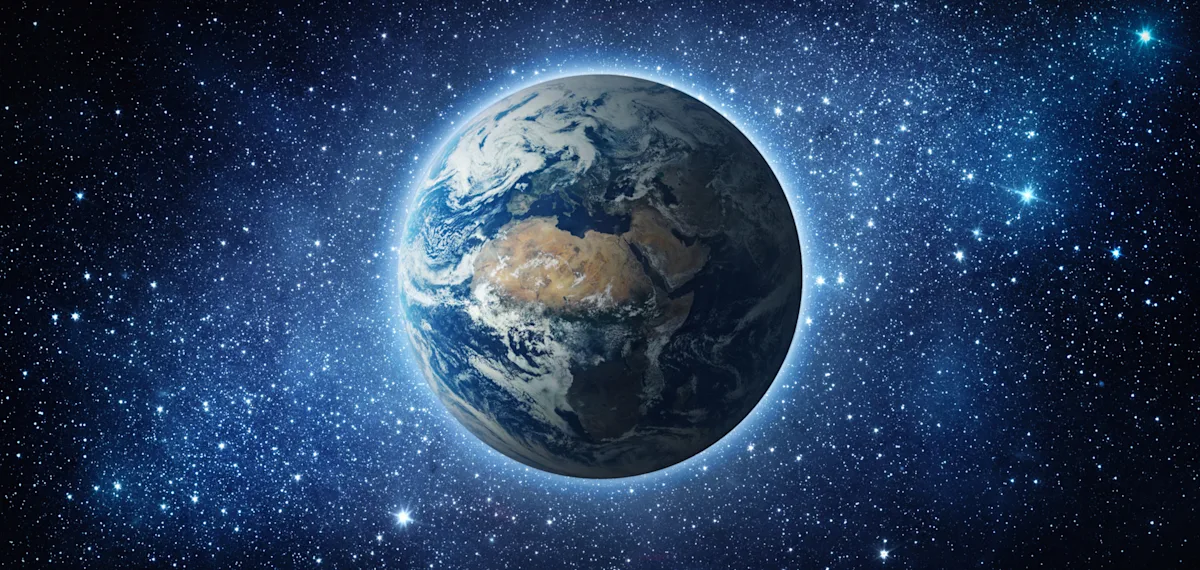
According to NASA, the promise of a better life in the mysterious beyond can be seductive. But the fact is the more we learn about “out there,” the more we realize how special it is here. The first astronauts to look from space back at Earth, a “pale blue dot, the only home we’ve ever known,” as scientist Carl Sagan once wrote, saw a beautiful, delicate world that is perfectly suited to the bounty of life it supports.
I know, especially at the present time, that the struggles of paying the bills and just muddling through takes up most of your bandwidth. But the hard truth is that this is the planet that we have right now. And without a clean, healthy world to live on today, none of the issues that consume our thoughts now will matter tomorrow.
Here’s to finding your true places and natural habitats,
Candy