Why Protecting Indigenous Cultures Is Key to Conservation in Bhutan and Beyond
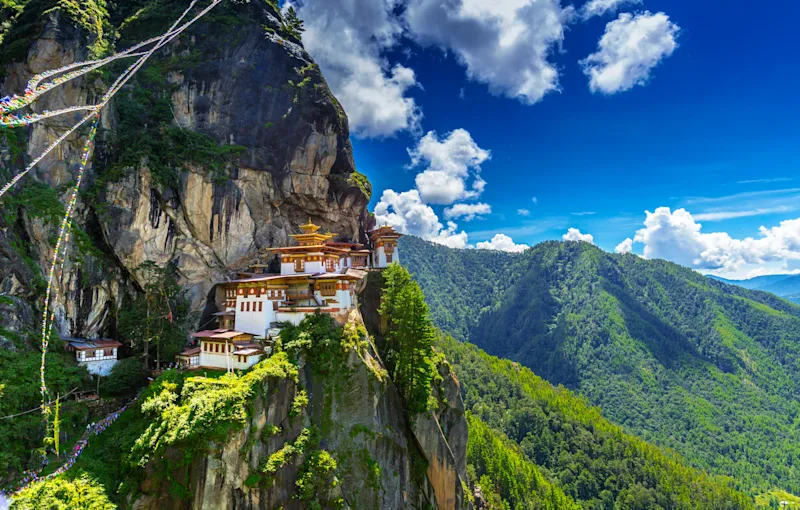
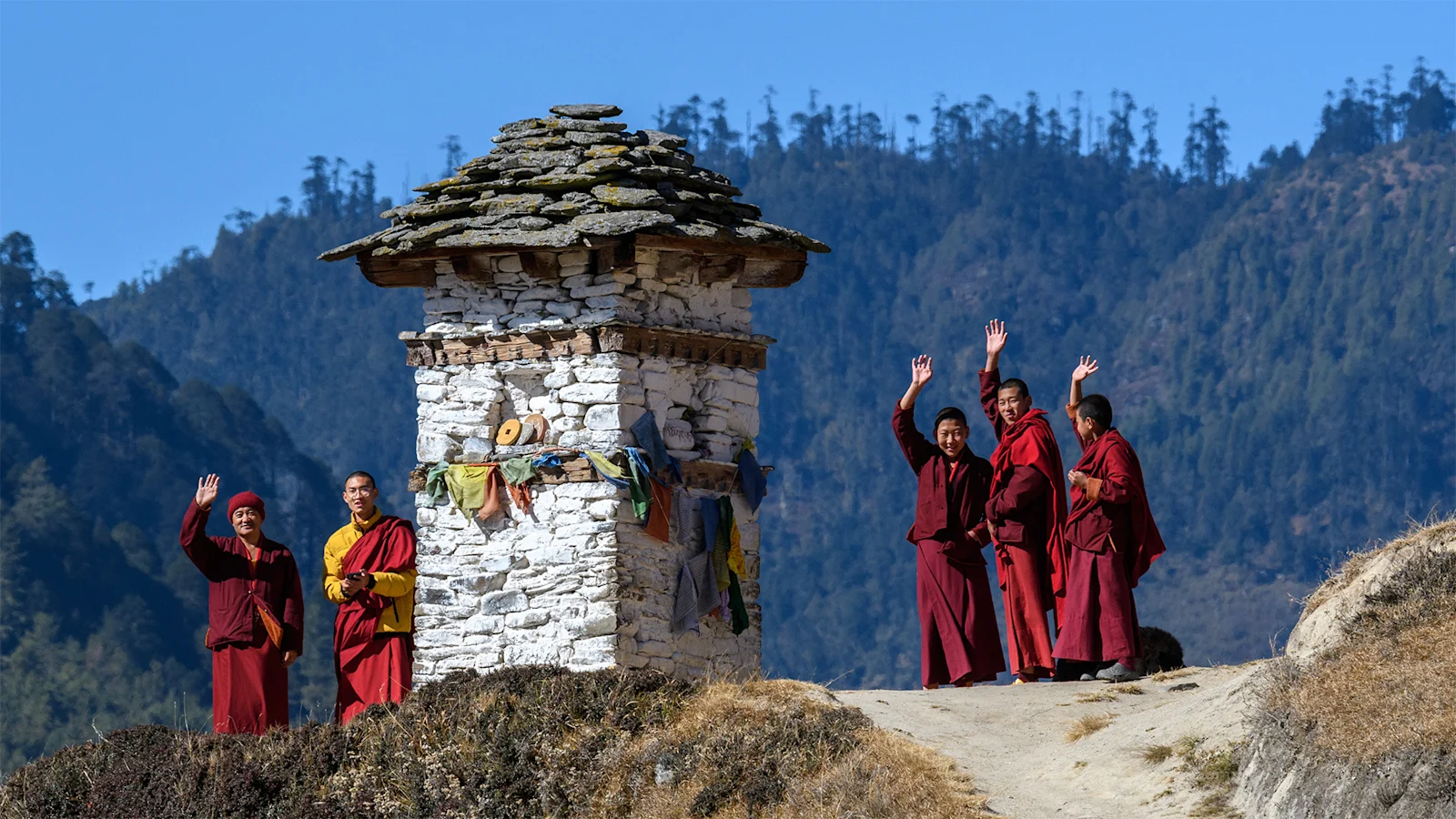
The Kingdom of Bhutan is a remarkable place: a landlocked country of towering mountains, fertile valleys and forests that cover more than 70% of its territory. It’s also a nation rich in cultural heritage. Here, men wear traditional ghos (knee-length robes) and women wear kiras (ankle-length dresses); dzongs (fortresses) constructed using traditional techniques dot the landscape, and more than two dozen languages are spoken. However, many of these languages face the risk of disappearing.
Among them is Ole, a distinct language spoken by the Olep people, whom some consider Bhutan’s earliest Indigenous inhabitants. Until recently, Ole was known to only a handful of elders in Bhutan’s Rukha Valley. But thanks to Nat Hab grantee the Cultural Sanctuaries Foundation and its partner, the Tarayana Foundation, opens in new tab, children in the valley are now learning the language. With a new generation of speakers, this critically endangered language has a better chance of survival.
The Cultural Sanctuaries Foundation, opens in new tab is a nonprofit organization dedicated to protecting endangered Indigenous cultures, languages and biodiversity around the globe. National Geographic explorer and documentary photographer Chris Rainier, opens in new tab and Olivia McKendrick, opens in new tab, a lawyer by profession, founded the nonprofit in 2017 after witnessing firsthand the effects of climate change and modernization on Indigenous languages, cultures and environments around the world.
The foundation focuses on “double hotspots”—places where both local cultural heritage and biodiversity are endangered. Rainier and McKendrick realized that protecting languages, cultures and the environments in which they thrive requires a physical gathering place for communities. “You need to give them a home that’s tangible and touchable and visible, so that everything can coalesce,” says McKendrick. With this vision, Cultural Sanctuaries was born.
Getting to Know the Cultural Sanctuaries Foundation’s Co-Founders
Rainier and McKendrick sat down with Natural Habitat Adventures to discuss why they founded the Cultural Sanctuaries Foundation, why culture matters and the connection between conservation and tourism as part of our Daily Dose of Nature webinar series.
Indigenous peoples make up a relatively small percentage of the global population, yet their lands overlap with many of the world’s most biodiverse regions. Their knowledge, traditions and stewardship practices play important roles in protecting these ecosystems.
There’s an “increasing recognition that culture and nature go together,” says McKendrick. “That you can’t separate them. That you shouldn’t separate them.” Cultural Sanctuaries believes this wholeheartedly, and it’s a thread that runs through everything the organization does.
The duo’s backgrounds are ideally suited for this type of work.
McKendrick had a legal career spanning 25 years. She worked as a skilled negotiator and strategist throughout Europe, Asia and the U.S. and understands the importance of tourism in protecting both biodiversity and cultures. “Cultural protection cannot happen in an economic vacuum,” she says. “It needs finances.” Responsible tourism can help provide those funds while supporting the traditions and landscapes that attract visitors.
Rainier’s own experience with the intersection of culture and conservation began in his late teens. That’s when he became the last photographic assistant to the great Ansel Adams, whose black-and-white images of the American West helped inspire efforts to preserve its natural landscapes. By working alongside Adams in California’s Yosemite Valley during the 1980s, Rainier learned not only about the power of photography but also about the importance of land conservation and the Indigenous peoples whose ancestral territories these landscapes encompass.
In the years that followed, Rainier began using photography as a tool for documenting cultures around the globe. His work included a decade spent in New Guinea, a southwestern Pacific island that’s the second largest in the world. Divided between Papua New Guinea and Indonesian territory, the island is home to hundreds of distinct cultural and linguistic communities and is one of the most linguistically diverse places on Earth. More than 10%, opens in new tab of the world’s living languages are spoken there, where longstanding traditions surrounding birth, death and initiation remain part of cultural life.
Rainier’s time in New Guinea introduced him to an array of customs, traditions and ways of life, reinforcing the importance of preserving cultural knowledge. In one valley, for example, an Indigenous community practices the mummification of deceased elders. Elsewhere, young men undergo a scarification ritual in which patterns resembling crocodile skin are cut into their bodies as part of their transition into adulthood.
Over his decade of work, Rainier documented and photographed these traditions, acknowledging that “different” doesn’t mean “primitive.” Instead, he considered: “What do they do that we do not?” he says. “What do they hear that we have lost touch with?”
The Cultural Sanctuaries Foundation’s Vision
With a shared belief in the power of photography to effect change and a commitment to “protecting the protectors”—Indigenous peoples who care for their ancestral lands and maintain endangered cultural traditions—McKendrick and Rainier created the Cultural Sanctuaries Foundation.
One of the foundation’s main projects is establishing community-run cultural centers that serve as local gathering places. This includes a center in Bhutan’s Rukha Valley, which opened in 2019 as part of a broader effort to protect the Ole language. The center also doubles as a homestay for visitors.
Cultural Sanctuaries has supported cultural centers and related initiatives in places including Mongolia, Peru, Ecuador and Papua New Guinea. Each project is different, reflecting the needs and priorities of the community involved.
For example, at the Casa de la Cultura Mazahua in the Mexican village of Crescencio Morales, visitors and local residents can learn about the region’s Indigenous Mazahua culture through crafts, cooking classes, language lessons and nature hikes.
The Mazahua live in the buffer zone of the Monarch Butterfly Biosphere Reserve, and thanks in part to a Nat Hab grant, Cultural Sanctuaries was able to finance an additional garden highlighting local plants, herbs and traditional medicines. The garden also demonstrates the relationship between Mazahua cultural practices and the surrounding environment.
Despite their different offerings, each cultural center serves as a community hub for cultural revitalization and pride. The centers also create opportunities for young people to remain in their communities, maintain cultural traditions and care for their ancestral lands.
Tourists bring incredible power through their interest, respect and enthusiasm, says McKendrick. “When young people leave their land…then they can no longer be its protectors.” But, “if tourists are interested, then the community says, ‘well maybe we’re interesting?'” That recognition can make a huge difference psychologically.
McKendrick and Rainier emphasize that cultures evolve naturally, so their mission isn’t to preserve them unchanged. Rather, it’s to support the values, knowledge and traditions that communities themselves consider important as their societies continue to develop.
“To quote the great anthropologist Margaret Mead,” says Rainier: “‘My greatest fear having been born into a polychromatic world is that my grandchildren—indeed all of our children—will one day wake up in a monochromatic world and never know that there has ever been anything else.'”
To learn more about the Cultural Sanctuaries Foundation’s projects or inquire about volunteer opportunities, contact the organization at info@culturalsanctuaries.org.