Know Before You Go
The Greater Maasai Mara is one of East Africa’s most important wildlife ecosystems, where herds of grazers move across open savanna and predators follow seasonal patterns tied to water and grass. These movements depend on connected habitats—but in recent decades, land use change, overgrazing and invasive species have degraded parts of the landscape, disrupting wildlife movement and reducing biodiversity.
Why Is the Greater Maasai Mara a Critical Landscape for Monitoring Wildlife Recovery and Habitat Restoration?
Restoration efforts in areas like Enarau Conservancy aim to rebuild these habitats and reconnect key wildlife corridors across the Mara region. By working in a landscape that borders one of Africa’s most wildlife-rich ecosystems, participants contribute to research that supports habitat recovery and helps sustain wildlife movement across the broader savanna.
Quick Facts: On Safari with Big Game in Kenya
Location: Enarau Conservancy, Greater Maasai Mara, Kenya
Research partners: Center for Ecosystem Restoration Kenya (CERK) and Nottingham Trent University (NTU)
Primary focus: Savanna ecosystem restoration and biodiversity recovery
Key activity: Wildlife surveys, vegetation monitoring and habitat restoration
Conservation focus: Habitat recovery, wildlife return and ecological connectivity
What Wildlife Will I See on a Kenya Expedition?
The Maasai Mara ecosystem supports a wide range of savanna wildlife, and participants experience both high-density wildlife areas and landscapes undergoing restoration. Wildlife may also be recorded through camera traps, offering insight into species that move through restoration areas, including those less frequently seen during fieldwork. These open savanna ecosystems support complex predator-prey dynamics and seasonal wildlife movement, making them a critical focus for restoration and conservation.
Participants may encounter:
Plains zebras grazing across open grasslands
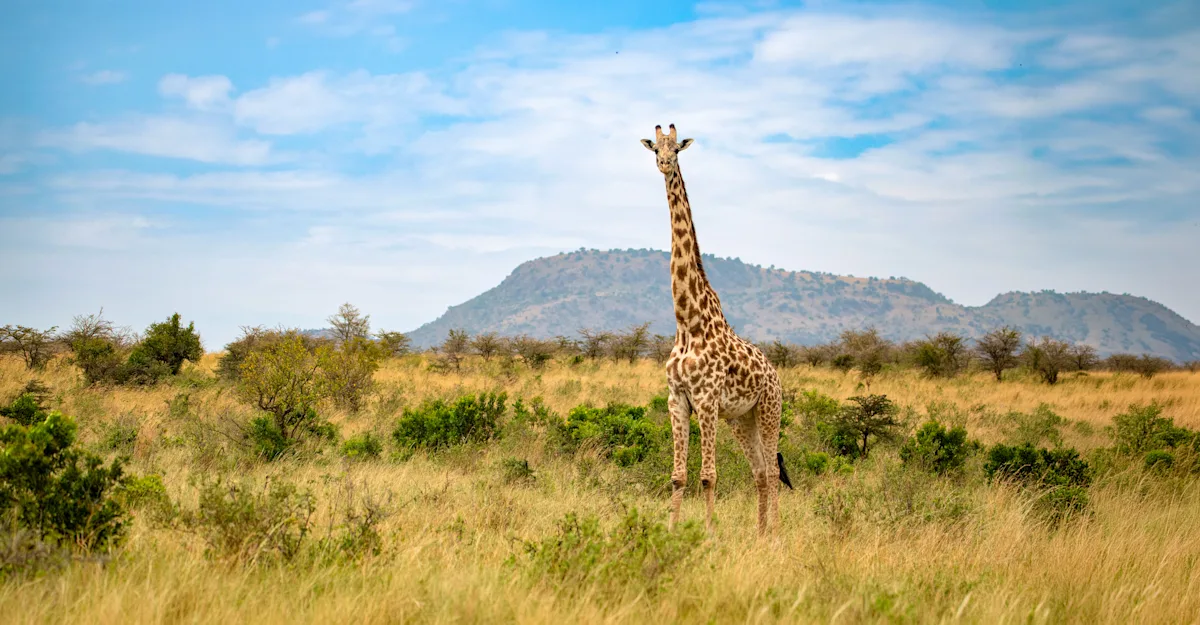
Giraffes browsing on acacia trees
Antelopes such as impala, Thomson’s gazelle, Grant’s gazelle and topi
Wildebeest moving through the ecosystem, especially during migration periods
African elephants traveling between savanna and woodland habitats
African buffalo grazing in herds across open plains
Lions resting or hunting across open plains
Spotted hyenas and black-backed jackals moving at dawn and dusk
Cheetahs scanning for prey in open grassland areas
Leopards in woodland or riverine habitats (less frequently seen)
Warthogs and other grazing mammals feeding in short grass
Hippos in river systems and water sources
Birdlife is abundant and varied, including:
Lilac-breasted rollers, hornbills, starlings and weaver birds
Raptors such as bateleurs, fish eagles and vultures
Ground birds such as secretary birds and kori bustards
What Is the Climate Like in the Maasai Mara?
The Maasai Mara has a warm, semi-arid savanna climate with strong sun exposure, cooler mornings and evenings, and seasonal rainfall that influences vegetation and field conditions.
Conditions vary throughout the year, with dry periods offering clear skies and strong sun, while rainy seasons bring greener landscapes, muddy terrain and more variable field conditions.
Season | What to Expect |
|---|---|
Dry Season (June–October) | 75–85°F during the day, cooler mornings and evenings, dry conditions and strong sun exposure |
Short Rains (November–December) | 75–85°F with intermittent rain showers and increasing humidity |
Hot Dry Period (January–February) | 85–90°F with hotter daytime conditions and little rainfall |
Long Rains (March–May) | 70–80°F with more frequent rain, muddy terrain and increased vegetation growth |
Frequently Asked Questions
Do I need research experience?
No prior research experience is required. Scientists and field staff provide training and guidance in field observation techniques and ecological data collection.
What type of research will I assist with?
Participants assist with ecosystem restoration and wildlife habitat monitoring. Activities may include vegetation surveys, recording wildlife signs, monitoring restoration sites, removing invasive plant species and collecting environmental data.
What is the conservation impact of this research?
This expedition supports habitat restoration and conservation in the Maasai Mara. Data collected in the field helps scientists evaluate ecosystem recovery and guide restoration efforts that support wildlife populations and ecological connectivity.
How physically demanding is the expedition?
Participants should be comfortable walking up to 3–4 miles per day at a pace of about one mile per hour across uneven terrain and working outdoors in warm conditions. Participants should also be comfortable bending down, squatting and getting back up. Fieldwork may include removing invasive plants, measuring vegetation and collecting ecological data.
Can weather affect research activities?
Yes. Weather conditions such as heavy rain or extreme heat may affect fieldwork and daily schedules. Researchers adjust plans as needed to maintain safety and continue restoration and monitoring activities.
What happens in case of an emergency?
Participant safety is a priority on all expeditions. Field staff follow established safety procedures and maintain communication during field activities, and trained rangers accompany teams in wildlife areas.
If medical care is required, staff coordinate transportation to the nearest medical facility, typically reachable within 25 minutes, with a hospital approximately one hour away.
Do I need travel insurance?
Travel insurance is strongly recommended and should include coverage for trip cancellation, interruption, medical expenses and emergency evacuation.
Earthwatch Expeditions provides travel medical insurance for participants.
What immunizations & travel vaccinations do I need?
Participants should consult a healthcare provider before travel, as routine vaccinations and malaria prevention measures may be recommended for Kenya. Participants should also take precautions against insect bites while working outdoors.
What should I bring?
Participants receive a detailed packing list before departure outlining recommended clothing, field gear and personal supplies. Essential items include lightweight clothing, durable footwear, sun protection and gear suitable for outdoor fieldwork in savanna conditions.
What Should I Pack for a Kenya Expedition?
Participants should pack for warm, sunny conditions with occasional rain and active outdoor fieldwork in savanna environments. Layered clothing and sun protection are important year-round due to strong sun exposure and changing conditions. Recommended items include:
Lightweight long-sleeved shirts for sun protection
Durable trousers suitable for walking through vegetation
Lightweight layers for cooler mornings and evenings
Well-worn hiking boots with ankle support
Wide-brimmed hat
Sunglasses
Sunscreen (SPF 30+)
Insect repellent
Two one-liter refillable water bottles or a hydration bladder
Small daypack
Binoculars (required for wildlife observation tasks)
For rainy periods (March–May and November–December), also bring:
Lightweight rain jacket or poncho
Waterproof or water-resistant footwear
Extra socks
What Will I Experience While On Safari with Big Game in Kenya?
Participants move between wildlife-rich conservancies and restoration areas, gaining a clear understanding of how healthy ecosystems function and what happens when landscapes are degraded. Time in the field combines wildlife observation with hands-on conservation work, offering direct insight into how restoration supports biodiversity.
What Does Daily Fieldwork Look Like?
Fieldwork includes a mix of walking and vehicle-based activities, with participants assisting scientists in wildlife surveys, vegetation monitoring and habitat restoration. Tasks may include recording mammals and birds along transects, measuring vegetation and ground cover, working with camera traps and supporting restoration efforts such as planting native species or managing nursery sites.
Activities vary based on weather, research priorities and seasonal conditions, with guidance provided throughout by scientists and field staff.


