Itinerary
Day 1: Arrive in Nairobi overlooking a wildlife-rich national park
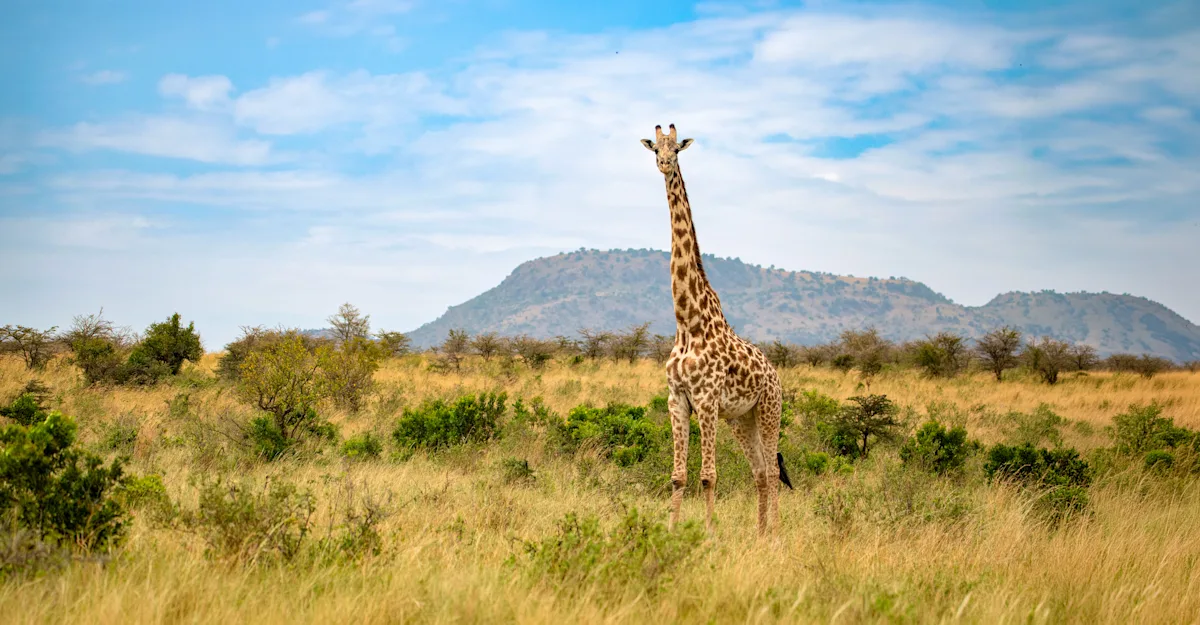
Settle into a hotel beside Nairobi National Park, where giraffes, zebras, buffalo and other wildlife may be visible
Join your Field Guide and fellow participants for dinner and an introduction to the Maasai Mara restoration project
Arrive in Kenya's capital of Nairobi, where you are met and transferred to your hotel overlooking the open bush of Nairobi National Park, on the city's edge. A preview of the wildlife to come is on display right outside your door, and animals are frequently in view from the terrace—we may see lions, endangered black rhinos, giraffes, zebras, buffalo, antelope, ostrich and more than 400 other bird species. This evening, gather for a welcome dinner with your Field Guide and fellow participants as you're introduced to the important experience that awaits: Learn what's been lost or damaged in the Maasai Mara landscape, what is being restored, and how your work as part of the team in the field will contribute to crucial conservation efforts.

Days 2 to 3: Watch lions, elephants and great herds cross the Maasai Mara
Fly by bush plane into the Mara, one of Africa’s richest wildlife ecosystems
Search for lions, elephants, giraffes and hoofed game across the open grasslands
Stay at Nat Hab’s Mara East Camp in a private conservancy
Fly by bush plane to the Maasai Mara, where your first game drive begins soon after landing. Before our field work begins, we enjoy a couple days devoted strictly to the exhilaration of being on safari in this iconic landscape. Animals are immediately in view and abundant—herds moving across the open plains, predators never far behind—offering a clear view of how a fully functioning savanna ecosystem operates. Hoofed game gathers in great herds across the rolling grasslands, elephant and giraffe move between stands of acacia, and lions are frequently spotted, sometimes lazing in the shade of thorn trees, other times racing in pursuit of prey.
Continue to Nat Hab’s own Mara East Camp, set within a private conservancy bordering the Maasai Mara National Reserve. With strict limits on vehicles and guests, wildlife viewing in this setting is uncrowded and unhurried. Animals move freely across protected land that serves as a key migration corridor between the Mara and the Loita Plains, and our exclusive camp places you directly within their path. Classic canvas safari tents are spaced for privacy, each with an en suite bathroom and shaded veranda overlooking all the activity on the plains. Enjoy romantic evenings around the campfire, illumined by lantern light, as the night sounds of the Mara carry across the darkness.

Day 4: Compare a thriving savanna with land in need of restoration
Watch wildlife and vegetation diminish as you travel from healthy grasslands into Enarau Conservancy
Arrive at the research station that serves as your fieldwork base
Meet the scientists leading the project and learn how the landscape has changed
Depart Nat Hab's Mara East Camp to travel across the Mara to the Enarau Conservancy—an overland transfer that becomes one of the most revealing drives of the trip. What starts as a classic safari—with abundant wildlife traversing the open plains, herds grazing, and predators never far off—gradually changes as we move deeper into the conservancy. Animals become fewer, savanna vegetation becomes more sparse, and the effects of long-term overuse of the land become readily apparent. The contrast unfolds in real time, offering an unusual side-by-side look at how a healthy ecosystem functions and what happens when it begins to break down.
Ultimately, we arrive at the research station inside the conservancy, where our field work takes place Just beyond your door, the surrounding terrain is our project site, with the research team guiding each day’s efforts. After settling in, meet the scientists leading the project and begin your orientation. You’ll learn how the land has changed over time, what restoration work is being tested, and how your contributions here will help rehabilitate the habitat that supports wildlife movement and return to healthy population numbers.

Days 5 to 6: Monitor wildlife and restore habitat across Enarau Conservancy
Walk or drive transects to record mammals, birds and animal behavior
Set and check camera traps, then review the wildlife images they capture
Plant native species, measure vegetation and support nursery operations
Work at Enarau centers on both monitoring and restoring the landscape, with each day offering a different way to understand how this terrain is changing—and how it can be brought back. Alongside our scientist team, you’ll move between research sites across the conservancy, contributing to ongoing study efforts. You may walk or drive transects to spot and record mammals and birds, noting group size, behavior and location to further a detailed understanding of how wildlife is using the area. In other locations, you’ll measure vegetation and ground cover to track how habitat is recovering. Camera traps extend what we can see in the field, capturing wildlife activity over time, and you’ll assist with setting, checking and reviewing images. Restoration work is hands-on, including planting native species and supporting nursery operations.
Throughout, your Lead Scientist and research team guide the work, explaining what you’re seeing, how data is collected and how it informs restoration. Traditional Ecological Knowledge (TEK), gleaned from the Maasai community, is integrated directly into these methods, influencing how the land is managed and the best strategies for recovery. Your participation forms the third strand of this shared approach to rewilding the land and bringing wildlife back in the process. On some afternoons or evenings, we'll head out by vehicle on a working safari. These drives combine wildlife viewing with data collection, as you record sightings, observe animal behavior and compare how species frequent different parts of the conservancy.
Between fieldwork sessions, take advantage of time to rest and absorb the nuances of your surroundings. Many birds have already returned to the Enarau base camp area, and downtime gives you ample time to observe some of the region's iconic species, often just beyond your cabin. Evenings are unhurried, often spent reviewing images, sharing observations, and hearing from scientists through informal discussions and structured presentations that bring additional depth to the work you're doing. By the end of your time at Enarau, you’ll have a clear understanding of how your contributions are furthering this crucial conservation project.
Day 7: Link rhino conservation with Maasai land stewardship
Measure vegetation cover, abundance and productivity across restoration plots
Visit the Mara Rhino Project and learn about efforts to protect southern white rhinos
Meet Maasai community members and explore how conservation supports local livelihoods
Begin the day with focused restoration work—one of the most hands-on and rewarding parts of the experience. Working alongside scientists and members of the local community, you’ll take part in efforts that directly shape the landscape, from planting native species to supporting nursery operations and maintaining experimental plots. You may also contribute to vegetation surveys, measuring cover, abundance and productivity to understand how different areas are responding. This is where the work becomes tangible. The changes you help put in place remain part of the conservancy, contributing to habitat recovery and the gradual return of wildlife over time.
In the afternoon, visit the Mara Rhino Project, a nonprofit organization dedicated to restoring and protecting the ecosystem's endangered southern white rhino population. Here, we gain insight into the urgency of safeguarding these rare and ancient mammals from poaching and habitat loss. Continue to a nearby cultural center, where time spent with Maasai community members offers a deeper understanding of how conservation and livelihoods are closely linked. Local knowledge and traditional land stewardship play a key role in determining how this ecosystem is managed and how restoration efforts continue.
Day 8: Look for signs of wildlife returning to the restored landscape
Check camera traps at a final survey site for evidence of wildlife movement and return
Review your findings with researchers and learn what the data reveals
Gather for a farewell dinner marking your contribution to the project
On our last day in the field, we visit one more survey area, checking camera traps for wildlife presence and behavior. As patterns start to emerge, revealing animal movement, absence and return, we begin to gain a clearer picture of how this harmed landscape is responding to the rehabilitative work underway. Spend the last few hours alongside researchers reviewing your findings and hearing their interpretation of what the data reveals. It's exciting to see how your fieldwork connects to the broader conservation effort! In the evening, gather for a final dinner as we reflect on our experiences and celebrate our accomplishments, knowing that each individual participant has played a vital role in restoring this ecosystem.
Day 9: Depart Kenya with a firsthand understanding of Mara restoration
Spend a final morning in Enarau Conservancy
Fly from the Enarau airstrip to Nairobi for homeward flights
Spend a final morning on the Enarau Conservancy before transferring to the airstrip for your return flight to Nairobi. You'll depart with a clearer understanding of how ecosystems recover—and a direct connection to the science and people working to restore the treasured landscape and wildlife of Kenya's celebrated Maasai Mara.