Research & Impact
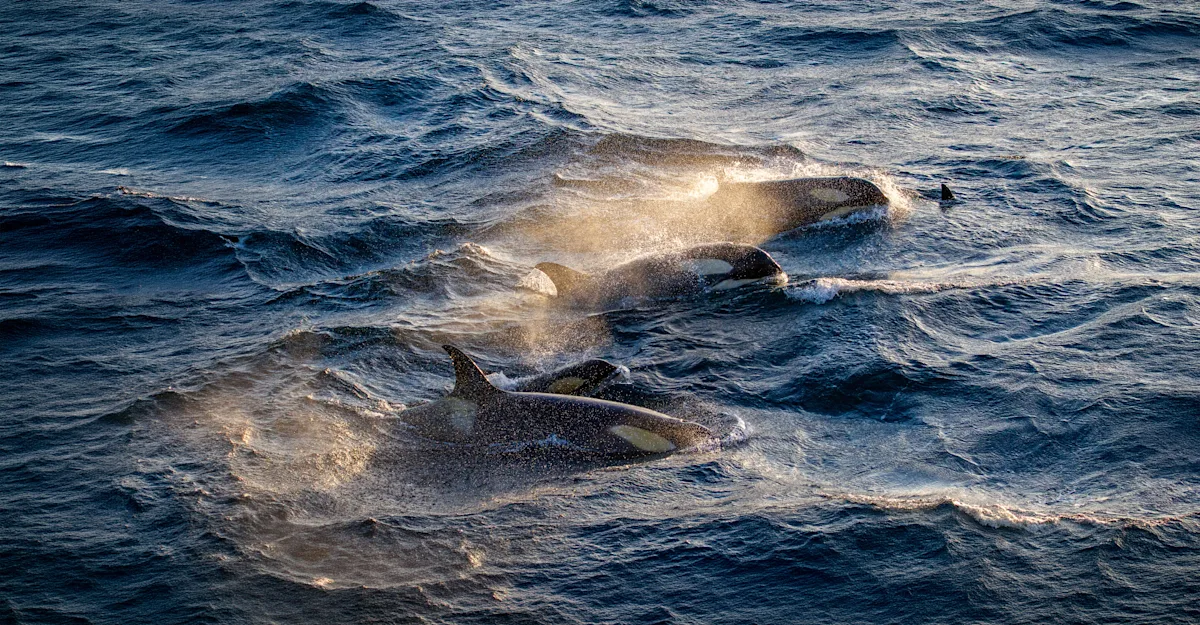
You’re contributing to the first long-term research program dedicated to understanding killer whale diet and behavior in Iceland. This work examines how prey shifts—driven by warming waters and changing ocean conditions—affect how these whales feed, move and survive, and what that means for their future in the North Atlantic.
What You'll Do in the Field
Click a photo to expand details
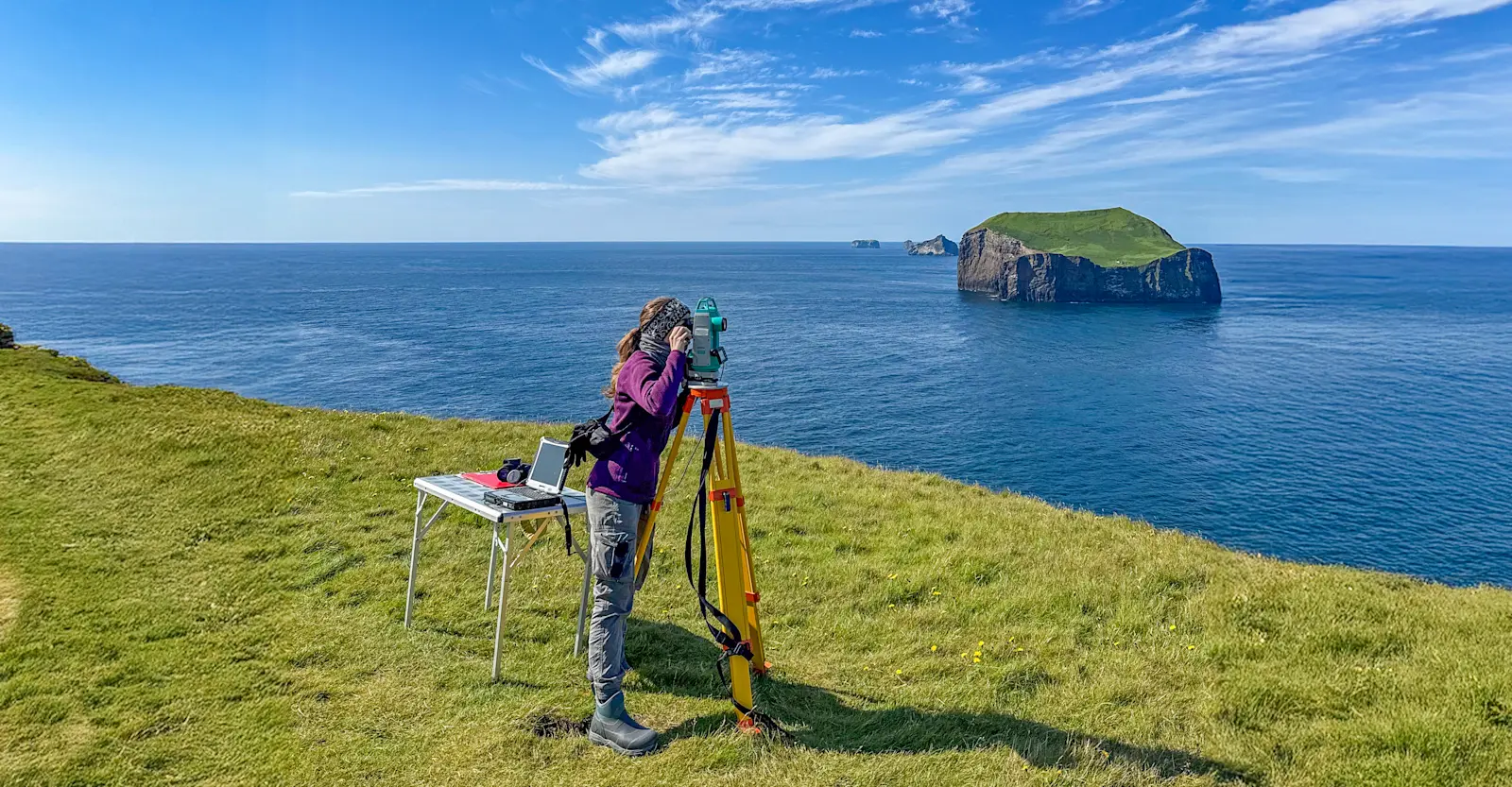
Survey Wildlife Populations
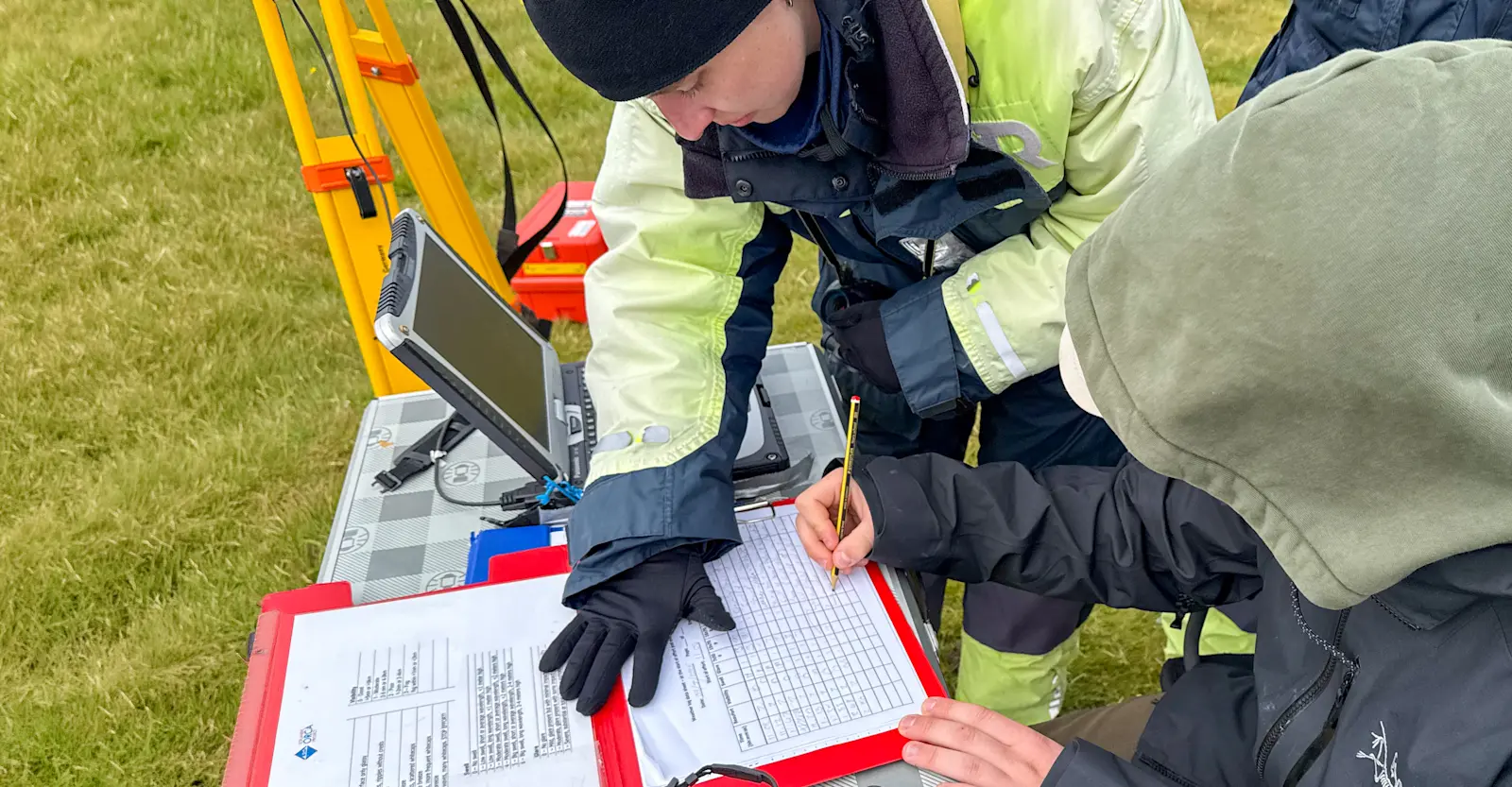
Scan coastal waters for killer whales and other cetaceans from land and boat, recording sightings, group size, location and conditions.
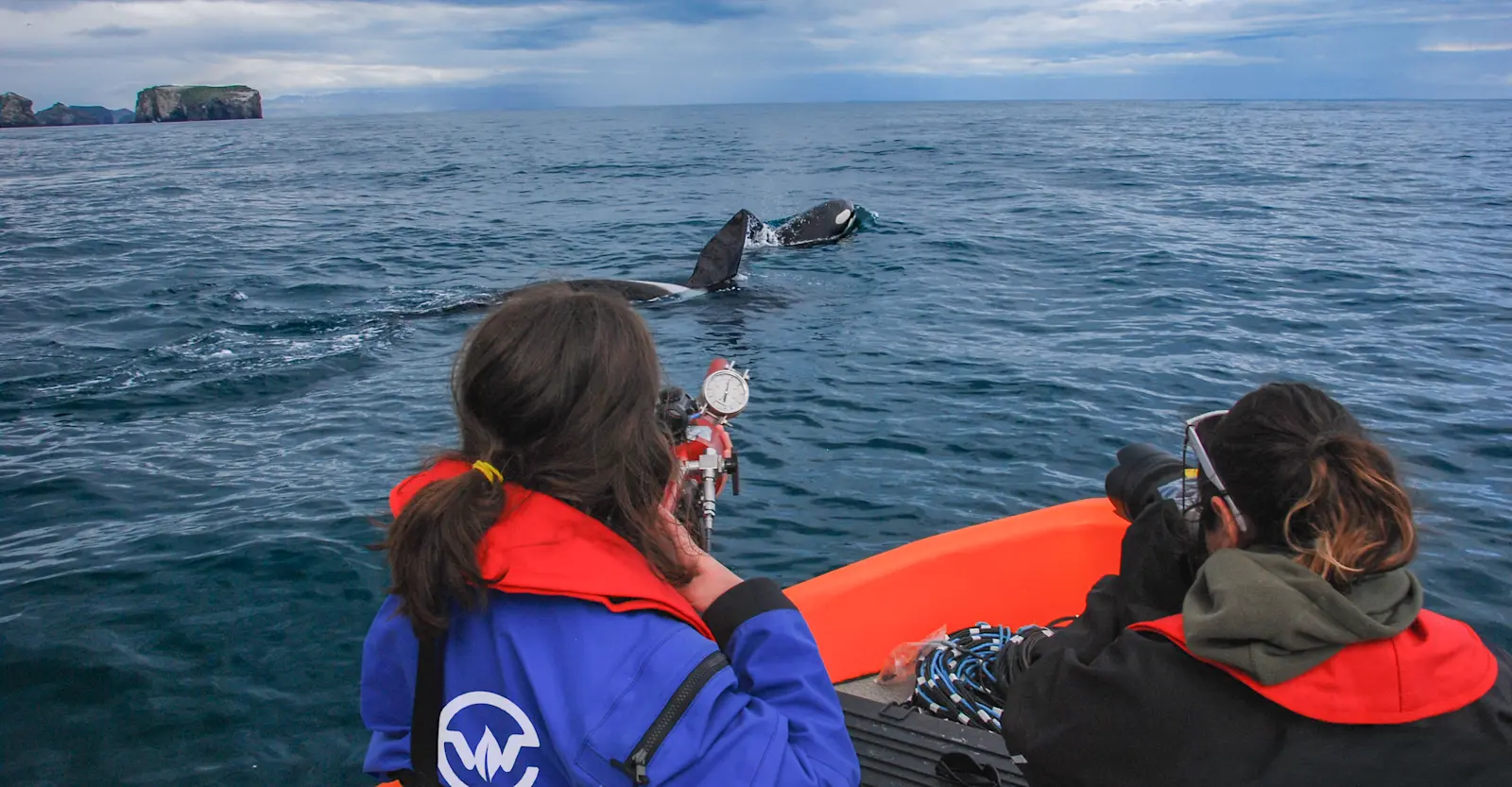
Observe Animal Behavior
Document feeding, movement and group dynamics when whales are encountered, capturing how they hunt, interact and use these waters.
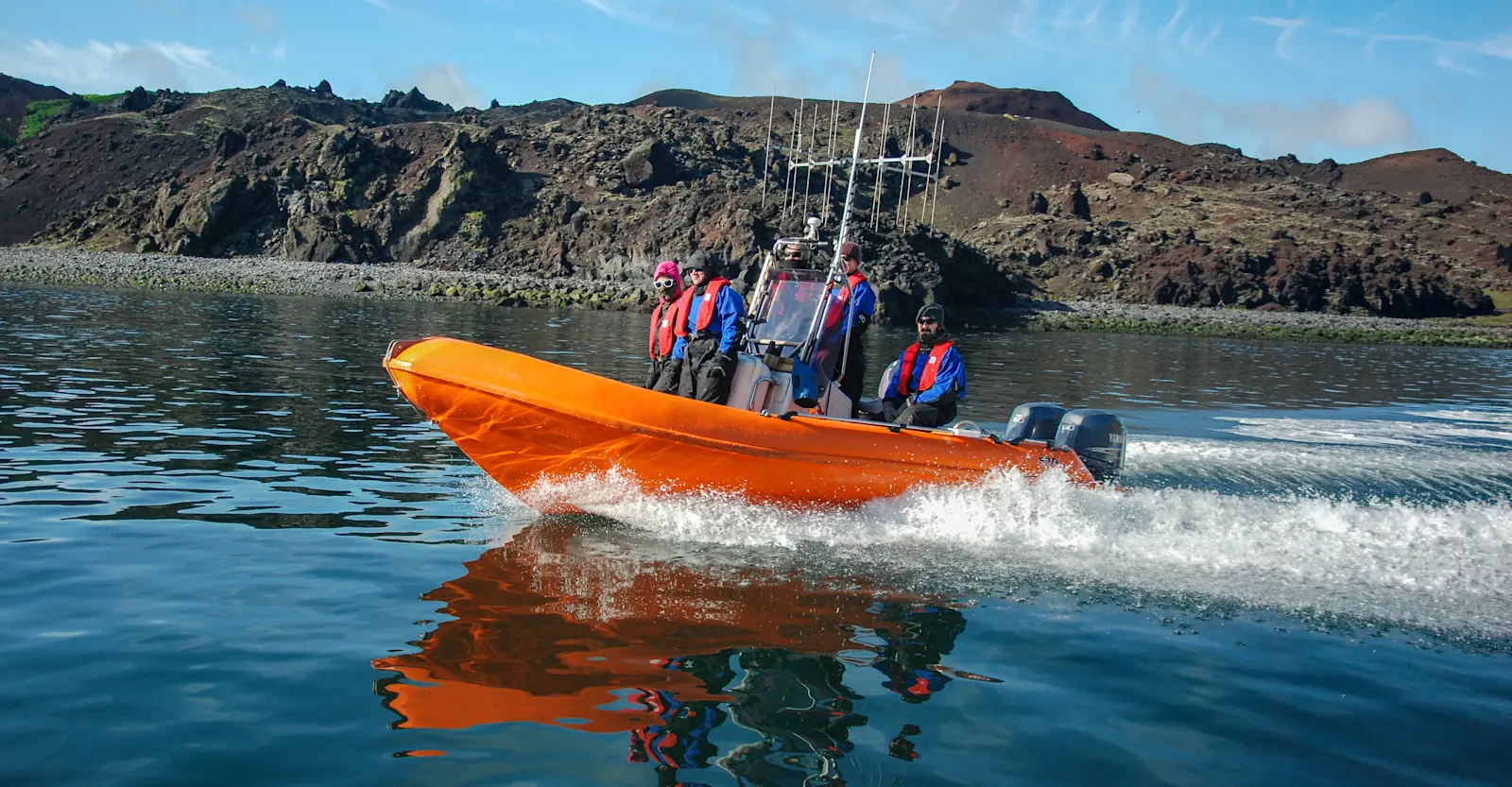
Record Acoustic Data
Collect and process underwater recordings to track whale presence, communication and activity across the study area.
Run Field Experiments
Observe or assist with drone surveys and biological sampling to assess diet, body condition and long-term health.
Meet Your Lead Scientist

Filipa Samarra, Ph.D.
Dr. Filipa Samarra has spent years studying killer whales in the North Atlantic, focusing on their behavior, communication and social structure. She is also a director at the University of Iceland Research Center in Vestmannaeyjar, where her work contributes to long-term research and conservation of this apex predator.
Read moreResearch Focus
In the waters around Vestmannaeyjar—the Westman Islands off the south coast of Iceland—scientists study how killer whales use a known herring spawning ground and how different groups feed, interact and move through the area. Some whales closely track herring migrations, while others switch between herring and other prey, suggesting more flexible feeding strategies. This is unusual among killer whales, which typically specialize in a single prey type. Understanding how common each approach is—and how it affects health and survival—is central to the research. By combining land-based observations, boat surveys, acoustic monitoring, drone measurements and biological sampling, the team builds a clearer picture of how these whales live and how they may respond to change.
-
Track Orca Diet & Adaptation
Research how shifts in prey populations are affecting killer whale behavior, health and survival in the first long-term study of orca diet in Iceland—an important component informing conservation in a changing North Atlantic.
Conservation Impact
Key aspects of killer whale ecology in Iceland—including what they eat and how they survive—remain poorly understood. This research is helping close that gap and inform how these whales and their habitat are managed and protected.
The first long-term dataset on killer whale diet, behavior and ecology in Iceland
Rare insight into how climate-driven shifts in prey affect a top marine predator
Evidence of different feeding strategies among whales within the same population, reshaping understanding of their adaptability
Documentation of cetacean biodiversity in South Iceland, confirming this region as an important and previously understudied feeding area
Data that links prey availability to whale health, movement and resilience to environmental change
Findings that inform ecosystem-based management and future conservation decisions in a rapidly changing North Atlantic
This work continues year after year, with each observation contributing to a clearer understanding of how killer whales survive, and what it will take to protect them.
Your Role in the Research
Scan for whales from coastal lookouts and at sea, recording sightings, movement and behavior. Contribute to photo-identification by matching dorsal fins to known individuals and help process acoustic recordings when conditions limit fieldwork. Each observation adds to a growing dataset used to understand how killer whales use this habitat and how they respond to changing prey and ocean conditions.
Life in the Field
Days are shaped by changing weather and whale activity. When conditions allow, we scan the sea from cliffs or track orcas in the water from small research vessels. When seas are rough or visibility drops, our focus shifts onshore to processing data, reviewing images and learning how the research comes together to create broader insights. Some days bring multiple whale encounters while others are quieter in terms of sighting, reflecting the unpredictable nature of fieldwork in this exposed North Atlantic environment.
Field Conditions
Fieldwork takes place along Iceland’s South Coast and in the waters around Vestmannaeyjar (the Westman Islands), accessed by foot and small boat. Expect extended time outdoors in cool, windy and changeable conditions, with temperatures typically between 40–50°F. Terrain may include uneven coastal paths and short uphill walks to observation points. Boat work depends on sea conditions and may involve cold, wind and occasional rough water. Plans shift with weather and visibility; flexibility is an inherent part of the experience.