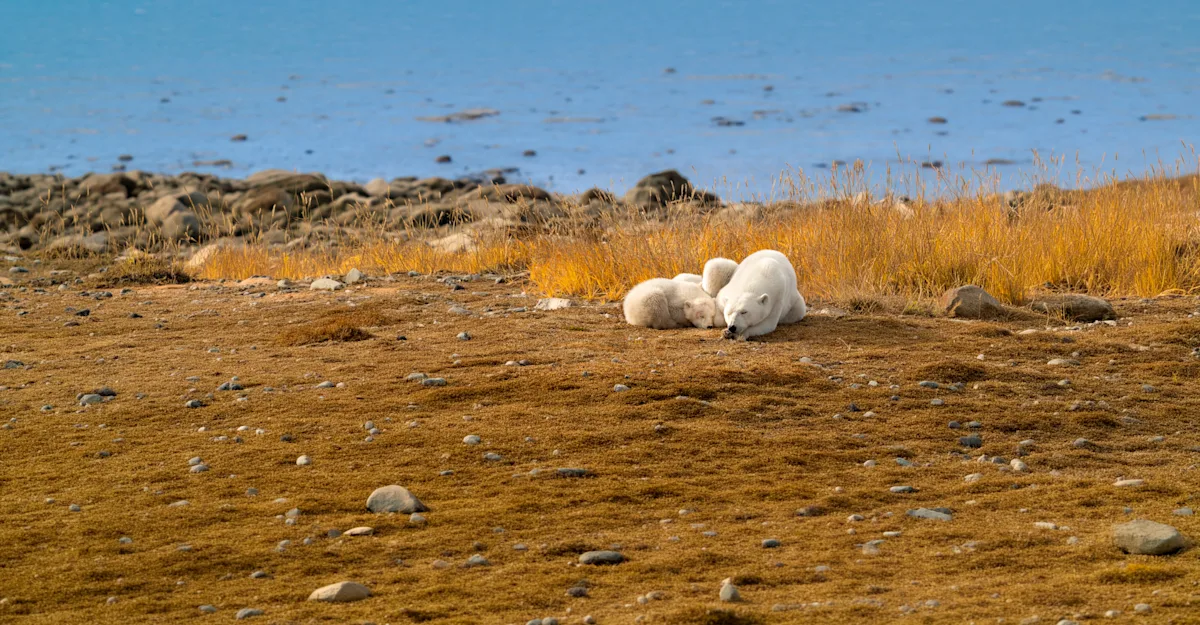
Protecting Polar Bears in Canada’s Changing Arctic
Know Before You Go
Churchill offers a rare convergence of Arctic wildlife and climate research in one accessible location. In late summer, thousands of beluga whales gather in the Churchill River, while polar bears move along the Hudson Bay coastline as they wait for sea ice to form.
Why Is Churchill One of the Best Places in the World to Study Arctic Wildlife and Climate Change?
Positioned where boreal forest transitions into tundra, this region supports both marine and terrestrial species within an ecosystem undergoing rapid change. This overlap allows participants to contribute to multiple research efforts in a single expedition, working alongside scientists to observe wildlife and document environmental change across tundra, coastal and marine environments.
Quick Facts—Protecting Polar Bears in Canada’s Changing Arctic
Location: Churchill, Manitoba, Canada
Research partner: Churchill Northern Studies Center and collaborating researchers
Primary species: Beluga whales and polar bears
Key activity: Marine wildlife research, tundra-based observation and environmental data collection
Conservation focus: Understanding climate impacts on Arctic wildlife, permafrost and shifting ecosystems
What Wildlife Will I See on a Churchill's Changing Arctic Expedition?
Beluga whales and polar bears are the primary focus, but the Churchill region supports a diverse range of subarctic wildlife across marine, tundra and boreal transition zones. Wildlife sightings vary by location and conditions, with belugas most active in river and coastal waters and land species encountered across tundra and inland habitats.
Most Likely
Beluga whales in the Churchill River and Hudson Bay
Polar bears along the tundra and coastline
Shorebirds and waterfowl along wetlands and coastal areas
Medium Likelihood
Arctic foxes moving across tundra
Sandhill cranes and other migratory birds
Snowshoe hares in shrub and tundra habitats
Rare
Caribou in tundra and boreal transition zones
Snowy owls (more typical outside this season)
Seals along the Hudson Bay coastline
Wolves in remote areas
What Is the Climate Like on a Churchill's Changing Arctic Expedition?
Churchill experiences cool, variable conditions during August and September, with weather influenced by proximity to Hudson Bay. Temperatures are generally mild compared to winter, but wind, moisture and time on the water can make conditions feel significantly colder.
Fieldwork takes place in exposed environments on both land and water, where participants should expect changing conditions throughout the day, including wind, rain and periods of fog.
Condition | What to Expect |
|---|---|
Daytime Temperatures | 40–60°F (occasionally warmer or cooler) |
Nighttime Temperatures | 35–50°F, colder on the water |
Winds | Frequent, especially along the coast |
Rain & Fog | Common throughout August–September |
Insects | Possible, but less intense than early summer |
Frequently Asked Questions
Do I need research experience?
No prior research experience is required. Participants receive training and guidance from scientists and field staff before taking part in research activities.
What type of research will I assist with?
Participants assist with a combination of wildlife and climate research. Activities may include photographing beluga whales for identification, observing polar bear behavior, and collecting environmental data related to permafrost, vegetation and Arctic ecosystems.
What is the conservation impact of this research?
This expedition supports Arctic research through ongoing work with scientists at the Churchill Northern Studies Center. Data collected in the field helps researchers understand how climate change is affecting wildlife, ecosystems and environmental processes across the region.
How physically demanding is the expedition?
Participants should be comfortable walking 2–3 miles per day over uneven tundra terrain and spending extended periods outdoors in cool, variable conditions.
Activities may also include boat excursions, standing for periods of observation and occasional bending or kneeling during fieldwork.
Can weather affect research activities?
Yes. Weather conditions such as wind, rain, fog or rough water may affect fieldwork and daily activities. Researchers adjust schedules as needed to maintain safety and continue data collection.
What happens in case of an emergency?
Participant safety is a priority on all expeditions. Field teams follow established safety procedures and maintain communication while conducting research.
If medical care is required, staff coordinate transportation to the nearest appropriate facility in Churchill.
Do I need travel insurance?
Travel insurance is strongly recommended and should include coverage for trip cancellation, interruption, medical expenses and emergency evacuation.
Earthwatch Expeditions provides travel medical insurance for participants.
What immunizations & travel vaccinations do I need?
Participants should ensure routine vaccinations are up to date before traveling to Canada.
Participants should also take precautions against insect exposure and consult a healthcare provider for additional guidance prior to departure.
What should I bring?
Participants receive a detailed packing list before departure outlining recommended clothing, field gear and personal supplies.
Essential items include layered clothing, waterproof outerwear and footwear suitable for tundra and marine environments.
Please note that the Churchill Northern Studies Center is a fragrance-free facility when packing your toiletries.
What are the chances I will see beluga whales and polar bears?
Beluga whale sightings are highly likely during August and September, when large numbers gather in the Churchill River and Hudson Bay. Polar bear sightings are possible during this period, as bears begin moving along the coast, though they are not guaranteed.
What Should I Pack for a Churchill’s Changing Arctic Expedition?
Participants should pack for cool, windy and highly variable subarctic conditions, with clothing suited to both land-based and marine fieldwork. Recommended items include:
Layered clothing (base layers and insulating mid-layers)
Warm jacket suitable for wind and cold conditions
Waterproof rain jacket and rain pants
Sturdy walking shoes or waterproof boots
Warm hat and lightweight gloves
Sunglasses and sunscreen
Insect repellent (especially for August departures)
Small daypack
Refillable water bottle
A windproof outer layer is essential for time on the water during beluga research, where conditions can feel significantly colder than on land.
What Will I Experience on Protecting Polar Bears in Canada’s Changing Arctic?
Participants experience a combination of marine and tundra-based research, working alongside scientists to study beluga whales, polar bears and Arctic ecosystems. Time is spent both on the water and on land, offering a direct connection to wildlife and the changing environment.
What Does Daily Fieldwork Look Like?
Fieldwork shifts between marine and terrestrial environments, with activities shaped by weather, wildlife movement and research priorities. Participants assist with wildlife observation, data collection and environmental monitoring, depending on conditions and ongoing scientific needs.


