

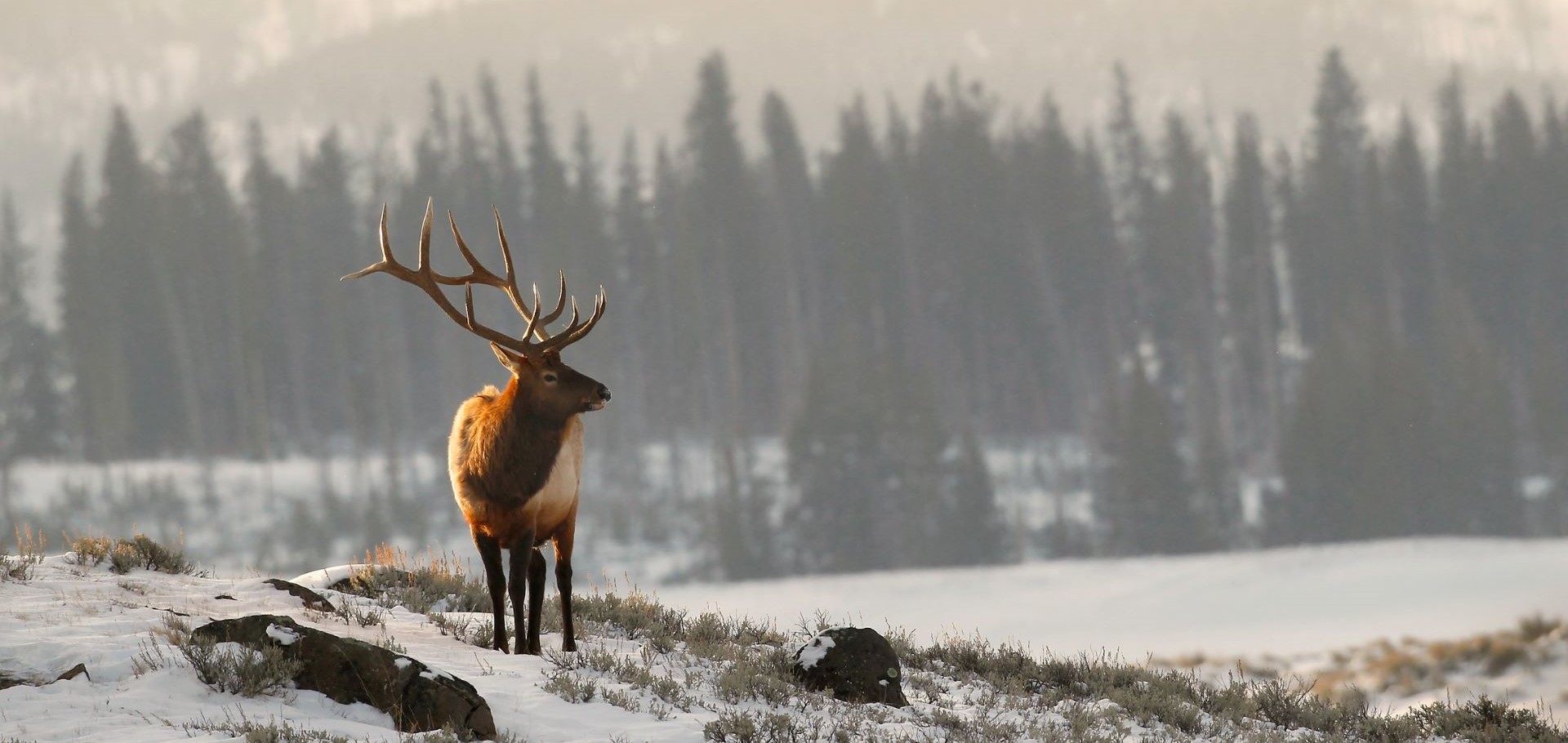
What, you may be asking, is an ungulate? You’ve actually known them all along, but perhaps just didn’t know them by their official moniker. Among the ungulates that are native to North America are bighorn sheep, bison, caribou, Dall sheep, mountain goats, moose and white-tailed deer. What do they all have in common? Hooves (and, sometimes, horns).
These large, hooved mammals are found across approximately 98% of all U.S. National Park Service lands. So, if you’re traveling with Nat Hab on a national park nature trip, you’re very likely to see one. The ungulate population is heavily managed within these protected lands, with methods ranging from reintroduction and feeding to protect or increase populations in some areas to culling, fencing and contraception to control populations in others. The management techniques vary by species, with, say, feral peccaries being handled differently than elk.
Why is so much effort devoted to ungulate management in our national parks? With 220 ungulate species worldwide, these mammals play a vital role in their ecosystems, both as prey for top predators and as primary consumers of vegetation. To successfully manage their ungulate populations, parks must consider how much the animals forage and where they migrate, as well as their population demographics.
Today, we’ll reveal what native North American ungulates you may see on your travels with Nat Hab and learn some fun facts about each! Although we mention specific trips and national parks where you’re likely to encounter them, you can expect to see many of these animals in multiple destinations across the U.S. and Canada.
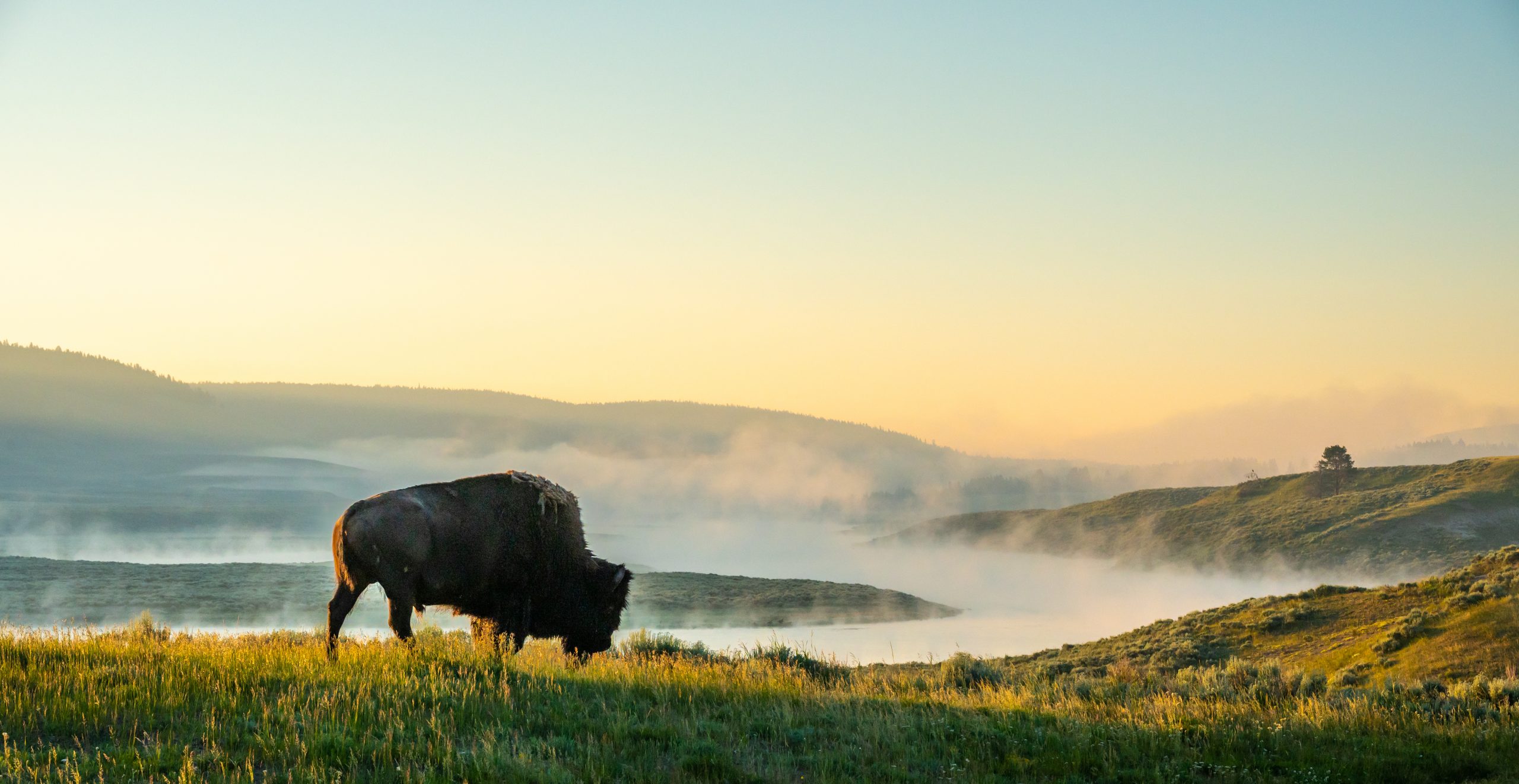
Bison Walks Toward The Foggy Yellowstone River in Summer
Bison
If you’re visiting Yellowstone and Grand Teton national parks with us, you’ll be privy to an incredibly successful ungulate survival story. The Yellowstone bison has seen more than its share of strife. Back in the early 1800s, there were approximately 65 million bison roaming North America’s Great Plains (think about that for a second: the Great Migration of the Serengeti comprises less than 2 million!). The hunting, poaching and intentional elimination of these mammals, which the Native American communities had relied upon heavily, decimated the population, leaving fewer than 1,000 bison remaining by 1890.
It wasn’t until 1886, 14 years after Yellowstone National Park was created, that the U.S. Army intervened to guard the park’s natural resources. Thanks to protective measures and management, the bison population reached 1,500 in 1954 and continued to grow through the 1970s and 1980s, supported by cool, wet summers, mild winters and plentiful grasses.
When you’re in Yellowstone and the Grand Tetons, you’re likely to get up close (though not too close, please) and personal with these majestic beasts. An adult bull can grow to six feet tall at the shoulder and weigh 2,000 pounds. During the spring and summer, look for newborns in the Lamar Valley and Firehole area of Yellowstone. Remember, as always, to keep a safe distance; bulls can charge at speeds of 30 miles per hour.
Elk
Elk play a key role in shaping the environment of the Greater Yellowstone Ecosystem, affecting plant growth and even impacting stream temperatures. Before the reintroduction of wolves into the area, the elk population had exploded, negatively influencing the ecosystem by overbrowsing willows. These plants provide critical habitat for numerous species and help stabilize stream banks. Now that elk numbers have returned to a more sustainable level, willows have rebounded, and the mammals’ impact is more positive. These large ungulates remain the most abundant big-game animals in Yellowstone, comprising more than 90% of wolves’ winter diet. Additionally, many scavenger animals, like coyotes, survive off these kills.
The elk is also a star ungulate in Grand Teton National Park, easily seen at Willow Flats between mid-May and mid-June (calving season). You won’t be able to enter the area during this time, but there are nearby viewing areas and pull-outs.

Elk © Colby Brokvist
Mule Deer
In Yellowstone, you’re likely to spot the laid-back mule deer (at least compared to its more skittish cousin, the white-tailed deer). Mule deer are easy to recognize by their large ears, which resemble those of a mule. Throughout the park, they frequent open forests, sagebrush flats and mountain slopes, moving seasonally between higher summer ranges and lower wintering areas. During migration, they generally remain at higher elevations for as long as conditions allow, descending only when deep snow limits access to food. Heavy snow can make travel difficult and bury the shrubs and other vegetation they rely on for winter forage.

Moose
A bit north of Yellowstone and Grand Teton national parks, our Nat Hab adventure to Glacier National Park introduces you to the mighty moose. Keep an eye out for these massive mammals along the edges of waterways, where they’re often browsing and munching their way through the willows. Thanks to their exceptionally long legs, moose can move easily through water, as well as deep snow.

Moose © Kurt Johnson
This trip includes a visit to Canada’s Waterton Lakes National Park, and while there aren’t as many moose up there as in Glacier proper, you may see one in the low-lying wetland areas. Moose are a stealthy bunch, despite their 1,000-pound bodies, often moving undetected through brush and forest. If you’re hiking, you may find yourself suddenly coming upon one! If that happens, just keep as much space as possible between you and them and enjoy the view.
Mountain Goats
Speaking of Canada, the rugged Canadian Rockies are one of our favorite places to spot mountain goats. Despite the name, these athletic alpinists aren’t actually goats at all! Instead, these members of the Bovidae family are more closely related to antelopes and cattle. Bring your binoculars to get a peek at them from the gondola at Lake Louise in Banff National Park or while heli-hiking in the awe-inducing Bugaboos. Mountain goats thrive in these high-altitude environments. with hooves that are adapted to traverse precipitous peaks: the sharp outer rim grips the rock ledges, while the rubbery sole provides traction on both steep and slippery surfaces.
Caribou
Perhaps you’re heading to Alaska, where you’ll have the opportunity to see another ungulate, the caribou. These “deer of the North” were used for ages by Indigenous cultures for food and clothing. Caribou are considered a social herd animal and are found both on open tundra and in the boreal forest, making Alaska their true happy place. While they can be a bit unpredictable to find, the herds often head to the Alaska coast during the summer, where they can hang out on the tidal flats—far from the pesky black flies that penetrate the interior.
Both male and female caribou have antlers, which differentiate them from all other deer species. They’re able to put up with the harsh Arctic temperatures thanks to their dense coat of hollow, club-shaped hairs, which have thicker tips than bases. This creates a nearly invincible coat with a thin, curly underwool and a thickly packed outside layer.
Musk Ox
During our Alaska wildlife safari, you’ll also visit the Large Animal Research Station at the University of Alaska, where you’ll have the opportunity to see musk ox. These shaggy bovines wandered the planet during the Ice Age, sharing space with sabertooth tigers and woolly mammoths. Today, there are about 3,500 musk oxen living in Alaska, including within the Arctic National Wildlife Refuge. You’ll have the chance to explore the reserve, with its blend of perfect ungulate conditions: open pasture and boreal forest.

Musk oxen
Dall Sheep
Venture, too, into Alaska’s Denali National Park, where you may glimpse Dall sheep, moose and caribou. Learn about Dall sheep conservation and how intimately linked the population is with the park, as well as sheep in Alaska and Canada’s Yukon Territory.

Dall sheep
Pronghorn
Moving from the boreal forests, vast grasslands and Arctic tundra, we head south to the canyons of the United States. Our Canyons Adventure takes you to the edge of the Grand Canyon, deep into Red Rock Country and to the pink pinnacles and soaring sandstone ramparts of Bryce and Zion national parks.

Pronghorn © Kim Clune
While you’re here, look for the pronghorn. It’s often referred to as the “pronghorn antelope,” although it’s more closely related to the giraffe than a true antelope! You’ll have to keep a keen eye out, because the pronghorn is the fastest land animal in North America, sprinting at 60 miles per hour and cruising comfortably at 45 miles per hour. There are an estimated 500,000 pronghorns across the western United States, down from 35 million in the early 1800s.
Bighorn Sheep
You’re also likely to glimpse speedy bighorn sheep while you’re in this region. They’re best known in these parts for their quickness and for their jousting matches with competitors—when they collide with another animal, they generate hundreds of pounds of force!

Bighorn sheep © Kurt Johnson
Bonus Ungulate: Manatees
Would you believe that the Florida manatee is an ungulate? Technically, they’re considered a subungulate, which means they might be an evolutionary offshoot of a primitive ungulate. The manatee, or sea cow, as well as whales and dolphins, have developed enlarged claws that form hoofs. While boat collisions had reduced the manatee population in Florida, conservation and educational efforts have helped it rebound from just over 1,000 to more than 6,000 individuals—effectively downgrading the manatee from endangered to threatened.

Florida manatee
From white-tailed deer and moose in Acadia National Park, to the muskoxen of Alaska, our adventures showcase the native ungulate species of North America. If it’s a hoofed or horned mammal you’d love to see, our expert wildlife guides know where they’re likely to be and when—and the best, most respectful ways to see them. We hope you’ll journey with us to meet and marvel at the ungulates of North America!