

By Siobhan Ruck, Earthwatch Participant
Fierce Faces, Night Forests and Six Years of Owl Research
My friend knows how to get my attention—”I saw that there’s an Earthwatch trip to Cave Creek Canyon to study owls.”
An Intimate Encounter with Arizona’s Forest Owls was too tempting to pass up.
Nancy and I had joined an Earthwatch expedition to study parrots in Peru 15 years earlier, and it was unforgettable. We had visited Cave Creek Canyon on a birding trip about 10 years before, and the owls were one of the highlights. Within days, we signed up.
The following year, we signed up again.
Then again.
We just finished our sixth visit.
Learning to Listen, Learning to Contribute
From Birders to Beginners Again
We had decades of birding experience, but owls were a whole new challenge. Surveying by sound—at night, in an unfamiliar environment—required an entirely new set of skills. Daytime plot surveys, identifying potential nest cavities and checking for breeding activity added another layer of learning.
I wondered how we could be useful to the researchers when we had so much to learn.
Fortunately, the training was thoughtfully designed. New concepts were introduced each day and reinforced through hands-on fieldwork. We learned by doing.
Learning Together: Skills for Every Background
Over the years, our fellow participants have arrived with a wide range of experiences and interests. We assumed most would be avid birders like us, but many had never spent much time watching birds, let alone studying them.
The training enabled everyone to make meaningful contributions. Some participants even brought expertise from other fields. One entomologist helped identify insects as part of a prey-study project we worked on that season.
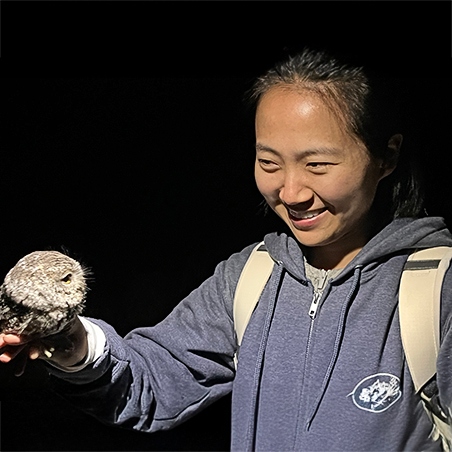
![Dr. Dave Oleyar and an Earthwatch participant about to release a Whiskered Screech Owl who has been fitted with a geo recorder]](https://d4g0cdul6yygp.cloudfront.net/uploads/2026/04/IMG_0279.jpg)
What Fieldwork Really Looks Like
Plot Work by Day, Fierce Little Faces by Afternoon
Although the specifics of the work evolved over the years, the daily rhythm remained fairly consistent.
The day often began with training related to the day’s work—learning tree identification and plot survey techniques. Then we headed into the field for several hours of mapping owl habitat and searching for nests.
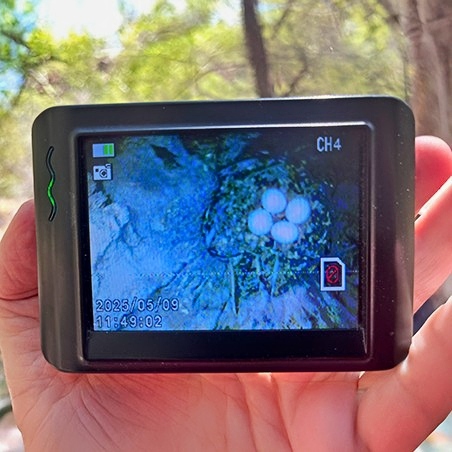
Within each plot, we investigated promising cavities using a specially designed cavity camera mounted on long poles. We rated each cavity and mapped those worth revisiting in future years.
Most were empty.
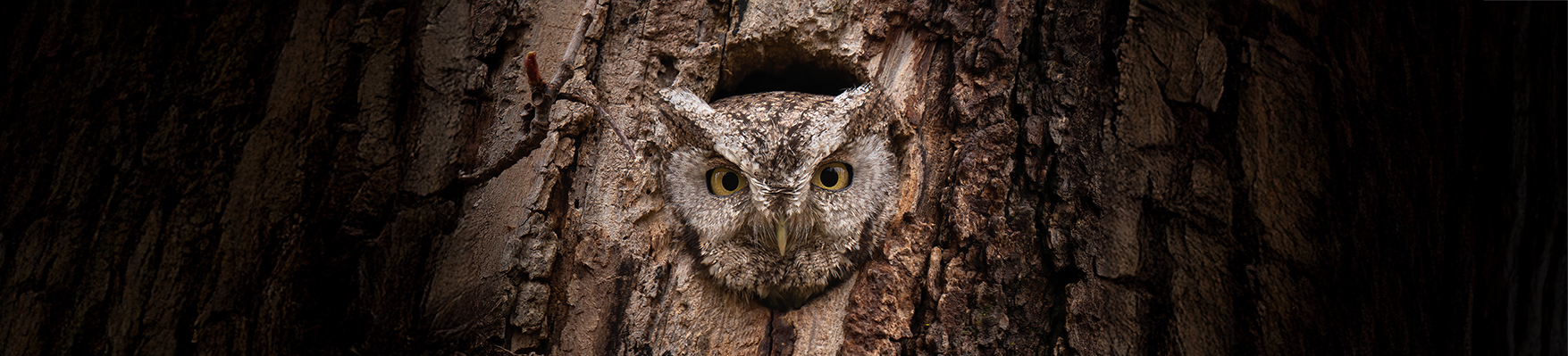
Sometimes, though, we’d peer into a cavity and find a fierce little face staring back at us.
As the years passed and researchers located more nests, we spent more time revisiting previous nesting sites to see whether they were being used again. Every year seemed to bring more fierce little faces.
Life at the Southwest Research Station
When surveys ended, we sometimes returned to the classroom for additional training. Other days, we had a few hours to explore on our own.
The expedition is based at the American Museum of Natural History’s Southwest Research Station near Cave Creek Canyon in Arizona. Participants stay in comfortable shared rooms and gather in a dining hall for meals. Most days, we ate outside beneath a giant sycamore tree beside the creek.
The station also includes classroom space and an excellent natural history library filled with comfortable sofas and shelves of fascinating books.
A Living Laboratory in the Chiricahua Mountains
The station supports a remarkable diversity of birds, mammals, insects, plants and geology. Even a short walk often turns up something interesting.
Several research projects operate from the station, and many scientists are happy to discuss their work.
One year, I returned home and saw a major article in The New York Times featuring a researcher I’d spent the week talking with over meals.
That felt pretty special.
Nights in the Forest: Surveying, Capturing and Releasing Owls
The Real Adventure Begins After Dark
As interesting as the days were, the nights were when the adventure truly began.
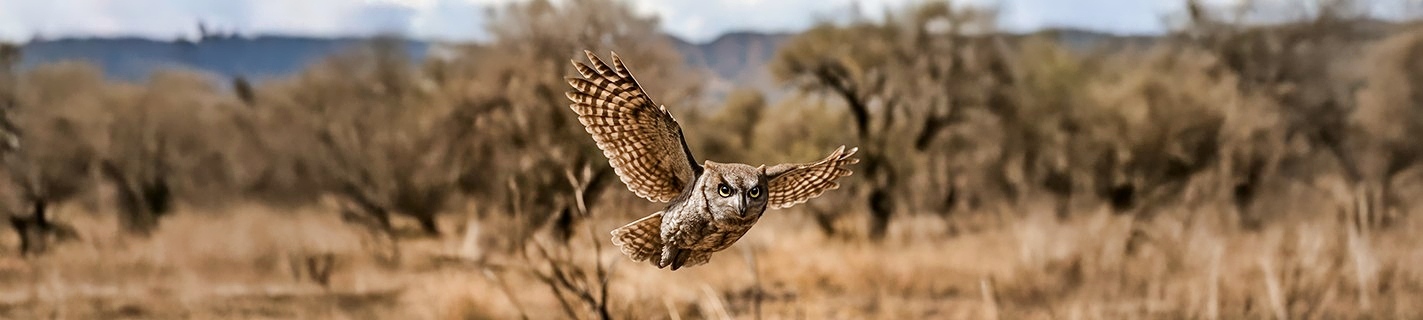
Armed with newly acquired owl-identification skills, we conducted audio surveys throughout the Chiricahua Mountains. We listened quietly, played owl calls and waited for responses.
If an owl responded strongly and appeared to be approaching, we quickly set up mist nets mounted on tall poles.
Some owls flew in almost immediately.
Others kept us waiting.
And some simply refused to cooperate.
The unpredictability made every successful capture even more exciting.
Banding, Measuring and Marveling
Once an owl was safely captured, researchers attached a unique identification band that would allow them to recognize the bird if it was encountered again.
After banding, they recorded measurements and assessed the owl’s health and breeding status. A select number also received tracking devices that provided valuable information about their movements.
Tiny Bodies, Huge Presence
And oh, those owls.
The largest species we handled, the western screech owl, weighs a little more than 5 ounces and can sit comfortably in the palm of your hand.
The owls only get smaller from there.
An elf owl stands roughly 6 inches tall and weighs about 1½ ounces.
How can something so tiny have such an enormous presence?
The Bigger Picture in Owl Conservation
A Species at the Edge
The most frequently captured owl at the Arizona site is the whiskered screech owl. This species is widespread across Mexico and Central America but barely extends into the United States along the southern border.
Because whiskered screech owls have not been widely studied, this project has made an important contribution to understanding the species over more than a decade of research.
Tracking Generations
The long-term owl research associated with Earthwatch has produced valuable insights into breeding behavior, habitat use and survival.
Long-running studies allow researchers to follow individual birds over time and, in some cases, across generations. Those decades of data help scientists better understand how forest owls respond to environmental change.
The Moment of Release
After the banding work is complete, we have a chance to admire these tiny predators before they return to the night.
If the owls seem comfortable, participants may have the opportunity to release them.
Sharing that moment with a completely wild creature is unforgettable.
Why This Work Matters—and Why We Keep Coming Back
More Than Just Fieldwork
Time with the owls is certainly a major draw, but another reason my friend and I keep returning is Dr. Dave Oleyar and the outstanding team that works alongside him.
We don’t just learn what the researchers are doing.
We learn why it matters.
Dave explains how the forests these owls depend on are becoming fragmented and how changing climate conditions affect breeding habitat, migration routes and food sources. Understanding what owls need to survive means understanding everything from nesting trees to insect populations to drought and extreme weather.
Dave’s passion for owls is contagious.
By the time you head home, you may find yourself becoming an “evangeowlist” too.
(And yes, there is a steady stream of owl puns.)
Come for the Owls, Return for the People
During meals and downtime, we sometimes talk about owls. More often, conversations wander in all sorts of interesting directions.
Earthwatch participants seem to attract fascinating people.
On most trips, about half the group is experiencing Earthwatch for the first time. The rest are returning participants, some with 15 or 20 expeditions behind them.
Is This for You?
Earthwatch isn’t for everyone. If your ideal getaway involves lounging on a beach with a paperback or tackling a long-distance backpacking trail, this may not be the right fit.
But if you want an experience that expands your understanding of the natural world while contributing to meaningful research in a remarkable landscape, I have a suggestion for you.
Ready to Hear the Forest Speak?
If the idea of tracking tiny predators beneath star-filled skies makes your heart beat a little faster, you might be one of us.
Whether you’re a seasoned birder, a newcomer or simply someone who enjoys hearing owl calls echo through a canyon at night, there’s a place for you on this expedition.
Join An Intimate Encounter with Arizona’s Forest Owls and become part of the story.
Or browse other Earthwatch expeditions and discover your own fierce little face in the wild.