

Know Before You Go: Brazil Tours
Why Should I Go to Brazil’s Pantanal?
Brazil’s Pantanal is one of the best places on Earth to see wildlife in open, wild country. Spanning more than 70,000 square miles, it is the world’s largest tropical wetland and one of the most wildlife-dense regions in the Western Hemisphere. A UNESCO World Heritage Site, the Pantanal supports an extraordinary concentration of animals—including the highest density of jaguars on the planet, an estimated 10 million caimans and more than 650 bird species. For nature travelers planning a Brazil safari, it offers unusually frequent and prolonged sightings of big mammals, river predators and spectacular birdlife.
The Pantanal is an exceptional choice for a South American nature adventure, offering rare opportunities for clear views and long, uninterrupted wildlife encounters. Open floodplains, winding rivers and forested “islands” create natural edges where wildlife stays visible along riverbanks and wetlands rather than disappearing into dense vegetation. Add small groups, skilled naturalist guides and remote ecolodges inside private reserves, and you have one of Brazil’s most rewarding regions for immersive nature travel.
Why Is Brazil’s Pantanal Considered South America’s Grandest Wildlife Realm?
The Pantanal is the world’s largest tropical wetland and one of the most wildlife-rich regions in the Americas. Seasonal floods create a shifting mosaic of rivers, lagoons, gallery forest and grasslands that support an impressive density of animals. Jaguars, giant river otters, giant anteaters, tapirs, capybaras, caimans and more than 650 bird species all share this immense basin.
What sets Brazil’s Pantanal apart is how much wildlife you can see—and how clearly you can see it. As water and food concentrate in predictable places during the dry season, many animals feed and rest in open habitats along river and wetland edges. That gives travelers long, clear sight lines and time to observe natural behavior rather than catching only quick glimpses. With boat-based exploration in the north and ranch- or reserve-based outings in the south, the Pantanal offers a wide range of experiences within one connected ecosystem.
“People think about the Amazon for wildlife, but I hadn’t quite realized the density of wildlife in the Pantanal—and it’s the easiest place to see a jaguar in the world. Birders would be in heaven in the Pantanal too. It’s the [world’s largest tropical] wetland and a UNESCO Conservation Area; it has some unique wildlife lodges you can stay at. People always love wildlife, and in South America, it’s primarily been the Amazon that draws travelers—but this region is less visited. Nat Hab’s group trip would be a great way to do it; they take a chartered flight and have [wildlife guides].” —AFAR, opens in new tab
Why is the Pantanal One of The Best Places in the World to See Jaguars?
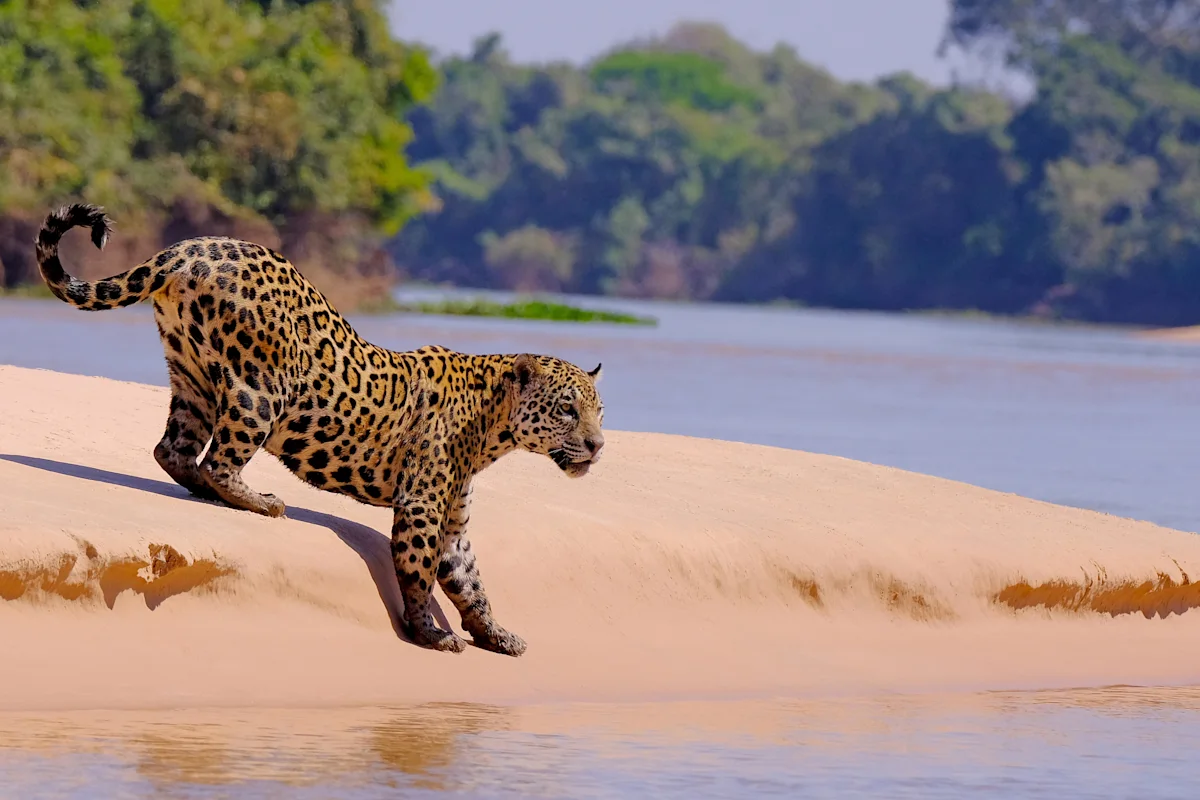
For travelers who dream of seeing jaguars in the wild, Brazil’s Pantanal is unmatched. The region holds the highest known density of jaguars on the planet, especially along the rivers near Porto Jofre in the northern Pantanal. Here, big cats patrol sandbars and forested banks in search of capybaras and caimans, and they often hunt in daylight. Conservation programs like the Jaguar ID Project, Onçafari’s research and reintroduction efforts and habitat preservation at Caiman Ecological Refuge have strengthened jaguar numbers and helped ensure the cats can thrive in the region.
Why Travel With Natural Habitat Adventures to Brazil’s Pantanal?
Wildlife tourism plays a vital role in protecting Brazil’s Pantanal, the world’s largest tropical wetland and one of South America’s richest wildlife sanctuaries. Much of the region is privately owned ranchland, and responsible ecotourism helps create economic incentives to safeguard habitat for jaguars, giant anteaters, hyacinth macaws and countless other species.
Natural Habitat Adventures designs its Pantanal itineraries around what matters most for wildlife-focused travelers:
A complete north + south experience: Linking the jaguar-rich river corridors of the northern Pantanal with the ranches, wetlands and private reserves of the south provides the most comprehensive view of this vast ecosystem.
Multiple days on the rivers near Porto Jofre: Repeated small-boat outings offer the best chance of observing jaguars, giant river otters and other river-edge wildlife without crowding or disturbance.
Private charter flights between regions: Flying saves many hours of overland travel, adds more time in nature and minimizes pressure on local roads and wildlife.
Remote ecolodges in protected areas: Nat Hab chooses lodges inside private reserves, conservation ranches and wildlife corridors—locations that support habitat protection and reduce pressure on busy tourist zones.
Because Nat Hab is WWF’s global travel partner, every journey directly supports conservation initiatives that protect wetlands, wildlife and the communities that depend on them. Our small groups, expert naturalist guides and conservation-first approach ensure guests spend their days where it matters most: in quiet, wildlife-rich places where encounters feel unhurried, respectful and deeply immersive.
Why Choose Nat Hab for a Brazil Tour?
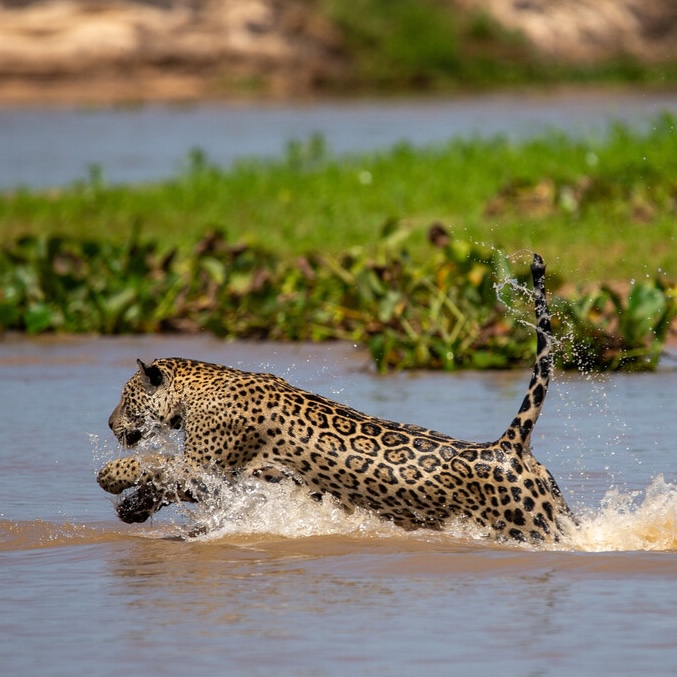
Nat Hab’s Brazil journeys combine river-based exploration in the jaguar-rich northern Pantanal with ranch- and reserve-based wildlife experiences in the south, revealing wetlands, forests and savanna most travelers never see. This thoughtful routing offers a deeper, more varied immersion in the region. Learn More
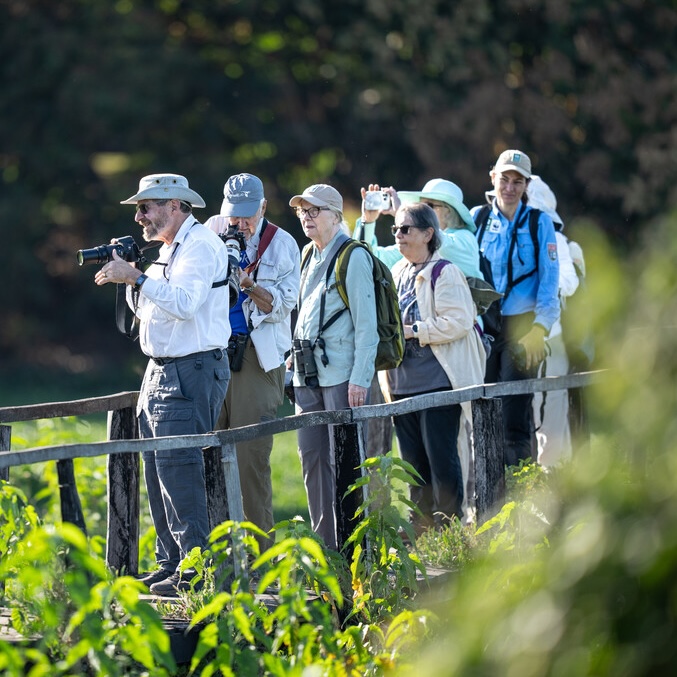
Group sizes between 8 and 11 guests, depending on the itinerary, ensure uncrowded boats and vehicles, flexible routing and intimate wildlife encounters on rivers and ranchlands. Smaller groups also allow for more personal guidance and richer, slower-paced wildlife observation throughout the journey. Learn More
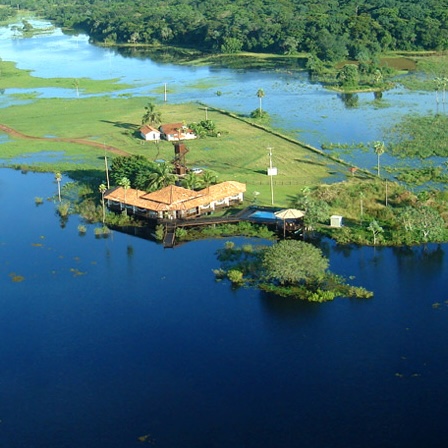
Stay at riverfront lodges and conservation-focused ranch ecolodges set inside private reserves and wildlife sanctuaries, where you can watch capybaras, caimans and macaws often without leaving the property. Locations are chosen for exceptional access to wildlife rather than city-style luxury. Learn More
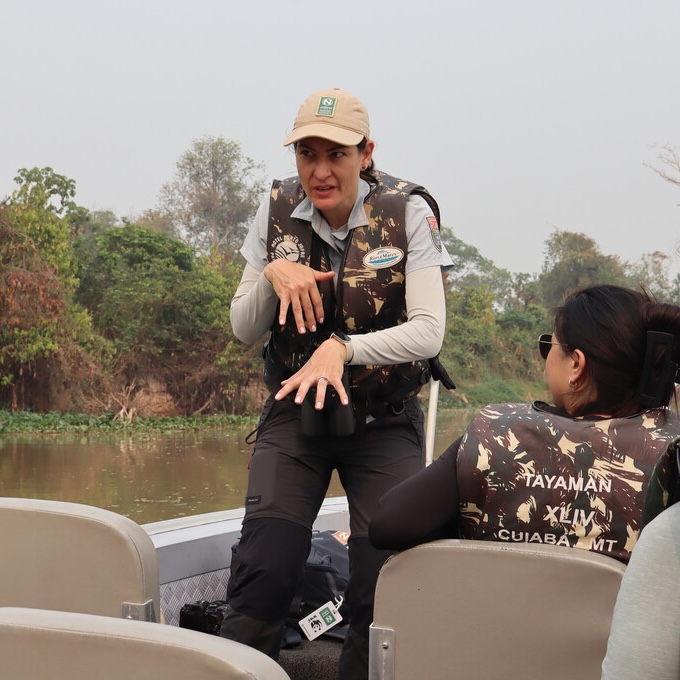
Nat Hab’s Pantanal Expedition Leaders are seasoned naturalists who interpret floodplain ecology, jaguar behavior and birdlife with depth and clarity. They work alongside local guides who know individual territories and seasonal rhythms, enhancing every skiff outing, guided walk and 4x4 drive. Learn More
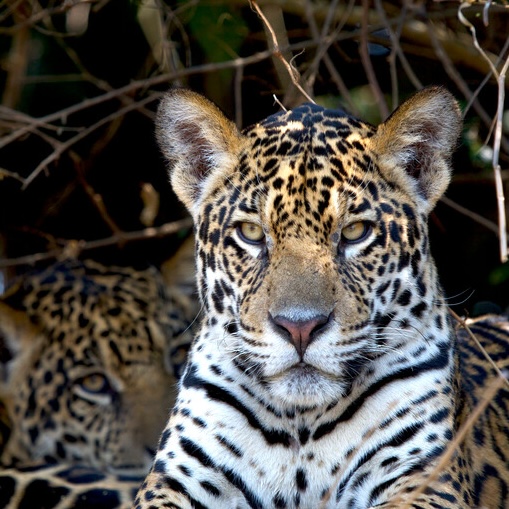
Through our long-standing partnership with World Wildlife Fund and our support of conservation-minded lodges and ranches, Nat Hab’s Brazil Pantanal safaris help protect critical wetland habitat, promote coexistence with wildlife and sustain local livelihoods tied to a thriving ecosystem. Learn More
Brazil Tour Guide


Frequently Asked Questions
Will I see jaguars in Brazil’s Pantanal?
No operator can guarantee a jaguar sighting, but the Pantanal offers some of the best odds anywhere in the species’ range. An estimated 4,000 to 6,000 jaguars live across the Pantanal—one of the species’ strongholds—and Nat Hab itineraries include multiple small-boat excursions in the core territories around Porto Jofre. By timing trips for lower water levels and working with local guides who know individual home ranges, Nat Hab greatly improves your chances of encountering jaguars along exposed riverbanks and sandbars.
How do you get to Brazil’s Pantanal?
Reaching the Pantanal usually starts with an international flight to a major Brazilian gateway, most often Sao Paulo. From there, travelers connect via domestic flights to regional hubs that serve different parts of the Pantanal. Cuiaba is the primary entry point for the northern Pantanal, while Campo Grande commonly serves the south.
What should I pack for a Brazil Pantanal safari?
You should pack for both hot afternoons and cool mornings or evenings. Lightweight, quick-dry shirts and long pants work best for sun and insect protection. A warm layer such as a fleece is important if you travel in June or July, when dawn boat rides can be chilly. A fully waterproof rain jacket, comfortable closed-toe walking shoes, a wide-brimmed hat, sunscreen, insect repellent, a reusable water bottle and good binoculars will all make your time in Brazil’s Pantanal more comfortable.
Do I need any vaccines or medications to travel to Brazil’s Pantanal?
Recommendations vary based on your health history, itinerary and country of residence. Travelers are typically advised to be current on routine vaccines and may need additional protection for tropical regions. Because guidance changes, consult a travel clinic or healthcare provider before departure and review the latest information from official health agencies for Brazil.
What currency is used in Brazil?
Brazil’s official currency is the Brazilian real (BRL). In major cities you can exchange money at casas de cambio or large banks and use credit cards widely at hotels, airports and larger shops. In the Pantanal, smaller businesses and tipping situations often require cash, so it is wise to arrive with some local currency for gratuities, snacks and incidental purchases.
What language is spoken in Brazil?
Portuguese is the official language of Brazil and the primary language spoken across the Pantanal. In city hotels and at lodges that regularly host international guests, you will often find staff who speak some English.
What is the food like in Brazil’s Pantanal?
Food in the Pantanal reflects broader Brazilian cuisine with a regional twist. Many meals feature rice and beans, fresh fish, local meats, vegetables and tropical fruits. You may have the chance to try feijoada, the country’s classic black bean stew with pork and greens, along with grilled dishes and simple desserts.


