

Know Before You Go: Brazil Tours
Where Should I Go in Brazil’s Pantanal?
Planning a trip to Brazil’s Pantanal starts with choosing where to explore in this vast wetland. Covering more than 70,000 square miles—about the size of Washington State—the Pantanal is far larger than most travelers expect, and only a few regions offer consistent wildlife access. Selecting the right ones means better sightings, smoother travel and a deeper connection to the ecosystem.
For most nature travelers, the best approach is to visit both the Northern Pantanal and the Southern Pantanal. Each area offers a different mix of rivers, ranchlands and private reserves, and together they reveal the full character of Brazil’s greatest wetland wilderness.
“As dusk casts a golden light on the water, we nearly miss a jaguar paddling through the river beside us. We cut the engine and the animal turns, making eye contact over its shoulder until it walks onshore and shakes itself dry before disappearing into the bushes. ...To see wildlife in and around the water, head to the rivers of the Northern Pantanal, like around the popular settlement of Porto Jofre, which you can reach by flying into Cuiabá, or to the remote Serra do Amolar, accessible via riverboat from Porto Jofre or the city of Corumbá. If you plan to visit multiple destinations...join a group trip with Natural Habitat Adventures.” —Condé Nast Traveler, opens in new tab
What Are the Main Regions of Brazil’s Pantanal?
Brazil’s Pantanal, the world’s largest tropical wetland, is generally divided into two primary regions for travel and wildlife viewing: the Northern Pantanal and the Southern Pantanal. While both regions share the same flood-driven ecosystem, they differ significantly in landscape, access, and wildlife-viewing style.
Northern Pantanal Region
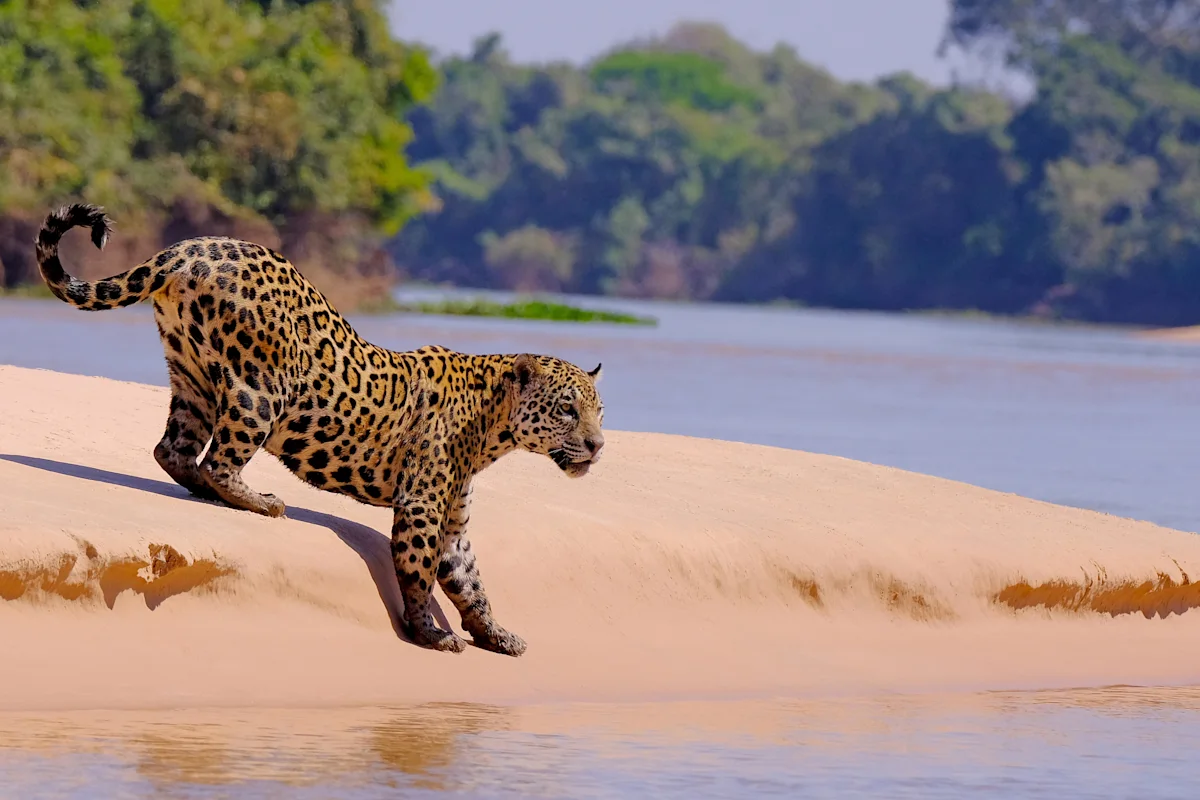
The Northern Pantanal is best known for river-based exploration and jaguar-focused wildlife encounters. The rivers near Porto Jofre hold one of the highest densities of jaguars anywhere in the species’ range, and small boats provide access to narrow channels and sandbars where they often patrol.
Key characteristics of the Northern Pantanal include:
Extensive river systems and maze-like tributaries
Boat safaris and skiff-based wildlife viewing
High concentrations of jaguars along major waterways
Excellent birding with hyacinth macaws, jabiru storks, herons, kingfishers and raptors
Long viewing windows that allow you to watch behavior, not just quick glimpses
Small riverfront communities and remote fishing outposts
Days on the water are ideal for wildlife photography and for observing natural behavior at close yet respectful distances. In this region, wide rivers dominate the landscape, carving channels through floating meadows and exposed banks. Seasonal flooding concentrates wildlife along the water’s edge, making the north especially famous for jaguar sightings as cats patrol riverbanks in search of prey. Human activity here is closely tied to the rivers, with most lodges and travel centered on water access.
Southern Pantanal Region
The Southern Pantanal offers a more varied mix of habitats and activities. Here, fazendas (cattle ranches) and private reserves protect mosaics of grasslands, gallery forest, wetlands and patches of scrub. Wildlife can appear almost anywhere.
Key characteristics of the Southern Pantanal include:
A mosaic of cattle ranches, private reserves, and forested “islands”
Land-based wildlife drives and guided walking safaris where you'll spot giant anteaters, tapirs, capybaras, macaws and other birds, and elusive nocturnal species
Gallery forests lining seasonal streams
A deep cultural link to Pantaneiro ranching traditions
Rather than being defined by large rivers, the Southern Pantanal spreads into expansive floodplains of open pasture, palm-dotted savanna, shallow lagoons, and narrow forest corridors. Although the terrain feels more open, the water table remains high, and seasonal rains transform the area into a vast wetland. Wildlife moves freely between marshes, forests, and working ranchlands surrounding remote ecolodges and long-established conservation properties.
How the Two Pantanal Regions Compare
Both the Northern and Southern Pantanal are shaped by the same seasonal flooding cycle, but they function differently. The north feels organized around rivers and boat travel, while the south resembles a wild countryside shaped by water, where land-based exploration plays a larger role. Together, they represent two complementary expressions of the Pantanal ecosystem.
Should I Visit Both the North and South Pantanal on One Trip?
For a truly complete Pantanal experience, combining the Northern and Southern regions is the best choice. Each area reveals different pieces of the ecosystem and a different feel for life in Brazil’s Pantanal.
Visiting both regions gives you:
Two perspectives on the same wetland system
River corridors and boat-based exploration in the north
Ranchlands, forests and mixed activities in the south
Greater wildlife variety
Strong jaguar and river wildlife focus in the north
Broader mix of large mammals and birds in the south
Cultural context
Insights into Pantaneiro ranch traditions and modern conservation work
Time at properties that support research and community partnerships
Nat Hab’s Brazil journeys are built around this combination. Chartered flights connect north and south, so you avoid long, dusty drives and gain more time on the water and on wildlife drives.

