

Know Before You Go: Brazil Tours
When Should I Go to Brazil’s Pantanal?
Choosing when to go to Brazil’s Pantanal is almost as important as choosing where to go. This vast tropical wetland runs on a clear seasonal rhythm. Water levels rise and fall, temperatures shift and wildlife gathers in different places throughout the year. Understanding the dry months and rainy season will help you time your Pantanal adventure for the conditions you prefer.
For most nature travelers, the best time to visit Brazil’s Pantanal is during the dry season—April through November—when water levels recede and wildlife concentrates around remaining rivers, lagoons and wetlands. Trails and boat routes open up, views get longer and animals become easier to spot along exposed banks and floodplain edges.
During the dry season, travelers can generally expect to:
See more wildlife in open areas, as animals gather at shrinking water sources, making sightings more frequent and often more prolonged
Enjoy smoother logistics, with drivable roads, firmer ground for walking safaris and easier access to remote areas
Experience excellent boat-based wildlife viewing, especially on narrower river channels where jaguars, giant otters, caimans and capybaras concentrate
Have clearer visibility for photography, with long sight lines, crisp morning light and reduced vegetation compared to the wet months.
What Are Conditions Like During the Pantanal’s Dry Months?
The drier stretch of the year in the Pantanal runs April through November. As rains ease and floodwaters retreat, trails open, rivers narrow and wildlife concentrates along exposed banks and wetlands.
During the dry months, you can generally expect:
Temperatures:
April–May: Warm days in the mid-80s to low 90s°F; evenings are mild, typically 55–70°F.
June–July: Warm days in the high 80s°F; early mornings can drop into the 40s–50s°F, especially during cold fronts.
August–September: Hotter weather returns, often 90–95°F in the afternoon with warm nights 65–75°F.
October–November: Increasing heat and humidity as the wet season approaches, with daytime highs 90–100°F and warm nights 70–80°F.
Rainfall:
Limited rainfall from April through September, with storms increasing in October and November as the rains begin to return.
Humidity:
April–May: Moderate humidity, generally 55–70%, with cooler mornings and warm afternoons.
June–September: The driest stretch, often 45–60%, making boats and trails more comfortable.
October–November: Noticeably more humid as the wet season approaches, typically 70–85%.
Wildlife Activity:
Animals concentrate around shrinking water sources, creating frequent and predictable sightings along riverbanks, mudflats and lagoons.
Photography Conditions:
Clear skies, long sight lines, crisp morning light and more open vegetation from June through September. By October–November, dramatic storm clouds and richer greenery return, offering more dynamic conditions.
What Are Conditions Like During the Pantanal's Rainy Season?
The rainy season in the Pantanal runs roughly December through March. More than half the region’s annual rainfall can arrive during these months, swelling rivers, flooding vast floodplains and turning much of the landscape into a shallow inland sea. Roads often become impassable, many lodges switch to boat-only access and wildlife disperses into freshly inundated habitat.
During the rainy season you can generally expect:
Temperatures:
Daytime highs typically 90–95ºF, with warm, humid nights that often stay above 70ºF.
Rainfall:
Frequent heavy showers and thunderstorms, with some days experiencing prolonged downpours. Flood levels may rise several feet across open wetlands.
Humidity:
Very high—often 75–95%—creating a noticeably hotter, more tropical feel compared to the dry months.
Wildlife Activity:
Animals spread out across the flooded landscape as new food and shelter become widely available. Sightings are still possible but less concentrated, and travel requires more time and flexibility.
Photography Conditions:
Lush green landscapes, dramatic clouds and moody storm light, but less predictability. Visibility is reduced during storms, and wildlife may be farther from accessible routes.
When Is the Best Time to Look for Jaguars in Brazil’s Pantanal?
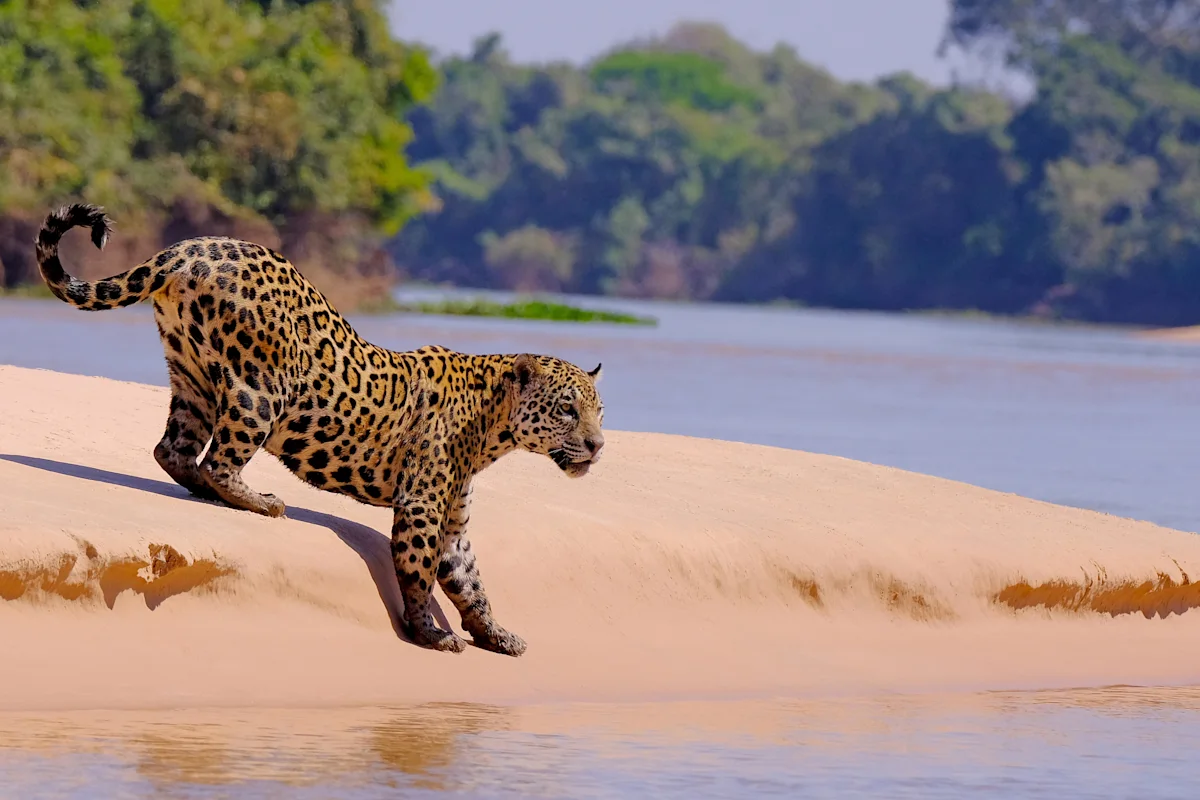
If seeing a jaguar in the wild is at the top of your list, the drier months from April to November are the best time to visit Brazil’s Pantanal. As water levels fall and riverbanks widen, jaguars in the northern Pantanal spend more time hunting, patrolling and resting in full view along exposed shorelines. A jaguar encounter is one of the most exhilarating wildlife moments on Earth—and traveling with experts who understand jaguar behavior and river dynamics makes all the difference. During the dry months, Nat Hab Expedition Leaders take advantage of low water levels to run multiple small-boat outings through the narrow river corridors where jaguars reliably roam. These repeated excursions allow you to linger in core territories, follow fresh tracks and listen for alarm calls that often signal a cat’s presence.

