
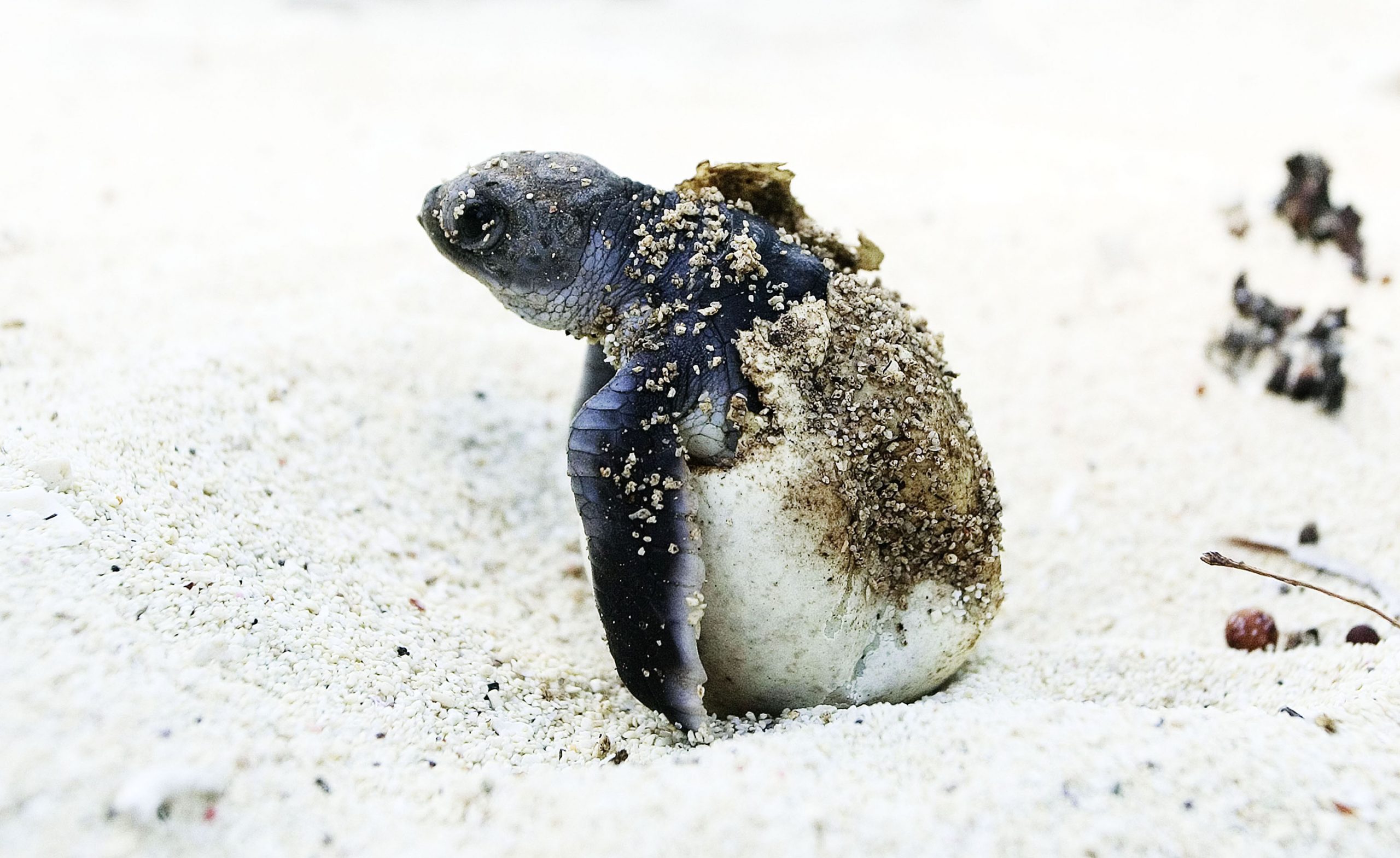
When I was about 14 years old, I attended a conservation science camp on the east coast of Florida. The only part I remember clearly now, decades later, was when we gathered on the beach at dawn to release turtle hatchlings into the Atlantic.
A volunteer from a local community conservation group brought them in a white Styrofoam cooler. Some were still hatching. They seemed impossibly small scrambling into the surf, too small to be tumbled in the waves. Some got turned around toward the highway lights; we redirected them. We learned about the different species that nest on local beaches, community efforts to guard nests, and what percentage live to adulthood. It was my first formal conservation experience.
That morning was a tiny part of a much larger conservation story told in WWF’s Living Planet Report 2026: in 2025 the green sea turtle became the first marine turtle ever moved from Endangered to Least Concern on the IUCN Red List, after 50 years of work across about 80 nesting countries.
WWF subtitled the 2026 edition The Science of Hope to show how targeted conservation works, and how the same approach can transform the larger systems driving nature loss.
Shifting Focus to Positive Tipping Points
Sea turtle recovery offers a ray of hope in the larger context of stark decline: monitored wildlife populations fell by an average of 73% between 1970 and 2022. Despite local and targeted species recoveries, nature continues to be degraded globally, with no sign of slowing.
The 2024 Living Planet Report focused on tipping points that put coral reefs, forests and ice sheets at risk. Good Nature’s coverage of the 2022 Living Planet Report tracked the same downward trend.
The 2026 report documents positive tipping points, focusing on how we can learn from wildlife comebacks and conservation successes to drive recovery at the scale needed to reverse biodiversity loss.
A positive tipping point occurs when a system crosses a threshold into a healthier state and the change begins to reinforce itself.
Dr. Rebecca Shaw, WWF Chief Scientist and the report’s editor-in-chief, shared, “The Living Planet Report 2024 focused on negative tipping points: climate change, coral reefs to raise awareness of risks. The Living Planet Report 2026 focuses on recovery at scale through positive tipping points. How we drive transformation is through hope and inspiration, vision and goals, and coordinated action at scale.”
What Did WWF’s Living Planet Report 2026 Find?
The Living Planet Index, produced by ZSL (Zoological Society of London), featured the largest dataset to date, tracking 35,803 populations of 5,790 vertebrate species: mammals, birds, fish, reptiles and amphibians. Over 52 years, those populations shrank by an average of 73%.
- By ecosystem: freshwater populations fell 85%, terrestrial 69% and marine 59%.
- By region: Latin America and the Caribbean fell 95%, Africa 80%, Asia and the Pacific 49%, North America 28%, and Europe and Central Asia 23%.
- By threat: habitat loss and degradation, followed by overexploitation, climate change, pollution, invasive species and disease.
The 73% figure is an average change in population size. It does not mean 73% of animals or species are gone. “While fifty-two years of data show us that monitored wildlife populations have on average declined 73%, it also shows that nature can rebound when we take action,” noted Dr. Shaw. “Half the populations we track are stable or increasing, and species that were in freefall a generation ago are fighting their way back. That makes recovery more than a hope. It’s a documented, repeatable outcome of sustained action, and the science now shows that the same self-reinforcing dynamics driving collapse can drive recovery, if we build the conditions for it.”
This is cause for hope and action.
Which Species Are Recovering, and How?
The report profiles four recoveries, each documented over decades:
- Tigers (Panthera tigris). Camera-trap estimates show wild tigers rising from about 3,200 in 2010 to around 5,700 in 2025, a gain of more than 70% and the first documented reversal of their long decline. Tigers remain Endangered and occupy less than 8% of their historic range.
- Atlantic and Pacific bluefin tuna (Thunnus thynnus and Thunnus orientalis). By 2010, Atlantic bluefin had fallen by 80% and Pacific bluefin had collapsed to 2% of unfished levels. Science-based quotas, spawning-area protections, dockside monitoring and commitments from chefs and retailers brought both back. Neither is now considered overfished.
- Green sea turtles (Chelonia mydas). Nest protection, beach lighting rules and turtle excluder devices on fishing gear lifted annual nesting at monitored sites from about 419,000 clutches in 2011 to roughly 526,000 in 2024.
- Southern African savannah elephants (Loxodonta africana). African savannah elephants are Endangered and declining across much of their range. In parts of southern Africa they are stable or increasing, in countries where the law gives local communities rights over wildlife and a direct share of the benefits.
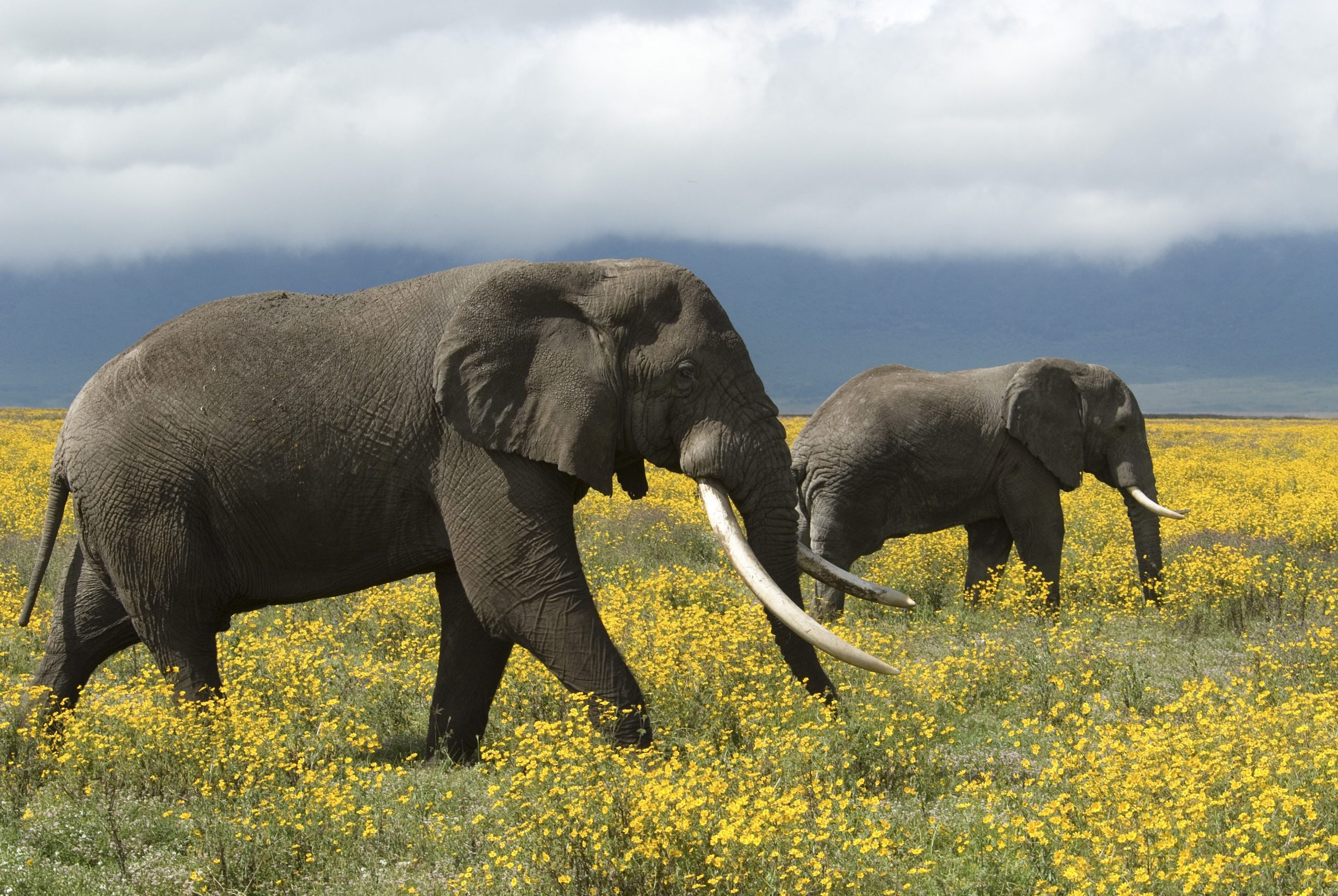
© Steve Morello / WWF
How Can the Science of Hope Drive Biodiversity and Wildlife Recovery?
The report uses hope as key component in a process with four parts, along with a vision or goal grounded in something people value, a credible pathway, agency and resilience.
When communities, sectors and countries share them, the report calls it collective hope and describes it as the most reliable predictor of whether large-scale change will occur.
Each recovery had a clear goal, a plan that could be revised, people with the agency to act, and the resilience to continue through setbacks. The report treats that combination as a process that can be cultivated and replicated at scale.
In a press briefing, Dr. Shaw stressed, “Targeted conservation works and cannot overcome the scale of biodiversity loss. We have to change the systems.” Especially energy, food, and finance.
Transitions last when the people closest to the land and water have real authority and a fair share of the benefits. Forest loss is significantly lower in Indigenous-managed territories, and fisheries recover faster when local fishing communities help design the protections.
How Does Conservation Travel Contribute to Transformation?
WWF International Director General Kirsten Schuijt said, “We have to elevate nature in public discourse, elevate the place of nature, its value to people. By elevating nature, we can create a movement to reverse biodiversity loss.”Nat Hab contributes through conservation travel, supporting local communities and educators. A living elephant, tiger or coral reef becomes worth more to the people who share land and water with it when travelers pay to see it and local people hold the jobs. The southern African elephant recovery in the report rests on that logic: communities with rights over wildlife and a stake in its future.
As WWF’s conservation travel partner since 2003, Nat Hab contributes to transformation in several ways:
- Elevating nature, wildlife and biodiversity in public discourse at home and abroad. Travelers return as advocates, and Nat Hab uses its platform on issues such as a proposed mine surrounded by Alaska’s Lake Clark National Park, home to coastal brown bears.
- Supporting local and Indigenous communities who value nature, wildlife and biodiversity. In Namibia, communal conservancies give residents the legal right to manage and benefit from wildlife. Tourism is central to that model, and elephant numbers in Kunene have tripled.
- Contributing directly to education that elevates nature. Nat Hab Philanthropy funds grassroots projects that restore habitats, advance education and strengthen local stewardship.
- Innovating in transport and food systems where it operates. In Botswana’s Okavango Delta, a converted diesel 4×4 now runs on batteries charged by an off-grid solar station. In Churchill, Manitoba, a hydroponic container farm supplies 250 to 400 pieces of fresh produce a week to a subarctic town, and Nat Hab funded a hydroponic cabinet for hands-on learning alongside it.
These small shifts follow the pattern the report describes: a clear goal, a workable path, local agency, and continued commitment.The tigers, tuna, turtles and elephants in the WWF Living Planet Report 2026 show how recovery happens: people collaborated, committed to outcomes they could not guarantee, and kept going for decades. That means rangers on patrol, fishing communities accepting quotas, locals voting to protect the wildlife on their land, teachers in the classroom and in the field, and travelers choosing small-group conservation travel.
You can see that work in person. On Nat Hab’s Great Namibia Wildlife Safari, guests explore a country where communal conservancies have helped elephants, black rhinos and lions increase. On the Secluded Botswana Safari, guests can ride in Nat Hab’s solar-charged electric safari vehicle, quiet enough to hear the Okavango Delta.
Go, pay attention, and bring the story home. Elevating nature in public discourse starts with people who have seen what recovery looks like.