

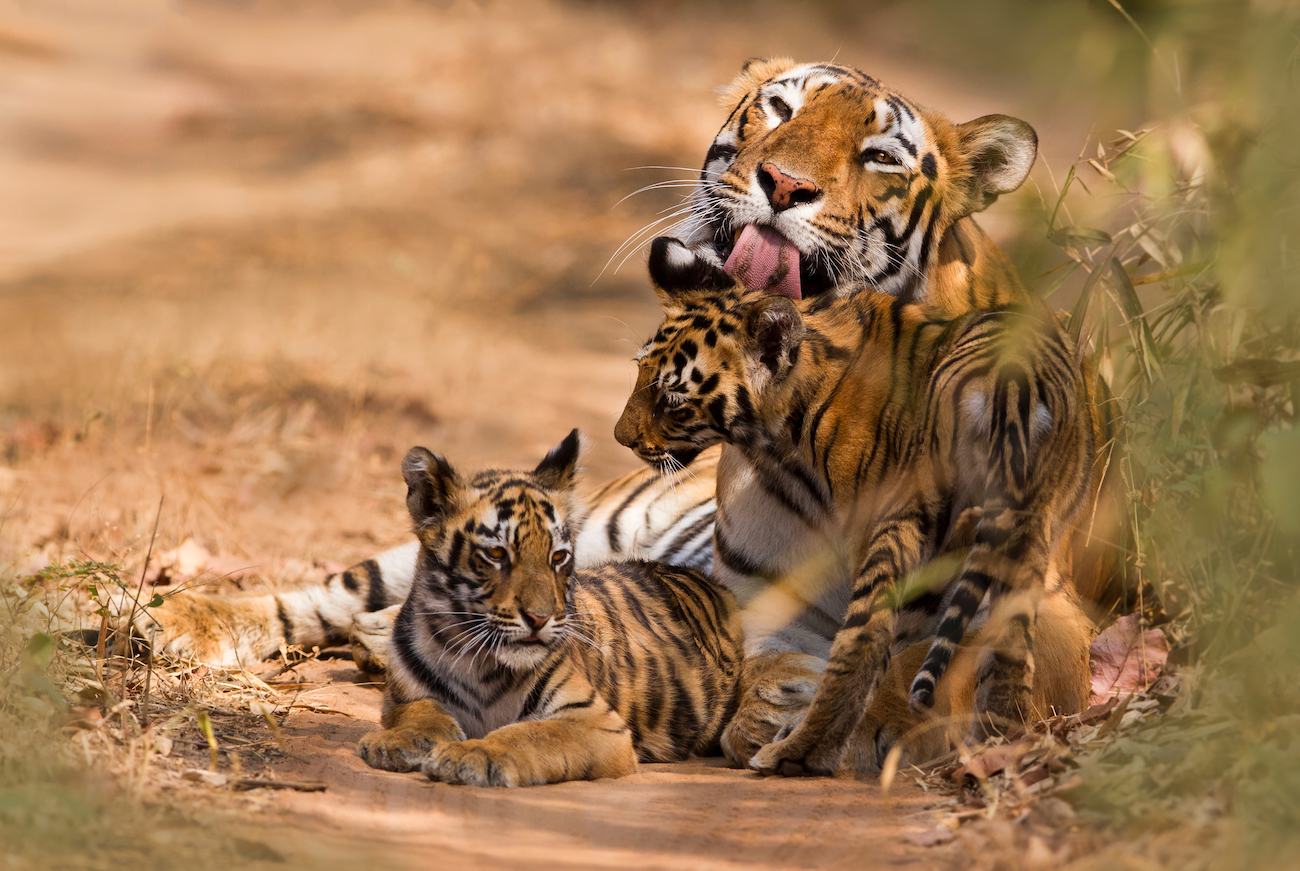
A tigress steps through a forest in northeast China, followed by five striped cubs. The camera trap footage lasts only moments, but it tells a story decades in the making.
Amur tigers, commonly known as Siberian tigers, typically give birth to one to four cubs, making a surviving litter of five exceptional. This mother has raised 13 cubs to date and is a grandmother to at least four more.
Her family is part of a broader, though uneven, tiger recovery taking shape across Asia.
Where Are Wild Tiger Numbers Increasing?
WWF reports that tiger populations are stable or increasing in India, Nepal, Bhutan, Russia and China. About 5,574 wild tigers are estimated to remain worldwide, though recovery is far from uniform and populations continue to decline in much of Southeast Asia.
Recent national estimates show both the scale of progress and the value of sustained conservation:
- Nepal: The country’s 2026 estimate of 429 wild tigers is more than three times its 2010 count of 121. WWF credits decades of collaboration among communities, government agencies and conservation partners.
- China and Russia: China’s wild tiger population had fallen to just 20 individuals in 2010. In 2026, China reported at least 72 wild Amur tigers in Northeast China Tiger and Leopard National Park, contributing to a confirmed transboundary population of at least 147 Amur tigers across conservation landscapes in China and Russia.
- Thailand: The country’s latest estimate is 179–223 wild tigers, up from an earlier estimate of 148–189.
- India: India’s estimated tiger population rose from 1,411 in 2006 to 1,706 in 2010, 2,226 in 2014, 2,967 in 2018 and 3,682 in 2022. India now protects roughly 70% of the world’s wild tigers.
Together, these gains offer measured evidence that endangered wildlife can recover when protected landscapes, scientific monitoring and local communities receive sustained support.
But Asia’s tiger conservation story is one of recovery in particular landscapes, not a uniform comeback. WWF reports that tiger populations are still declining in much of Southeast Asia. Tigers have disappeared from Cambodia, Lao PDR and Vietnam within the past 25 years.
What Can Five Amur Tiger Cubs Tell Us About Tiger Conservation?
WWF camera trap footage shows the first family of an Amur tigress and five cubs ever documented in China.
One large litter alone does not signal a population recovery, but five healthy cubs moving through the forest with their mother suggest that she has access to prey, cover and enough secure habitat to raise them.
Their story highlights several elements that are essential to tiger recovery:
- Long-term protection works. Population increases reflect years of habitat conservation, anti-poaching enforcement, cross-border cooperation and scientific monitoring.
- Tigers need connected habitat. Protected corridors allow tigers to disperse, establish territories and find mates rather than becoming isolated in small forest fragments. In northeast China, the national park creates an important corridor along the Russian border, giving dispersing animals access to new territory, prey and potential mates.
- Individual breeding females matter. One highly successful mother can make a meaningful contribution to a recovering population. Her descendants represent future breeding animals in a landscape where tigers once came close to disappearing.
- Tiger habitat protects much more than tigers. WWF notes that tiger habitat overlaps nine of Asia’s most important watersheds, which supply water to more than 800 million people.
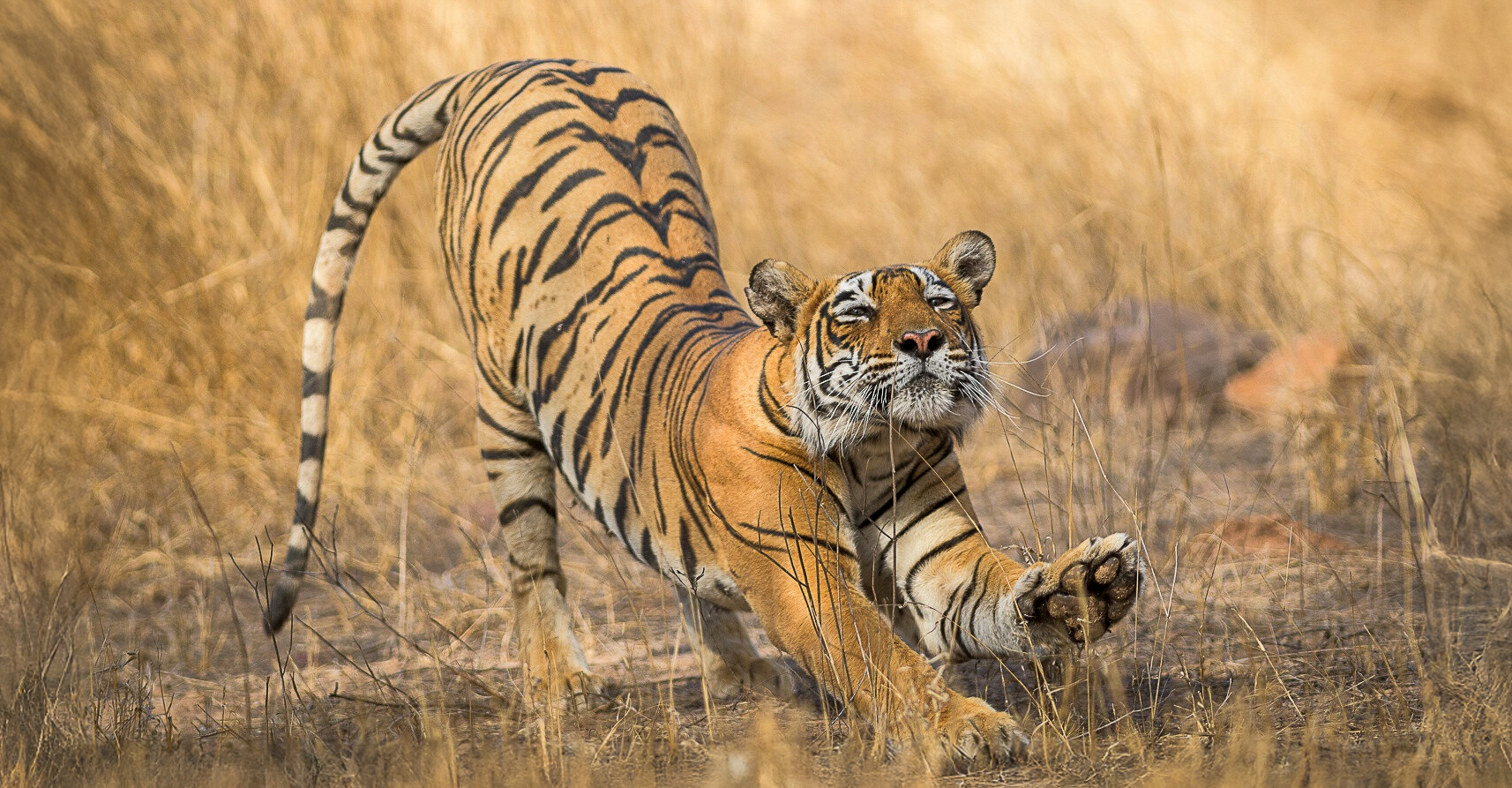
Bengal tiger © Nat Hab Expedition Leader Aditya Panda.
What’s the Difference Between Amur Tigers and Bengal Tigers?
The tigers captured in the China camera trap footage are Amur tigers. Amur and Bengal tigers are distinct geographic populations within the continental tiger subspecies, Panthera tigris tigris, found across mainland Asia.
Their most noticeable differences reflect adaptations to very different habitats.
Amur tigers inhabit birch and conifer forests in the Russian Far East and northeast China. They have thick, pale-gold coats with fewer stripes and may travel long distances across snowy terrain in search of prey such as wild boar and deer.
Bengal tigers are native to India, Bangladesh, Nepal and Bhutan. They occupy a wide variety of warmer habitats, including forests, grasslands, wetlands and mangroves. Their shorter orange coats and bold stripes provide camouflage as they stalk deer, wild cattle and other prey.
Both Amur and Bengal tigers can reach weights of 400 to 550 pounds.
Think you know your tigers? Take our Tiger IQ quiz.
What Is Working in Tiger Conservation?
Tiger recovery does not happen through a single intervention. It reflects conservation strategies sustained across entire landscapes over many years.
The most effective approaches include:
Protecting and Connecting Habitat
Tigers need large territories with adequate prey, water and cover. Forest and grassland corridors allow them to move between protected areas, maintain genetic diversity and adapt as environmental conditions change.
Strengthening Protection and Law Enforcement
Anti-poaching patrols, intelligence networks and controls on illegal wildlife trade help reduce the direct killing of tigers and their prey.
Using Data to Guide Decisions
Camera traps, DNA analysis and long-term population surveys reveal where tigers live, how they move and where conservation investment is most urgently needed.
Supporting Coexistence With Local Communities
As tiger populations recover, more cats move through landscapes shared with people, farms and livestock. WWF and its partners support measures such as predator-proof livestock enclosures, early-warning systems, community outreach and livestock insurance to help people and predators share space more safely.
Recognizing the Economic and Cultural Value of Tigers
Well-managed conservation travel can support local jobs and businesses while giving communities a direct economic stake in maintaining intact tiger habitat.
Cultural traditions can matter, too. WWF’s Faith and Nature Hub notes that successful coexistence depends in part on understanding how local communities value tigers, including spiritual and cultural traditions that can strengthen tolerance for living alongside large predators.

Where Can Travelers Experience Tiger Conservation in Action?
India’s national parks offer opportunities to search for Bengal tigers while experiencing the forests, grasslands, wetlands and wildlife communities that make tiger recovery possible.
Nat Hab travels into tiger country on several itineraries, ranging from broad wildlife expeditions to specialized photography journeys.
Grand India Wildlife Adventure
The Grand India Wildlife Adventure travels through three national parks in search of Bengal tigers, one-horned rhinos, Asian elephants, sloth bears and other wildlife.
A visit to Dudhwa reveals how forests, wetlands, grasslands and transboundary corridors in the Terai Arc connect wildlife habitat across India and Nepal.
India Tiger Safari
Nat Hab’s India Tiger Safari is our most tiger-intensive itinerary.
The journey centers on Tadoba National Park during the warmer March–May season, when shrinking water sources can draw tigers into more open areas.
Conservation travel’s contribution depends on how it is conducted. Nat Hab’s guide to responsibly seeing tigers in the wild emphasizes minimizing habitat damage and animal stress while generating tangible benefits for conservation programs and neighboring communities.
Our departures are limited to eight travelers, with no more than four guests in each open 4×4.
© Conan Dumenil
Looking for a Guided Wildlife Photography Tiger Safari?
Travelers who want to focus on wildlife photography can choose specialized departures designed around extended field time and photographer-led instruction.
- Grand India Photo Expedition: Extended photography time across a wide-ranging wildlife itinerary.
- India Tiger Photo Expedition: Ten dedicated safaris over six nights in Tadoba, with six guests and two photographers per vehicle.
How Can Responsible Travel Support Tiger Recovery?
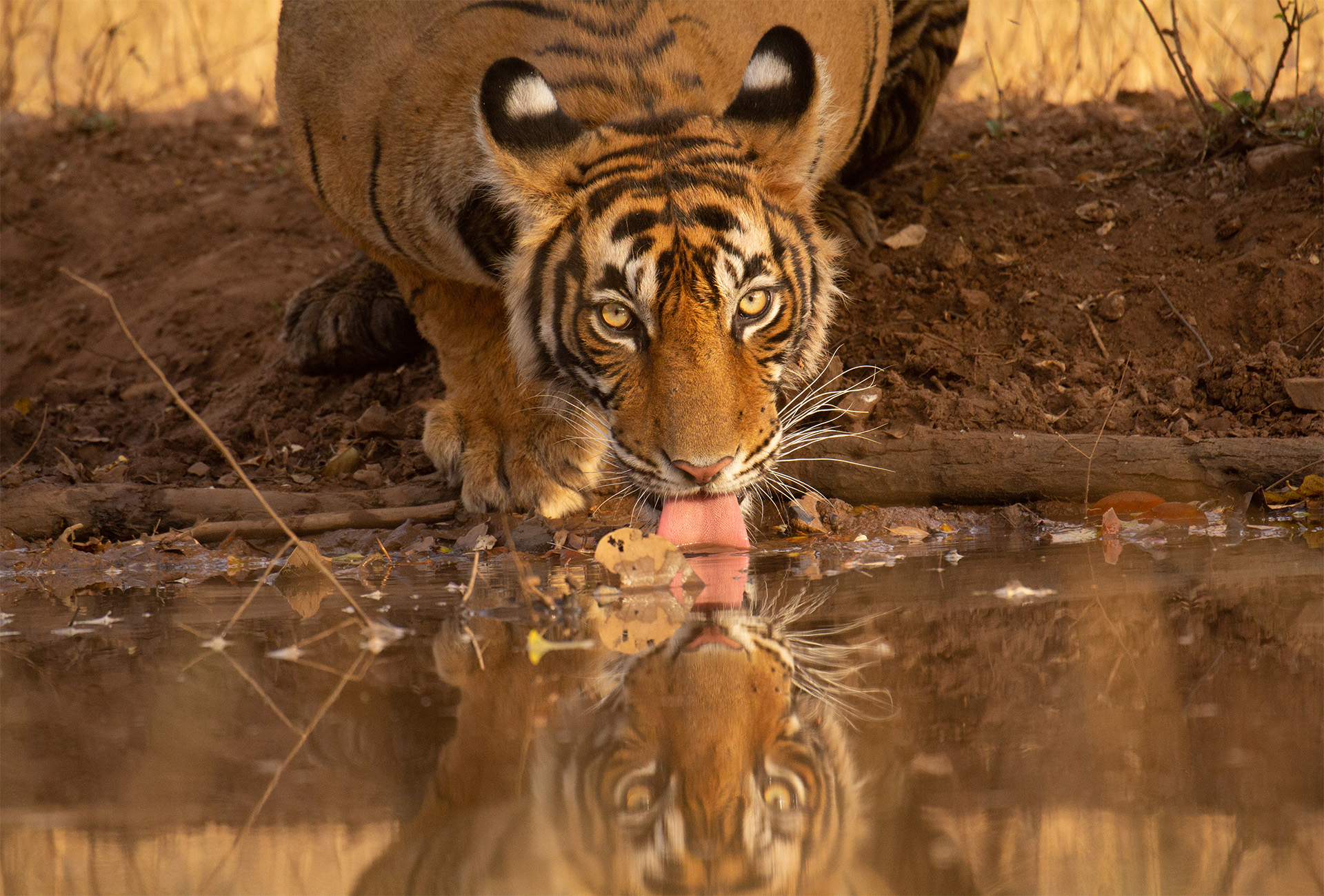
A tiger sighting may last only seconds: a striped shoulder moving between sal trees, a reflection at a waterhole or cubs following their mother through tall grass.
The Amur tigress and her five cubs show what decades of sustained protection can make possible. The conditions that allow her litters to thrive can take years to build.
New figures from Nepal and China, together with India’s sustained gains, show what conservation can achieve. But more tigers also require more connected habitat, stronger protection and practical ways for people and predators to share space safely.
Responsible, conservation-focused travel is one part of this larger conservation ecosystem.
By visiting tiger landscapes with operators committed to small groups, expert naturalists, low-impact wildlife viewing and local economic benefits, travelers can help reinforce the value of keeping these forests wild while gaining the chance to witness one of conservation’s most hopeful recoveries.
For travelers, the reward extends far beyond the sighting itself.
A tiger emerging from the forest becomes part of a much larger conservation story—one in which, across several parts of Asia, wild tigers are beginning to reclaim ground.