

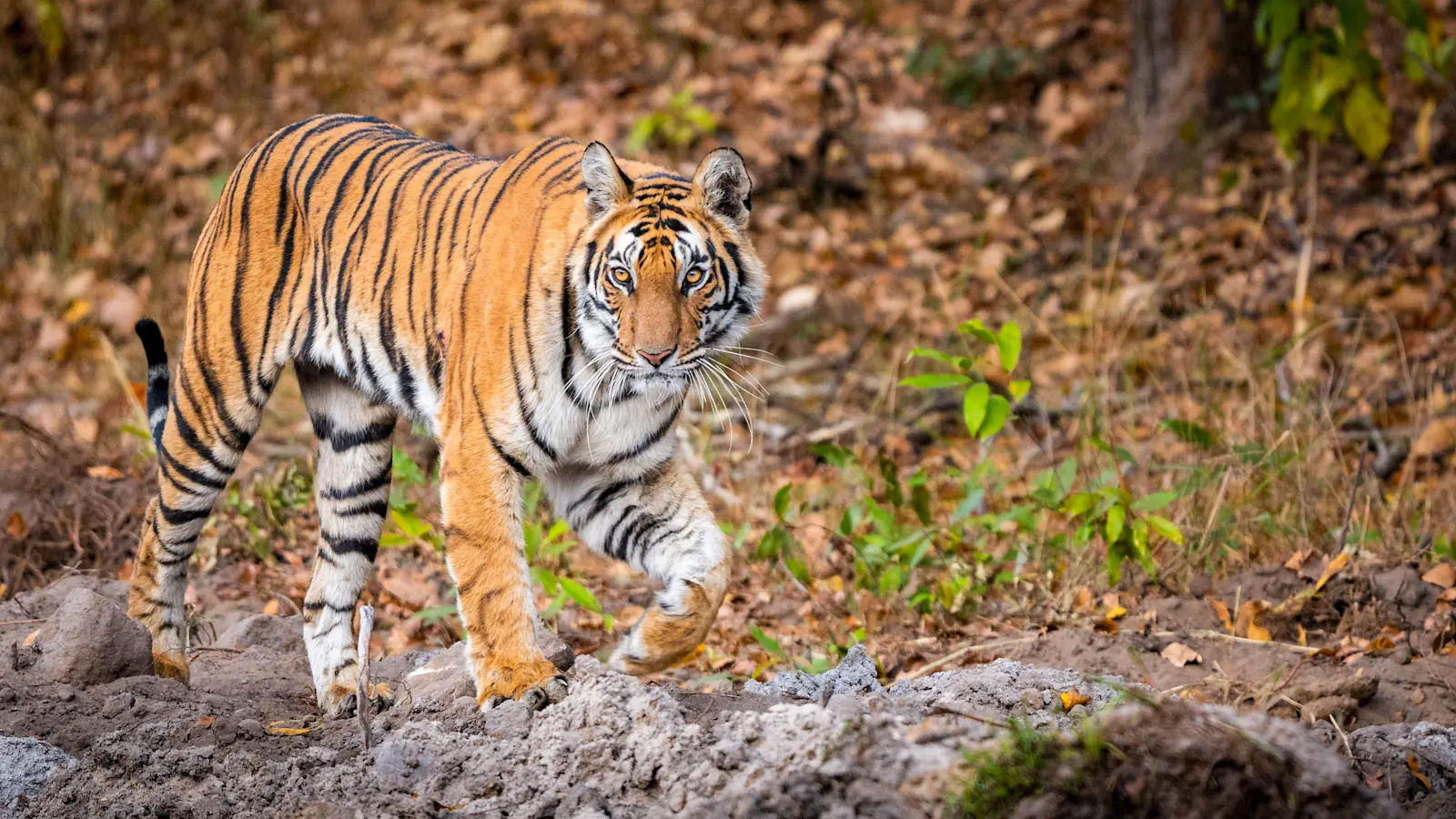
Along India’s northern edge, the fertile floodplains of the sub-Himalayan Shivalik hills spread south from the Nepali border, with deciduous sal forests, marshy grasslands, rivers and wetlands. Tigers and swamp deer move through tall grass. Elephants cross forest and farmland.
Dudhwa Tiger Reserve is a conservation complex of three large interconnected forested sanctuaries in the Terai Arc landscape along the Indo-Nepal border. Dudhwa National Park is at the core of this thriving wildlife enclave, well off the conventional safari circuit.
On Natural Habitat Adventures’ Grand India Wildlife Adventure and Grand India Photo Expedition, guests can experience Dudhwa’s borderland conservation story. It is a quieter, less conventional wildlife stop where the deeper reward is seeing how habitat, corridors and transboundary conservation partnerships sustain some of South Asia’s most iconic species.
What Is the Terai Arc Landscape?
The Terai Arc landscape is a 12.3-million-acre conservation landscape stretching across northern India and southern Nepal, below the outer foothills of the Himalayas. WWF India describes it as a 503-mile stretch between the Yamuna River in the west and the Bagmati River in the east, encompassing the Shivalik hills, adjoining bhabhar areas and Terai flood plains.
Ecologically, this is part of the Terai-Bhabar system, where the Himalayan foothills give way to gravel zones, alluvial floodplains, wetlands and grasslands. That transition helps explain the region’s biological richness. Forest, marsh, river, farm and grassland habitats sit close together, creating an unusually varied home for wildlife.
Across the Terai Arc, habitat includes:
- sal forests and riverine woods
- tall alluvial grasslands
- marshes, wetlands and flood plains
- rivers flowing down from the Himalayas
- farms, villages and community-managed forests
- national parks, wildlife sanctuaries and other protected areas
A Bengal tiger at Dudhwa National Park © Nat Hab Expedition Leader Aditya Panda
WWF Nepal describes the Terai Arc as a transboundary belt connecting protected areas across India and Nepal, including forests, agricultural lands and wetlands. Conservation here is not only about what happens inside national parks and protected areas; it is also about maintaining connected habitats between them.
Dudhwa belongs to this wider landscape, where the spaces between protected areas shape the future of wide-ranging wildlife. As a result of this habitat diversity, the Terai Arc, and Dudhwa within it, supports some of South Asia’s most impressive wildlife.
What wildlife can guests encounter in Dudhwa National Park?
Originally established as a wildlife sanctuary for the endangered swamp deer (barasingha), with its magnificent 12-point rack, Dudhwa National Park remains the last great stronghold for the endangered deer species.
The park is also home to Bengal tigers, leopards and many deer species. The park has also successfully reintroduced a healthy population of one-horned Indian rhinoceros from Assam and Nepal, once hunted nearly to extinction. Other mammals include:
- Asian elephants roam the grasslands and marshy woodlands, sometimes crossing into Nepal.
- Sloth bear: Shaggy and largely nocturnal; often spotted foraging for termites and insects in forest clearings.
- Wild boar: Abundant throughout the reserve; frequently seen in family groups in grassy openings.
- Honey badger: Rare and notoriously fearless; a prize sighting in the undergrowth.
- Langur: Grey langurs move through the canopy in large troops, often alerting other species to approaching predators.
- Rhesus monkey: Common near water and forest edges throughout the park.
- Golden jackal: Most active at dusk and dawn; often heard calling across the grasslands before it is seen.
- Jungle cat: A medium-sized wild cat of tall grass and wetland margins, elusive but present.
- Fishing cat: A stocky wetland specialist that hunts fish along Dudhwa’s rivers and marshes.
- Around 450 bird species, including hornbill, red jungle fowl, Bengal florican, fishing eagle, serpent eagle and paradise flycatcher.
Some of the reserve’s land was formerly used to grow sugarcane and returned to its natural state, while other tracts of native forest, predominantly sal and teak, are intermixed with extensive tall grasslands and wetlands inundated by rivers flowing down from the Himalaya. The lush area today is the core of a viable tiger population.
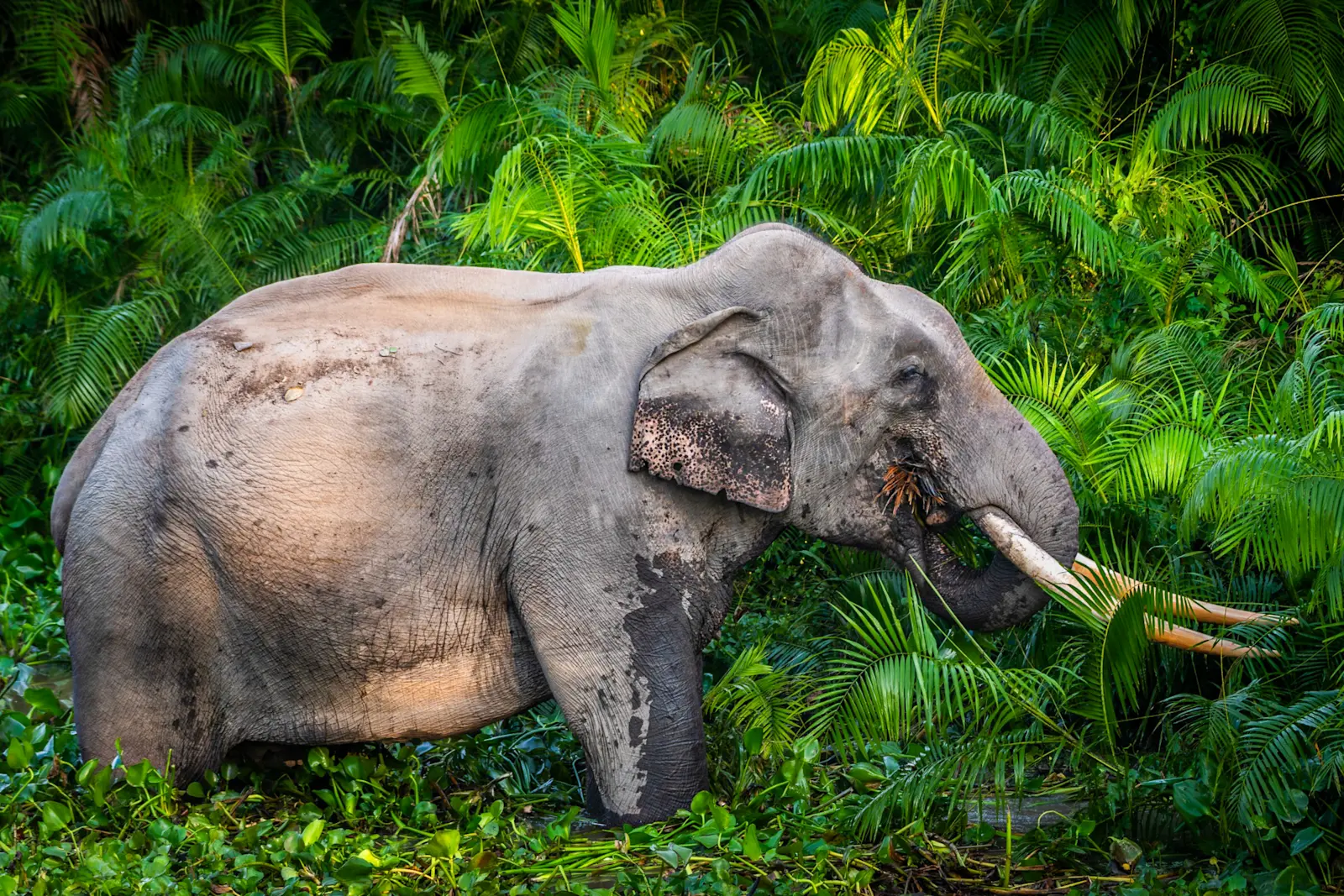
Asian elephant at Dudhwa National Park © Nat Hab Expedition Leader Aditya Panda
How were Dudhwa National Park and Dudhwa Tiger Reserve created?
In the 1960s, Billy Arjan Singh, a famous hunter-turned-conservationist, had a vision to introduce several zoo-born tigers and leopards back into the wild. His efforts led to the establishment of Dudhwa National Park by Prime Minister Indira Gandhi in 1977 and, a decade later, to the designation of the broader Dudhwa Tiger Reserve in 1987, a conservation umbrella that brought together the park and its neighboring sanctuaries under a single landscape-scale framework. Singh was awarded World Wildlife Fund’s gold medal, its premier award, in 1996 for his conservation work.
Where Does Dudhwa Tiger Reserve Fit in the Terai Arc?
On a map, Dudhwa’s place in the Terai Arc becomes immediately clear. The Shivalik Hills, the outer foothills of the Himalayas, run from northwest to southeast across Nepal in a long ridge. Below the foothills, the Terai flattens into a lowland belt of forests, wetlands, grasslands, rivers and farms along the India-Nepal border.
Four large protected areas, two in India and two in Nepal, anchor this western Terai borderland and form part of a wider conservation landscape, where habitat connectivity matters as much as individual park boundaries.
In Nepal:
- Shuklaphanta National Park lies to the west of Dudhwa
- Bardiya National Park lies to the east.
In India:
- Dudhwa National Park and Katarniaghat Wildlife Sanctuary are part of the larger Dudhwa Tiger Reserve complex.
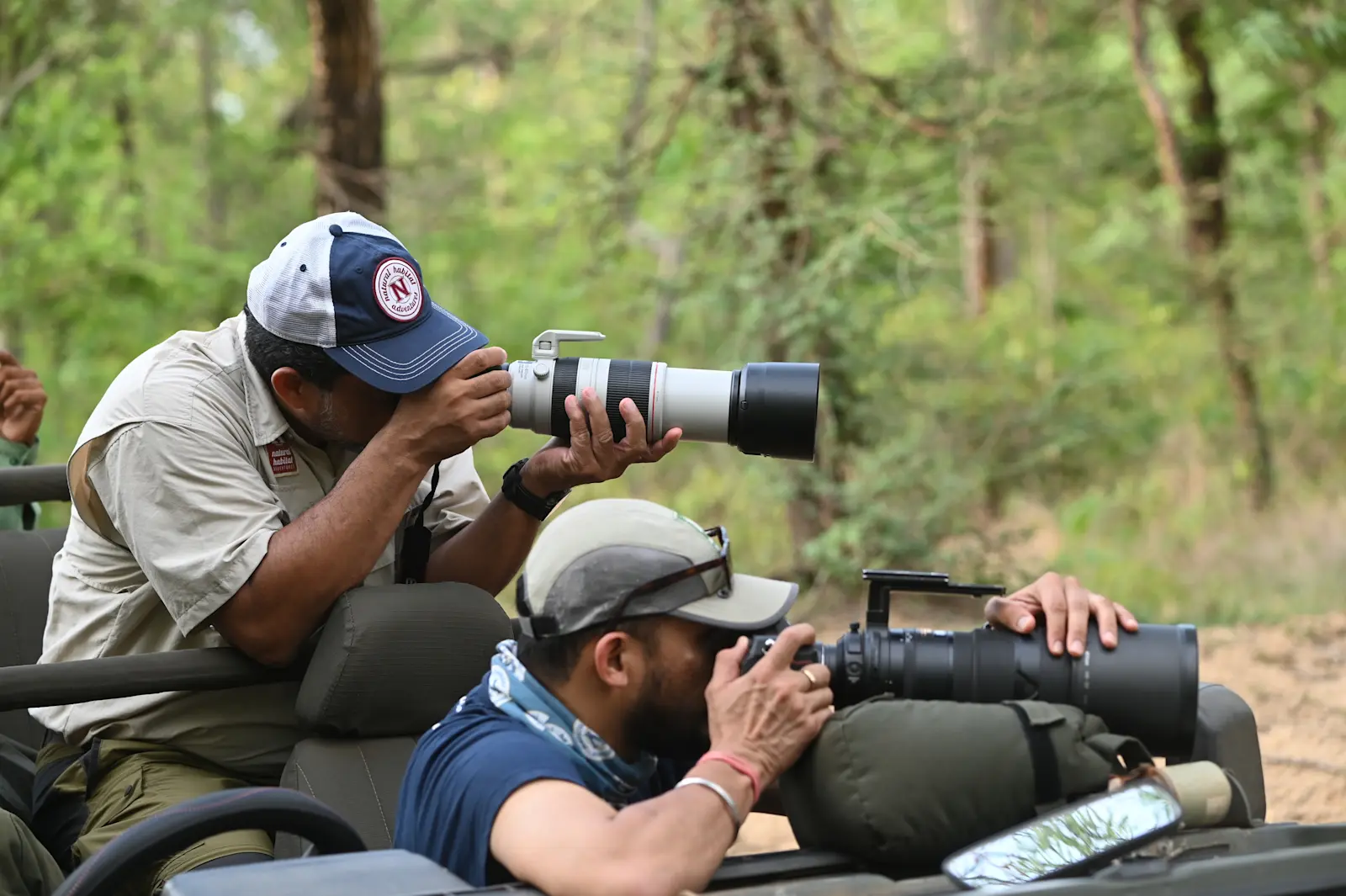
Nat Hab travelers at Dudhwa National Park © Nat Hab Expedition Leader Toby Sinclair_
Why Visit Dudhwa Tiger Reserve on a Nat Hab India Journey?
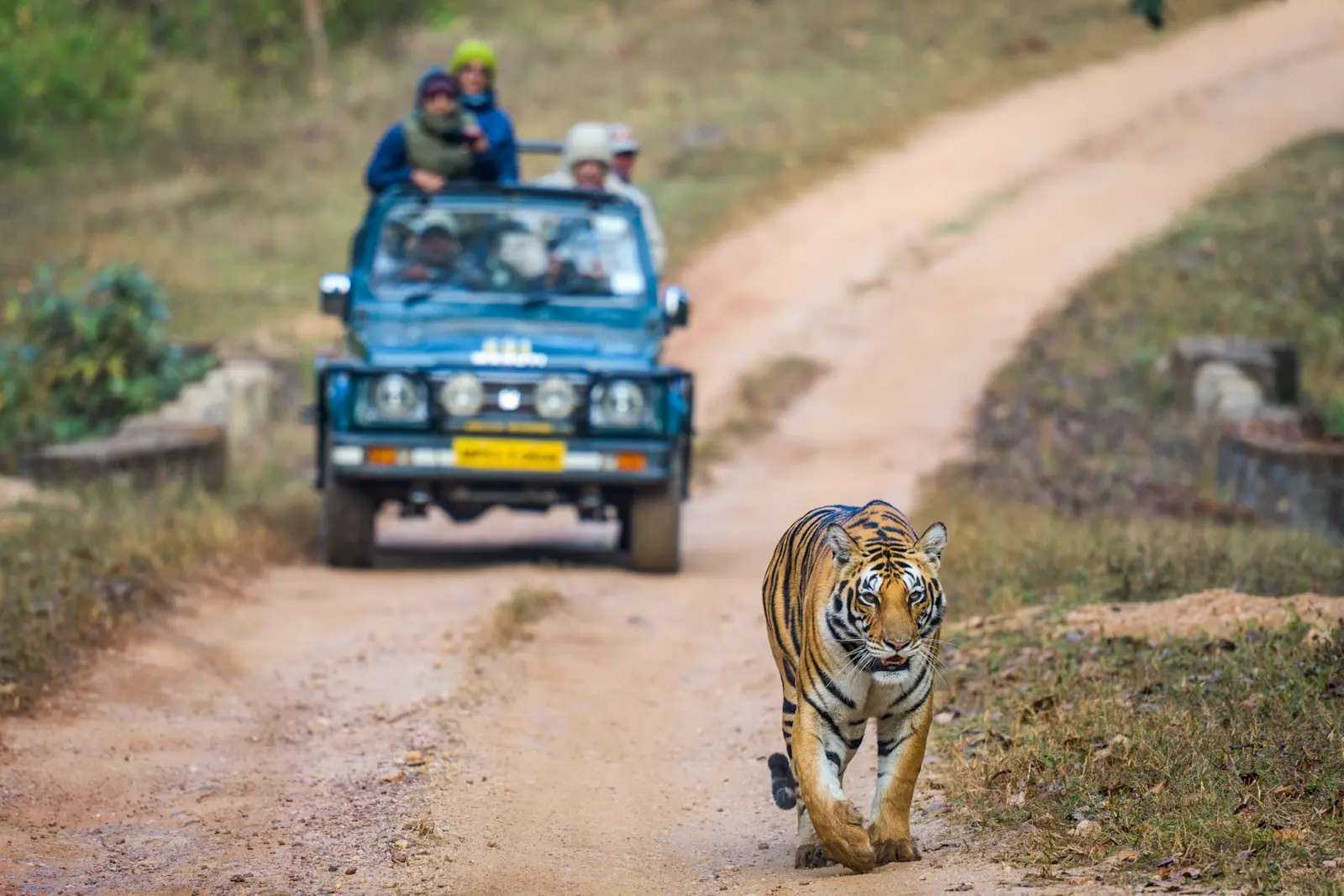
Dudhwa offers a quieter safari experience in a landscape where tigers, rhinos and elephants are part of a much larger ecological web. On Nat Hab’s Grand India Wildlife Adventure and Grand India Photo Expedition, travelers explore India’s wildlife with expert Expedition Leaders, open 4×4 safari drives and a focus on Bengal tigers and other rare wildlife. Dudhwa also offers exceptional birdwatching, with hundreds of recorded species across its wetlands, grasslands and forests.
Dudhwa adds a distinctive Terai dimension to the journey: wildlife viewing well off the conventional safari circuit, in uncrowded forest and grassland habitat shaped by the wider India-Nepal conservation landscape. Here, the story is about how forests, wetlands, grasslands and corridors work together to sustain wild India and Nepal.
For conservation-minded travelers, that makes Dudhwa especially rewarding; it’s a place to look beyond iconic sightings and ask bigger questions: Where and how do these species move? What happens outside park boundaries? How do people, rivers, farms and forests fit together? The Terai landscape’s flattened grasses, river channels, forest edges and vast, quiet protected areas provide compelling and complex answers.
To visit Dudhwa is to see India’s wildlife through a wider lens: in a national park and tiger reserve, where India meets Nepal, and from individual animals to the living corridors that help make their future possible.