

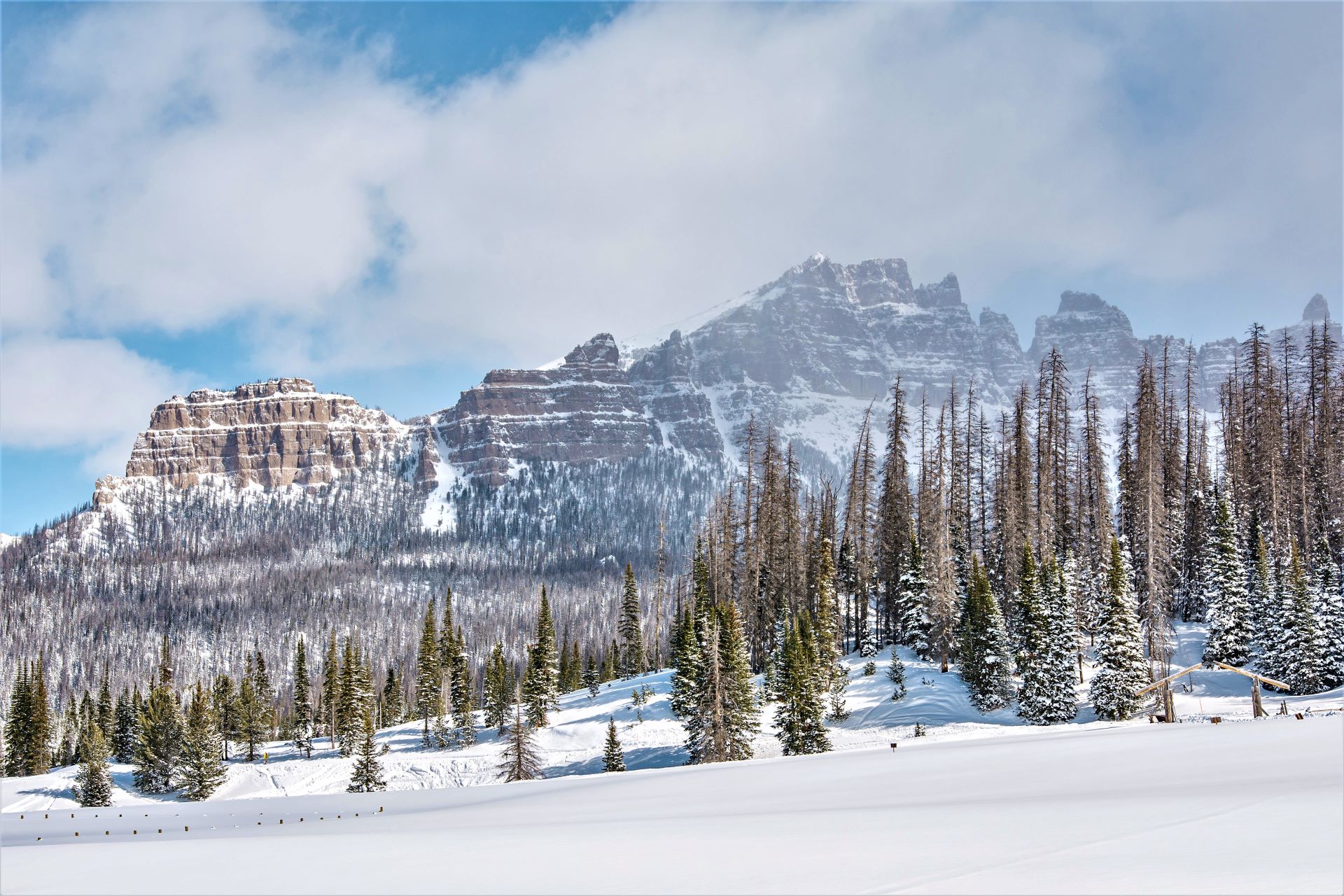
In the shadow of Yellowstone’s ancient and dense pine forests, a sage grouse burrows beneath a blanket of deep snow. Guided by starlight, a snowshoe hare drifts through the frost-covered grasslands like a snowy specter—swift-footed and sure. Its large feet distribute its body weight over the surface, and its hollow white hairs—which contain air instead of pigment—help keep it well insulated.
As day dawns, the rising sun reveals snow-dusted boulders of slumbering bison, their vaporous breaths swirling in the air with each exhale and sinking into the steam of nearby hot springs. These hydrothermal features shelter thermophiles (heat-loving microorganisms) that thrive in the park’s alkaline pools, sulfuric cauldrons and bubbling fumaroles (steam vents). Communities of thermophilic microbes, including photosynthetic cyanobacteria, help give features like Grand Prismatic Spring their vibrant colors.

© Colby Brokvist
Nearby, bison, moose, elk and geese gather around thermally influenced meadows and streams, grazing on vegetation and seeking respite from winter’s chill.
To combat the cold, conifer trees retain their needles, extending their ability to photosynthesize. Aspens and cottonwoods photosynthesize before they produce leaves with the aid of chlorophyll stored in their bark.
Every resident animal, plant and microbe species in the Greater Yellowstone Ecosystem evolved over millions of years to endure the extremes of winter weather through behavioral, morphological, physical, biochemical and physiological adaptations. But today, they must contend with a new challenge: climate change.
The Greater Yellowstone Ecosystem & Northern Great Plains
The Greater Yellowstone Ecosystem encompasses between 12 million and 22 million acres, depending on how its boundaries are defined. Spanning portions of Wyoming, Montana and Idaho, it is one of the largest nearly intact temperate-zone ecosystems on Earth.
Farther east and north, the Northern Great Plains form another vast and ecologically important landscape. This prairie expanse provides critical habitat and migration routes for myriad species. It also holds deep cultural significance for Tribal nations with enduring connections to its lands, waters and wildlife.
Grasslands sequester and store huge amounts of carbon, and their conversion releases carbon while eliminating important wildlife habitat. WWF’s 2024 Plowprint Report found that approximately 1.9 million acres of grasslands were converted to cropland across the U.S. and Canadian Great Plains in 2022. In the Northern Great Plains alone, approximately 480,000 acres were converted.
Grassland loss remains a major conservation concern. WWF’s 2025 Plowprint Report paused its annual quantitative analysis while the organization evaluates new datasets and methodology, but noted that its previous report documented nearly 2 million acres of Great Plains grasslands converted for crops.
Martha Kauffman, Vice President of World Wildlife Fund’s Northern Great Plains program, has said, “The Northern Great Plains is as important as the Amazon or Arctic, and deserves our attention.”
How Climate Change Affects Yellowstone
In June 2021, the U.S. Geological Survey’s Northern Rocky Mountain Science Center released the Greater Yellowstone Climate Assessment in collaboration with scientists, resource managers and Tribal communities from Wyoming, Montana and Idaho. The report analyzed climate trends in the Greater Yellowstone Area from 1950 to 2018 and projected how conditions could change through the end of the century under different greenhouse gas emissions scenarios.
According to the assessment, if future emissions remain high, Bozeman, Montana, and Jackson, Pinedale and Cody, Wyoming, could experience 40–60 more days per year exceeding 90°F by the end of the century.
Annual monitoring has also shown that wetlands throughout Greater Yellowstone are vulnerable to repeated dry, warm years. Researchers found that in particularly dry years, more than 40% of monitored wetlands in Yellowstone and Grand Teton were dry. Continued drying could affect species dependent on wetlands, including moose, beavers, trumpeter swans and sandhill cranes.
Higher temperatures and reduced summer soil moisture can also place stress on plant communities, alter water availability and contribute to conditions that increase drought and wildfire risk.
The Greater Yellowstone Ecosystem is one of our planet’s last large, nearly intact temperate ecosystems. Protecting its ecological connections is increasingly important as its climate changes.

Animal Survival Strategies & Adaptations
Greater Yellowstone supports the largest concentration of wildlife in the lower 48 states. Predator and ungulate (hoofed herbivore) species include gray wolves, grizzly and black bears, plains bison, moose and elk.
The sheer diversity and distribution of species position Yellowstone as prime territory for observing the complexities of survival strategies—including resistance, migration and hibernation—and how a changing climate may influence animal behavior and biological adaptations.

Resistance
Bison
In contrast to top-down trophic systems, bison (“iinniiwa”: Blackfoot, “tatanka”: Lakota, “ivanbito”: Navajo, “kuts”: Paiute) exert powerful bottom-up influences on grassland ecosystems. As the largest land-dwelling mammal in North America, bison can transform their surroundings simply by engaging in their daily behaviors. Comparable to the way elephants engineer African savannas, bison are ecosystem engineers of America’s grasslands.
Bison play critical roles in grassland communities. During the winter season, their elongated vertebrae—to which strong neck muscles are attached—enable them to sweep their massive heads from side to side and clear up to three feet of snow. Elk and other animals may save energy by following paths already broken through deep snow by larger ungulates.
Bison also influence how spring unfolds through the valleys and mountains of the Greater Yellowstone Ecosystem. Through grazing, they keep grasses short and stimulate new plant growth. Their grazing recycles nutrients and creates patches of young, nutritious forage used by bison and other herbivores.
Research in Yellowstone has shown that repeated grazing by bison can delay plant maturation and prolong access to nutrient-rich spring forage—a phenomenon sometimes described as bison “surfing the green wave.”

Moose
Moose (Alces alces) are the largest members of the deer family, and their size is part of what makes them so well adapted to cold climates. Their ability to conserve body heat can be explained in part by Bergmann’s rule, the biological principle that animals in colder climates often have larger bodies relative to their surface area.
In addition to an insulating coat that helps shed moisture and block wind, moose have a long nasal passage that helps conserve heat and moisture during respiration.
In marshy areas, along lake shores and rivers and in willow flats, a solitary moose may be spotted browsing on aquatic vegetation or using its impressive stature to tear twigs from willow trees.
Moose normally thrive in cold environments, but rising temperatures can strain their ability to regulate body heat. Fewer than 200 moose remain in Yellowstone, though the species is difficult to census accurately because individuals are often solitary and inhabit dense cover. The park’s moose population has declined over several decades as a result of multiple factors, including the loss of mature forests, hunting outside park boundaries, habitat changes following wildfire and predation.
Moose in Greater Yellowstone rely heavily on mature spruce and fir forests for winter habitat. Yellowstone’s 1988 fires burned large areas of mature forest, reducing winter forage and cover, and the moose population declined substantially afterward.
Warming conditions may pose additional challenges. Research across the western United States has found that warmer regions, seasons and years can contribute to heavier winter tick loads on moose. Heavy infestations can cause blood loss and other physiological stress, though tick dynamics vary considerably by location, snow conditions and other environmental factors.
Gray Wolves
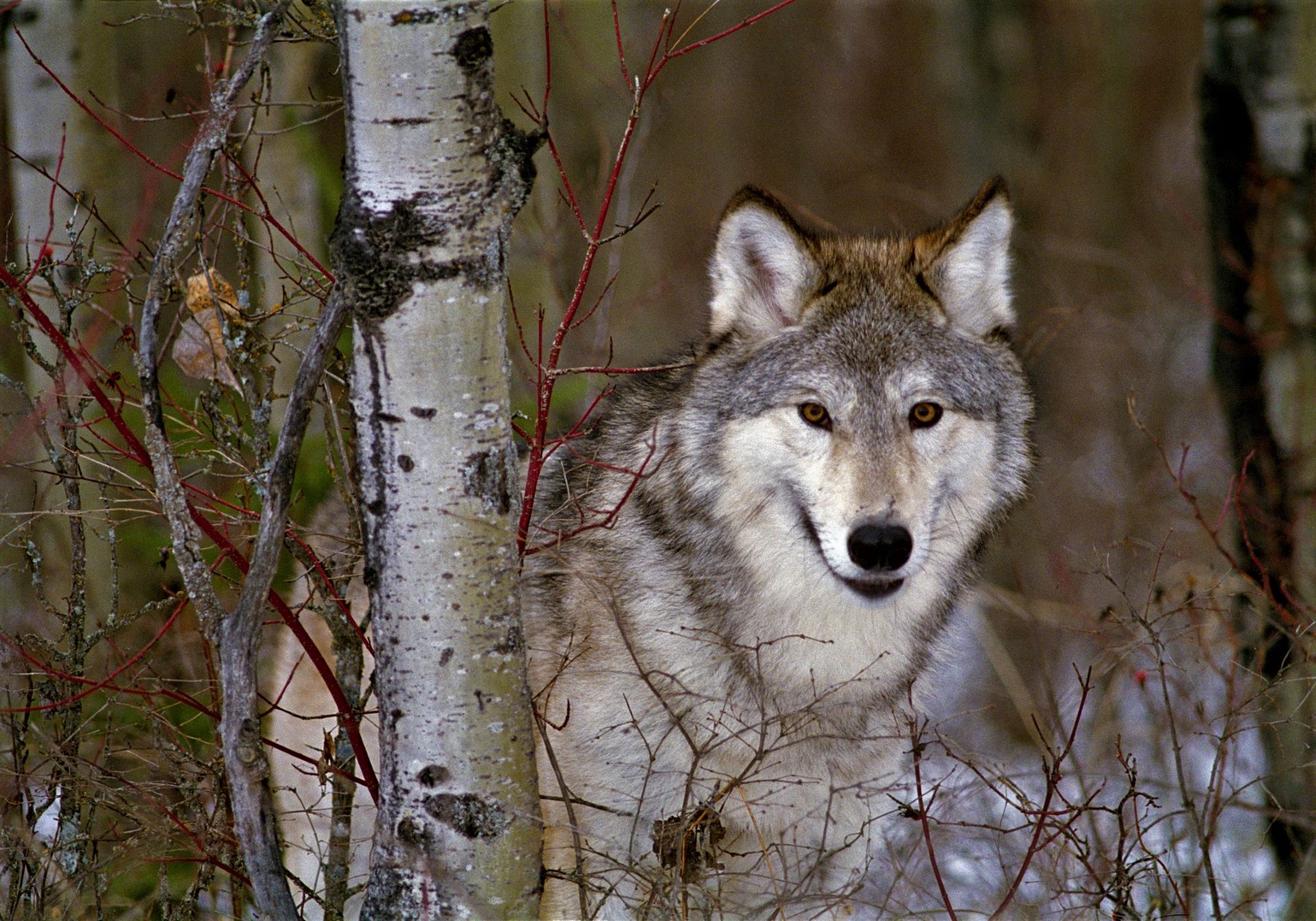
About half of the wolves in Yellowstone have black coats, while the other half are primarily gray. Research has found intriguing differences associated with coat color. Gray wolves tend to be more aggressive during territorial conflicts and have higher reproductive success, while black wolves have shown greater survival during outbreaks of canine distemper. Wolves also preferentially choose mates of the opposite coat color.
Wolves have both an undercoat and an outer layer of guard hairs. The dense undercoat traps heat, helping wolves regulate their body temperature, while the outer coat provides additional protection from winter weather. This combination allows wolves to remain active throughout Yellowstone’s coldest months.
Wolves also take advantage of deep snow when hunting long-legged, small-footed ungulates, which can become less agile in extreme winter conditions. NPS researchers note that declining annual snowpack could therefore affect wolf hunting success.
Winter is one of the best seasons to watch wolves, and the wide-open expanse of the Lamar Valley—part of Yellowstone’s Northern Range—is renowned for wolf viewing. Against a sea of white, a prowling pack can stand out in sharp contrast on the snowy slopes.
Nat Hab has a dedicated team of professional naturalists and biologists with deep knowledge of wildlife behavior. Their communication with local researchers helps our Expedition Leaders stay up to date on current wolf locations and activity, increasing opportunities to observe Yellowstone’s elusive predators on Nat Hab’s Yellowstone winter wolf adventure.
Migration
Elk
The elk (Cervus canadensis), also known as wapiti, are Yellowstone’s most abundant ungulates. Yellowstone National Park supports approximately 10,000–20,000 elk in six or seven herds during the summer months, while fewer than 2,000 remain within the park during winter.
In winter, colder temperatures and snowfall reduce accessible forage. This forces many ungulates to migrate in search of better feeding conditions. Yellowstone elk move north to the Northern Range and around Gardiner, Montana, while others migrate south toward the National Elk Refuge near Jackson, Wyoming.

Elk make up the majority of Yellowstone wolves’ winter prey. But climate also plays an important role in elk migration, nutrition and reproduction.
Migrating elk follow seasonal changes in vegetation and snow depth. As temperatures warm, spring vegetation may emerge earlier. If migration timing does not shift at the same rate, elk could arrive after plants have passed their most nutritious stage. Changes in snowmelt and streamflow may also affect traditional migration routes.
Hibernation
Bear
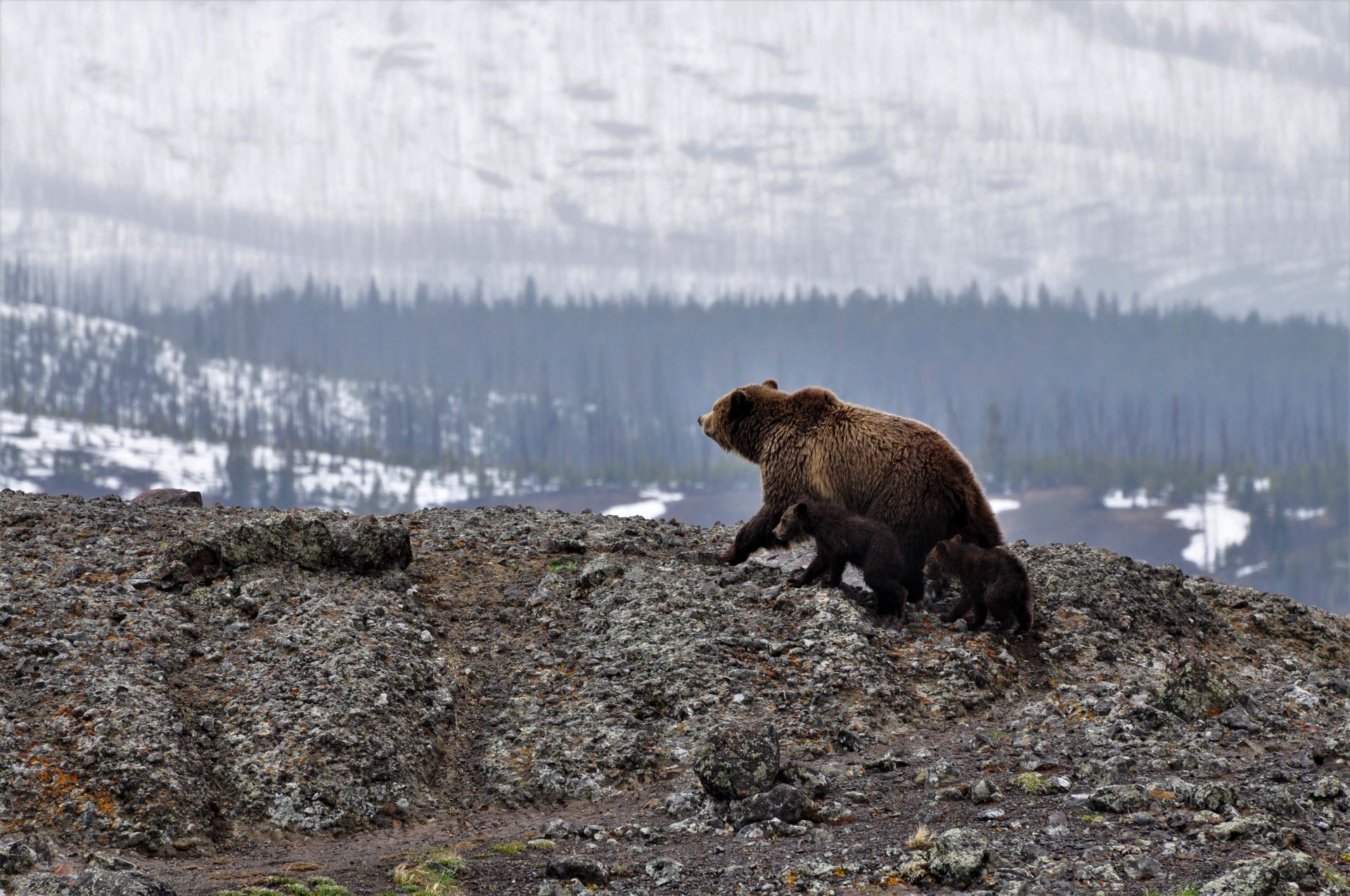
The third adaptive strategy is hibernation. Bears dramatically reduce their metabolic activity during winter, allowing them to survive months when food is scarce while living primarily on stored body fat.
The American black bear (Ursus americanus) is one of the species that relies on this seasonal adaptation. The Greater Yellowstone Ecosystem is one of the regions in the contiguous United States where black bears and grizzly bears coexist.
Fall is a critical feeding period for bears as they prepare for winter, consuming calorie-rich foods to build the fat reserves that will sustain them during denning.
Once bears have accumulated sufficient fat reserves, they retreat to protected dens for the winter. Den locations and construction vary, but snow can provide important insulation against subzero temperatures.
Climate change has the potential to alter the seasonal cues, snow conditions and food resources that bears rely on. Across Yellowstone, temperatures have risen, the growing season has lengthened in some areas and the number of days with snow on the ground has declined since the 1960s. Continued changes in vegetation, snowpack and seasonal food availability could influence the timing and ecology of denning species.
Winter Resilience in Yellowstone
Across Yellowstone, temperatures have risen, the growing season has lengthened in some areas and the number of days with snow on the ground has declined since the 1960s. Continued changes in vegetation, snowpack and seasonal food availability could influence the timing and ecology of denning species.
Winter puts Yellowstone’s wildlife adaptations on full display. Bison use their massive heads to sweep aside deep snow, wolves hunt across snowy valleys and bears conserve energy in their dens. These survival strategies have long helped Yellowstone’s wildlife endure months of cold, snow and limited food.