

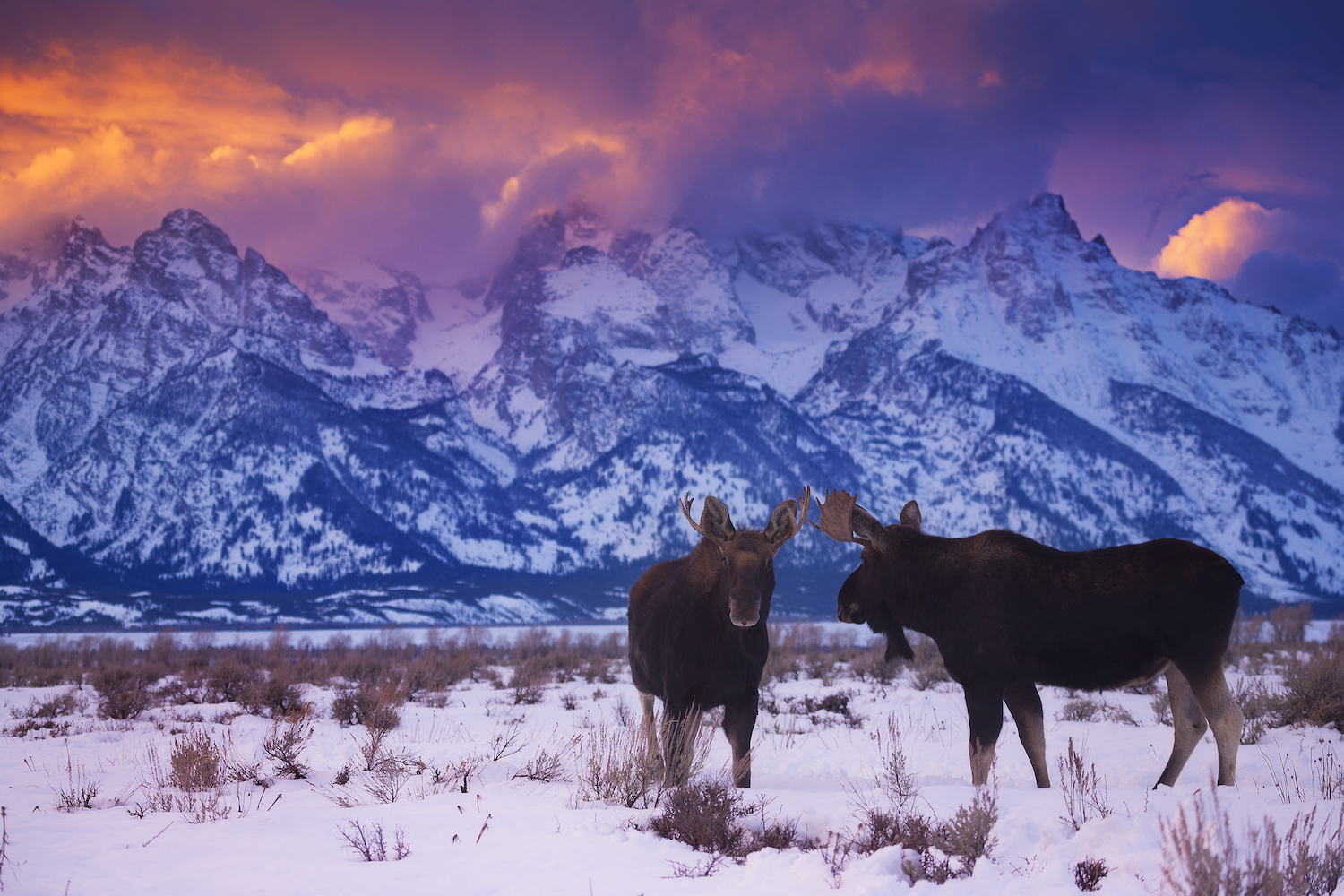
Let’s start by answering the most obvious question: Yes, Yellowstone is open in the winter! In fact, some may say this is the most magical time of year to visit. In Yellowstone and the nearby Tetons, wolves stalk their prey, great herds of elk and snow-crusted bison roam unfettered and steaming geysers and bubbling mud pots are bejeweled with glittering ice crystals.
Winter is a pristine time in the Lamar Valley and the rest of the park, a time when nature enthusiasts can commune with the landscape and feel the raw authenticity of a winter wildlife adventure. From a trip to Old Faithful by private Yellowstone snowcoach, watching as this most famous of geysers erupts against a snowy backdrop, to a horse-drawn sleigh ride across the National Elk Refuge near Jackson Hole, visiting Yellowstone in winter reveals the secret wonders of the quiet season.
Why Is Winter a Good Time to Go to Yellowstone?
With miles of trails through frosted forest and snow-packed meadows stretching out as far as the eye can see, Yellowstone is a winter wonderland. Animals stand out against winter’s white mantle, making for dramatic photography. Parts of the 2.2-million-acre national park can feel like your own once the warm-weather crowds thin dramatically and a serene stillness takes over the region. What’s more, winter is one of the best times to glimpse Yellowstone National Park’s wolves, especially when you’re accompanied by expert guides who bring along spotting scopes and a wealth of wolf knowledge to increase your chances of sightings of these beautiful and elusive creatures.
© Henry Holdsworth
10 Reasons to Visit Yellowstone National Park in Winter
1. You’ll See a Different Side of the Park When Visiting Yellowstone in Winter
It’s not everyone who jumps at the chance to head to a snowy, cold landscape midwinter and spend quite a bit of time outside, all bundled up. For those who relish in-depth nature and wildlife experiences, however, that kind of opportunity sounds dreamy. At Yellowstone in the winter months, you’ll experience the park as few others do, getting around on snowcoaches and mainly traveling in the company of expert guides who know where to go and what to experience during these chilly days. There’s no better time of year to soak up the spirit of the landscape and reconnect with nature and the great outdoors.
2. You Can Watch Geysers Soar Against a Snowy Backdrop
There’s something ethereal about watching Old Faithful erupt more than 100 feet into the air against a bluebird sky and a backdrop of pristine white snow. As Yellowstone geysers shoot into the sky, the near-boiling water can freeze into tiny ice crystals that fall back to Earth—definitely not an experience you’d have in July or August! As for the colorful hot springs for which Yellowstone is famous, these appear even more vibrant and otherworldly against the snow.
3. You Can Easily Spot Yellowstone’s Wildlife
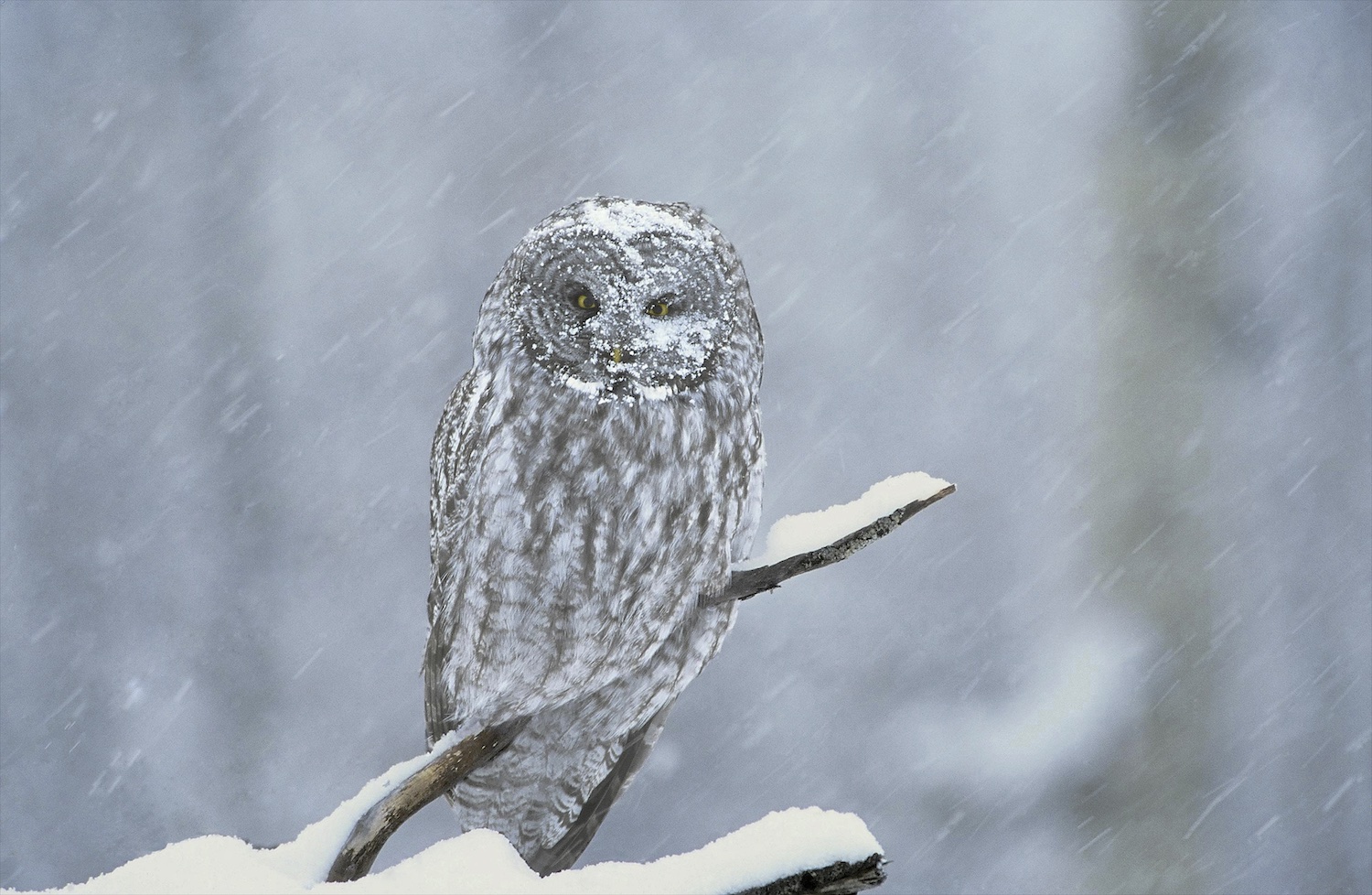
That same bright-white backdrop that makes the bubbling hot pots and geysers so dramatic also makes it easier to spot wolves, bison, foxes, moose, elk and more. Against the fresh snow, you can see their dark coats and look for their tracks. While you’re likely to spot wildlife in many areas, some of your best chances are in the Northern Range. This region of the park—the only area accessible by car year-round—is not only excellent for wolf watching in Yellowstone but also one of the best places to view wolves in the world. This area—which includes Mammoth Hot Springs, Tower Fall and the famous Lamar Valley—is especially rich in wildlife during the winter months and throughout much of the year.
4. You Can Commune with Wolves
If it feels like we can’t stop talking about Yellowstone’s wolves—well, you’ll forgive us. Wolves were reintroduced to Yellowstone between 1995 and 1997, with many released in the Lamar Valley, and it is here that much of your wolf watching will focus. Join your expert guide on a wildlife-watching adventure and learn why winter is one of the best times for wolf viewing in Yellowstone National Park.
5. You Can Learn How to Track Wildlife
With an expert naturalist at your side, you’ll learn how to decipher wildlife tracks that crisscross forest trails and meadows. During a Yellowstone winter tour, you can look for evidence of tromping, trudging, scurrying and sliding animals that survive and thrive here in the winter.
6. You Can Gape at Snow-Covered Bison
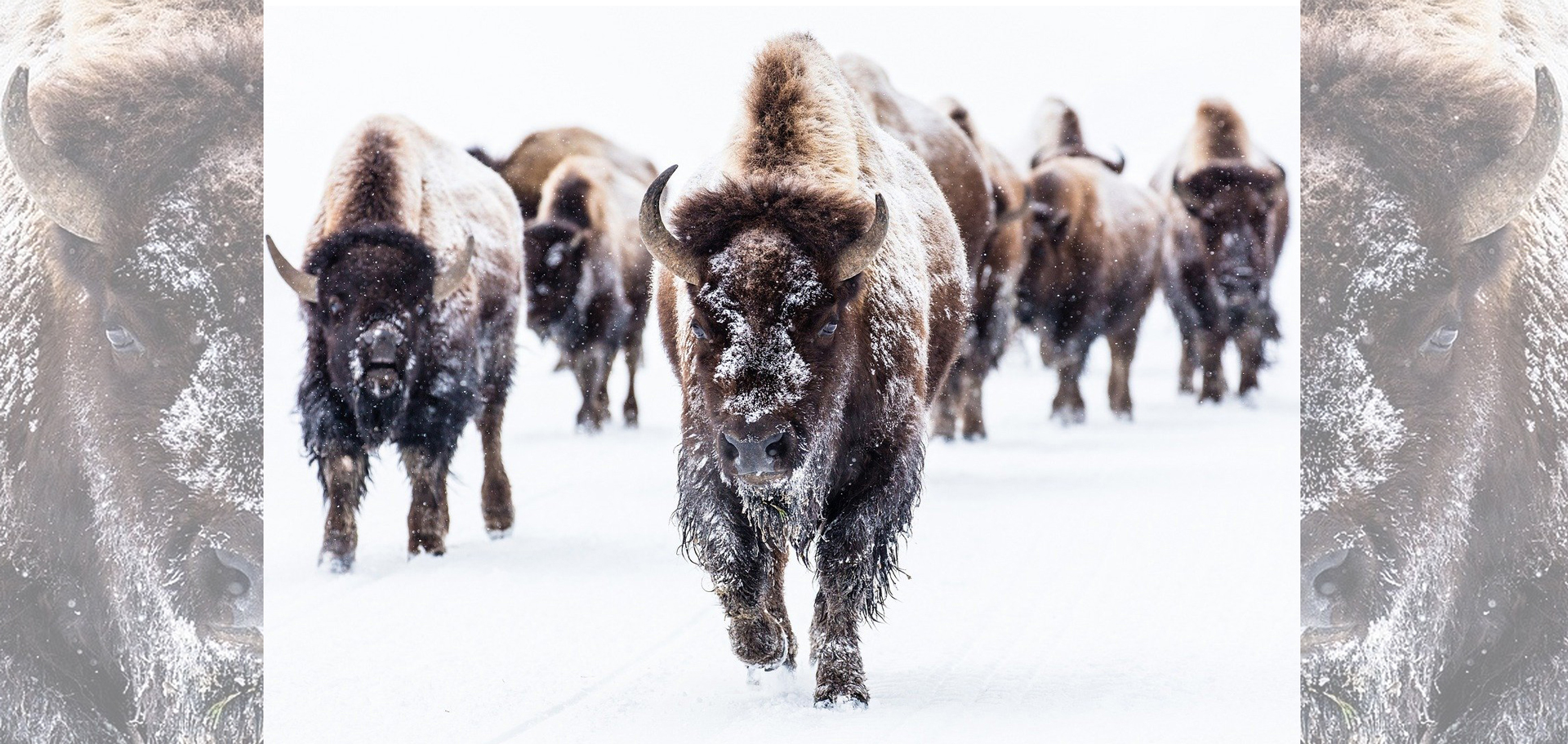
Speaking of bison, they’re particularly impressive and somewhat primeval-looking in winter. Balls of snow and frost cling to their shaggy coats, while fragile icicles dangle from their bushy beards. And you know how you can see your breath when it’s cold? These beasts’ breath literally hangs in the air near their heads, making for an impressive sight and compelling wildlife photography.
7. You Can Partake in Winter Snow Activities
If you’re a winter recreationalist, you’ll find plenty of opportunities for snowshoeing, cross-country skiing and even ice skating during a winter visit to Yellowstone National Park. Glide past a bison or elk herd. Follow the tracks of a hare on snowshoes or skis or take the trail to Lone Star Geyser from the Old Faithful Snow Lodge. Yellowstone’s winter lodges offer access to ski and snowshoe rentals and a variety of guided winter activities.
8. You Can Travel by Snowcoach
Wondering how you’ll get around the park with all that snow? Yellowstone snowcoaches are the answer. These specialized oversnow vehicles are designed to travel Yellowstone’s snow-covered roads, allowing you to venture deep into the park’s interior during winter. Most park roads close to regular vehicles in early November, then reopen to limited snowcoach and snowmobile travel from mid-December to mid-March. The road between the North and Northeast entrances is the exception, remaining open to regular vehicles year-round, weather permitting.
© Henry Holdsworth
9. You Can Take Epic Photos
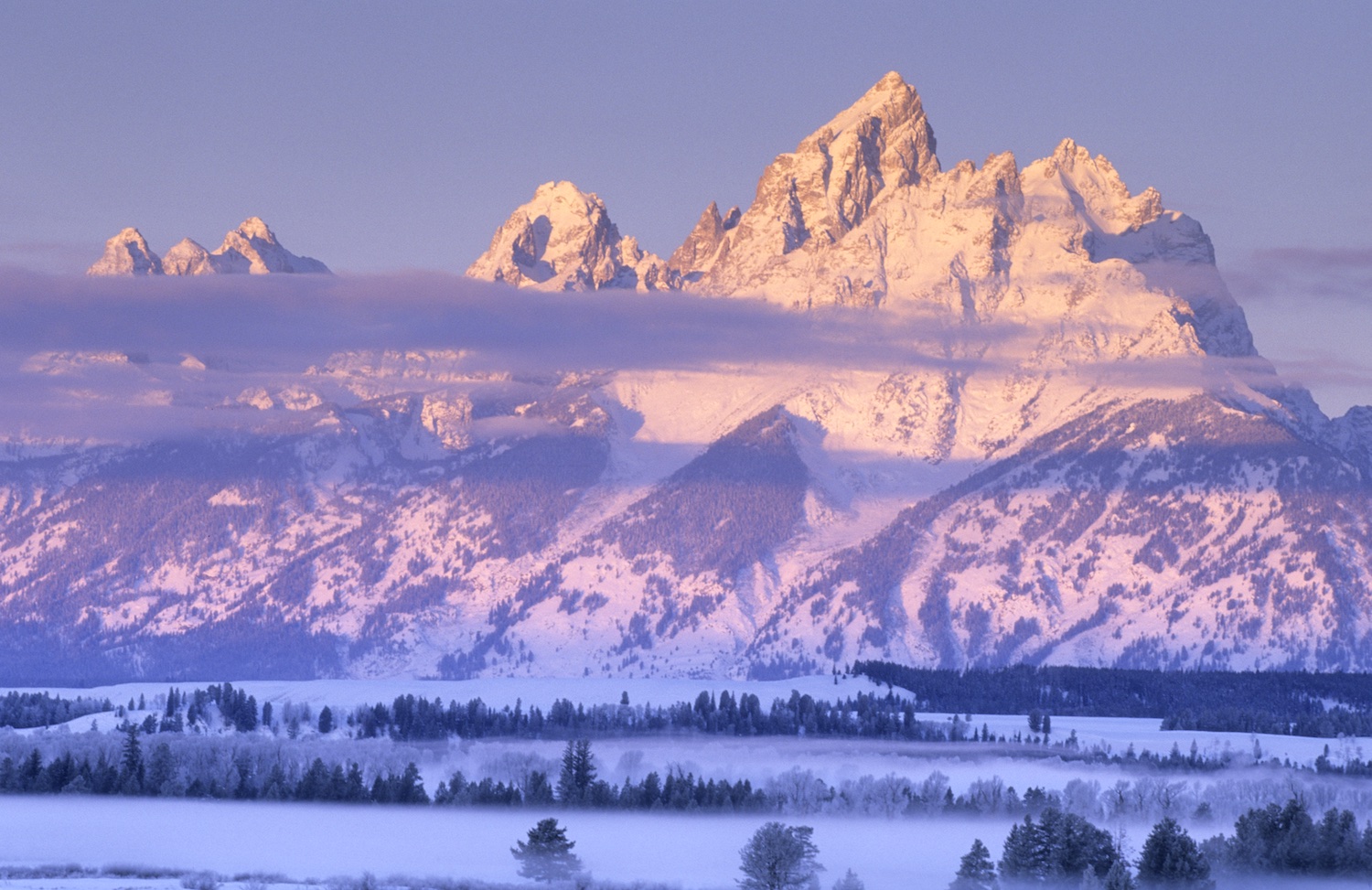
When you’re sharing your photos of Yellowstone in wintertime with family and friends, you won’t find too many who have similar photos from their summer visits. The clear-blue skies, snow-carpeted meadows, dramatically steaming geysers and woolly animals draped in frost make for spectacular nature photography. On a Photo Expedition, you’ll travel in the company of renowned regional naturalists and photographers for whom Yellowstone is their big backyard. They’ll help you hone in on where Yellowstone’s gray wolves may be hiding and capture shots of the landscape and shy animals you might not otherwise have found.
10. You Can Ice Skate at Mammoth Hot Springs
The travertine pools and white, chalky calcified terraces of Mammoth Hot Springs may look a bit like frozen waterfalls most of the year, but when they are covered in snow and thick with frost in the winter, this geothermal wonderland makes for a truly fantastical scene. And yes, weather permitting, there’s an outdoor ice-skating rink at Mammoth Hot Springs Hotel.
Discover Yellowstone—and the nearby Tetons—on a rare winter wildlife adventure, and your spirit will never be the same.