

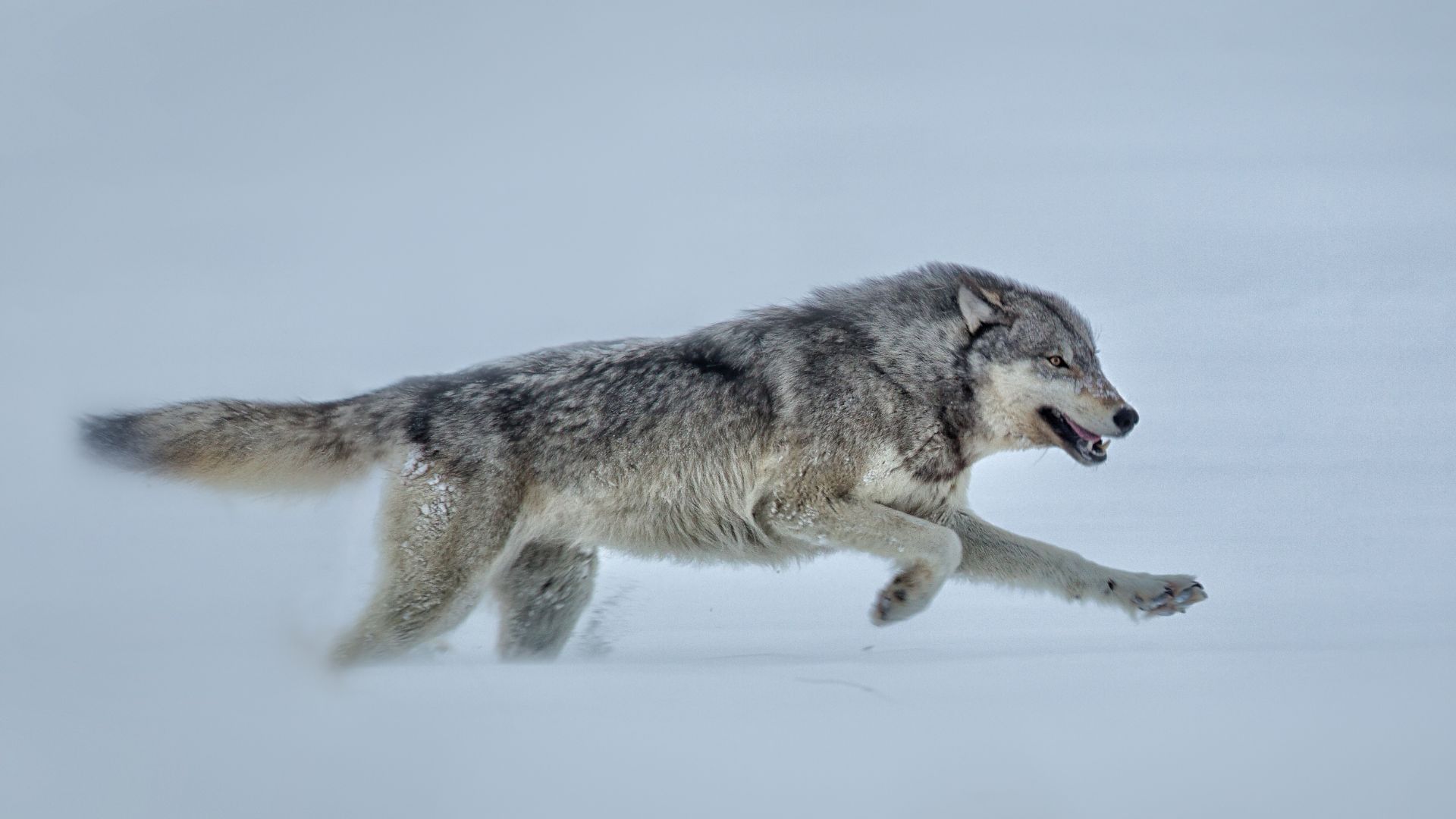
Few wildlife encounters compare to watching wolves move through the wide, wild valleys of Yellowstone. On Nat Hab’s Yellowstone wolf-watching adventure, expert naturalist guides help travelers search for these elusive predators while exploring one of North America’s most dynamic winter ecosystems.
How Did Wolves Return to Yellowstone National Park?
Wolves once had one of the largest natural ranges of any terrestrial mammal in the Northern Hemisphere. Packs populated diverse regions from the Arctic tundra south to Mexico, but habitat loss and extermination programs led to their disappearance throughout most of the U.S. by the early 1900s. Many cattle ranchers viewed wolves as a threat to their livelihood, and widespread hunting, trapping and poisoning quickly devastated already vulnerable populations.
In 1973, the U.S. Fish and Wildlife Service listed the northern Rocky Mountain gray wolf (Canis lupus) as endangered and designated the Greater Yellowstone Ecosystem as one of three recovery areas. Yellowstone remains one of the most important protected strongholds for gray wolves in the Lower 48. From 1995 to 1997, as part of this long-awaited recovery effort, 41 wild wolves from Canada and northwest Montana were released in Yellowstone.
How Many Wolves Are in Yellowstone Today?
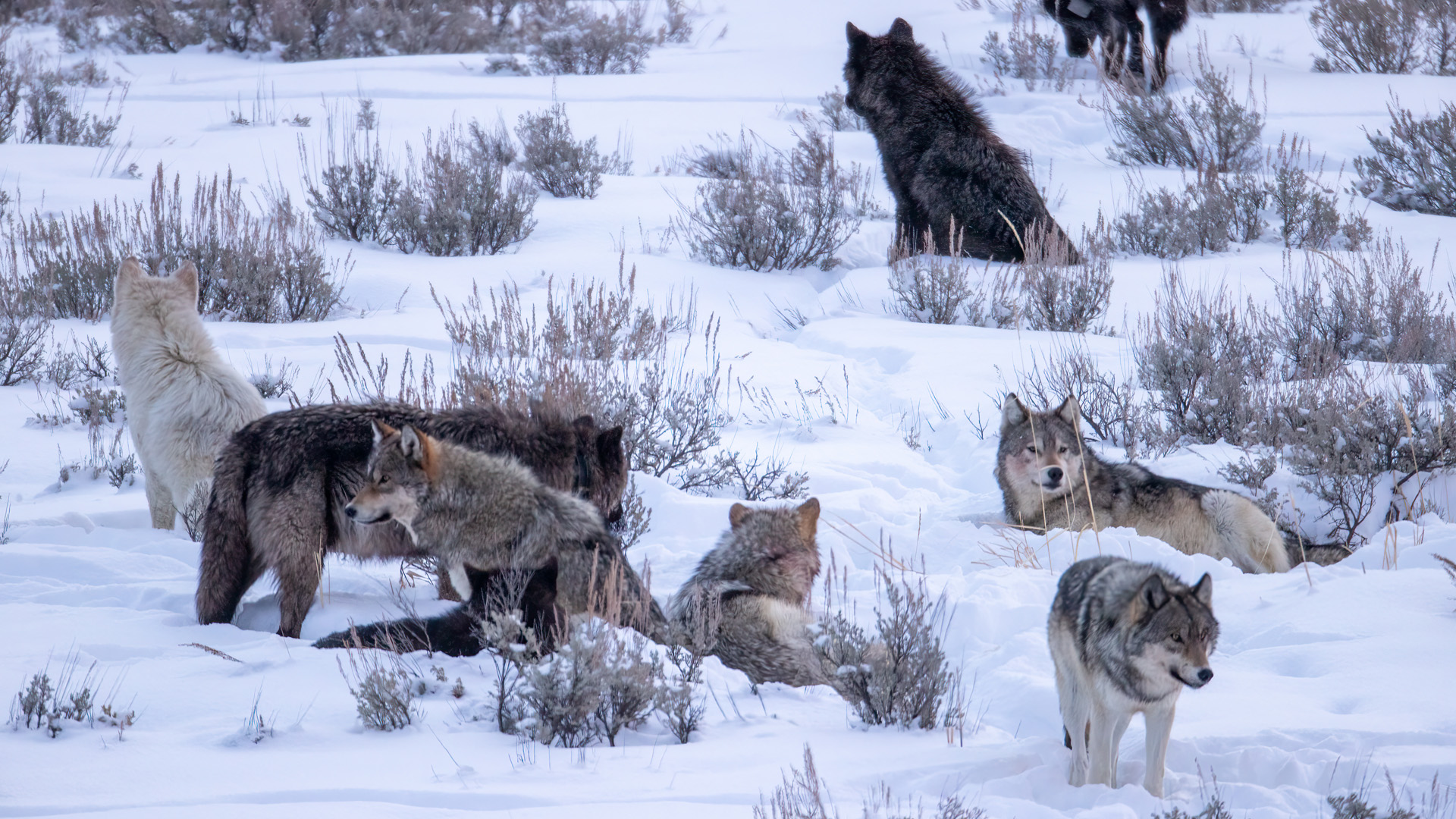
Today, Yellowstone’s wolf population continues to shift with births, dispersals, disease, conflict between packs and human-caused mortality beyond park boundaries. The most recently reported minimum count put Yellowstone National Park’s population at 84 wolves in eight packs at the end of 2025, down from 108 wolves in nine packs at the end of 2024. While lower than the post-reintroduction peak of 175 wolves in the mid-2000s, today’s population reflects the dynamic nature of a recovering predator population in a landscape where prey, pack territories and mortality pressures are constantly changing.
For visitors, Yellowstone remains one of the best places in the world to watch wild wolves in their natural habitat. The experience can feel once-in-a-lifetime: a distant pack moving across a snowy valley, a black wolf slipping through sagebrush, or a chorus of howls rising before dawn.
Where Is the Best Place to See Wolves in Yellowstone?
The best place to watch wolves in Yellowstone is often Lamar Valley, especially at dawn and dusk. Wolves are found in many parts of the park, but Lamar Valley, Hayden Valley, the Canyon area and Blacktail Deer Plateau are among the more reliable places to scan for them.
In Yellowstone, pack territory size is closely tied to prey availability. Wolves in the northern range, where elk are more concentrated, generally use smaller territories than packs in the park’s interior. A good spotting scope, patience and a knowledgeable naturalist can make all the difference. Wolves may be visible to the naked eye, but they are often seen best as moving shapes across a wide, open landscape.
Why Do Wolves Howl?
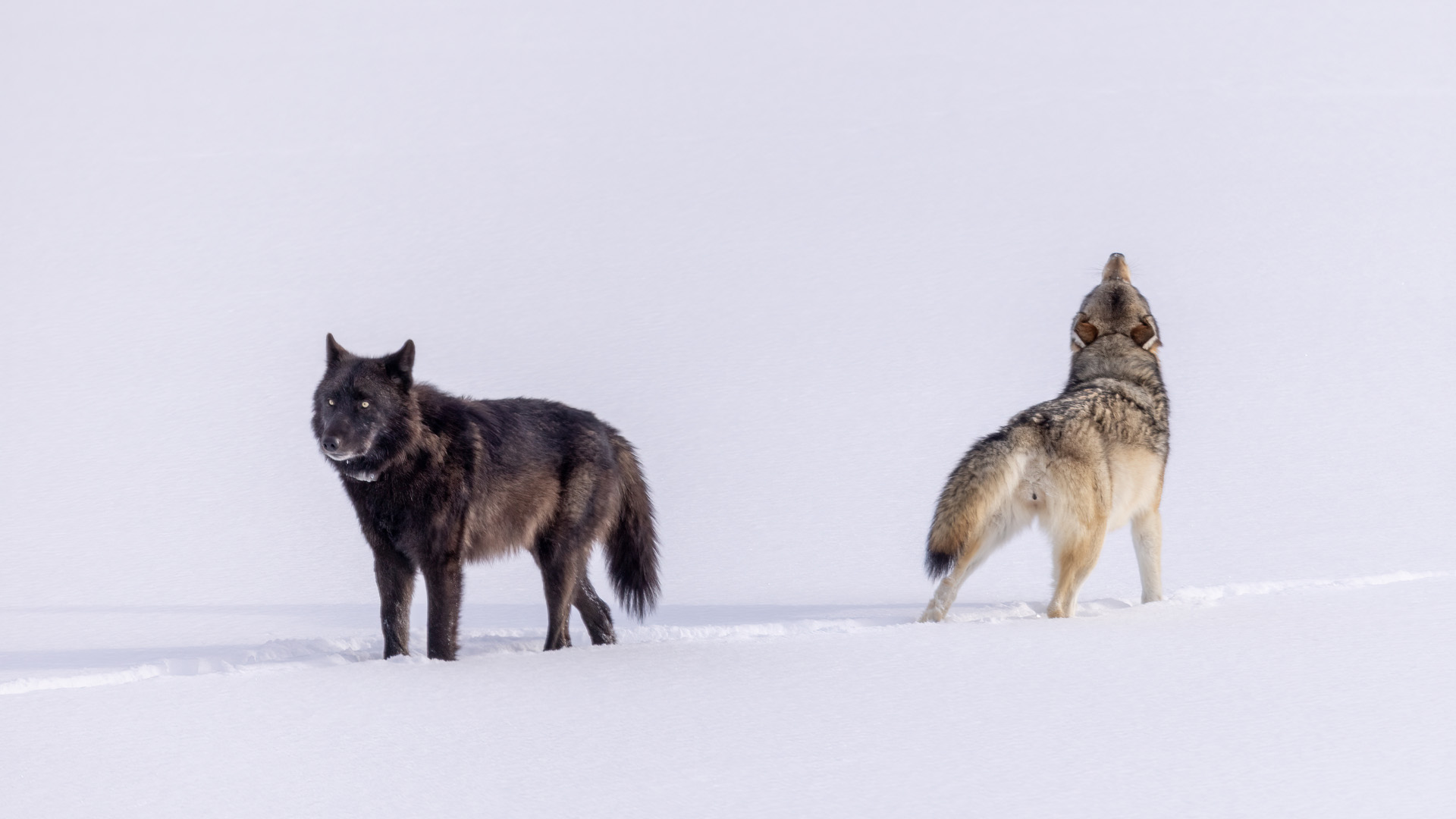
Remember: hearing a howl does not always mean a wolf is close. A howl can travel more than 6 miles in forested areas and nearly 10 miles across open terrain. Wolves do not howl randomly at the moon. Howling is a social rallying call, a way to locate pack members, a prelude to movement or hunting, and a means of advertising territory to neighboring packs.
Body language is another important form of wolf communication. Watching closely can reveal a great deal about an individual wolf and its place in the pack. A dominant wolf may display raised hackles, bared teeth, a wrinkled forehead and erect, forward-pointing ears. A more subordinate wolf may lower its tail and body, expose its throat, draw back its lips or fold its ears.
What Makes Yellowstone Wolves So Fascinating?
There is undeniably something captivating about wolves. Born blind and deaf and weighing only about 1 pound, wolf pups are completely dependent on their mother and other pack members during their first weeks of life. By six months, they may weigh around 60 pounds and begin traveling and hunting with the pack.
Fully grown, wolves are powerful, intelligent predators built for endurance. Their jaws, teeth and cooperative hunting behavior allow them to pursue large prey such as elk and, at times, bison. But their strength is only part of the story. Wolves are also deeply social animals. They raise pups cooperatively, defend territories, share food and maintain complex family bonds that researchers are still working to understand.
Why Are Wolves Important to the Yellowstone Ecosystem?
Their role as predators is a vital one and should never be underestimated. Wolves help shape ecosystems by influencing the abundance, movement and behavior of prey. They consume a wide variety of animals, from smaller prey to large ungulates that many predators cannot easily kill. In Yellowstone, elk remain their primary winter prey, while deer make up a larger portion of their summer diet. Wolves are also known to kill bison, one of the most difficult and dangerous prey animals in the park.
Before wolves returned, Yellowstone’s northern elk herd was much larger, and heavy browsing affected willows, aspens and other woody plants in parts of the park. After wolves were reintroduced, elk numbers declined and elk behavior changed. Scientists continue to study exactly how much of that change was driven by wolves, compared with factors such as cougars, bears, hunting outside the park, drought, winter severity and groundwater patterns.
That complexity is part of what makes Yellowstone so fascinating. Wolves are not the only force shaping the ecosystem, but their return restored an important predator-prey relationship that had been missing for decades. In some areas, changes in elk behavior and browsing pressure have been linked with willow and aspen recovery, which can benefit beavers, birds, insects and other wildlife. More trees and shrubs along streams can help stabilize banks, shade waterways and create richer habitat.
How Do Wolves Support Other Wildlife?
The ripple effects do not end with elk. Many animals in Yellowstone benefit from the predatory nature of gray wolves. When wolves kill an elk, ravens and magpies may appear almost immediately. Coyotes often arrive soon after, waiting nearby until the wolves have fed. Bears may move in later, and eagles, foxes, beetles and other scavengers can feed on the remains.
A single wolf kill can become a temporary gathering place for a surprising number of species. In this way, wolves move nutrients across the landscape and support Yellowstone’s scavenger community, especially in winter when food can be scarce.
Are Wolves Dangerous to People?
With all this talk about wolves taking down large prey, it is worth remembering that wolves are not normally dangerous to humans. No wolf has attacked a human in Yellowstone, and wolves are naturally cautious around people unless they become habituated through access to human food.
Visitors should still respect wolves as wild animals. Give them space, never feed them and always follow park regulations for wildlife viewing. Seeing a wolf in Yellowstone is not about getting close. It is about watching one of North America’s great predators living freely in one of the wildest landscapes in the country.
So don’t hesitate to plan a trip to see wolves in their natural habitat—and what better place to look for them than Yellowstone, where their return remains one of the most closely watched wildlife restoration stories in the world?