

Two years ago, we asked you to speak up against a proposed mining project threatening Alaska’s Lake Clark National Park and its extraordinary wildlife.
Now, we need your help again. The proposed Johnson Tract Mine has continued to advance—and it is now moving forward on a federal fast-track.
The stakes extend far beyond the underground mine itself. Plans include an industrial access road and coastal barge facility through a landscape that supports one of the world’s densest concentrations of coastal brown bears, all five species of Pacific salmon and endangered Cook Inlet beluga whales.
Please sign the No Johnson Tract petition and urge decision-makers to require a full Environmental Impact Statement before the project moves any further.
The Johnson Tract Mine Is Moving Forward
The Johnson Tract sits on approximately 21,000 acres of privately owned land surrounded by Lake Clark National Park and Preserve, part of Alaska’s Bear Coast. The property contains gold, silver, copper, zinc and lead.
It is also just a few miles northeast of Nat Hab’s Alaska Bear Camp.

Map of Lake Clark National Park showing Nat Hab’s Alaska Bear Camp in relation to the proposed Johnson Tract Mine and easements. Created by Nat Hab Staff © Megan Brief
When we last wrote about Johnson Tract in 2024, the National Park Service was considering transportation and port easements needed to access the property. We asked Nat Hab travelers and readers to make their voices heard during that review.
The project has continued to advance since then.
In December 2025, Johnson Tract was admitted to the federal FAST-41 program, accelerating coordination of its federal environmental review and permitting. The current federal timetable targets May 2028 for completion of that process.
Then, on July 2, 2026, Alaska approved an amended reclamation plan allowing the project to move further into underground exploration. Work associated with expanded exploration and supporting infrastructure is moving ahead as the mining company pushes toward eventual full-scale development.
The mine is no longer a distant possibility.
The Threat Extends Far Beyond the Mine
Johnson Tract is often described as a relatively small underground mine. But focusing only on what happens below ground obscures much of the project’s potential impact.
Ore has to get out.
Plans call for an industrial access road linking the mine to the Cook Inlet coast, along with staging and material areas and a barge facility. Federal review encompasses potential impacts to waters and wetlands associated with this infrastructure—not simply the underground mine.
That development would cut through an otherwise extraordinary protected landscape.
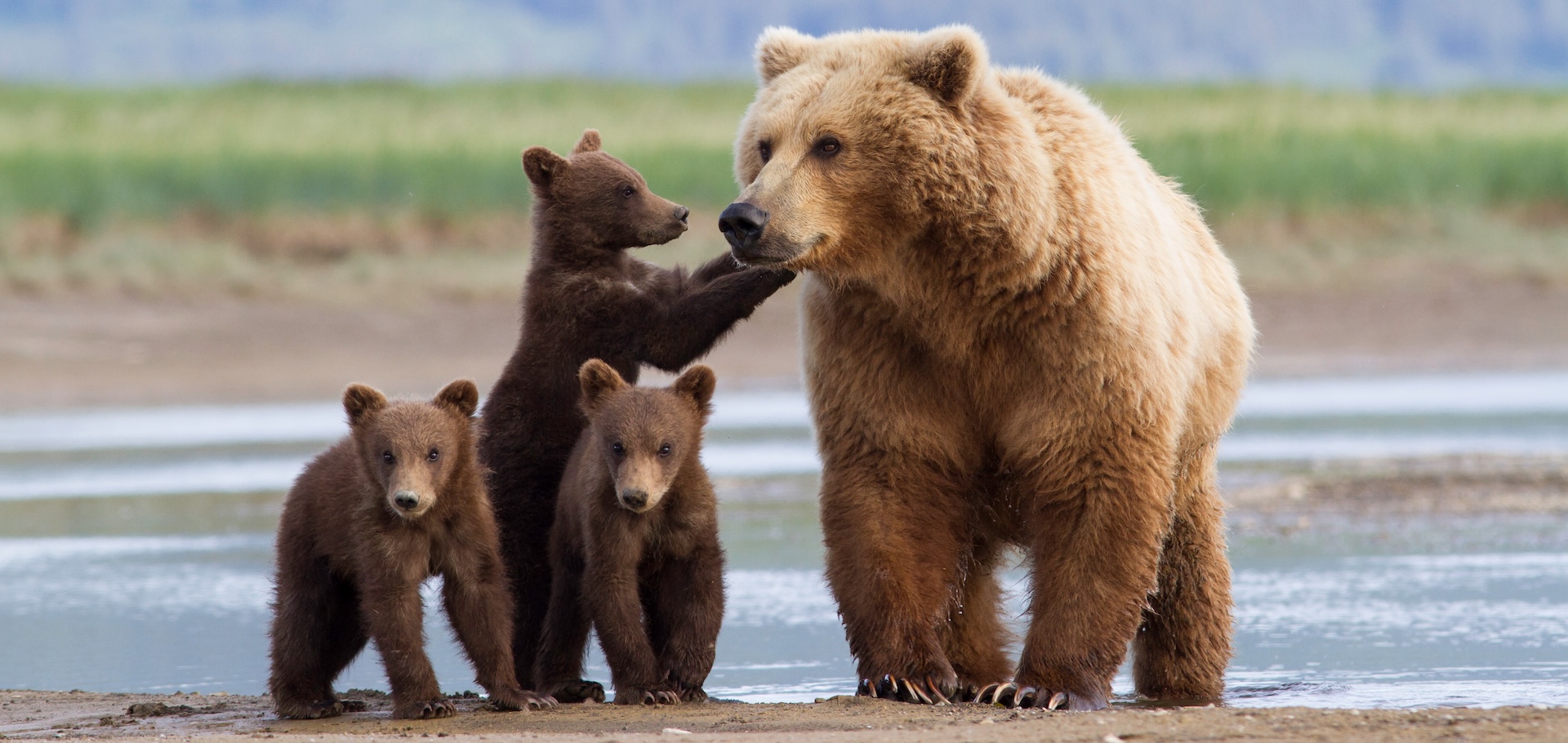
The Lake Clark coast supports one of the world’s densest concentrations of coastal brown bears. The bears that depend on this habitat are the same ones Nat Hab travelers encounter at Alaska Bear Camp.
The ecosystem also supports all five species of Pacific salmon, which provide a foundation for wildlife, fisheries and communities throughout the region.

Nat Hab travelers watch brown bears at Nat Hab’s Alaska Bear Camp © Court Whelan
Endangered Belugas Depend on This Coast, Too
The wildlife at stake extends beyond Lake Clark’s bears.
Tuxedni Bay, near the proposed coastal infrastructure, has been identified as the only known winter foraging habitat for endangered Cook Inlet beluga whales, whose population numbers only around 300 animals.
Belugas rely heavily on sound to communicate, navigate and locate food, making disturbance and industrial noise especially concerning in important feeding habitat.
Nearby Chisik and Duck islands also contain some of Cook Inlet’s most important seabird nesting habitat.
A mine, road, port, increased vessel traffic and other industrial activity would introduce an entirely different kind of use into this remarkably concentrated wildlife landscape.
A Seven-Year Mine Versus a Lasting Wildlife Economy
There is another important question to consider: What are we risking for a mine expected to operate for only about seven years?
Johnson Tract has been promoted in part for its deposits of minerals considered important to domestic production. But according to the mining company’s own economic analysis, gold accounts for approximately 70% of the project’s projected revenue.
The same analysis envisions a mine life of roughly seven years.
Meanwhile, the wild Lake Clark coast already produces lasting economic value precisely because it remains wild.
Bear-viewing tourism generates more than $50 million in annual sales and supports hundreds of jobs for guides, pilots, lodge employees, boat operators and other local businesses.
The proposed mine, by comparison, is expected to provide roughly 170 direct jobs at peak production, with the operation itself currently projected to last only about seven years.
This should not be framed simply as mining versus jobs.
The real question is whether a short-lived extraction project is worth putting an existing, renewable tourism economy—and the wildlife that sustains it—at risk.

An Alaska brown bear fishes for salmon
Why We’re Asking You to Speak Up Again
Protecting wild places rarely comes down to a single petition, comment period or decision.
It requires persistence.
We saw that with the long fight over the proposed Pebble Mine in Bristol Bay. For more than a decade, Alaska Native communities, commercial and recreational fishers, conservation organizations, businesses and individuals kept pressure on policymakers to protect one of the world’s great salmon ecosystems.
In January 2023, the Environmental Protection Agency issued Clean Water Act protections that effectively prevented the Pebble Mine proposal from moving forward as designed because of its expected impacts on Bristol Bay’s salmon fisheries.
Nat Hab travelers and readers were among those who added their voices through petitions and public comments.
The fight over Pebble also offers an important reminder: to save the wild places we love, we have to keep the pressure on.
That is why we are asking you to speak up for Lake Clark again.
Tell Decision-Makers: Lake Clark Deserves a Full Environmental Review
Federal review of the Johnson Tract project is underway.
Conservation groups are calling for a full Environmental Impact Statement (EIS) that examines the effects of the mine and its associated infrastructure before the project advances further.
That matters because the potential impacts cannot be viewed in isolation. The mine, industrial road, coastal barge facility and associated activity together could affect bears, salmon, endangered belugas, wetlands, clean water and the people and businesses that depend on this intact ecosystem.
Please sign the No Johnson Tract petition and urge decision-makers to require a full Environmental Impact Statement before this project moves any further.
The petition includes space for an additional personal comment. If you choose to add one, consider emphasizing:
- Your appreciation for Alaska’s brown bears, salmon, endangered belugas, clean water and intact wild habitat
- The need to consider the combined impacts of the mine, industrial road and coastal barge facility
- The importance of a rigorous environmental review before further development occurs
- The long-term value of Lake Clark’s bear-viewing and ecotourism economy
- Your own connection to Alaska, its wildlife or wild places
If you have traveled to Alaska and experienced its wildlife firsthand, share why protecting this extraordinary landscape matters to you.
Add your voice today. A roughly seven-year mine should not put one of Alaska’s great wildlife landscapes—and the lasting economy it supports—at risk.