

Sometimes I struggle to describe Scotland. Moody? Rugged? Ever-changing? I have seen the Outer Hebrides on days when the whole world appeared in misty grayscale, and also on days when a bright blue sky met deep green grass in a line of stark contrast.
Maybe that’s where the description lies. From the forested interior of the Highlands to Britain’s outermost islands, Scotland’s wild landscapes might be best characterized by edges—places where one time, terrain or culture gives way to another.
Rivers widen into lochs. Ancient forests thin into open moor. Mountains rise from the Atlantic. Recorded history fades into myth and legend.
Nat Hab’s Wild Scotland Photo Expedition follows these transitions westward, from the pinewoods and lochs of the Highlands to Skye and the Outer Hebrides.
Designed specifically for photographers, this journey prioritizes light, timing and access, lingering where conditions are right and moving quietly through landscapes where wildlife, history and weather remain closely intertwined.
With fall departures, the expedition coincides with the Highlands’ autumn transition, when days shorten, light softens and seasonal color spreads across glens and lochs. It is a time between summer and winter, abundance and stillness, when Scotland’s edges feel especially pronounced.
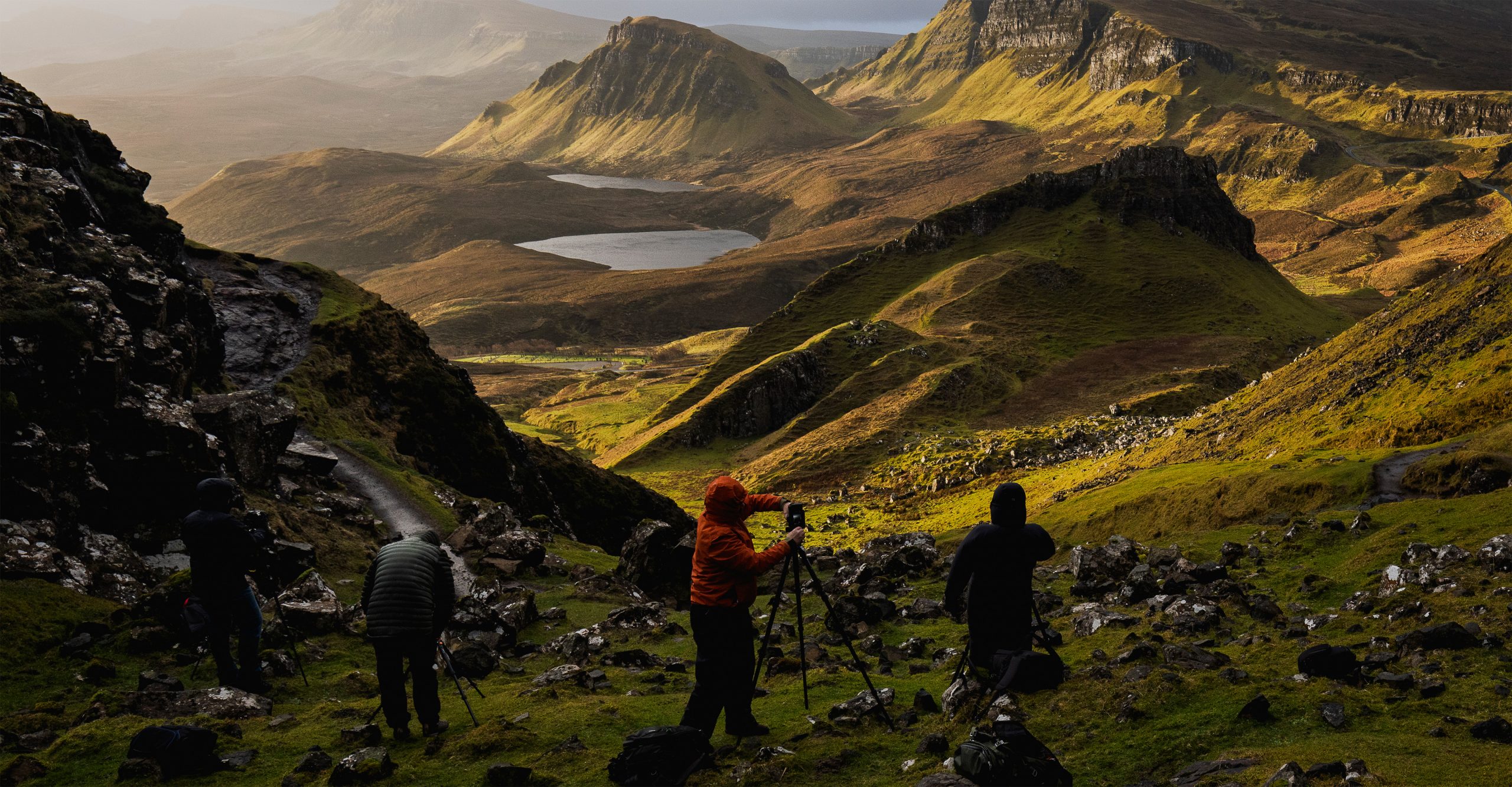
Nat Hab Guests photographing wild landscapes, Isle of Skye, Scotland © Harry Martin
Where Does Wild Scotland Begin?
Our Scottish photo expedition begins in Inverness, the cultural capital of the Highlands, before continuing to Contin and historic Coul House. The property’s formal gardens and arboretum offer the first opportunities to photograph autumn foliage, mature trees and the shifting Highland sky.
From here, the route heads west through pine forest, mountain glens and long freshwater lochs before reaching Scotland’s Atlantic coast.
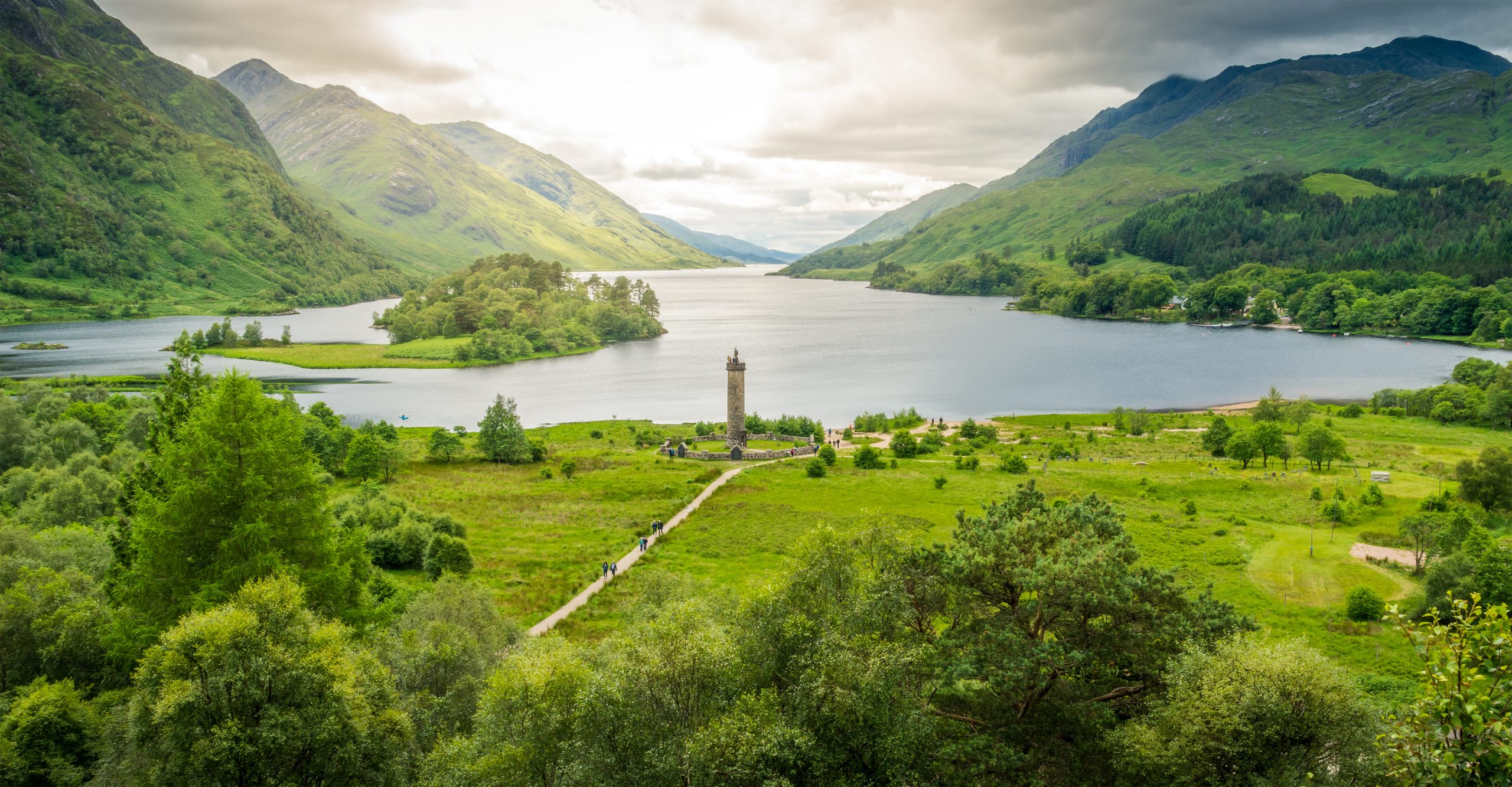
Loch Shiel, Inverness, Scotland.
Why Scotland’s Wild Landscapes Are Defined by Edges
Unlike destinations known for a single headline species, Scotland’s power lies in its landscapes. As Nat Hab Photo Expedition Leader Warwick Lister-Kaye explains:
“In Scotland, we don’t really have that one headline species that you might travel to see. But in my mind, our landscape, the ever-shifting light through the landscape and our history, which goes back thousands of years, is, in a sense, our charismatic megafauna.”
Across the western Highlands and islands, glaciation, erosion and centuries of human land use have shaped a mosaic of forests, moors, lochs, mountains and coasts. These are cultural as well as natural landscapes, formed through generations of interaction among people, climate and ecosystems.
For photographers, the boundaries between land and water, past and present, light and shadow create compositions that change from one moment to the next.
Where Forest Gives Way to Moor: Glen Affric and the Highland Interior
The Wild Scotland Photo Expedition leads through the wooded interior of the Highlands, where cultivated land begins to thin and fragments of Scotland’s ancient forest remain.
In Glen Affric National Nature Reserve, rare Caledonian pinewoods survive among lochs, mountains and open moor. These remnants of the forest that once covered much of Scotland are now at the center of long-term restoration and rewilding efforts.
Along the shores of Loch Beinn a’ Mheadhoin, photographers walk among native Scots pine, birch and juniper, with red deer, pine martens, golden eagles and ospreys part of the surrounding ecosystem.
Twisted old-growth trees, reflections on the loch and streams descending from the mountains offer opportunities for both wide-angle landscapes and closer studies of bark, moss, water and seasonal color.
This is an edge in time, where an ancient forest meets contemporary stewardship and future growth.
Where Water Cuts the Land: Loch Lochy and the Great Glen
The Great Glen forms a natural line across Scotland, shaped by geological forces and glaciers and now traced by a chain of long, narrow lochs.
At Loch Lochy, steep forested slopes descend toward dark water beneath the surrounding Highland peaks. A walk along the shoreline reveals quiet bays, rocky beaches and broad views across the loch.
The meeting of land, water and mountain creates strong lines within the frame. Reflections appear and disappear as clouds move overhead, while changing light can transform the same view within minutes.
Here, Scotland’s geological and human histories overlap, a theme that follows the journey farther west.
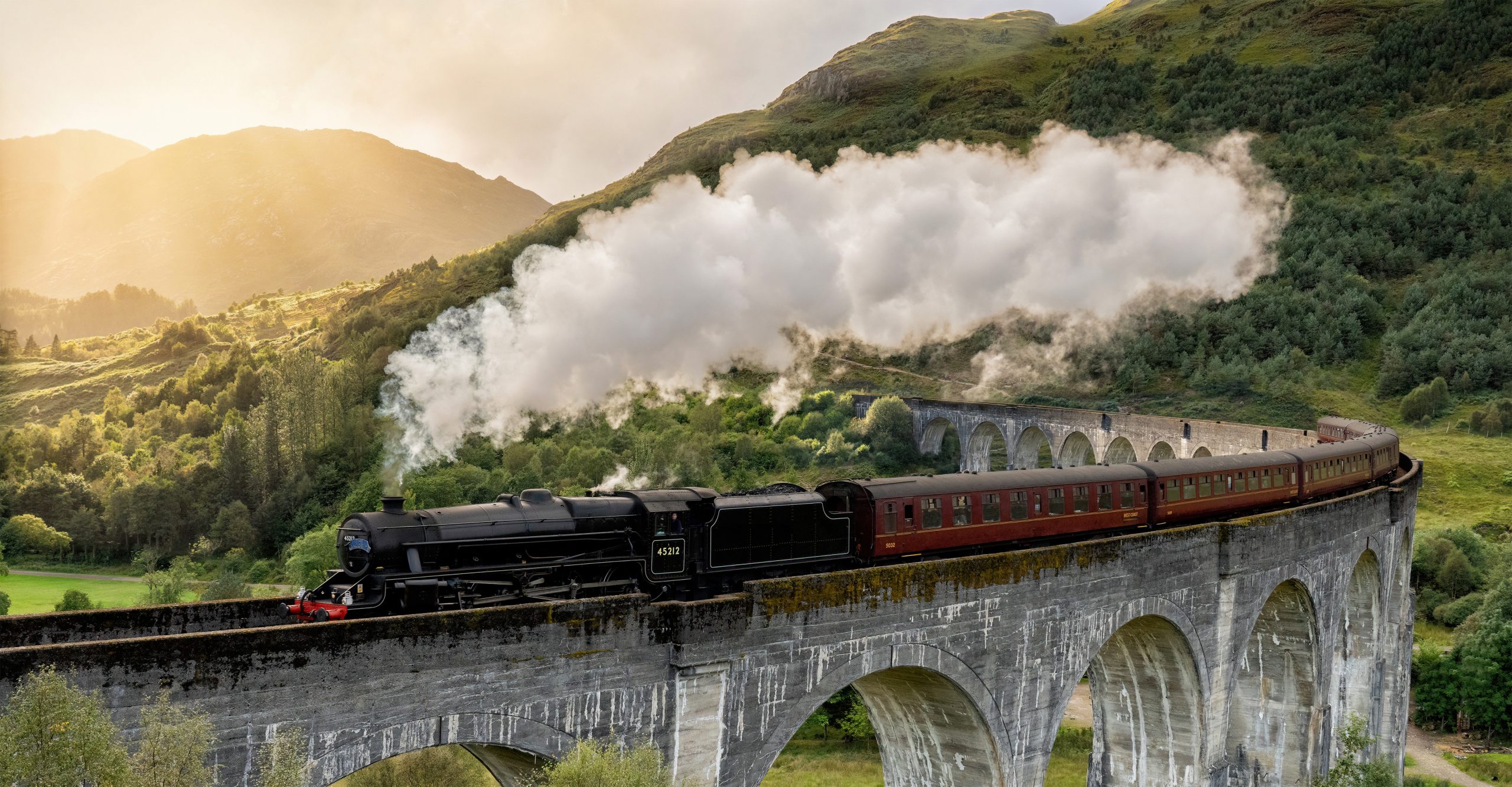
Jacobite steam train (Hogwarts Express), Scotland.
Where History Meets Landscape: Glenfinnan and the West Highlands
Few photographs connect Scotland’s landscape and history as clearly as the Jacobite steam train crossing the Glenfinnan Viaduct.
From a hillside viewpoint, photographers wait for the locomotive to follow the viaduct’s 21 arches across the glen, with steam trailing behind it and mountains rising in the distance. The structure’s curve creates a strong line through the landscape and has become widely known as the route of the Hogwarts Express in the Harry Potter films.
The photograph requires preparation and timing. There is only a brief window as the train approaches, crosses the span and disappears from view.
The scene is more than a familiar film location. It brings together Highland geography, railway engineering and the history of travel through this once-isolated region.
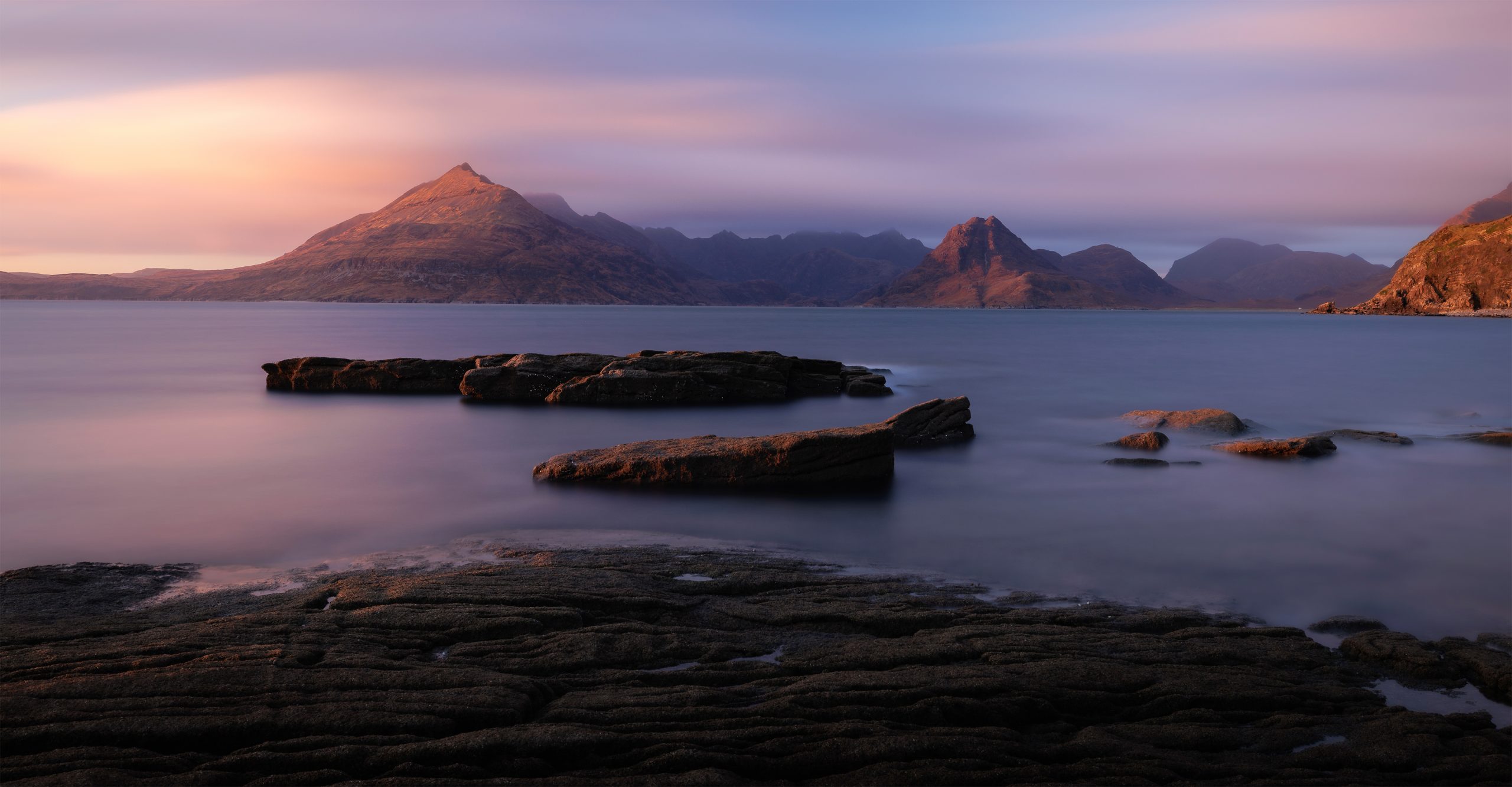
Elgol Beach, Isle of Skye, Scotland © Harry Martin
Where Mountains Fall into the Sea: Knoydart and Skye
West of the Great Glen, Scotland becomes increasingly remote. From Mallaig, the expedition travels by private boat along the Knoydart Peninsula, a roadless region where steep mountains descend directly into sea lochs.
Along the coast, seals may rest on rocks, seabirds patrol the skies and dolphins, porpoises or minke whales may appear offshore. Otters are also found here, though detecting them among the rocky shoreline requires patience and a watchful eye.
The journey includes lunch at The Old Forge in Inverie, regarded as mainland Britain’s most remote pub and accessible only by boat or on foot.
The route then crosses Loch Hourn to the Isle of Skye, where the softer coastal landscapes of the Sleat Peninsula contrast with the jagged peaks of the Black Cuillin.
Weather permitting, a boat journey to Loch Coruisk provides access to a freshwater loch enclosed by dark volcanic mountains. From the jetty, a short hike reveals views of still water, bare rock and peaks often wrapped in shifting cloud.
Later, the expedition briefly returns to the mainland to photograph Eilean Donan Castle at dusk, when fading light settles over the stone walls and the three sea lochs surrounding its island setting.
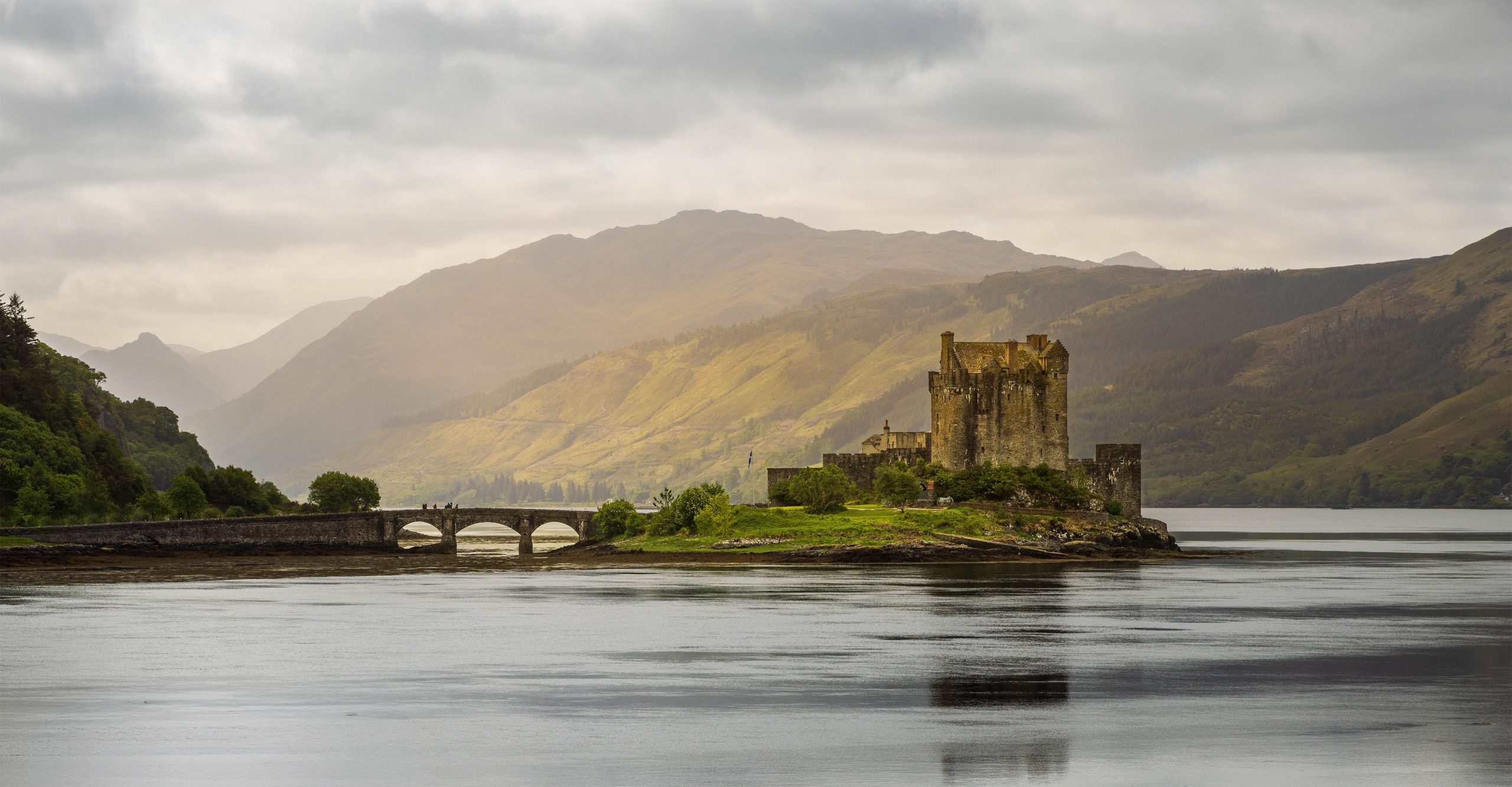
Eilean Donan Castle, Scottish Highlands © Nat Hab Guest Deborah Knight
Across Skye’s Northern Ridges
The journey continues north across Skye, stopping at several of the island’s most distinctive geological formations.
The Old Man of Storr rises above the sea from a steep mountainside, while Kilt Rock’s columnar basalt cliffs drop toward the coast. Farther north, the Quiraing reveals a landscape formed by a vast landslide, with high cliffs, terraced plateaus and sharp pinnacles.
In Portree, rows of pastel-colored buildings line the harbor, offering a change from the island’s rock formations and open terrain.
From Uig, the expedition boards the ferry to Harris, crossing toward the Outer Hebrides in the evening light.
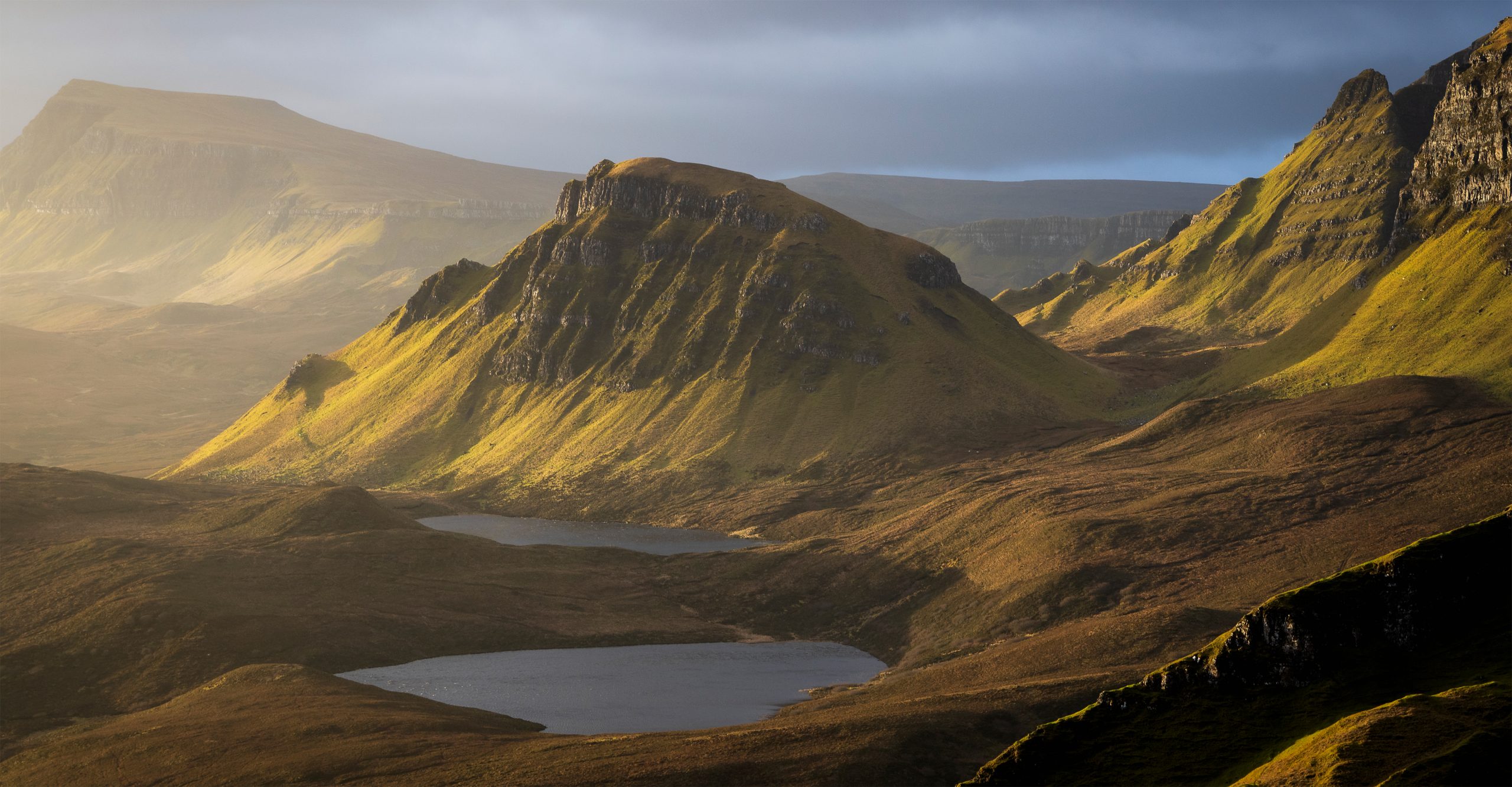
The Quiraing, Isle of Skye, Scotland © Harry Martin
At the Atlantic Edge: The Outer Hebrides
The Outer Hebrides, also known as the Western Isles, form a long Atlantic archipelago off Scotland’s northwest coast. Exposed to ocean weather, they encompass mountains, moorland, crofting settlements, rocky inlets and broad white sand beaches.
Much of the archipelago rests on Lewisian gneiss, among the oldest exposed rock in Europe. Ice, wind and Atlantic waves have shaped this ancient foundation into thin soils, rugged hills and an intricate coastline.
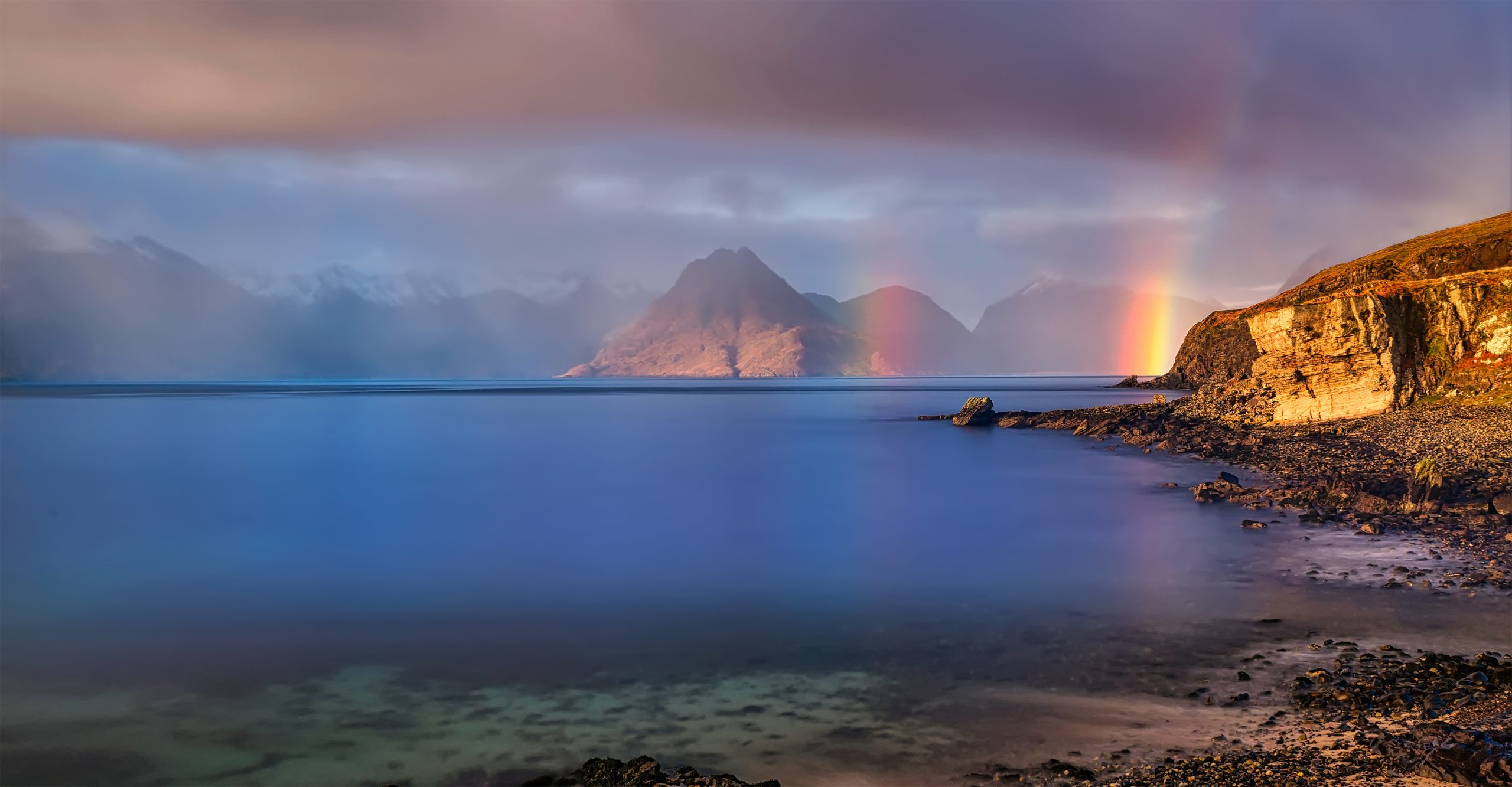
The Outer Hebrides, Scotland.
On Harris, the single-lane Golden Road follows the island’s east coast among rocky coves, small harbors and scattered villages with Gaelic and Norse names.
On the west coast, Luskentyre Beach stretches between white dunes and clear Atlantic water. The expedition plans its visit for the evening, when low light may bring out subtle patterns in the sand and shift the sea from pale aqua to deep teal.
Warwick recalls arriving during a previous visit:
“We were there on our own at five o’clock in the morning—completely clear skies.”
The coastline also provides habitat for seals, otters and seabirds, though wildlife sightings vary with season, weather and tide.
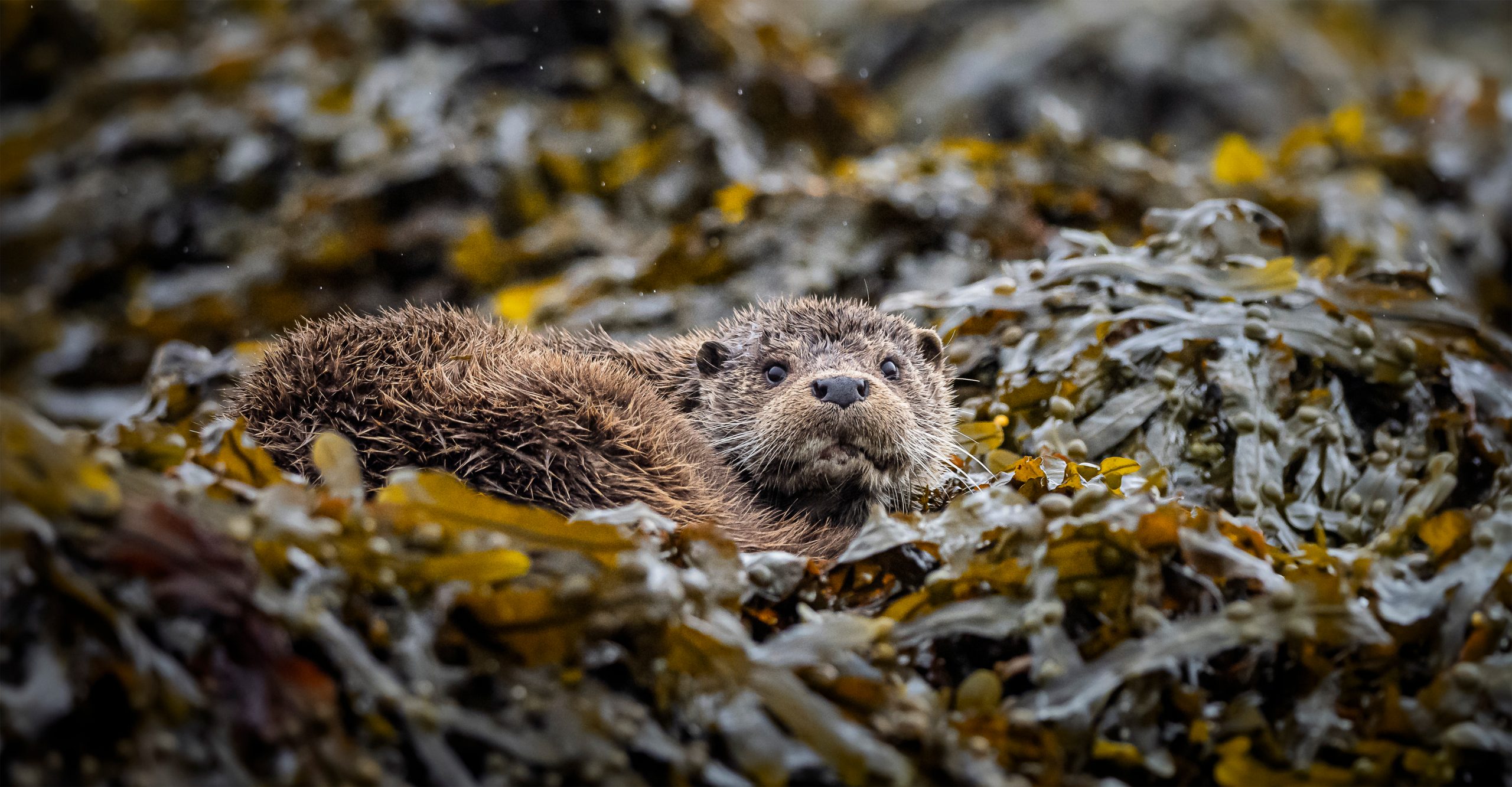
Eurasian otter, Scotland © Harry Martin
Stone, Time and Human Presence: Callanish
On the Isle of Lewis, the Callanish Standing Stones rise from open moor near the Atlantic coast. Erected approximately 5,000 years ago, the gneiss pillars form a cross-shaped arrangement around a tall central stone.
Unlike archaeological sites where visitors must remain at a distance, Callanish allows photographers to move among the stones and study their relationship with the surrounding landscape.
Warwick observes:
“One of the things I love about archaeological sites in Scotland is that you can walk right up to them. You can touch the stones. They’re not cordoned off.”
The boundary between past and present feels especially thin here.
The expedition also explores the living traditions of Lewis, meeting a local artisan who weaves Harris tweed on a foot-powered loom and visiting historic blackhouses that reveal how crofting families once lived.
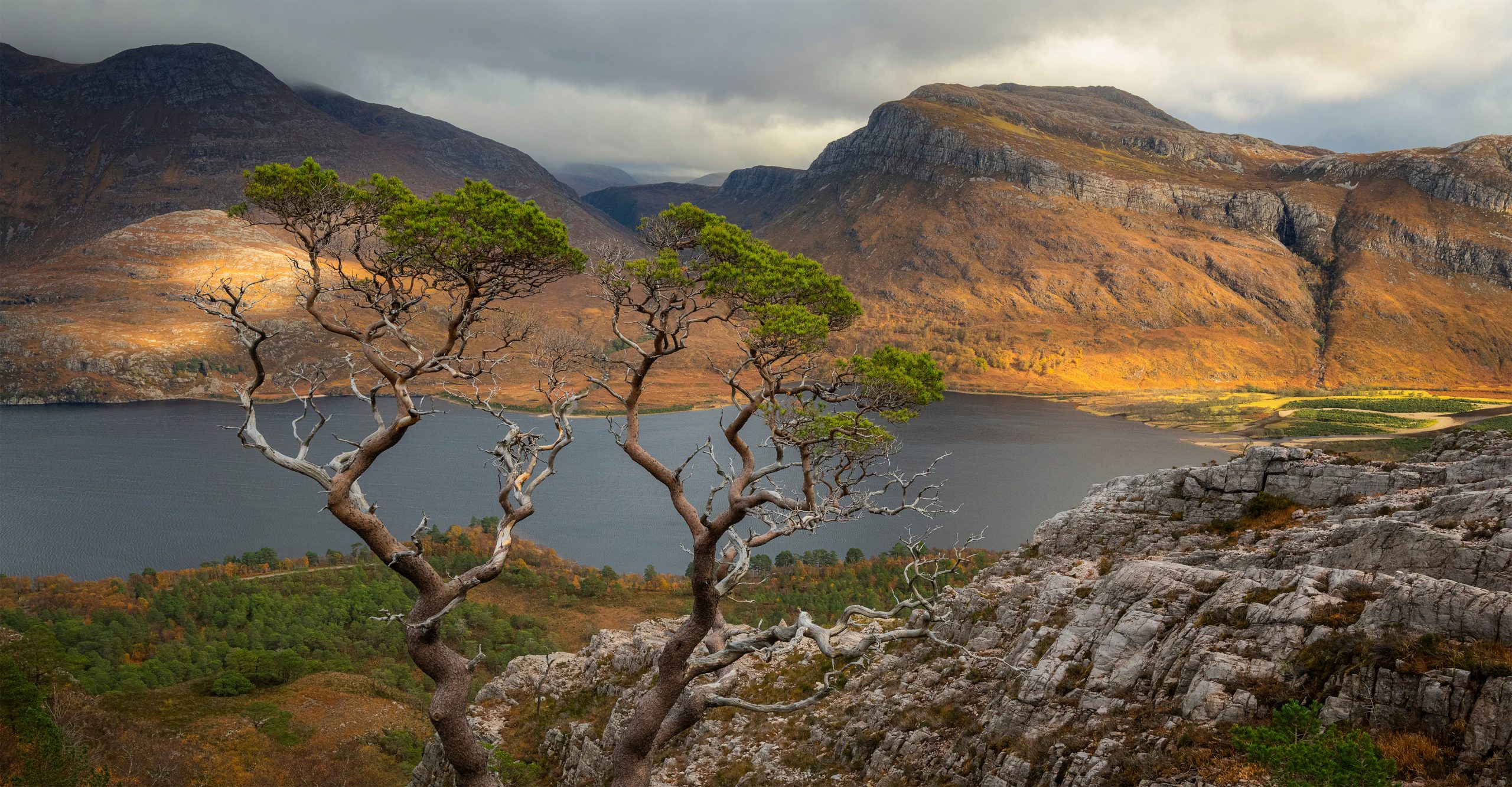
Loch Maree, Wester Ross, Scotland.
Returning to the Highlands: Wester Ross and Torridon
After the ferry crossing from Stornoway to Ullapool, the expedition returns to the mainland and enters the open landscapes of Wester Ross.
At Loch Maree, remnants of Caledonian pinewood grow along the slopes above the water, including centuries-old Scots pine, birch, rowan, holly and juniper. Black-throated divers breed in the region, while red deer roam the surrounding moorland.
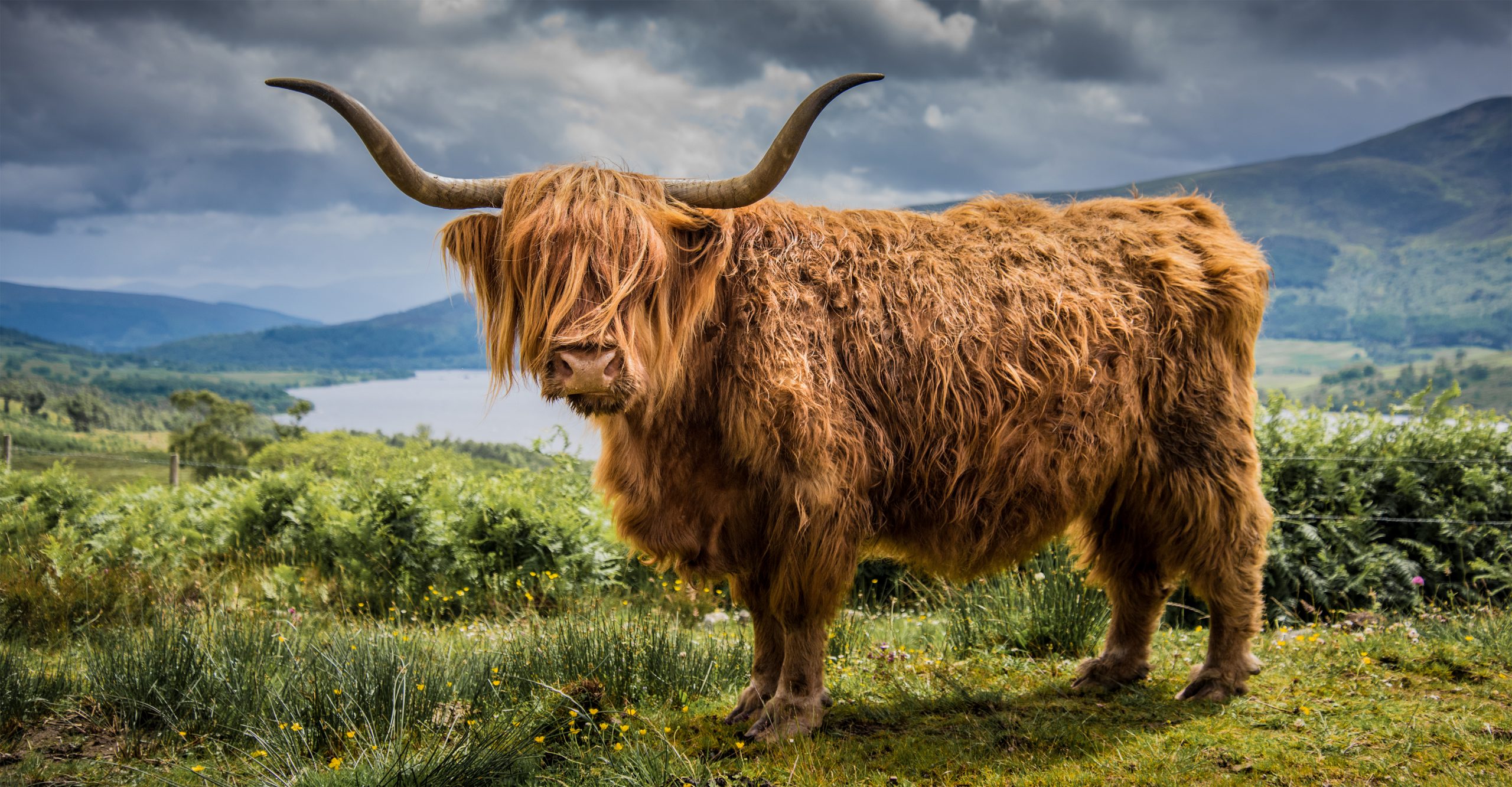
From The Torridon, photographers can work with views across the loch and hills or turn their lenses toward the hotel’s small herd of shaggy Highland cattle.
The Torridon Hills offer a final study in Scotland’s geological edges. Liathach rises in steep terraces of ancient sandstone above the glen, while the lochside village of Shieldaig sits beneath the surrounding peaks.
The expedition concludes with a traditional Gaelic ceilidh, bringing together music, storytelling and the cultural traditions of the Highlands.
Photograph the Edges of Wild Scotland
From ancient pinewoods and glacial lochs to Atlantic beaches and stone circles older than recorded history, Scotland’s wild edges reveal landscapes shaped by time, weather and human presence.
This expedition does not simply cross terrain. It follows the seams where forests meet moors, mountains meet sea and the distant past remains visible in the present, offering photographers the chance to capture a country defined by transition.
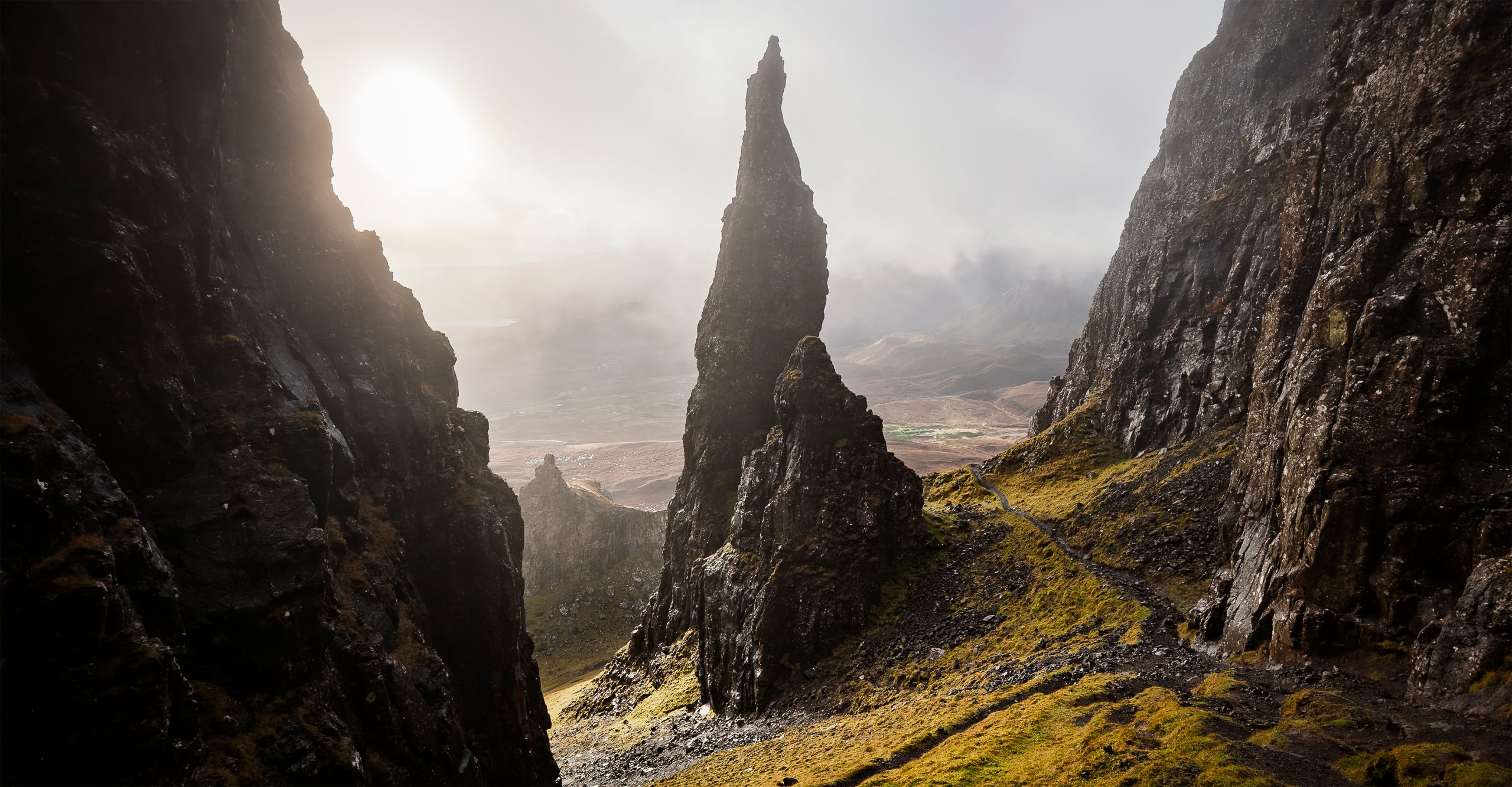
“The Needle,” Isle of Skye, Scotland © Harry Martin
What Makes a Nat Hab Photo Expedition Different?
Nat Hab Photo Expeditions are designed for photographers who value time, flexibility and quiet access. A small group allows for early starts, late finishes and the ability to linger when light or wildlife conditions are favorable.
“We’re always thinking about photography, first and foremost, and the photo opportunities we can give our guests in the field,” says Mike Hillman, Nat Hab’s Photo Expeditions Director.
“That focus on photography dictates the locations, activities, trip duration and daily choices so guests get the best photography opportunities and instruction possible.”
That focus is particularly valuable during Scotland’s fall season, when low sun, changing foliage and fast-moving weather can alter conditions throughout the day.
As Warwick puts it:
“The weather here is very changeable, and that means light is constantly changing.”
That variability makes Scotland’s Highlands and Outer Hebrides rewarding destinations for landscape and nature photography. Nat Hab Photo Expeditions also offer personalized instruction and increased baggage allowances for camera gear.
Travelers seeking a broader nature journey rather than a photography-focused departure can explore Scotland’s Wild Highlands & Islands, a 9-day itinerary that visits many of the same Highland and Hebridean landscapes, with activities varying by season.