

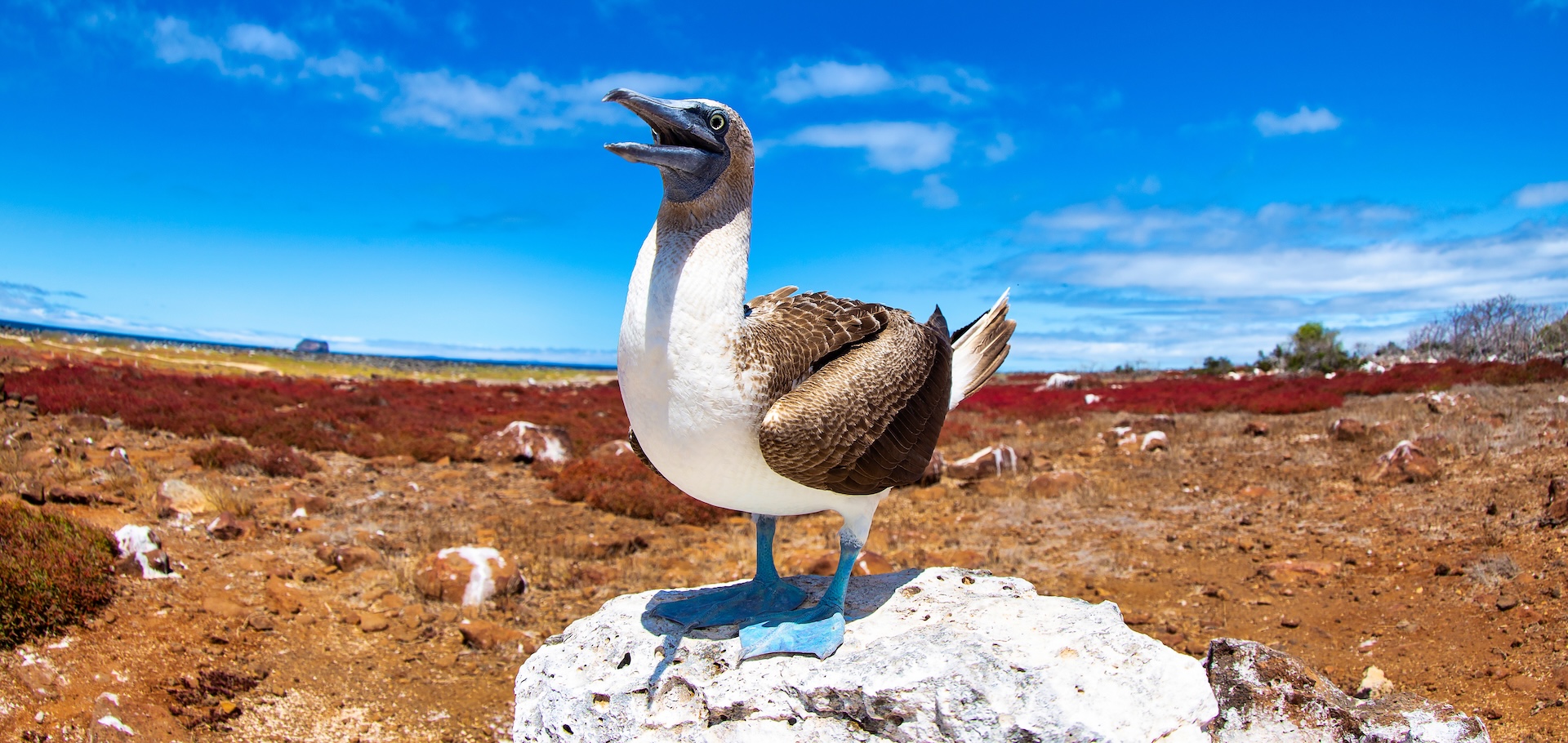
The Galapagos Islands are home to some of the world’s most recognizable wildlife, and few species attract more attention than the blue-footed booby. Known for their turquoise-blue feet, comic-looking courtship displays and remarkable diving skills, these seabirds are a highlight of many Galapagos wildlife adventures. While blue-footed boobies are found elsewhere along the Pacific coast of the Americas, the Galapagos supports one of their most important breeding populations.
Here are eight fascinating facts about blue-footed boobies:
1. Their bright blue feet help them attract mates.
Blue-footed boobies are famous for their courtship dance. Males carefully lift and display their feet while strutting around potential mates. Females pay close attention to foot color: brighter blue feet generally signal a healthy bird with good nutrition, making those males more attractive breeding partners.
2. They build simple nests directly on the ground.
Unlike many seabirds, blue-footed boobies do not build elaborate nests. Instead, they lay their eggs in shallow depressions scraped into bare ground. Over time, accumulated guano helps define the nesting area. Adults use their large webbed feet to incubate eggs and keep young chicks warm, since they do not have featherless brood patches like many other birds.
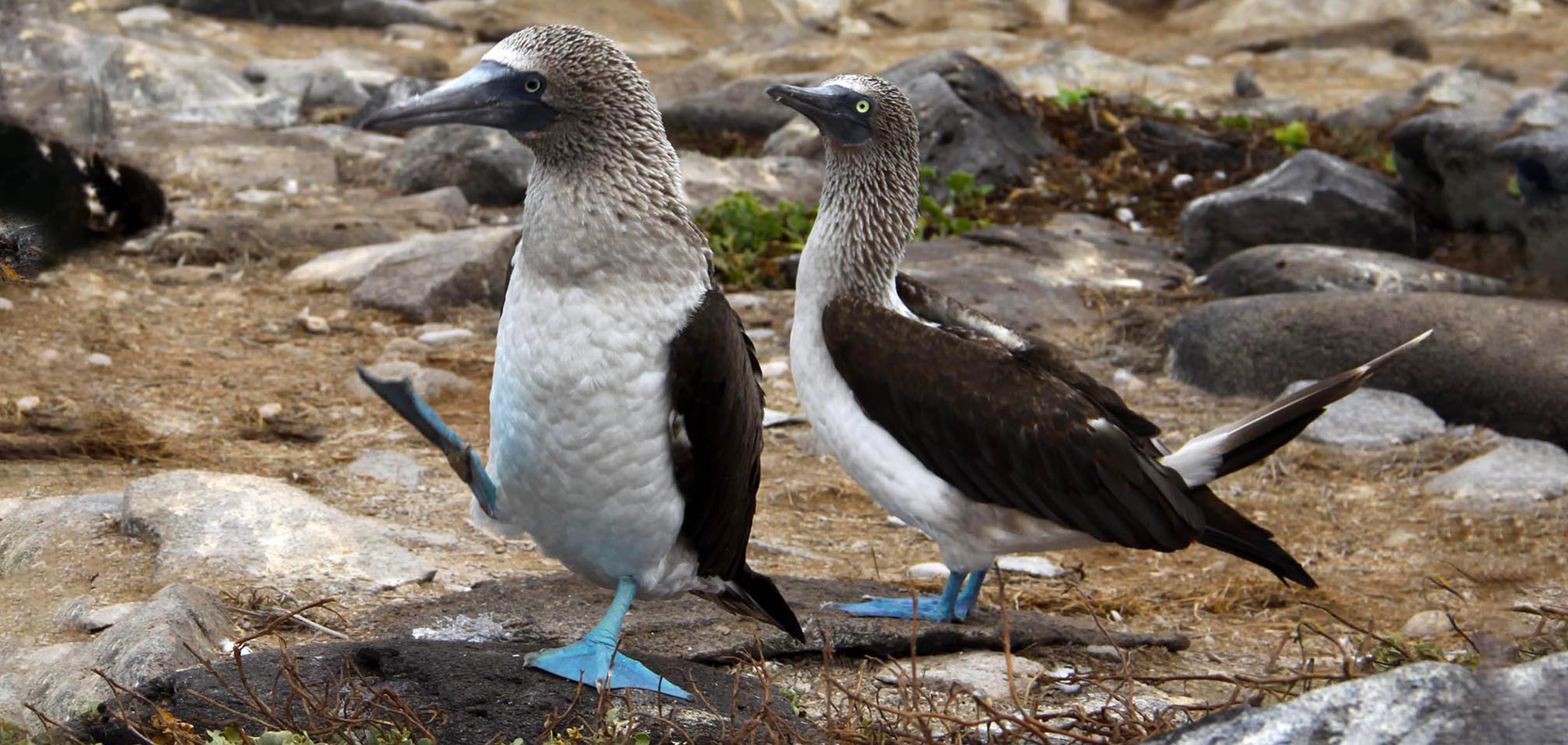
Male blue-footed boobies enjoy showing off their feet during mating rituals, often going into a high-stepping dance. Females seem to think that the bluer the feet, the more attractive the mate. © Candice Gaukel Andrews
3. Both parents share chick-rearing duties.
Blue-footed boobies are dedicated parents. Males and females take turns incubating eggs, guarding chicks and bringing food back to the nest. A typical clutch contains one to three eggs. During years when food is scarce, stronger chicks often receive more food than their smaller siblings, increasing their chances of survival. Young chicks are covered in fluffy white down that can make them appear larger than their parents.
4. Their unusual name comes from Spanish sailors.
The word “booby” comes from the Spanish word bobo, meaning “fool” or “clown.” Early sailors gave boobies this name because the birds appeared awkward and clumsy on land. In the water and air, however, they are highly skilled hunters capable of plunge-diving from significant heights to catch fish.
© Don Mammoser / WWF
5. Males and females look remarkably similar.
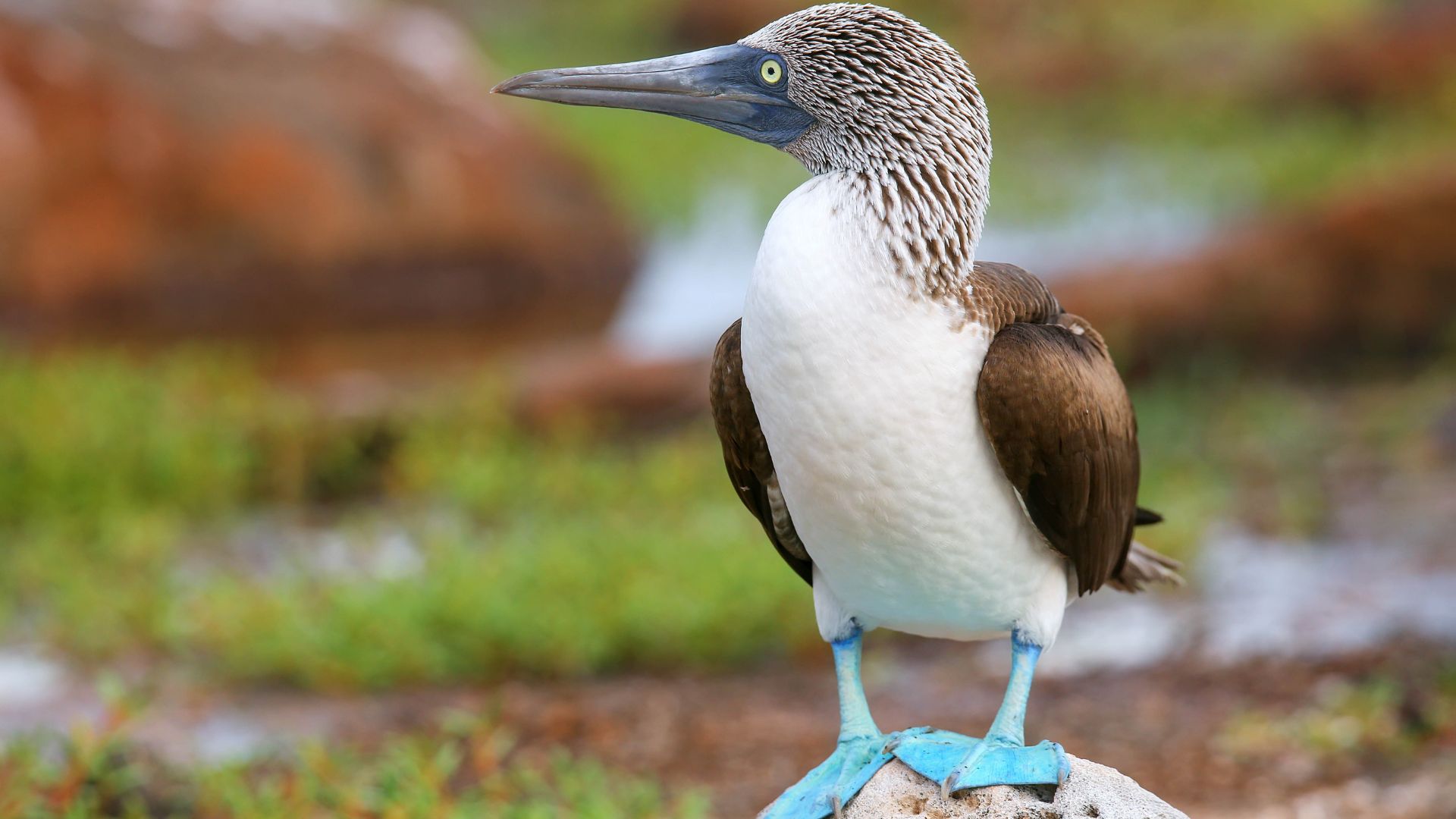
Male and female blue-footed boobies have nearly identical plumage, making them difficult to distinguish at first glance. Females are usually slightly larger than males and tend to have larger pupils. Both sexes share the species’ distinctive blue feet, streamlined shape and striking yellow-green bill.
6. They are expert plunge-divers.
Blue-footed boobies spend much of their time hunting fish at sea. When they spot a school of sardines or anchovies, they can plunge into the water from heights of up to 80 feet, folding their wings against their bodies moments before impact. Their streamlined shape and air sacs beneath the skin help cushion the force of these dramatic dives.
7. Their feet get their color from their diet.
The vivid blue color of a blue-footed booby’s feet comes from pigments called carotenoids found in the fish they eat. A healthy bird with access to abundant food tends to have brighter feet, which is one reason females pay such close attention to foot color during courtship displays.
8. They are surprisingly fearless around people.
Because the Galapagos Islands have few natural predators and wildlife has been protected for decades, blue-footed boobies are often remarkably tolerant of humans. Visitors can frequently observe them resting, nesting or performing courtship displays from nearby trails, making them one of the easiest Galapagos birds to watch and photograph.
Have you watched a blue-footed booby perform its courtship dance in the Galapagos? It’s one of the archipelago’s most memorable wildlife spectacles.