

For thousands of years, Indigenous peoples have shaped North America’s landscapes through stewardship, observation and a deep understanding of the natural world. Today, many of Natural Habitat Adventures’ journeys offer opportunities to learn directly from Indigenous guides, artists, elders and community members whose connections to these lands remain as strong as ever. Whether listening to a Gitga’at guide describe the salmon-rich waterways of British Columbia’s Great Bear Rainforest, walking among monumental poles in Haida Gwaii or hearing Métis stories beside a fire in Churchill, travelers gain perspectives that deepen their understanding of the places they visit.

© Nat Hab Staff Mark Hickey
Spirit Bears, Humpacks & Wildlife of BC
Venture into the realm of British Columbia’s Great Bear Rainforest, home to the elusive spirit bear—a creature revered by the Tsimshian peoples.
Guided by Gitga’at Wisdom: We’re joined by a local Gitga’at Indigenous guide within the protected bounds of the Kitasoo Spirit Bear Conservancy. With an intimate knowledge of the land and its inhabitants, our guide leads us along creeks and estuaries framed by evergreen backdrops, enhancing our chances of observing these secretive bears.

© Nat Hab Traveler Ronald Okuda
Conservation and Cultural Significance: The spirit bear’s existence is a testament to the untouched beauty of this wild portion of the British Columbia coast. Estimated to number only a few hundred, their survival hinges on the preservation efforts championed by the Gitga’at people. The Great Bear Rainforest has been at the forefront of conservation campaigns aimed at protecting this habitat from logging and oil pipeline development. Our access to this special place is made possible through the stewardship and passion of the Gitga’at community.
Wildlife Encounters and Stories: While patience is key in spotting the spirit bear, this journey offers frequent sightings of black bears and grizzly bears. Our Gitga’at guide shares stories and experiences gathered from countless hours in the forest, enriching our understanding of the bears’ behaviors and the cultural reverence they inspire.

© Nat Hab Expedition Leader Eddy Savage
Haida Gwaii: Islands at the Edge of the World
Embark on a journey to Haida Gwaii, an archipelago rich in Indigenous heritage and natural wonders.
Cultural Immersion in Haida Heritage: Originally known as Xaadala Gwayee, or “islands on the boundary of the world,” Haida Gwaii has been home to the Haida people for millennia. Begin your adventure with a visit to the acclaimed Haida Heritage Center at Kay Llnagaay. Engage in a guided monumental pole tour, meet contemporary carvers, and explore six traditional totem poles, hand-carved canoes, and longhouses that evoke the essence of a traditional Haida seaside village.
Authentic Local Experiences: Enjoy a special lunch at Keenawaii’s Kitchen, hosted by a Haida elder Roberta Olson. Savor beautifully plated courses that showcase traditional, wild-harvested Haida foods and the seasonal abundance of the islands, from smoked salmon and sea asparagus to huckleberries and nettle tea. After lunch, take an interpretive walk along the Spirit Lake Trail to learn about the local flora and fauna, as well as some Haida folklore. Embrace the Haida Gwaii Visitor Pledge as you prepare for the adventures ahead.
Ancient Villages and Haida Watchmen: Visit ancient village sites like SGang Gwaay (Ninstints), a UNESCO World Heritage Site, where Haida Watchmen welcome you and share stories of their ancestors. Walk among weathered memorial poles and the remains of longhouses, experiencing a culture that has thrived for over 12,000 years.
Legacy and Conservation: If conditions permit, visit Hlk’yah GawGa (Windy Bay) to see the monumental Legacy Pole raised in 2013, symbolizing the agreement between the Canadian government and the Haida Nation to protect the archipelago’s natural and marine resources. Learn about ongoing conservation efforts and the Haida people’s dedication to preserving their land and heritage.

Northern Lights Photo Expedition © Gail Yokote
Churchill’s Polar Bears | Northern Lights | Belugas
Discover the wild charm of Churchill, Manitoba—a place where Arctic wildlife and Indigenous culture intertwine to create a distinctive experience.
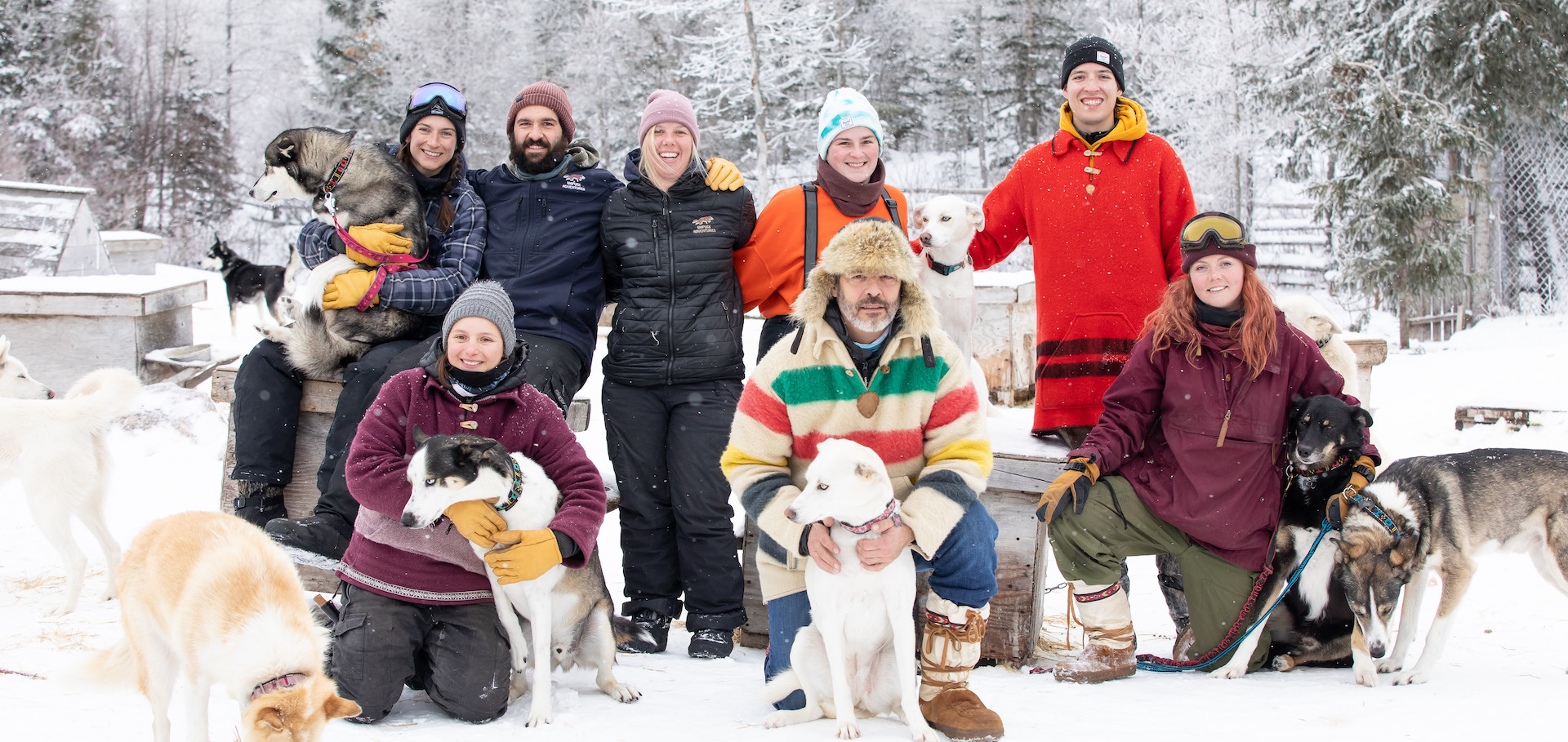
Wapusk Adventures Dog Sledding: Experience the exhilaration of dog sledding with Wapusk Adventures, an Indigenous-owned company. Musher Dave Daley shares his Métis heritage and the history of his people, including their struggles and triumphs. Learn about Louis Riel and the Red River Rebellion that led to Manitoba becoming Canada’s fifth province under Indigenous leadership. After an inspiring introduction, enjoy a thrilling ride through the boreal forest on the “Ididamile,” and warm up afterward in a traditional tipi, immersing yourself in stories and traditions passed down through generations.

Churchill residents Dave Daley and Katie De Muelles proudly wearing their traditional Métis clothing © Nat Hab Field Staff Daniel Raiti
Churchill Northern Studies Center: As part of our northern lights adventure, visit this nonprofit research station dedicated to studying the Canadian subarctic. Participate in building inukshuks—traditional Inuit stone landmarks shaped like humans. These structures have guided travelers across the tundra for centuries, serving as navigational aids and spiritual symbols. Learn about their significance while enjoying the center’s educational programs and perhaps spot wildlife from the viewing platforms.

“Spirit in the water, spirit in the sky, spirit on the Earth, all are connected. My piece is about ancestral legacy, what was passed on to us and what we will leave for our children’s children. She may be the Creator or Sedna, the Inuit goddess of the sea. She may be Jessie Tootoo, a healer or grandmother. Whoever she is, from her open hands the Aurora is unleashed, the ethereal cosmic voice of the ancestors speaking to us. The beluga swims through the aurora, a spirit guide legacy reminding us of what is truly valuable and worthy.” Artist Statement by Charlie Johnston; © Sea Walls
Itsanitaq Museum: Explore the rich history of Arctic peoples at the Itsanitaq Museum. This remarkable collection features carvings and artifacts dating back to 1700 BC, representing cultures like the Dorset and Thule—ancestors of today’s Inuit. Marvel at ivory, stone and bone figurines that tell stories of survival, creativity and the enduring spirit of the North. The museum also offers a gift shop with Inuit art and local crafts.

Churchill Community Complex © Nat Hab Staff Megan Brief
Prince of Wales Fort: On our summer adventures, visit this historic 18th-century stone fortress built by the Hudson’s Bay Company. Located where the Churchill River meets Hudson Bay, the fort offers insights into the fur trade era and the interactions between European traders and Indigenous peoples such as the Dene, Cree and Inuit. The massive, star-shaped fort stands as a testament to a time when beaver pelts were a symbol of status, and the fur trade shaped the region’s history.

Moose wade through water, Denali National Park & Preserve, Alaska. © Denali Backcountry Lodge
Ultimate Alaska Wildlife Safari
Alaska’s rugged beauty is more than a feast for the eyes; it’s a gateway to understanding the vibrant cultures that have thrived here for millennia.
Delve into Denali’s History: From our base at Denali Backcountry Lodge, a host of activities offers a chance to learn about the natural and cultural history of our environs, including the Athabascan people who lived off this land for 10,000 years.
Explore Seldovia’s Cultural Mosaic: Cross Kachemak Bay on a private cruise to the secluded town of Seldovia. Accessible only by boat or air, this natural realm is a confluence of Aleut, Yup’ik, Alutiiq and Athabascan cultures—we’ll learn more during a locally guided tour with a resident naturalist.

Coastal brown bear, Alaska Bear Camp © Nat Hab Staff Megan Brief
Nat Hab’s Alaska Bear Camp
Experience the wild intimacy of Alaska’s bear country while connecting with the cultural narratives that define this land.
Indigenous Environmental Stewardship: At Nat Hab’s Alaska Bear Camp, located on a private inholding within Lake Clark National Park, guides share how Alaska Native communities have depended on Bristol Bay’s salmon runs for generations. The annual return of sockeye salmon supports not only bears, eagles and countless other species, but also the subsistence traditions, cultural practices and food security of communities throughout the region. Learning about the connection between healthy salmon runs, thriving wildlife populations and Indigenous ways of life adds important context to time spent watching bears along the coast.

Alaskan grizzly bear fishes for salmon in Brooks Falls, Katmai National Park © Nat Hab Expedition Leader Court Whelan
Alaska’s Grizzly Ship: Kodiak to Katmai
Delve into the heart of Alutiiq culture on Kodiak Island, a place where history and heritage are as grand as the wilderness.
Visit the Alutiiq Museum in Kodiak: This museum safeguards over 250,000 artifacts, photographs and recordings. Explore the endeavors to preserve the Alutiiq language and customs. Gain insight into this resilient community and the strides they have made to keep their cultural traditions alive.
Cultural Narratives from Expert Guides: Throughout your journey, guides provide in-depth discussions about local Alutiiq history, offering perspectives on early interactions with Russian colonists and the enduring legacy of the Alutiiq people.

© Nat Hab Staff Dana Cama
Glacier & Waterton: An International Treasure
Stretching from the Rocky Mountain Front to the glacial valleys of Glacier National Park, this landscape has long been part of the homeland of the Blackfeet Nation. Alongside opportunities to explore alpine meadows, wildlife-rich grasslands and the sacred Badger-Two Medicine region, travelers gain insight into the enduring cultural connections that continue to shape this corner of the Northern Rockies.
Cultural Presentation and Traditions: As you travel along Glacier National Park’s eastern flank, guides introduce you to the profound connection the Blackfeet people have with this land. Engage with tribal members who share deeper insights into the Blackfeet Nation’s heritage. Experience traditional dances, smudging ceremonies and other customs that offer a meaningful glimpse into their way of life.
Guided Exploration of Badger-Two Medicine: Accompanied by a Blackfeet guide, hike through this sacred, roadless expanse teeming with wildlife. The guide’s narratives illuminate Blackfeet cultural traditions and their enduring relationship with the natural world.

© Farzaneh Tafreshi
Kingdom of the Monarchs
Experience one of nature’s most mesmerizing spectacles as millions of monarch butterflies converge in the mountains of central Mexico. This journey is enriched by the deep cultural connections between the local Indigenous communities and the monarchs.
Guided by Local Wisdom: Traditional guides from the village of Angangueo accompany us, sharing oral histories and folklore about the butterflies. They convey the profound belief that the monarchs are the returning spirits of their departed ancestors, adding a layer of spiritual significance to the butterflies’ annual migration. Each year around El Día de los Muertos—celebrated on November 1 and 2—the skies over Angangueo become a vibrant tapestry of orange and black. The arrival of the monarchs coincides with the Day of the Dead, and for centuries, the local people have viewed this as a sacred event. According to Aztec tradition, the souls of the departed return as hummingbirds and butterflies, forging an enduring link between the monarchs and the spiritual beliefs of the Indigenous communities.

© Nat Hab Staff Emily Goodheart
The Value of Indigenous Perspectives
Travel has the power to deepen our understanding of a place, but that understanding grows even richer when viewed through the perspectives of the people who have called it home for generations. Across North America, Indigenous guides, artists, elders and community members share knowledge shaped by centuries of connection to the land. Their stories offer insight into the history, cultures and conservation efforts that continue to shape these landscapes today, creating experiences that stay with travelers long after they return home.