
Know Before You Go
Frequently Asked Questions About Madagascar
Click on a question below to open the answer.
What is the best time of year to travel to Madagascar?
While Madagascar, as a whole, has distinct seasons and regions with different weather patterns, wildlife viewing is good all year. June through September are the end of the winter/dry season, with cooler temperatures and little rain. October and November bring the beginning of the summer/green season, with warmer temperatures and a bit more rain, and offer the best chances of seeing baby lemurs.
Is there a wet and a dry season in Madagascar?
Madagascar's dry season lasts from May to September, and the hot, rainy season lasts from November to April.
What is the weather like in Madagascar?
The dry season in Madagascar lasts from May to September, and the warmer, rainy season lasts from November to April. During the dry season, average temperatures range from 77°F to 87°F. In Antananarivo and the Central Highlands, temperatures drop, and nights are chilly and windy. The climate is generally cool during nights and mornings and warms throughout the day. July through October are the driest months. September through November are hot, with temperatures frequently reaching 100°F or above during the day.
What clothing should I pack for a trip to Madagascar?
During the dry season (May to September), we recommend you bring quick-dry clothing and layers for cooler temperatures. It can rain at any time in the Central Highlands, so bring a lightweight, waterproof rain jacket. Bring hiking boots for longer walks and sport sandals for any water activities. Layers are essential, and we recommend bringing a fleece and zip-off pants. Late September through November are much warmer, though the Central Highlands can be quite chilly. For further details of what to bring, peruse this helpful packing list and check out Nat Hab’s online Gear Store, opens in new tab for some of the key items recommended for your adventure.
What wildlife is Madagascar known for?
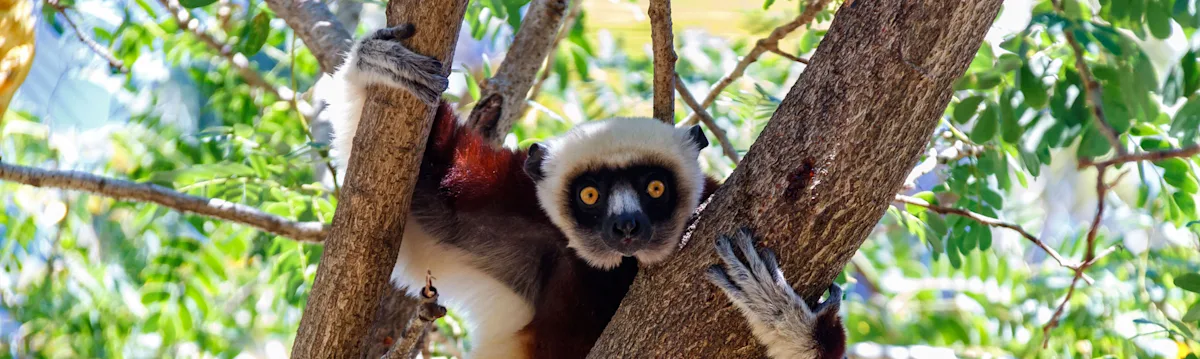
Madagascar is most famous for being home to the planet’s wild lemurs, with more than 100 endemic species. More than 80% of the country’s flora and fauna exist nowhere else in the world. In addition to lemurs, Madagascar is known for its civets, aye-ayes, fossas, chameleons, frogs, geckos and unique bird species, such as Malagasy sunbirds, couas and kingfishers.
What language is spoken in Madagascar?
Malagasy is the official language of Madagascar and is spoken by about 18 million people. French is the other official language of the former French colony, and English is slowly becoming more widespread.
What is Malagasy cuisine like?
Malagasy cuisine encompasses the many diverse cultures that have settled on the island. Rice is a staple food in Madagascar that is eaten at most meals. Vegetable and chicken curries and zebu (local beef) stew are served across the country, excellent seafood dishes can be found near the coast, and desserts are often flavored with local vanilla and spices such as clove, cinnamon and combava. Common spices and seasonings include ginger, garlic, turmeric and coconut milk. Hot pepper sauces like "Sakay" are used to add heat to dishes. On our Madagascar adventure, you’ll have a chance to try local Malagasy cuisine in addition to a variety of Western dishes. We provide plenty of options for all palates and dietary restrictions.
Is Madagascar an appropriate destination for children?
We strongly encourage you to call our office to speak with an Adventure Specialist about the specific requirements of our Madagascar adventure. Nat Hab asks any families bringing children to ensure their children behave in a respectful manner that does not disrupt other guests or the wildlife. If you’re looking for a safari designed specifically for families, consider our Family Adventures.
Will there be Internet connection or cell phone service on this trip?
Internet access is typically available at our accommodations, but it may be slow and unreliable in remote areas, and cell service can be spotty. We encourage guests to unplug during the adventure to enjoy an immersive experience in nature.
What currency is used in Madagascar? Can I exchange money while I’m there?
The currency used in Madagascar is the Ariary (MGA). Click here, opens in new tab to check the current exchange rate for USD to MGA. It is highly recommended that you exchange enough money in the airport to last you the duration of the trip. It’s unlikely ATMs or other opportunities to exchange money will be available, so you’ll need enough cash for incidentals not included with the trip.
Can Nat Hab take our family or a group on a private version of your Madagascar trip?
Yes! We reserve some dates for private groups of families and friends, so please call our office at 800-543-8917 for details on group size and pricing.
What is the best way to get to Madagascar to meet the group?
Guests are responsible for booking round-trip flights from their home city to Madagascar. We recommend that you use Natural Habitat Adventures’ Travel Desk, as our Air Travel Specialists are intimately familiar with the requirements of our trips and can arrange the most efficient and cost-effective travel. Please check the Getting There & Getting Home section on the Dates, Prices & Info page for details on your adventure's required arrival and departure times.
Can Nat Hab help me book a hotel if I want to arrive early?
Nat Hab is happy to reserve a hotel room for you at our group accommodation before your Madagascar tour begins, but please note that pre-nights are subject to availability at the time of booking. Please speak with our Travel Desk if you’re interested in booking extra nights.