

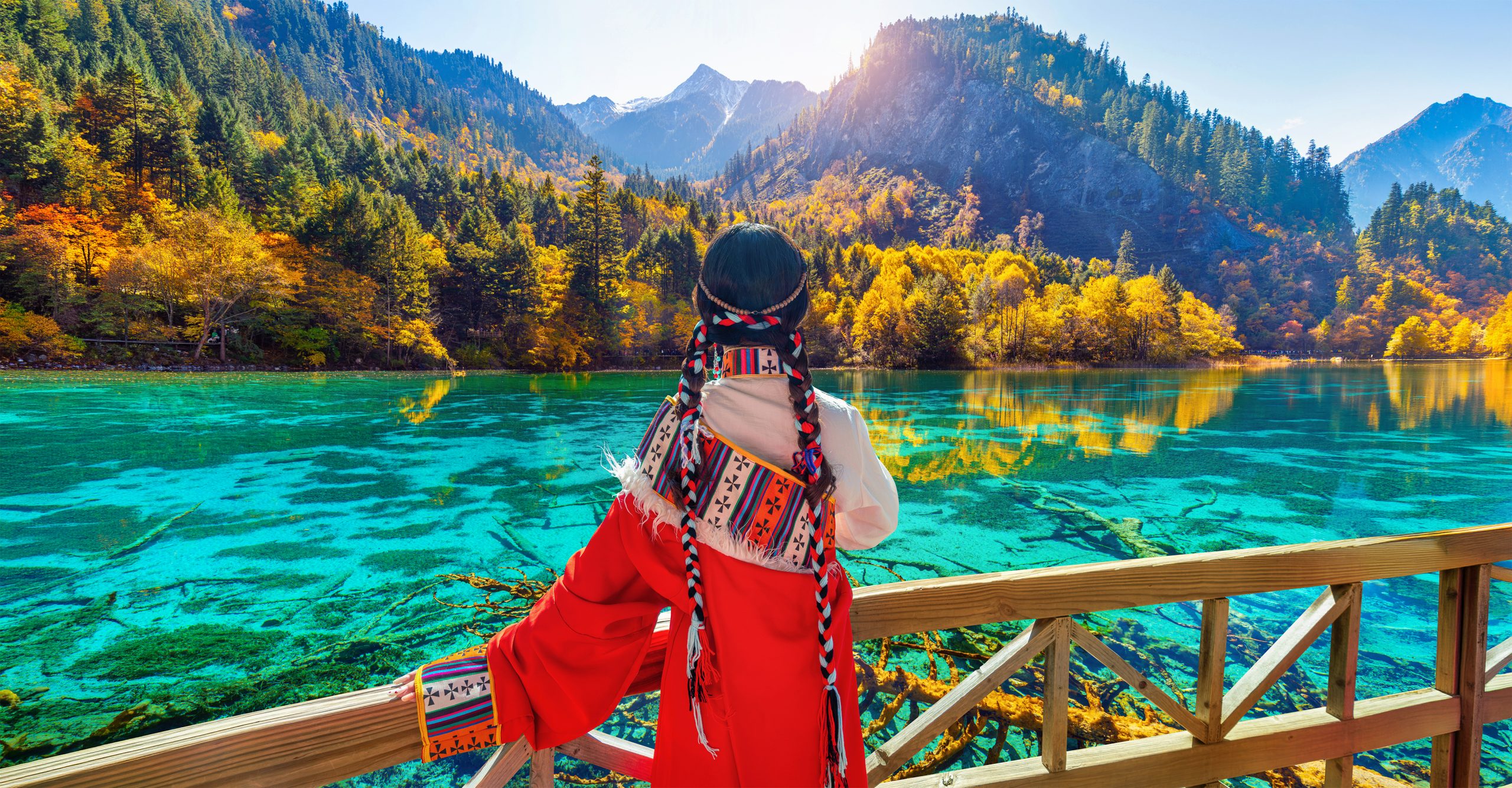
Siguniangshan National Park, a UNESCO World Heritage Site, is steeped in mysticism, a realm of glassy lakes, ancient cypress forests and sacred pagodas. The towering Mount Siguniang, also known as Four Sisters Mountain, looms over verdant valleys, alpine meadows and murmuring streams, earning the area its reputation as the “Chinese Alps.” The massif is composed of four snowy peaks, which Tibetan folklore dictates are the embodiments of four beautiful girls. Shrouded in the mist are elusive clouded leopards, snow leopards, white-lipped deer, golden monkeys and giant pandas. Nat Hab travelers head into the Shuangqiao Valley, taking in poetically-named sights such as Sun-Moon Mirror Mountain, Yin-Yang Valley, Willow Bridge and Five-Colored Mountains, where rocks glow white, yellow, red, blue and green.
Deeper into the valley, guests reach the Ginsenguo flatland, abloom with flowers in summer, and visit Jiujia Lake, the legendary waters where the four sisters are said to bathe. In the evening, travelers head to the ethnic Tibetan village of Rilong, at the base of Four Sisters Mountain. After a day spent exploring this exquisite national park, we sip yak butter tea while admiring the town’s elaborate architecture and the intricately embroidered costumes of the Jiarong people.
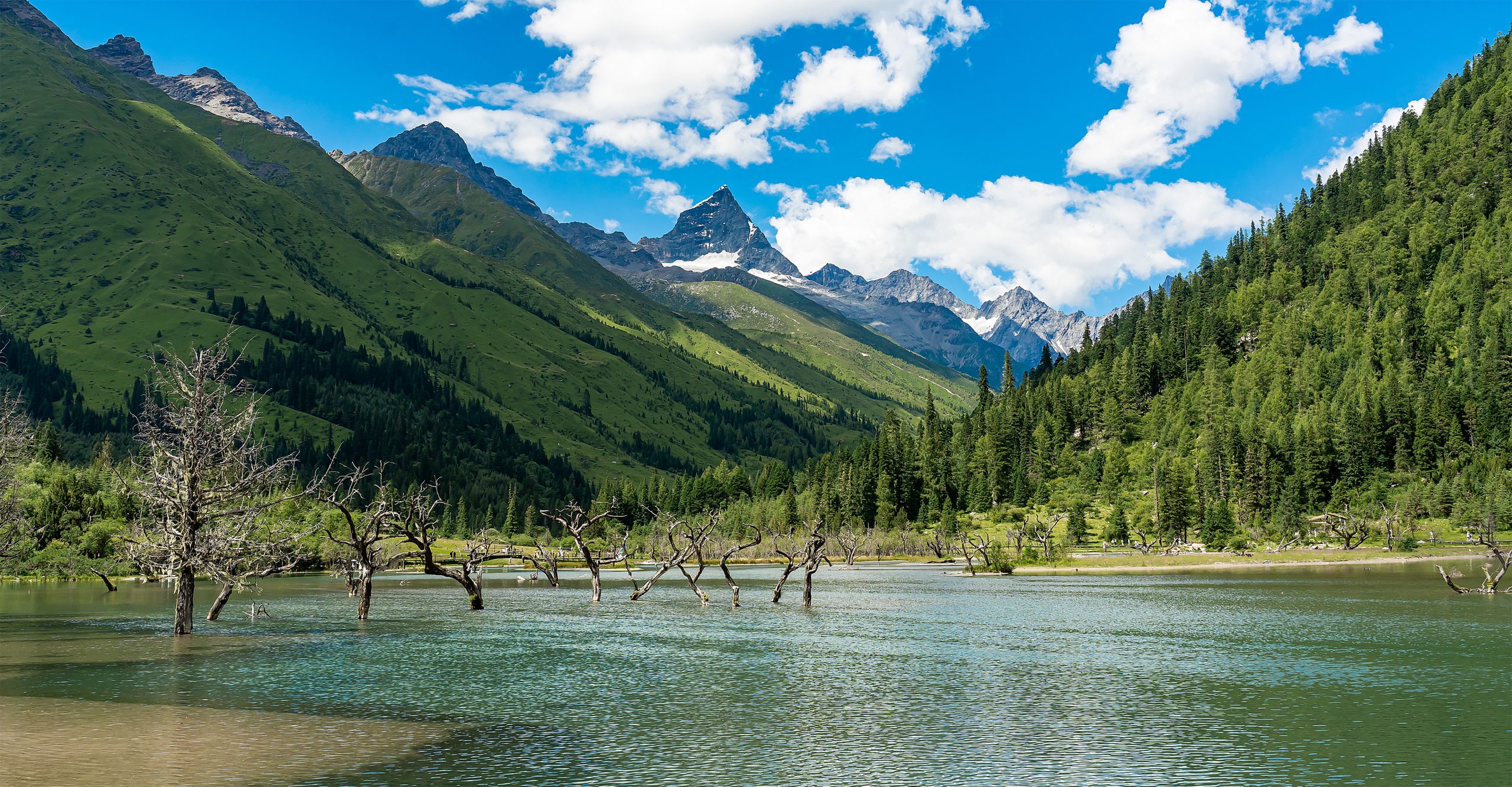
Shuangqiao Valley, Mount Siguniang National Park, Sichuan Province, China
The Minshan Mountains are another veritable fairyland, resplendent with blooming orchids, melodic birdlife, primeval forests and cascading waterfalls. Traditional Tibetan dwellings, their walls displaying vivid, hand-painted motifs, are set within the mountainside amid fluttering prayer flags. Turquoise springs hold tales of mystic origins, from deities to sleeping dragons. According to one Chinese legend, a goddess dropped her mirror, and the shattered pieces fell down the mountainside to form iridescent rivers and lakes. Folklore also tells of fairy maidens who colored the terraced limestone pools found here bright shades with their cosmetics.
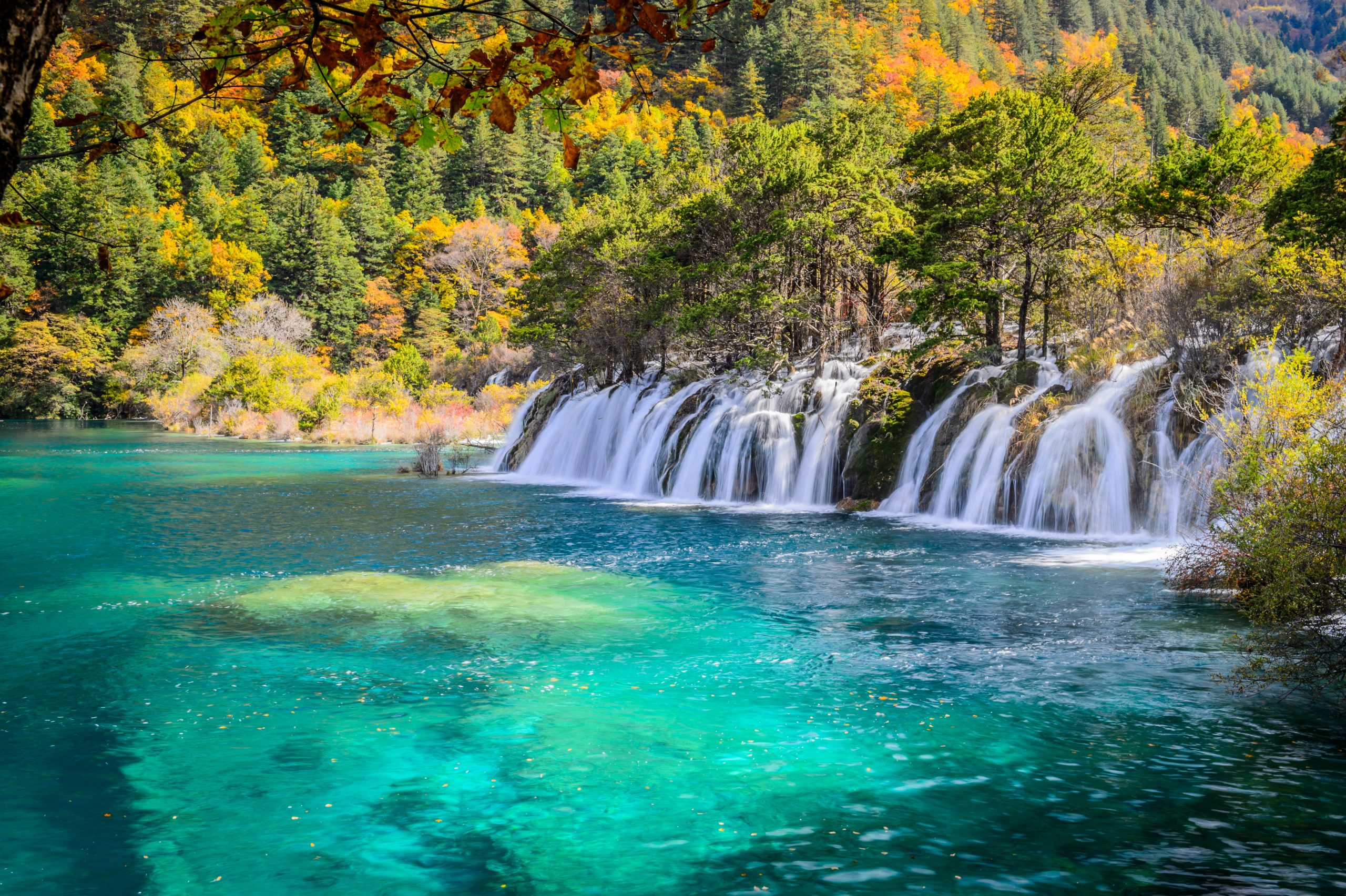
Waterfall, Jiuzhaigou National Park, Sichuan Province, China
As epitomized in the lore of Siguniangshan and the Minshan Mountains, many mythological creatures hold significant roles in Chinese folklore. The qilin, the Eastern equivalent of the unicorn, is a symbol of protection, prosperity, fertility, long life and good omens. It is said to appear with the imminent arrival or passing of a prominent leader. The Pixiu, which resembles a winged lion, is an auspicious animal that craves gold, silver and jewels, and statues of the beast are often used in feng shui to attract wealth.
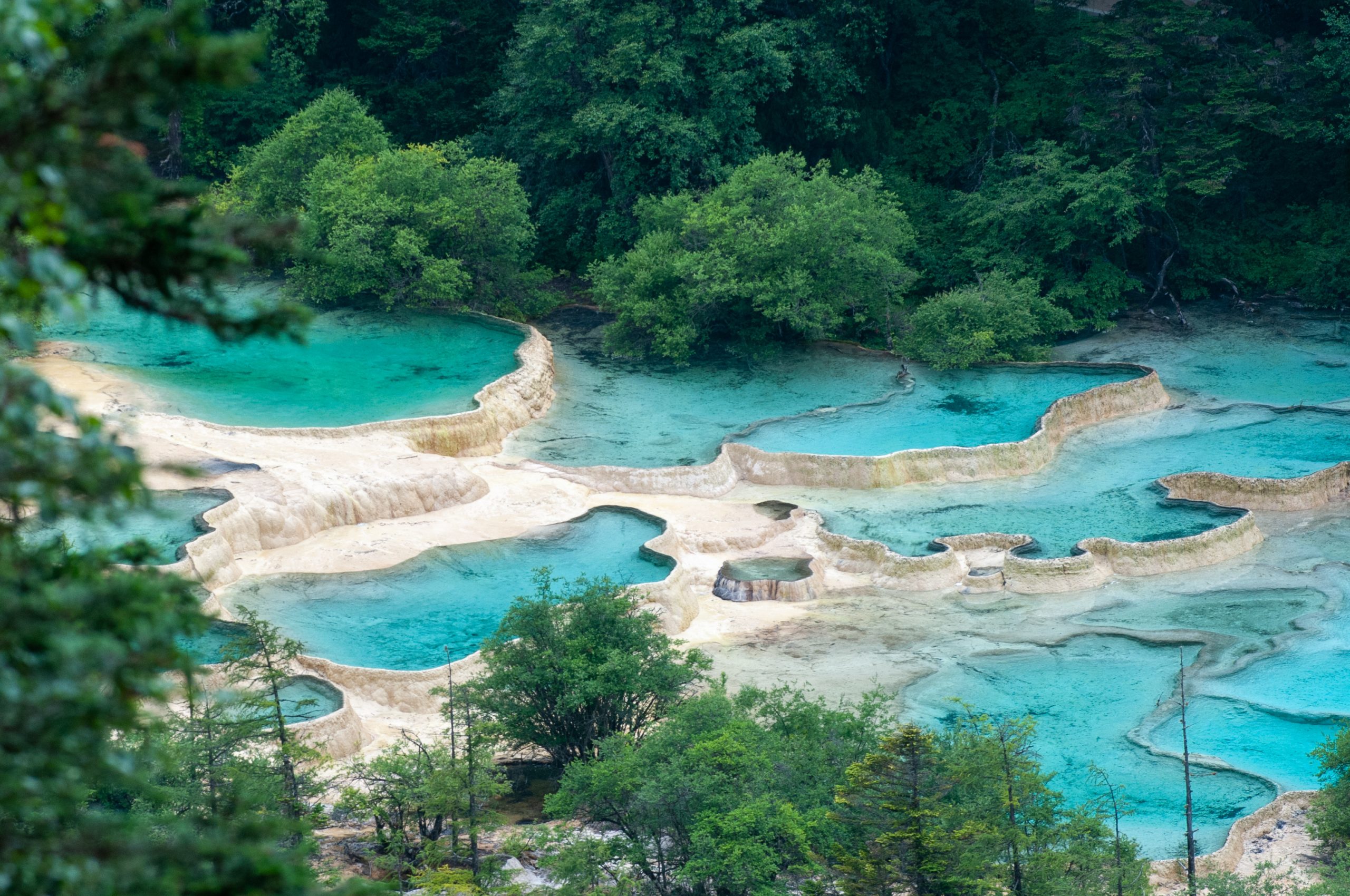
Huanglong Scenic Area in Sichuan Province, China, famous for its colorful travertine pools
The Fenghuang, often called the Chinese phoenix, is a representation of virtue and grace. The phoenix and the dragon are commonly depicted in wedding décor—a yin and yang metaphor that signifies the everlasting love between wife and husband. Xuanwu, the Black Tortoise of the North, is one of four mythological creatures in the Chinese constellations, along with the Vermilion Bird of the South, the White Tiger of the West and the Azure Dragon of the East.
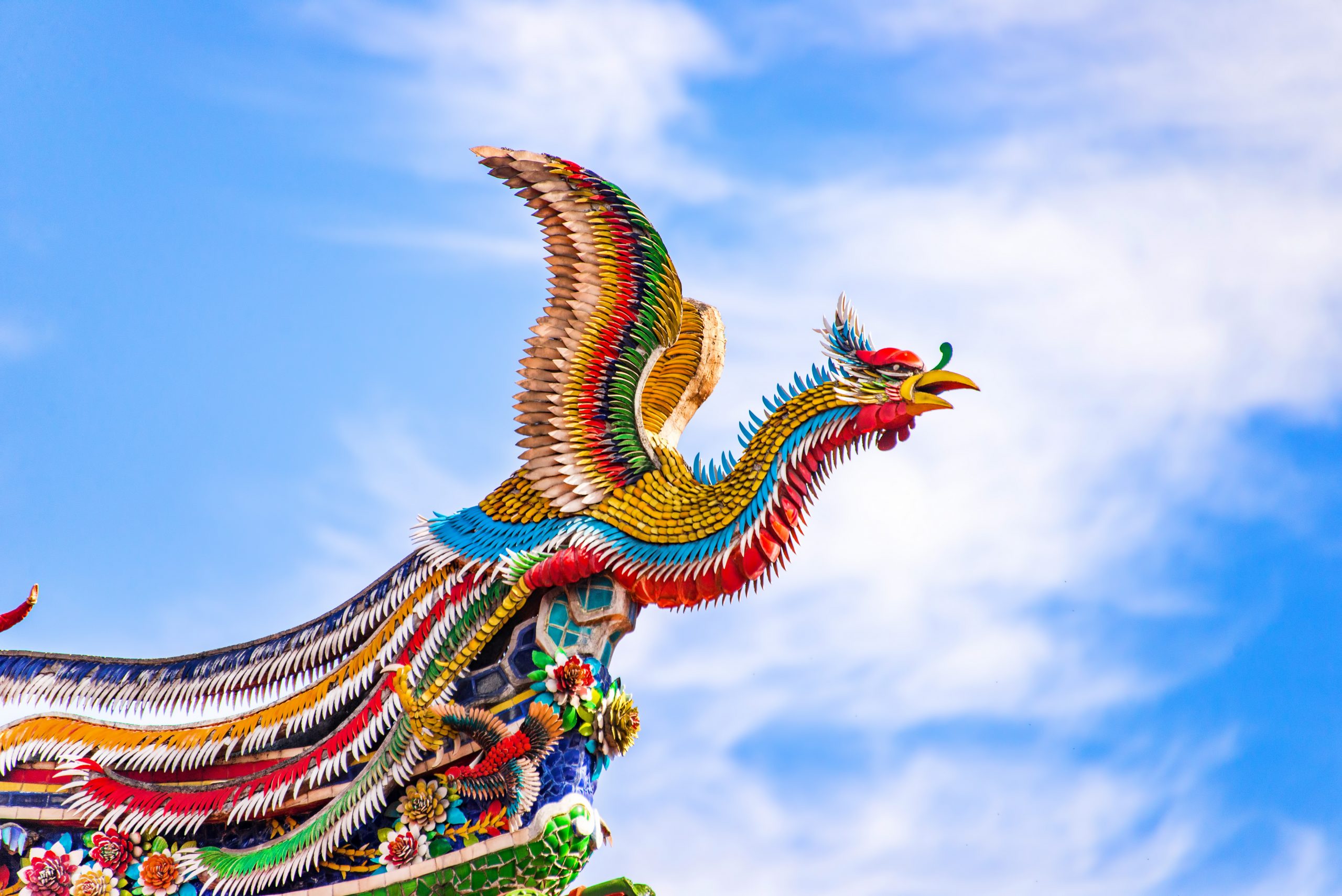
Phoenix, Chinese temple
Jade tortoise pendants were worn during the Han Dynasty, and tortoise depictions were often placed in tombs due to their association with longevity. The fabled Chinese dragon symbolizes good fortune and great power and is shown to have particular control over water, rain and typhoons. Emperors in Imperial China frequently used illustrations of dragons as an emblem of strength. Today, dragon dances are performed on festive occasions such as the Lunar New Year to spread good luck to the community.
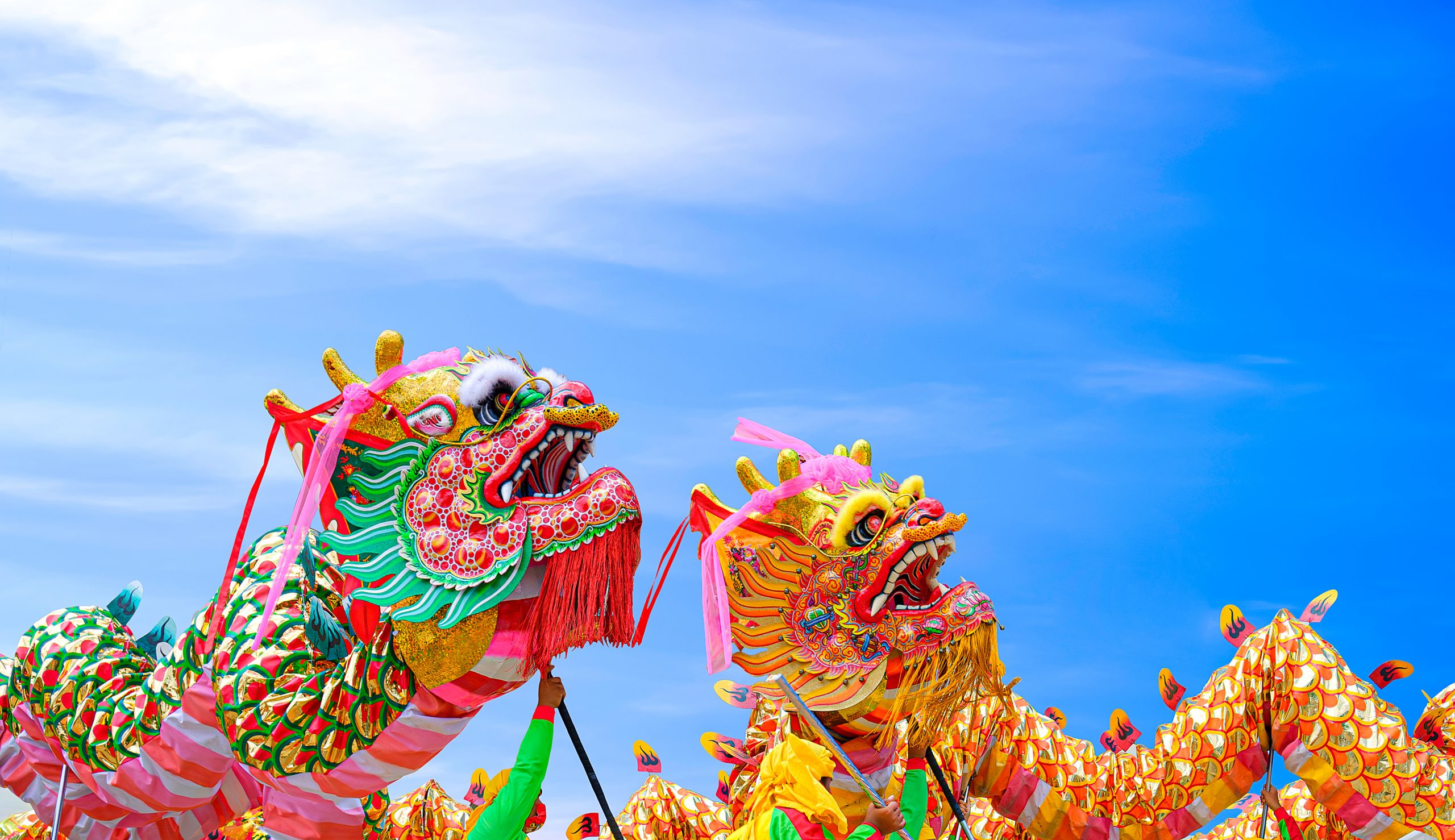
Chinese dragons, Lunar New Year Festival

Even China’s most famous animal resident, the giant panda, has a mythology surrounding it. Chinese folklore recounts the story of a young girl who befriended the pandas. She sadly passed away, and the bears were so overcome with sorrow that their black armbands rubbed off as they wept and hugged one another, leaving dark marks around their eyes, ears, shoulders and legs. This is said to be the reason for the panda’s unique coloring. See giant pandas and learn more legends about the Minshan Mountains and Siguniangshan on our Wild Side of China Nature Odyssey.
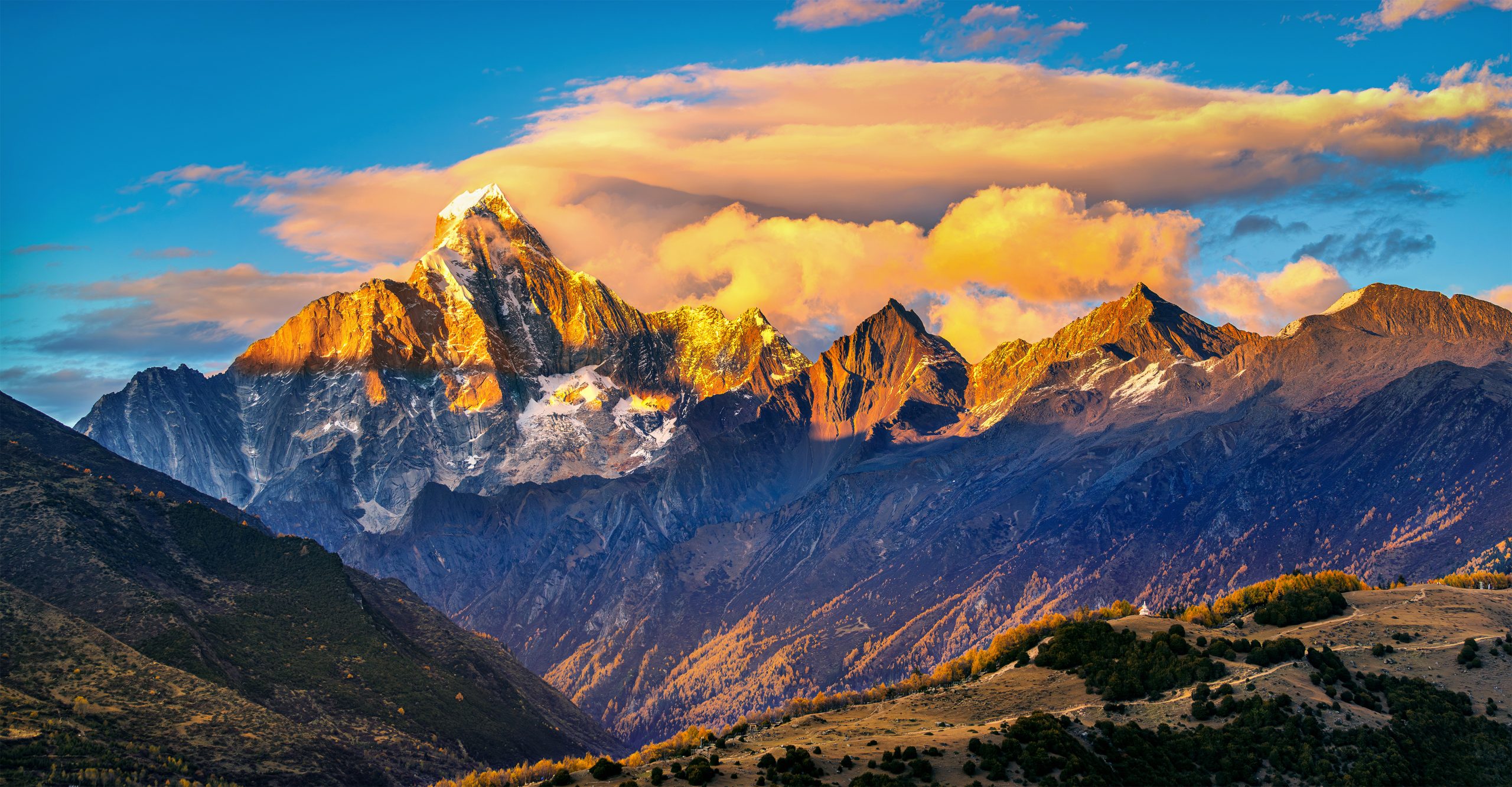
Siguniangshan National Park