See Our Guest's Baby Tiger Photos from India!

When fewer than 3,200 tigers remain in the wild, it’s a big deal to catch even a glimpse of this elusive, rarely seen cat. But when you time a visit to one of India’s best tiger parks at the very best time of year to maximize your viewing chances, you may be rewarded with a sighting that truly warrants the status of “once in a lifetime.”
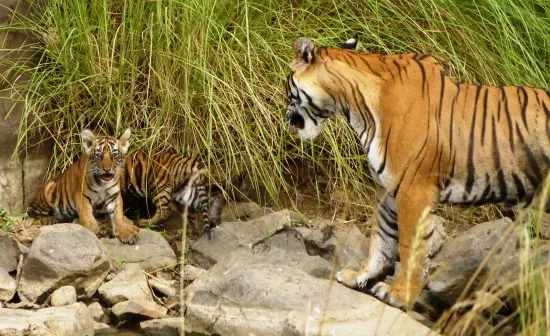
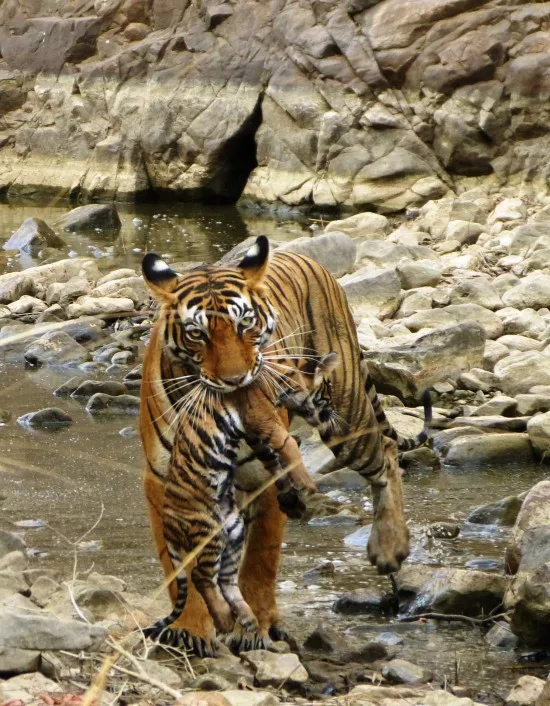
That’s what happened on Nat Hab’s India photo safari earlier this month, when guests in one of our 4×4 safari Jeeps spied a mama tiger with new twin cubs – and in one instance, she carried one cub in her mouth, walking very close to the vehicle as our guests watched awestruck, snapping incredible close-up photos like the ones that Rita Russell got, featured in this post.
Russell was the fortunate photographer who captured these extraordinary images of tigress “T39,” as she’s known by park staff, showing her two adorable cubs to visitors for only the second time. The cubs were less than three months in these photos, taken just a few weeks ago.
The exclusive Nat Hab trip of which Rita was a part isIndia’s Tigers & Wildlife: A Photo Safari, which focuses on maximizing opportunities to capture images of India’s regal Bengal tigers in their natural habitat.
This special photo safari takes place in Ranthambore National Park, opens in new tab, renowned for its healthy tiger population. While the park is crowded with visitors during the coolest months, we visit between April and mid-June, when the Indian spring is transitioning to summer and wildlife sightings are at their best. As temperatures rise, animals seek shelter during the heat of midday. With the relief of the monsoon still weeks away, they are forced to emerge to drink and feed, moving to water at least twice a day – providing optimal chances to see them in the open on game drives in the cooler hours of early morning and late afternoon. Ranthambore’s dry deciduous habitat also makes it easier to spot tigers here than in other more densely vegetated reserves.
In addition to tigers, visitors can also hope to see a multitude of other wildlife in the jungle scrub and rocky hills of the park, including spotted chital deer, nilgai, jackal, sambar, chinkara gazelle, various jungle cats, sloth bear, wild boar, langur monkeys and rhesus macaques. The park also harbors a sizable leopard population, though they are shy and tend to stay in higher, less accessible areas and are seen infrequently. More than 300 bird species also live within the reserve, ranging from crested serpent eagles to paradise flycatchers, peacocks and painted storks.
Click here for more details on this exciting India photo safari, and check out our Grand India Wildlife Adventure, too, while you’re at it!