

Narrowing down your options for an African safari can be tough, but if you ask me, I’d move Namibia to the top of your travel list. Stretching along the southwest coast of Africa, Namibia is home to the Namib—the world’s oldest desert—and some of the continent’s most striking scenery.
Namibia was also the first African country to incorporate environmental protection into its constitution. That commitment to conservation, combined with pioneering community conservancies, has helped protect populations of black rhinos, desert-adapted lions, cheetahs, elephants and other wildlife across the country.
Here are seven reasons to make Namibia your next African adventure.
Reason 1: The Scenery
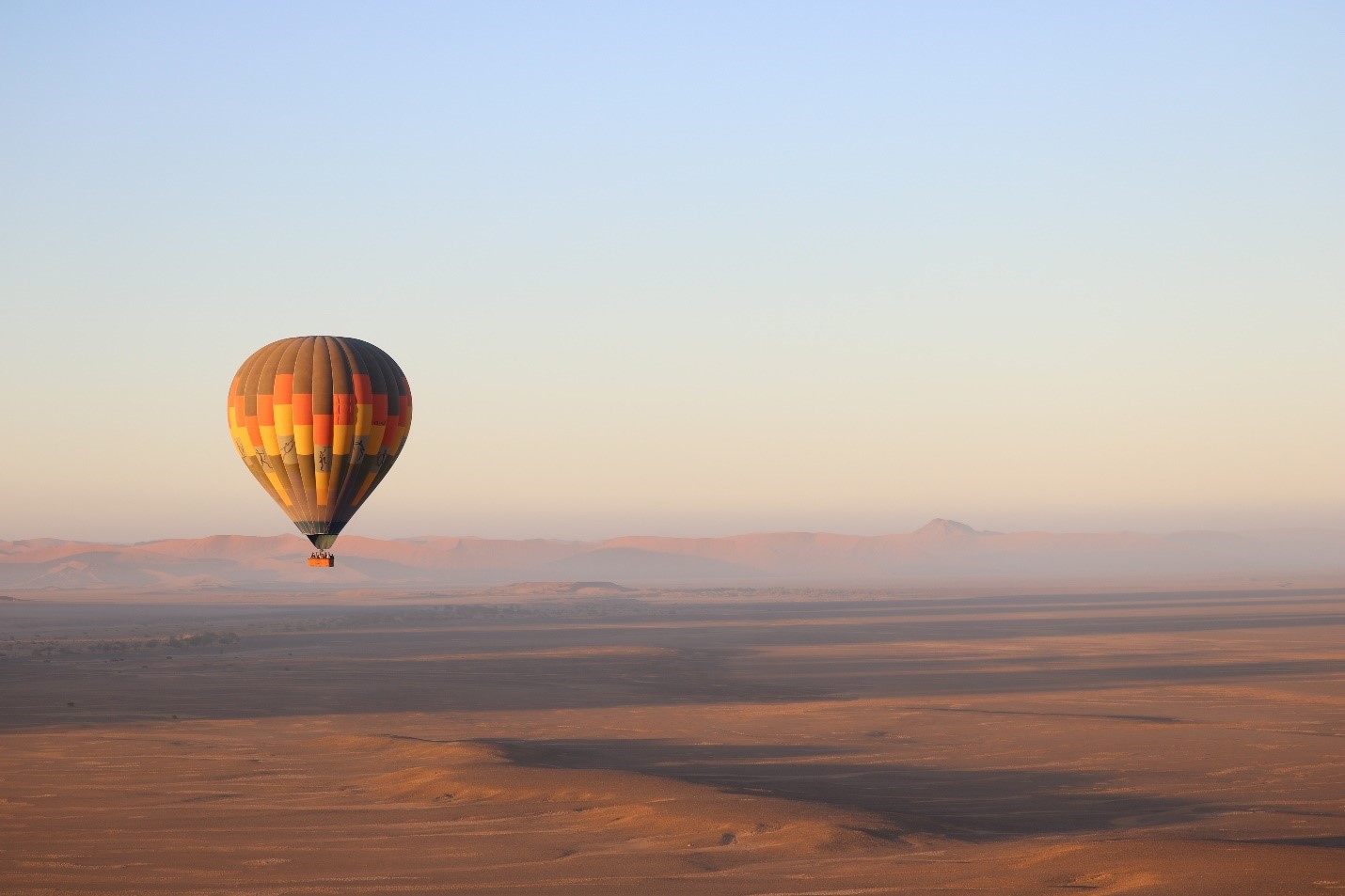
To say Namibia’s landscapes are dramatic hardly does them justice. One of the best ways to appreciate the scale of the Namib Desert is from above, floating silently in a hot-air balloon over the Sossusvlei region at sunrise. As the first light sweeps across the dunes, the sand shifts from deep rust to glowing orange and gold.
After landing, a champagne brunch in the desert offers time to soak in the stillness and vastness of the landscape with your fellow travelers.
Reason 2: The Dunes
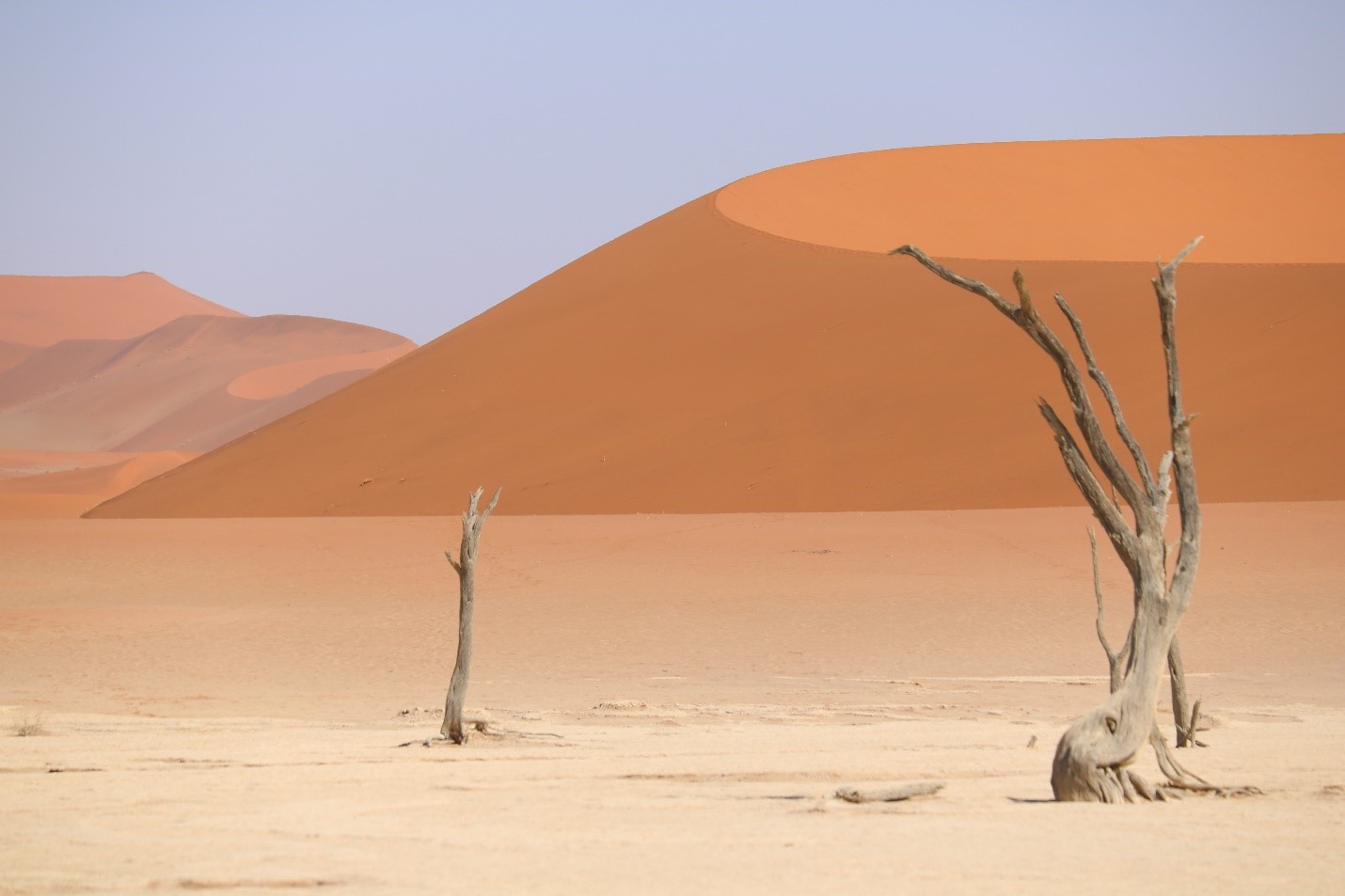
The Namib Desert is home to some of the tallest sand dunes on Earth. Seeing them from the air is unforgettable, but climbing them reveals their true scale. The hike up Big Daddy—the tallest dune in the Sossusvlei area—is steep and sandy, but the panoramic views from the top are worth every step.
Nearby, Deadvlei’s white clay pan and centuries-old camel thorn trees create one of Namibia’s most photographed landscapes. Wildlife has adapted remarkably to this harsh environment, and you may spot oryx, springbok, ostriches, brown hyenas, bat-eared foxes and the endemic dune lark among the dunes.
© WWF-US/Abby Wadley
Reason 3: Adventure
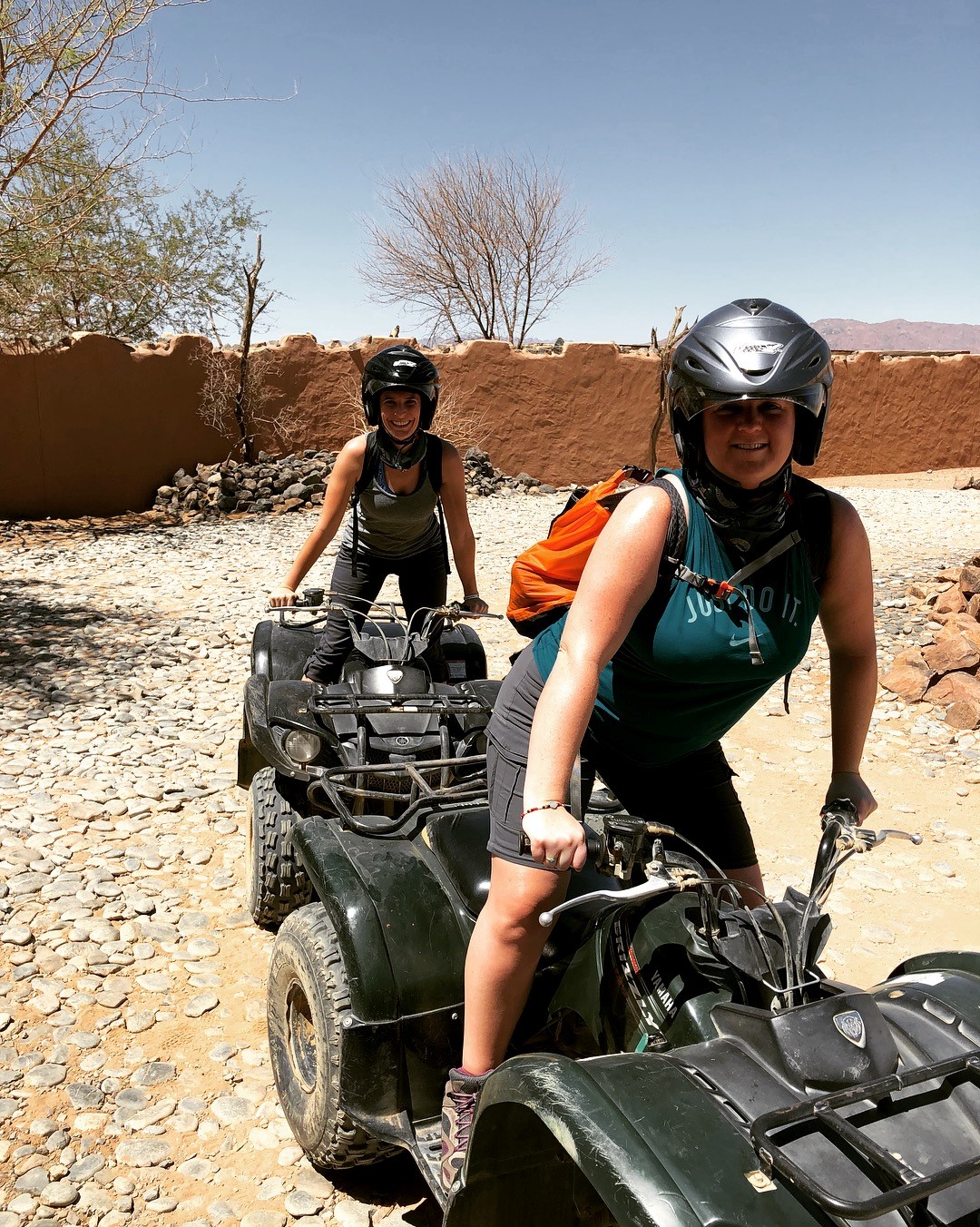
Adventure comes naturally in Namibia’s wide-open landscapes. During my stay at Little Kulala, one of the most memorable experiences was a quad bike excursion across the desert plains. We followed dry riverbeds and crossed open gravel flats that seemed to stretch forever.
On the return trip, a sudden sandstorm swept across the desert, adding an extra dose of excitement—and leaving all of us coated in fine red sand. By the end of the trip, several travelers agreed it had been one of the highlights of our time in Namibia.
© WWF-US/Abby Wadley
Reason 4: Spectacular Accommodations in Remote Locations
Part of what makes Namibia so memorable is the feeling of remoteness. Reaching Hoanib Skeleton Coast Camp by small plane, surrounded by mountains, desert and dry river valleys, felt like arriving in another world.
Our home for three nights blended seamlessly into the rugged landscape, yet still offered exceptional comfort, thoughtful hospitality and outstanding food. Days were spent exploring remote desert ecosystems while evenings ended beneath vast star-filled skies. Even before leaving, I knew I wanted to return.

© WWF-US/Abby Wadley
Reason 5: Unique Wildlife
Namibia’s wildlife has adapted to survive in some of Africa’s harshest conditions. The country’s desert-adapted lions are among the most famous examples, roaming dry riverbeds and surviving in an environment where water is scarce.
The remote Hoanib region supports a small population of these lions, and conservation researchers continue to study and monitor them throughout the area. During our first morning drive, our guide spotted tracks in the sand and followed them to two lionesses resting beside a freshly killed oryx.
Watching them quietly from a respectful distance was one of the most powerful wildlife experiences of my life. These lions embodied the resilience and adaptability that make Namibia’s ecosystems so extraordinary.

© WWF-US/Abby Wadley
Reason 6: The Coast
The journey from the Hoanib region to the Skeleton Coast revealed yet another side of Namibia. Along the way, the scenery shifted constantly—from desert riverbeds to towering dunes to windswept coastline scattered with shipwrecks and whale bones.
The Skeleton Coast earned its haunting name from the many ships lost along this foggy, unforgiving stretch of Atlantic shoreline. Today, it is also home to large Cape fur seal colonies, especially active during the pupping season.
The contrast between desert and ocean felt surreal and unlike anywhere else I’ve traveled.

© WWF-US/Abby Wadley
Reason 7: Conservation Successes
Namibia is widely recognized as a leader in community-based conservation, where local communities benefit directly from protecting wildlife and natural landscapes. The country now supports one of the largest populations of free-ranging black rhinos in Africa, thanks to decades of conservation work by government agencies, local conservancies and nonprofit organizations.
Seeing black rhinos in the wild had long been a dream of mine. That dream became reality at Ongava Game Reserve, adjacent to Etosha National Park, where I watched multiple rhinos gather at a waterhole—including mothers with calves.
Sitting quietly in the hide as a black rhino calf nursed beside its mother was an experience I’ll never forget. It served as a powerful reminder that conservation efforts can succeed when people, wildlife and local communities work together.

© WWF-US/Abby Wadley
By Abby Wadley
Travel to Namibia with Natural Habitat Adventures and World Wildlife Fund on The Great Namibia Wildlife Safari or our Wild Namibia Photo Safari.