

Know Before You Go
Frequently Asked Questions About the Galapagos
Click on a question below to open the answer.
When is the best time of year to visit the Galapagos Islands?
The Galapagos is a fantastic place to visit any time of year; however, there are some slight weather and wildlife differences from season to season. Due to the equatorial climate of the islands, temperatures do not vary much from month to month, so you can’t go wrong whatever season you choose. See this Galapagos weather chart for a more detailed view of monthly temperature and rainfall.
What time of year has the calmest seas in the Galapagos?
The waters in the Galapagos are generally calmer from December through May and can be more active from June through November. Some of our travel will be in the open ocean, where the waters can be unpredictable.
What wildlife will I see in the Galapagos?
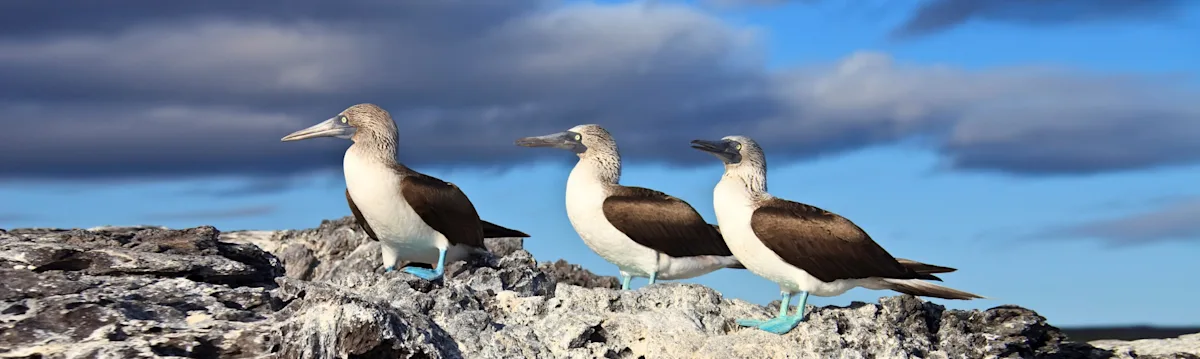
We’re glad you asked! The Galapagos is the singular most astonishing wildlife viewing spot on the planet. Here, you’ll likely see Galapagos sea lions, Galapagos fur seals, Pacific green sea turtles, giant tortoises, marine and land iguanas, lava lizards, bottlenose dolphins, Sally Lightfoot crabs, Galapagos penguins, blue-footed boobies, and hundreds of tropical fish and seabird species. And amazingly, most of these creatures show no fear of humans!
Are there any animals that are seasonal in the Galapagos?
Nearly every species encountered in the Galapagos Islands arrived there floating on logs or “rafts” of plants/seaweed. Or, in the case of much of the birdlife, they were blown in. Lucky for travelers, that means most of the iconic wildlife of the Galapagos remains there year-round. The only exception is the waved albatross, one of the few migratory birds in the Galapagos. The best time to see the waved albatross is April through mid-December. Egg laying occurs from mid-April to late June, and the colonies are active, with parents feeding their single young through December. When the fledged bird finally leaves the nest, it does not return for four or five years. From January to March, all the albatrosses remain at sea. Visit this Galapagos wildlife seasonality page to learn more about the patterns of various species.
How close will I get to wildlife in the Galapagos?
Most Galapagos wildlife is indifferent to human presence, so it is highly likely we’ll come very close to many animals on the islands and in the surrounding waters. Galapagos park rules state that we cannot get within 6 feet of any animal.
What clothes should I pack for a Galapagos trip?
Bring lightweight clothing and adequate sun protection for warm days on the water. It may be windy on the ship, and rain is always possible, so pack warmer layers and waterproof rain gear. A bathing suit, sports sandals and sturdy shoes are also necessary for snorkeling and walking excursions. For further details of what you’ll need, peruse this helpful packing list and check out Nat Hab’s online Gear Store, opens in new tab for some of the key items recommended for your adventure.
What are the meals like on the ship in the Galapagos Islands?
Meals on board are a combination of buffet-style and plated, with several options for each meal. They are a blend of Western-style meals and a sampling of Ecuadorian dishes. The food is plentiful and delicious, and special dietary needs can easily be accommodated.
What is it like to stay at Nat Hab's Tortoise Camp?
On some Galapagos adventures, travelers will have the opportunity to stay at Nat Hab's Tortoise Camp, a collection of elevated, safari-style tents and tree houses located atop a hillside that overlooks the Pacific Ocean. The camp is set amid the conservation habitat of several dozen giant tortoises, and from July through February, guests will regularly see these massive creatures strolling around the property. Tents and tree houses have beds, large viewing windows, flush toilets, showers and sinks. Our gourmet evening meal is eaten in our thatched dining area, with open views of the lush highland environs. During the day, we will explore the lava caves that are unique to this remote property.
How rough are the seas in the Galapagos Islands? Is seasickness common on small ships?
The waters around the Galapagos Islands are generally calm, but during bad weather and when the boat is traveling against the current, the waters can become a bit rough. The waters tend to be choppier from July to December, especially in September and October, because of the Humboldt Current that comes up from Antarctica. We tend to travel at night, so seasickness is usually not a big problem, but it does happen. Some travelers prefer to take medication to prevent seasickness. If you are at all susceptible to motion sickness (or if you are unsure), we recommend bringing medication with you. It is better to err on the safe side and bring extra medication, as we generally do not keep medication available on board the boat.
Will there be opportunities to snorkel in the Galapagos Islands?
There will be plenty of opportunities to snorkel, which is the highlight of visiting the islands for many of our guests. Maintaining the smallest groups ensures a more personal marine life experience, such as snorkeling with penguins, sea turtles, rays, sea lions and more.
What currency is used in Ecuador? Can I exchange money or use my credit card on the ship?
The national currency of Ecuador is the U.S. dollar. We recommend having cash on hand for incidentals, souvenir purchases and gratuities. Credit cards, particularly Visa, are widely accepted in Quito. ATMs are available in Quito but not easily accessible on the islands aside from Santa Cruz and San Cristobal.
Is there cell phone service or Internet access in the Galapagos Islands?
Wi-Fi will be available at our hotel in Quito. Internet access varies depending on the ship in the Galapagos. There is very limited cell phone reception in the Galapagos (guests must have an international plan) and none whatsoever on the outer islands. We encourage guests to unplug during the adventure, and most enjoy being disconnected during their time on the ship.
Are the Galapagos Islands appropriate for children?
Nat Hab’s Expedition Leaders are known for their excellent rapport with kids. This fun dynamic, along with a diverse array of activities and unforgettable wildlife encounters, will leave children with lifelong memories. We strongly encourage you to call our office to speak with an Adventure Specialist about the specific requirements of our Galapagos trips. If you’re looking for an adventure designed specifically for families, consider our Family Adventures.
Can Nat Hab take our family or a group on a private version of the Galapagos adventure?
Yes! Families or friend groups can reserve entire departures on a private basis. Please call our office at 800-543-8917 for group size and pricing details.
What is the best way to get to Quito to meet the group?
Guests are responsible for booking round-trip flights from their home city to Quito, Ecuador. We recommend that you use Natural Habitat Adventures’ Travel Desk to book your flights, as our Air Travel Specialists are intimately familiar with the requirements of our trips and can arrange the most efficient and cost-effective travel into Quito. Please check the Getting There & Getting Home information on the Dates, Prices & Info page for info on the required arrival and departure times for this adventure.
How will we get to the Galapagos Islands from Quito?
We’ll fly from Quito to the Galapagos Islands, where we’ll meet our ship and crew. Nat Hab’s staff will arrange these group flights for you.
Can Nat Hab help me book a hotel in Quito if I want to arrive early?
Nat Hab is happy to reserve a hotel room for you in Quito before your Galapagos tour begins, but please note that pre-nights are subject to availability at the time of booking. Please speak with our Travel Desk if you’re interested in booking extra nights.