

Know Before You Go: Galapagos Tours
Where Should I Go in the Galapagos?
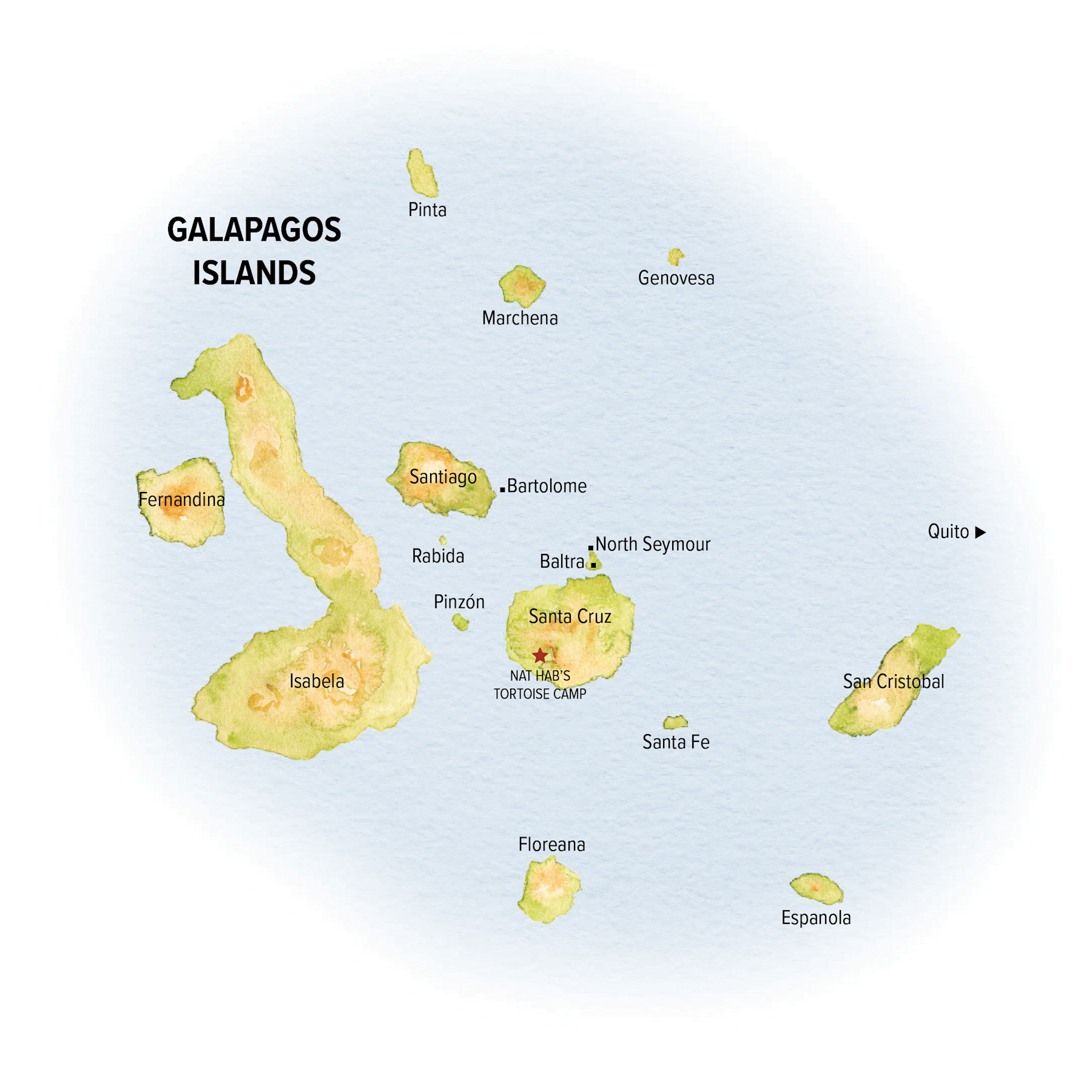
With 13 main islands and dozens of smaller islets, the Galapagos archipelago sits at the confluence of powerful ocean currents. The cool Humboldt Current sweeps up from the south, the warm Panama Current flows from the north, and the Cromwell Current surges from the west, creating a dynamic mix of waters that shape the islands’ climate and ecosystems.
Geologically, the islands are the peaks of underwater volcanoes rising from the Nazca Plate, which drifts slowly eastward over a stationary hot spot. This process continually forms new islands in the west while older ones erode in the east, producing landscapes that range from fresh black lava fields to highland forests.
The geography is just as diverse: some islands are stark and arid with cacti clinging to lava rock, while others are lush with cloud-covered highlands and freshwater springs. Beaches vary from white coral sand to red and even green volcanic shores, all framed by cliffs, craters and natural arches carved by wind and waves.
What is the Main Island of the Galapagos?
Santa Cruz is the hub of the Galapagos, home to Puerto Ayora and the Charles Darwin Research Station. It blends accessibility with biodiversity, making it a must-visit for nearly every traveler.
Highlights include:
Seeing giant tortoises in the lush highlands, where they roam freely
Exploring lava tunnels formed by ancient eruptions
Visiting the Darwin Research Station, where conservationists protect endemic species
Santa Cruz provides one of the clearest windows into the fearless nature of Galapagos wildlife—giant tortoises cross farmland trails unbothered by human presence.
Where Do Most Visitors Arrive in the Galapagos?
Nearly all travelers arrive on Baltra Island, just north of Santa Cruz, where the main airport receives flights from mainland Ecuador.
Once a World War II military base, Baltra is now the archipelago’s busiest entry point
The landscape is stark and arid, with cactus forests and dry scrubland
A short ferry connects Baltra to Santa Cruz, making it the key gateway to the rest of the islands
Though not a primary wildlife destination, Baltra is often the first place visitors glimpse the Galapagos’ resilient ecosystems, with frigatebirds and land iguanas visible near the airport.
Which Galapagos Island Has the Best Wildlife Encounters?
Each Galapagos island has its own character, shaped by age, geology and isolation. Fernandina, the youngest and most volcanically active, is one of the most pristine ecosystems on Earth—free of introduced species and alive with fearless wildlife. Other islands reveal different stories: some harbor misty highlands where giant tortoises roam, others showcase dramatic cliffs filled with nesting seabirds, and still others offer iconic viewpoints or calm bays for snorkeling. Rather than a single “best” island, the Galapagos are remarkable because every island is distinct, contributing to the archipelago’s extraordinary diversity.
Which Island Offers the Best Views?
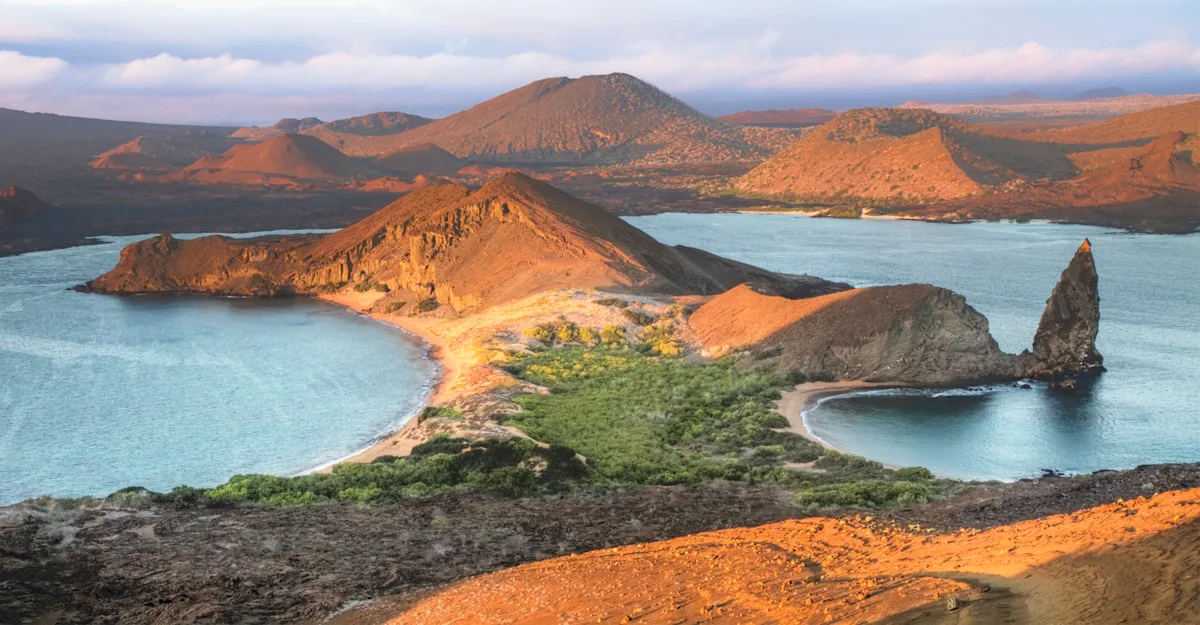
Bartolome Island is famous for its climb to a summit overlooking Pinnacle Rock, one of the most photographed landscapes in the Galapagos. A wooden staircase leads to a panoramic view of volcanic cones, turquoise waters and Santiago Island.
Additional Bartolome Island highlights include:
Snorkeling with Galapagos penguins, reef sharks and sea turtles in the surrounding waters
Spotting lava lizards and pioneer plants that survive in the island’s harsh terrain
Experiencing one of the most iconic fearless-wildlife interactions, as penguins dart past snorkelers without hesitation
Bartolome is the best island for capturing the “postcard” image of the Galapagos while enjoying memorable marine encounters.
What is the Difference Between Eastern and Western Galapagos Itineraries?
The Galapagos are often divided into Eastern and Western routes, each with distinct landscapes and wildlife.
What to Expect | Eastern Itineraries | Western Itineraries |
|---|---|---|
Islands | San Cristobal, Espanola, Santa Fe, Genovesa | Isabela and Fernandina, the youngest and most volcanic |
Landscapes | Dramatic cliffs, blowholes, arid scrublands and cactus forests | Towering volcanoes, black lava flows, mangrove lagoons |
Wildlife | Waved albatross (Espanola), red-footed boobies, large seabird colonies | Galapagos penguins, flightless cormorants, marine iguanas, abundant sea life |
Ecology | Unique cactus species and other endemic plants | Pristine habitats with fearless wildlife in cooler waters |
Which Galapagos Itinerary Should I Choose?
Which Galapagos itinerary you choose depends on your priorities. Each region highlights different landscapes, wildlife and experiences—there is no “best,” only distinct perspectives on the islands’ extraordinary diversity.
Choose the Eastern Route if you’re drawn to seabird colonies, endemic plants and dramatic coastal cliffs. These islands feel drier, with gentler terrain and open nesting sites where wildlife is often seen up close, including iconic species like waved albatrosses and red-footed boobies.
Choose the Western Route if you want volcanic landscapes, penguins and raw wilderness. These islands feel wilder and more remote, with fearless animals and active geology.
Both itineraries showcase the Galapagos’ extraordinary endemism: species found nowhere else on Earth, living little fear of people. Whichever route you choose, you’ll experience some of the planet’s most unique wildlife encounters.


