

Know Before You Go: Botswana Safaris
When is the Best Time to Go on a Botswana Safari?
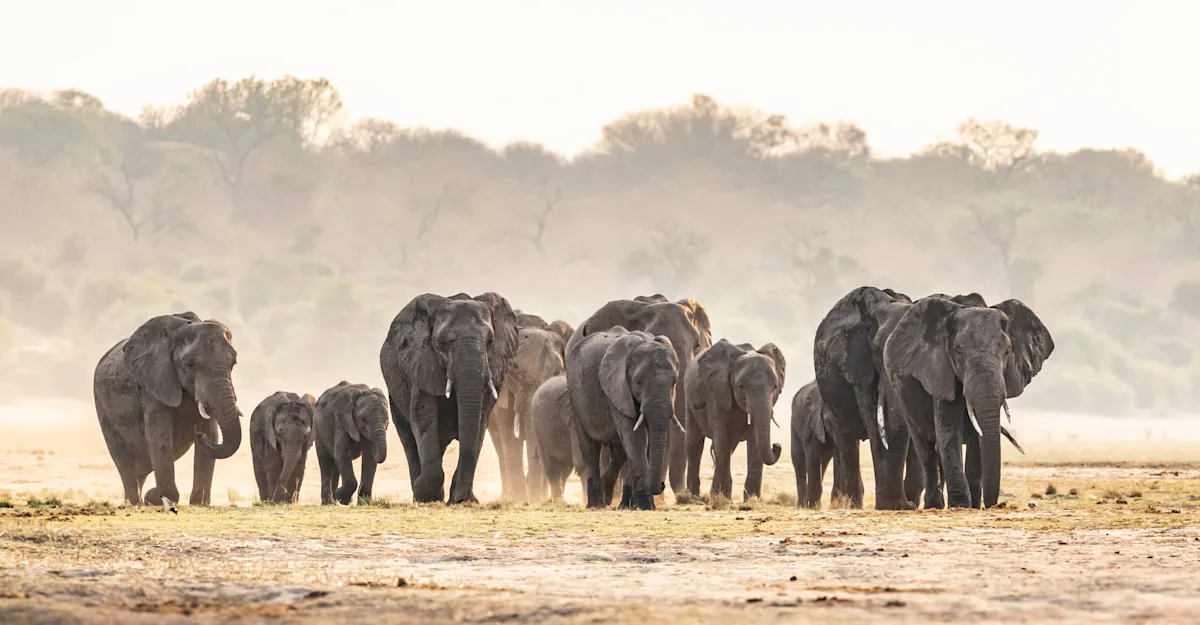
The best time to visit Botswana depends on the kind of safari experience you’re after. For classic big-game viewing—including elephants, lions, leopards and large herds gathered at water sources—the dry season (May to October) is ideal. Sparse vegetation and concentrated wildlife make this the easiest time to spot animals and capture dramatic photos.
But Botswana’s green season (November to April) also offers exceptional wildlife experiences, especially for those who enjoy vivid landscapes, dynamic skies and seasonal activity. This is calving season, when newborn antelope attract predators, and birdwatching peaks with the arrival of thousands of migratory species. Wildlife is more dispersed, but sightings remain rich and rewarding.
Botswana is a year-round safari destination, with each season offering its own unique highlights. Once you understand the differences between the dry and green seasons, it’s easier to choose the right safari for you.
What's the Difference Between Botswana's Dry Season and Green Season?
The main difference between Botswana’s dry season (May–October) and green season (November–April) lies in visibility and vegetation—dry season offers clearer views and concentrated wildlife, while green season brings lush landscapes, new life and dramatic skies.
What to Expect | Dry Season (May-Oct) | Wet Season (Nov-Apr) |
|---|---|---|
Weather | Sunny days (68–86°F); cold mornings (often near freezing Jun-Aug); low humidity | Hot days (often 86°F+); afternoon storms; lush scenery |
Precipitation | ~0.5 in. (Avg. Monthly Rainfall) | ~2.8 in. (Avg. Monthly Rainfall) |
Wildlife | High visibility; dramatic predator-prey interactions | Newborns attract predators; excellent behavioral viewing |
Birding | Birds cluster at waterholes, visibility improves, migrations begin | Migratory species from Europe & Asia arrive in full color |
Photography | Clean backdrops and soft, warm light | Vivid greens and dramatic skies |
When Is the Best Time to See Waterfalls on a Botswana Safari?
While Botswana is renowned for its wildlife and wetlands, many safari travelers extend their journey to Victoria Falls—one of the world’s most powerful waterfalls. Located on the border of Zambia and Zimbabwe, Victoria Falls is easily accessible from northern Botswana and pairs seamlessly with trips to the Okavango Delta or Chobe National Park.
This UNESCO World Heritage site spans more than a mile across and plunges 350 feet into the Zambezi Gorge. Its appearance shifts dramatically with the seasons, offering a range of experiences—from peak water flow and mist-covered rainbows to exposed rock formations and adventure access.
Victoria Falls by Season
February to June
This is the high-water season, when the Zambezi River is at its fullest. The entire width of the falls surges with volume, and rising mist creates lush rainforest conditions and frequent rainbows. May is typically the peak month for viewing the falls at full strength.July to August
As water levels drop, more of the gorge and underlying rock formations become visible. With reduced spray, this period offers clearer views and is ideal for photography and landscape observation.September to November
During the low-water season, visibility is at its best. The falls slow to a thinner flow, exposing the geological contours of the gorge.December to January
With the return of seasonal rains, the Zambezi begins to rise again, setting the stage for the high-flow spectacle that peaks in late February through May.


