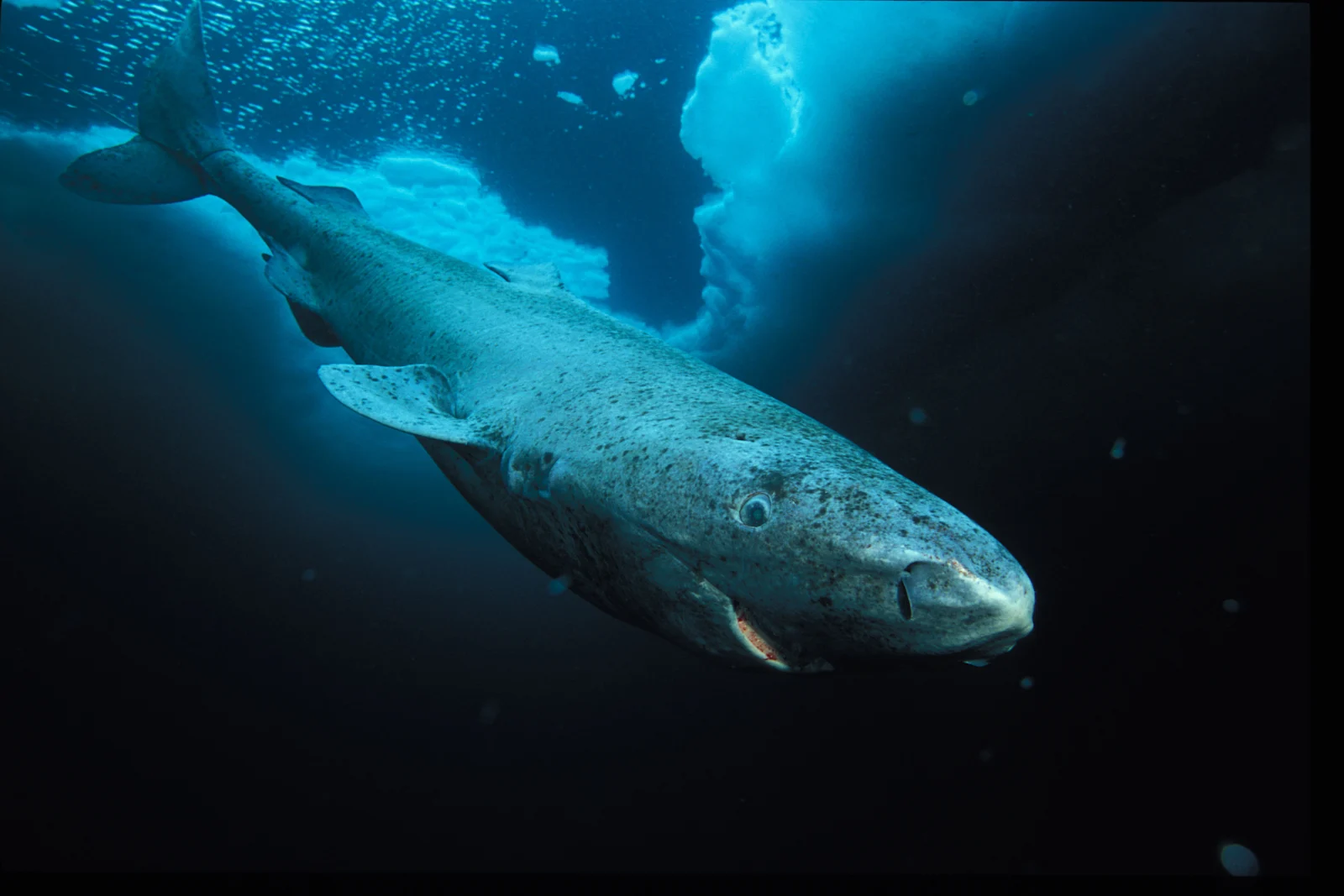
Tagging Greenland sharks, the “Jaws of the North”

By Jacqueline Nunes, Writer, Strategic Partnerships & Development, WWF-Canada.
Way, way, way up—way up—north is probably not the first place you’d look if you wanted to find a shark. In fact, when Vicki Sahanatien, who runs WWF’s office in Iqaluit, Nunavut, first spotted the Greenland shark, what surprised her most was that, well, it looked like a shark. “I thought, ‘Wow, here I am, up in the Arctic, looking at an actual shark,’” Vicki recalls.
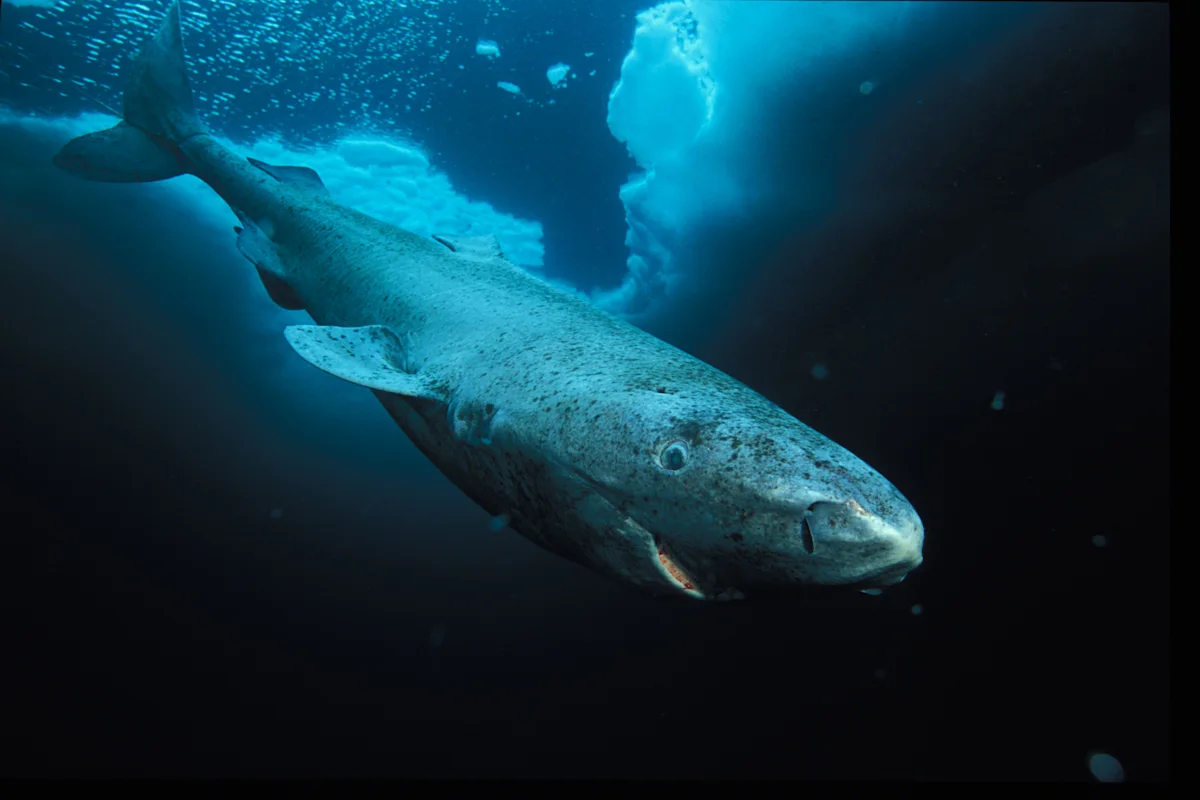
This past August, Vicki travelled up to Resolute Bay, one of Canada’s northernmost communities (located in the Last Ice Area, opens in new tab), where she participated in a Greenland-shark tagging project in partnership with the University of Windsor. The Greenland shark is one of the north’s largest and most mysterious predators. These sharks weigh an average of 900 kilograms and can grow up to seven metres long—as big as a great white. Yet scientists know virtually nothing about them.
“We don’t even know their true age,” says Nigel Hussey, a University of Windsor scientist studying Greenland sharks, though old research suggests they can live to be more than 100-years-old. They’ve been spotted in waters as far south as the Gulf of Mexico, which means they are capable of very long migrations. And they will eat almost anything. In fact, practically every marine animal has been found in their stomachs: eels, whales, sea urchins, other sharks, and even the remains of polar bear and caribou. What we don’t know is where they feed and how often, where they reproduce and why they migrate. “If you’re in the food web, there’s a reason,” Nigel says. “Especially if you’re a top predator.”
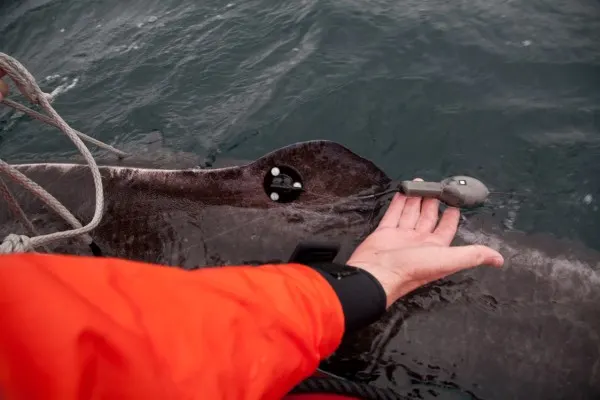
Vicki and the research team attached satellite tags to Greenland sharks’ dorsal fins, which will transmit data about the depths and temperatures of where the sharks are swimming—important information about their habitat. But scientists will have to wait until next fall. The tags can’t transmit data underwater, so they are designed to pop off in one year’s time and float thousands of metres up to the ocean surface, where they can zap data to a satellite. Nigel or one of his teammates will receive the year’s worth of Greenland-shark data in an email.
Travel to Greenland with WWF and NatHab., opens in new tab
This research is supported by funds from the Arctic Home, opens in new tab campaign—give today, opens in new tab and your donation will be generously matched by Coca-Cola® dollar-for-dollar until March 15, 2014, to a maximum of $1 million USD (Canada and U.S. only). Don’t miss this chance to double the impact of your donation!
This article was originally published on WWF-Canada’s Arctic Blog, opens in new tab and had been re-posted on Good Nature Travel with their permission.