
Natural Habitat Adventures’ Kenya Rhino & Elephant Conservation Safari is the ultimate launching point for exploring northern Kenya and the rich, biodiverse ecological havens that harbor many of the African continent’s distinctive wildlife species. This expedition comes on the heels of some technological advancements happening on-site at Ol Pejeta Conservancy, a highlight of the itinerary.
Ol Pejeta protects more endangered animals than anywhere else in Kenya. It’s a challenge, but recent changes to how staff and scientists collect, store and analyze data about the resident wildlife and environmental conditions are helping generate insights that drive conservation forward.

© Richard de Gouveia
Connecting the Dots of Conservation & Wildlife Data
Most organizations and scientists use multiple types of software and devices to track animals, monitor the safety of rangers on patrols, visualize enormous data sets and track environmental conditions. The numerous telemetry devices, wildlife trackers, camera traps and audio recorders on the market now come from different manufacturers, and it takes time and money to convert all the data collected from these devices and import it into the software experts use to analyze it.
Enter Gundi, a free, open-source tool that empowers conservationists and those who manage wildlife conservancies and other protected areas. Gundi can collect and pool information from all those disparate data sources, transform it into a common format, and then send that data for analysis.
In turn, researchers, conservationists and wildlife conservancy managers can use this information to make both daily and long-range decisions.
Gundi: The New Glue for Conservation Research
Gundi means “glue” in Swahili—an appropriate term for this new platform, as it helps connect technologies seamlessly. The software was launched by EarthRanger, a monitoring and analysis platform widely used by conservation professionals to aggregate and display real-time data from various tracking and monitoring devices. Alongside Wildlife Protection Solutions and the Wildlife Conservation Society, Gundi was created to address the compatibility issues between conservation hardware and software.

Local guide, Ol Pejeta Conservancy, Kenya © Andrew Morgan
“As digital data collection expands, the proliferation of software needed to interpret this data can become daunting. However, with the Gundi integration, Ol Pejeta seamlessly combines its preferred conservation monitoring tool, EarthRanger, with water meter reports in a unified interface,” says James Goodheart, a Senior Software Developer for Wildlife Protection Solutions who directly developed the Gundi water meter integration with Ol Pejeta Conservancy.
“This not only enhances efficiency, but it also extends the benefit of this integration to any organization using similar devices,” Goodheart adds.

The Wildlife Protection Solutions team, including Senior Software Developer James Goodheart (third from the right).
Ol Pejeta Conservancy: Kenya’s Largest Refuge for Endangered Species
At Ol Pejeta Conservancy, Gundi helped the team access readings from their digital water meters, which were installed in 2021. Monitoring water levels across the semi-arid landscapes of Ol Pejeta is essential to maintaining healthy water access for the region’s wildlife.
Traditionally, tracking and monitoring water levels across the 900,000-acre reserve was a time-consuming and labor-intensive process that required staff to track water levels manually.
When digital watering meters were introduced across the reserve in 2021, the team ran into an issue that has plagued conservancies and wildlife organizations for decades. The data from the digital water meters couldn’t be read or processed by EarthRanger alone.
But now, with the deployment of Gundi staff at Ol Pejeta Conservancy, staffers get daily reports on water levels across the park.

Nat Hab Expedition Leader and travelers at Ol Pejeta Conservancy in Kenya © Andrew Morgan
“By adopting Gundi, organizations can redirect resources typically spent on development to further their conservation efforts, exemplifying the platform’s potential to streamline operations and foster collaborative advancements in conservation technology,” says Goodheart.
Stewarding lands and protecting endangered species requires a lot of work. A thriving ecosystem relies on caring staff, scientists, community members, and collaboration within neighboring organizations and private-sector industries that are driving scientific and technological advancements.
Ol Pejeta Conservancy has, in many ways, perfected the conditions for a healthy, innovative conservation ecosystem. In 2014, the conservancy achieved IUCN Green List status, a designation that recognizes excellence in managing valuable natural areas. Ol Pejeta is one of only two African conservancies to be recognized this way.
Roaming with Rhinos: Nat Hab’s Epic Adventure at Ol Pejeta Conservancy
Nestled within the Laikipia Plateau alongside renowned wildlife reserves like Lewa Wildlife Conservancy and Loisaba Ranch, Ol Pejeta Conservancy stands as a testament to Kenya’s rich ecological diversity. Spanning over two million acres, the Laikipia Plateau ecosystem boasts a stunning array of habitats, from arid plains to snow-capped peaks, attracting safari enthusiasts seeking authentic experiences off the beaten path.

Nat Hab’s Rhino Camp—Ol Pejeta Conservancy, Kenya © Andrew Morgan
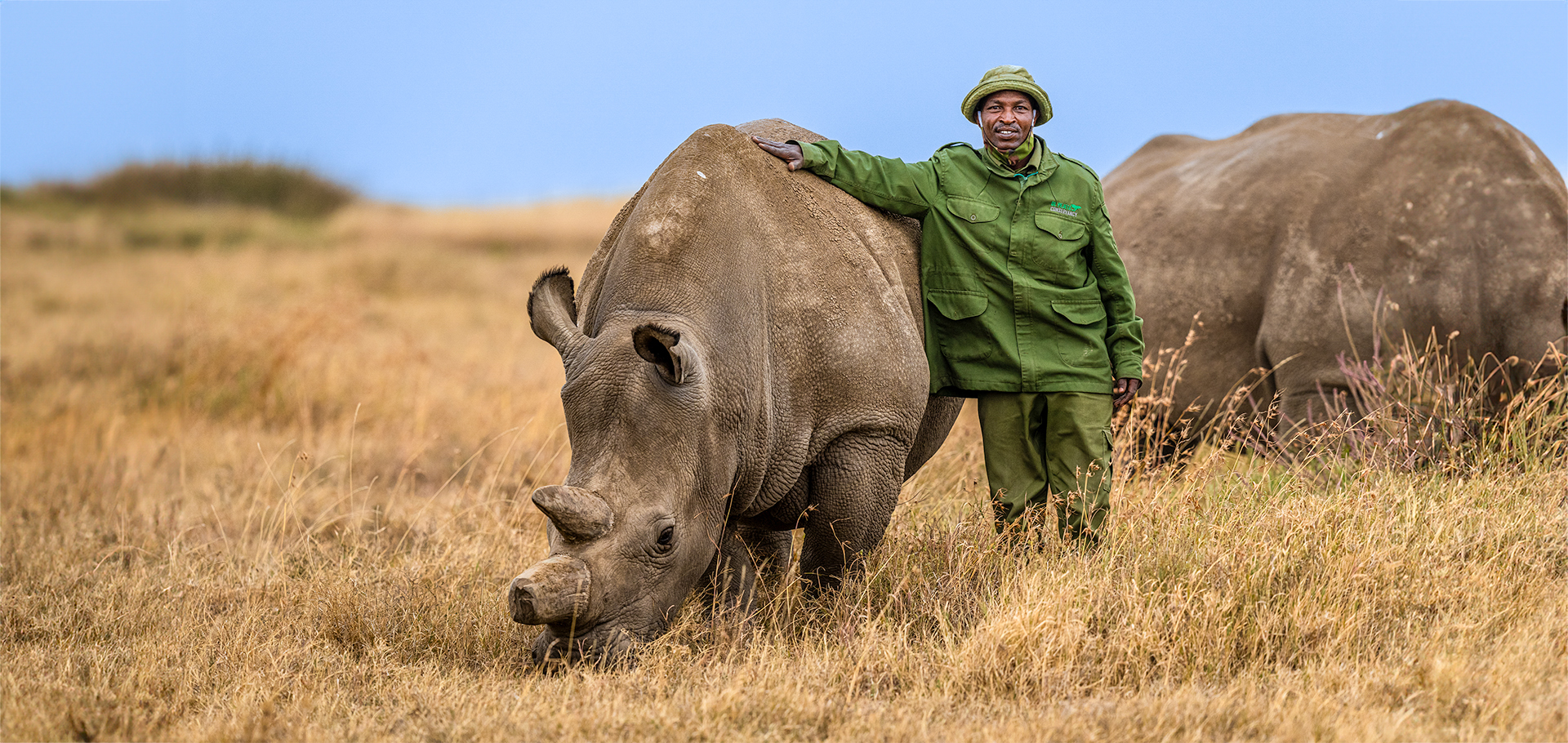
Within this vast expanse, Ol Pejeta is a haven for endangered species, including African wild dogs, Grevy’s zebras, half of Kenya’s black rhinos and the planet’s last two remaining northern white rhinos. Against this backdrop, Nat Hab’s Rhino Camp offers travelers an exclusive opportunity to delve into the heart of conservation at Ol Pejeta.
As guests explore the remote corners of this 900,000-acre reserve, Nat Hab’s Rhino Camp offers a blend of nostalgic safari charm and modern comforts, ensuring a memorable and sustainable adventure amid Kenya’s breathtaking wilderness.
At the forefront of conservation innovation, Ol Pejeta Conservancy exemplifies excellence in wildlife management. Through the integration of cutting-edge technologies like Gundi, we’re witnessing a transformative shift in conservation practices. Together with dedicated staff, scientists and community members, we’re shaping a sustainable future for endangered species and their habitats.
Join us on our epic Kenya Rhino & Elephant Conservation Safari to experience the beauty of Ol Pejeta firsthand.

Nat Hab’s private Rhino Camp offers exclusive access for viewing endangered rhinos and other rare wildlife on the renowned Ol Pejeta Conservancy © Andrew Morgan