

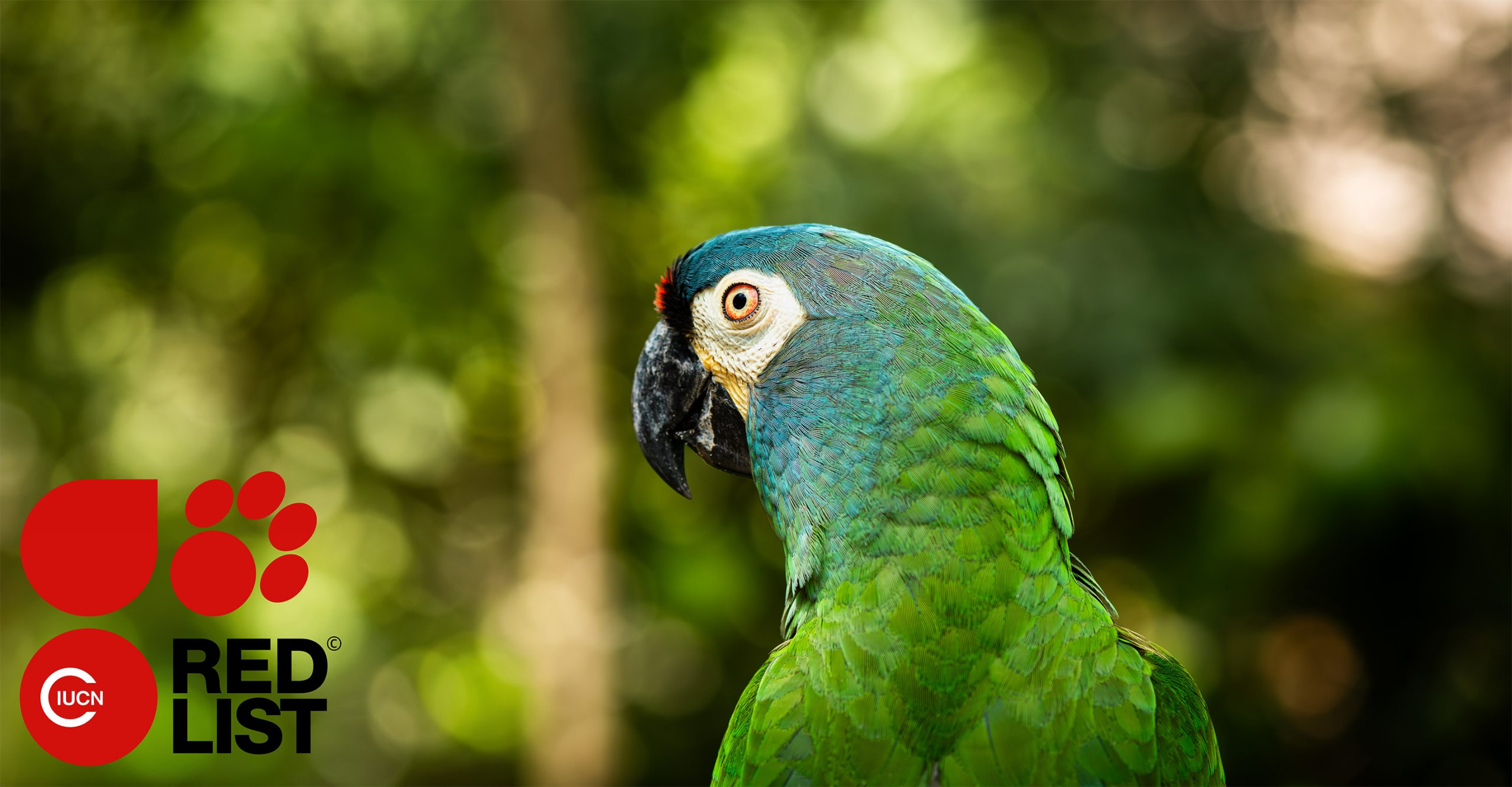
Need some good news? Here’s cause for hope and celebration: 20 species have moved further from extinction according to the latest IUCN Red List of Threatened Species update.
In The Book of Hope: A Survival Guide for Trying Times (with Douglas Abrams, 2021), Jane Goodall reminded us:
“Hope does not deny all the difficulty and all the danger that exists, but it is not stopped by them. There is a lot of darkness, but our actions create the light.”
Her words echo across the 2025 IUCN Red List update, as nearly one-third of assessed species remain threatened. The IUCN Red List now includes 172,620 species of which 48,646 are threatened with extinction.
The 20 recovering species—from songbirds to sea turtles—prove that conservation action works, and nature responds. Our actions create the light.
What Does It Mean When a Species Is Downlisted on the IUCN Red List?
When the IUCN downlists a species, it means that verified population data show a lower risk of extinction. A bird might move from Endangered to Vulnerable, or a mammal from Critically Endangered to Near Threatened. These changes come after years of monitoring, field surveys, and peer review by global experts.
A downlisting does not mean a species is safe. It simply marks progress, proof that conservation measures are effective. Many animals have moved down the Red List before slipping back up when protection wanes.
That’s another reason we need hope: to sustain conservation efforts in the face of tremendous challenges.
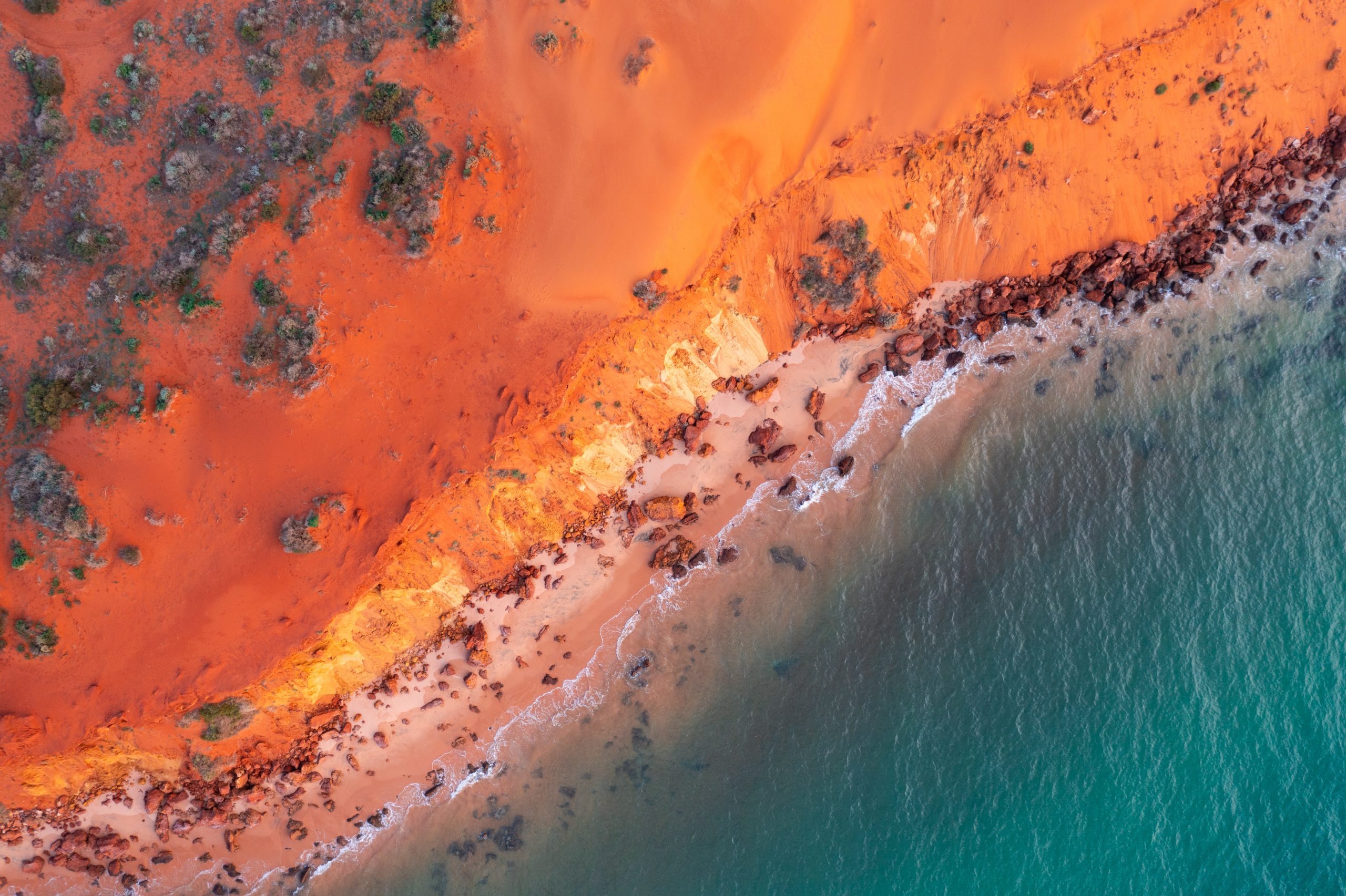
Shark Bay, a World Heritage Site in the Gascoyne region of Western Australia.
What Conservation Actions Bring Species Back?
Across these 20 downlistings, a handful of conservation interventions consistently show results:
Island restoration and invasive-species control: Removing rats, cats, and foxes allowed birds and small mammals to rebound on Rodrigues and Shark Bay.
Long-term, legally enforced protection: The green sea turtle’s 40-year recovery stems from global bans on harvesting nesting females and the use of turtle excluder devices (TEDs) in fisheries.
Fisheries reform and marine protected areas: South Africa’s “seventy-four” seabream is rebuilding after a 1998 fishing moratorium and the creation of large no-take zones.
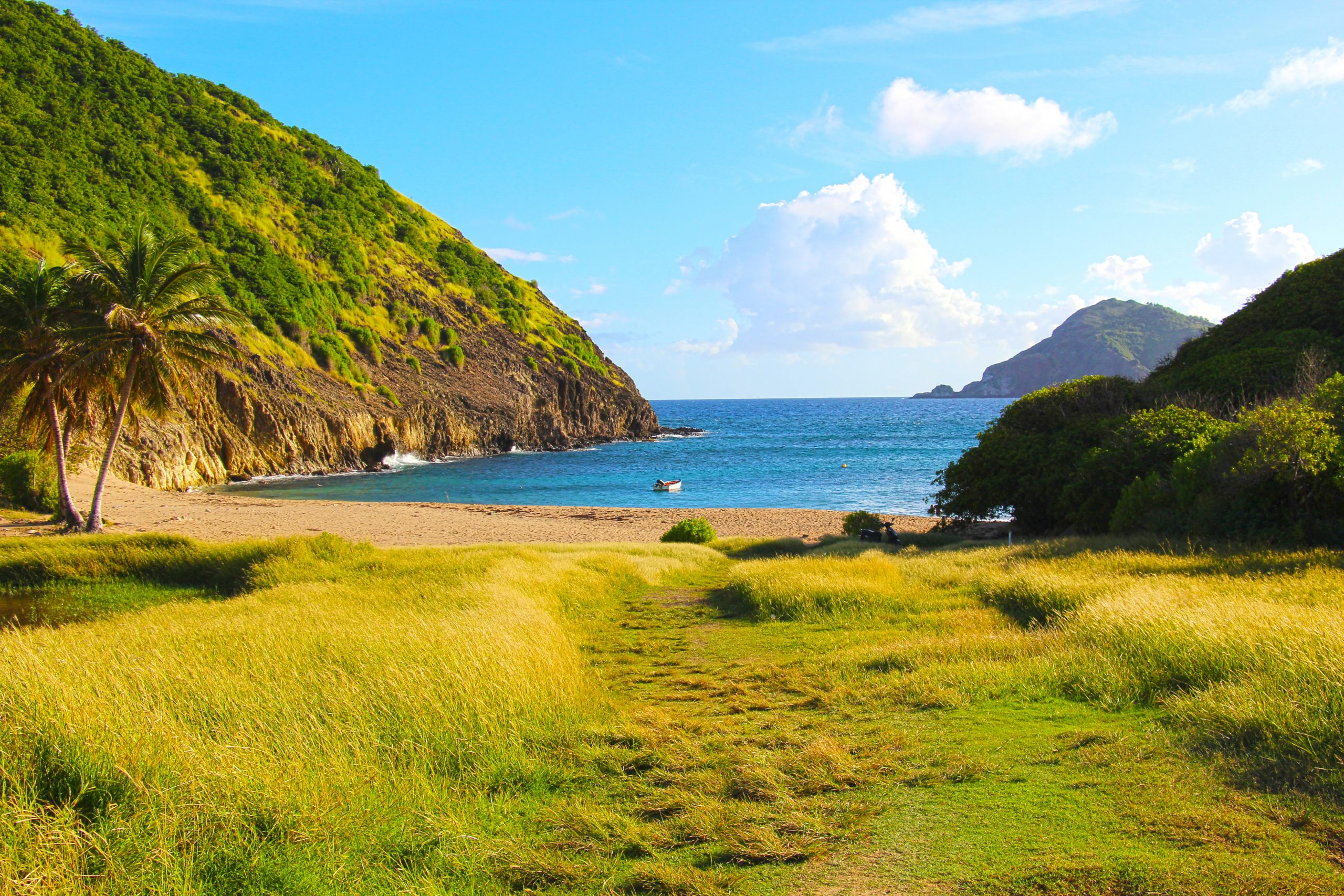
Rodrigues Island, Indian Ocean, Mauritius.
Habitat restoration and reforestation: Replanting Rodrigues woodlands and Brazil’s Atlantic Forest gave the blue-winged macaw and other species the space to breed again.
Wildlife trade control and community incentives: Cracking down on illegal wildlife trade and boosting local ecotourism jobs are helping parrots and macaws recover across Asia and South America.
Together, these measures illustrate a replicable pattern:
—safeguard critical habitat and protect remaining population strongholds,
—reduce or remove direct threats,
—give wildlife time to recover
—incentivize conservation in the local community.
That’s good news. With the right support, these successes are replicable worldwide.
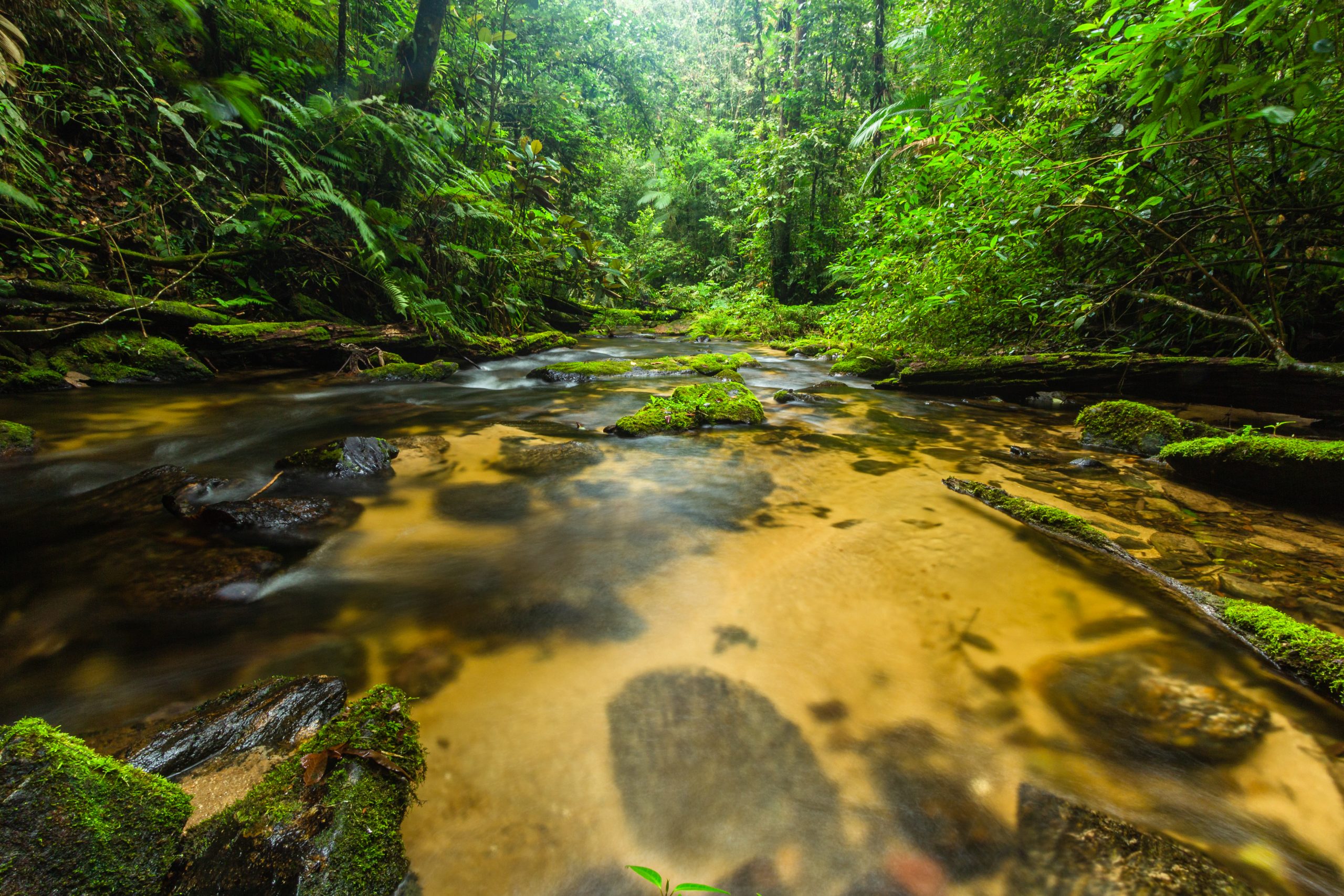
Atlantic Forest, Brazil.
What Conservation Efforts Keep Species in Recovery?
WWF’s Global Species Program emphasizes that recovery isn’t a single success story—it’s sustained maintenance built on three pillars:
—Long-term funding must outlast election cycles and short-term grants. Most species decline over decades and rebuilding them takes just as long. The global “nature finance gap” is estimated at roughly $900 billion per year.cIn Mobilizing Finance for Nature, WWF authors state:
The biggest obstacle to reversing this decline isn’t a shortage of ideas—it’s the lack of funding, sourced, blended, and deployed at the right scale, in the right places, and at the right moments when it matters most.
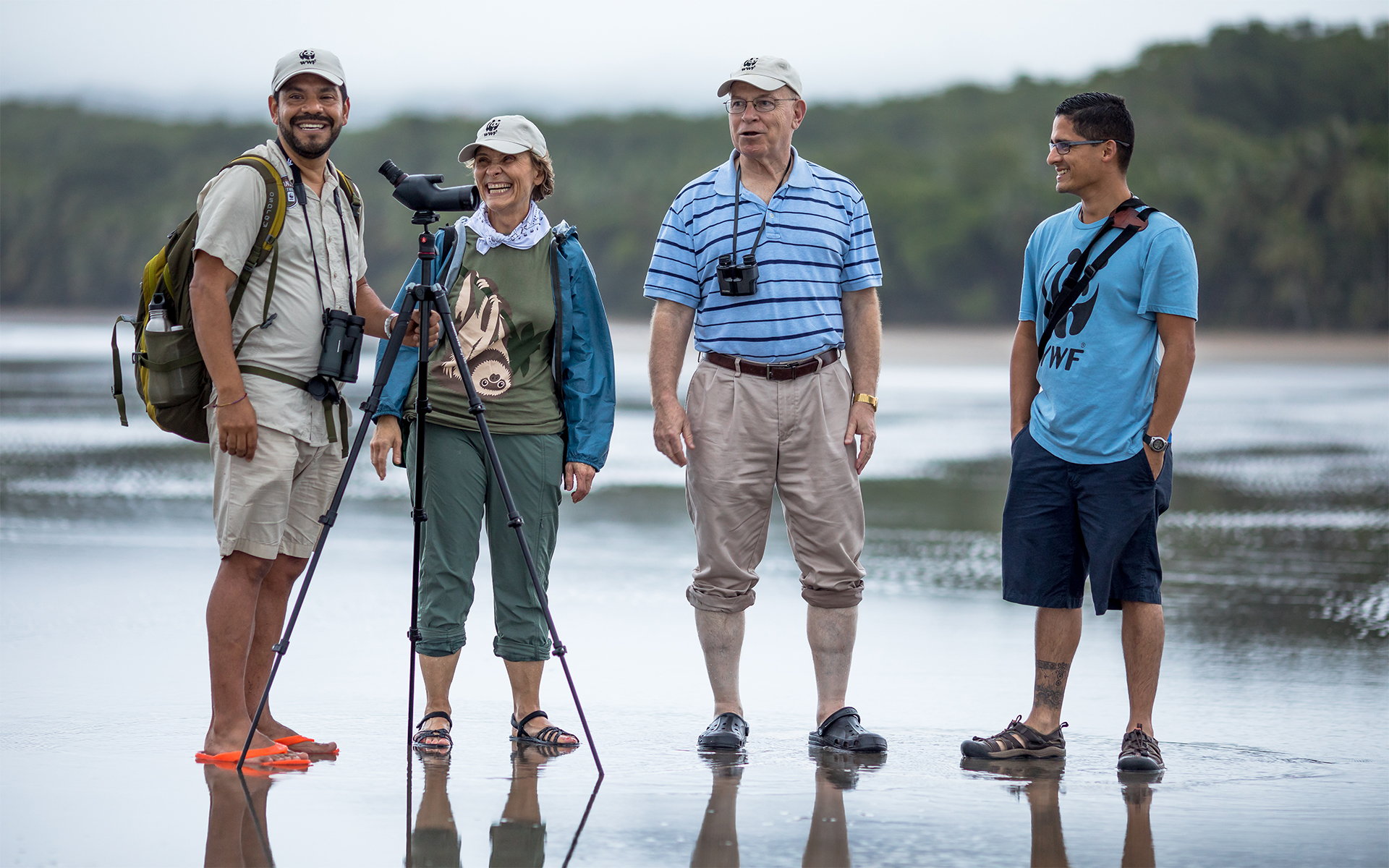
Nat Hab Expedition Leader & WWF Expert © Keith Arnold
—Community buy-in ensures that local people benefit directly—through conservation travel jobs, sustainable fisheries, or habitat restoration—so protection becomes part of daily life.
—Continuous policy enforcement, from wildlife trade bans to fishing rules and habitat protections protect hard-won conservation gains.
From sea turtles to seabreams, enduring recovery depends on steady investment, local partnership, and the will to protect and regenerate nature long after headlines fade.
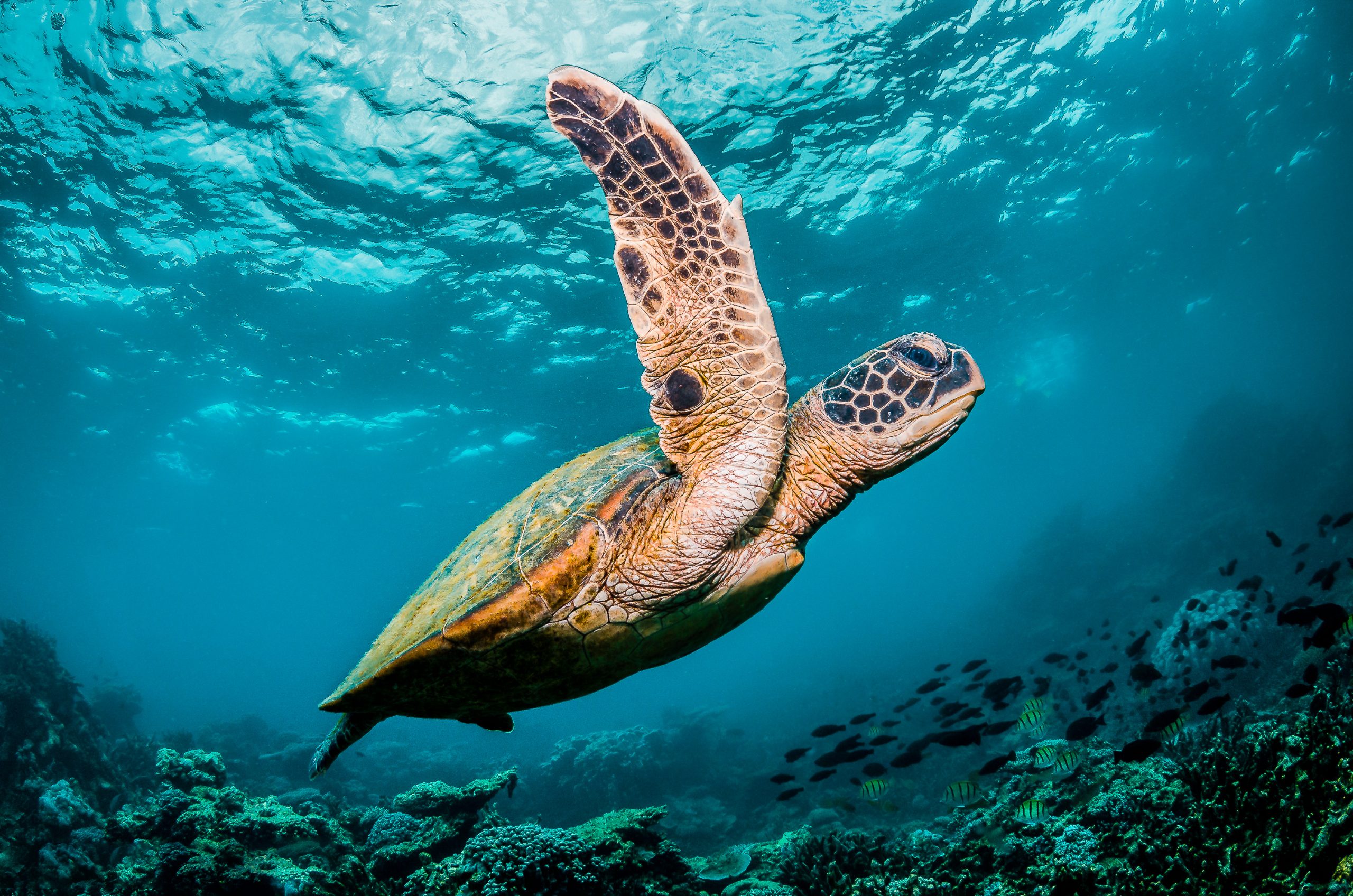
Green sea turtle
How Are Turtles, Macaws, and Marine Life Rebounding?
Few conservation stories capture global collaboration like that of the green sea turtle (Chelonia mydas). Once hunted to near-extinction, it has seen a roughly 28% population increase since the 1970s.
Turtle-friendly fishing gear, protected nesting beaches, and long-term WWF partnerships have all contributed. Travelers can witness nesting and hatchling releases on Costa Rica’s Caribbean coast, or swim alongside adult turtles in the Galapagos Islands or Australia’s Great Barrier Reef.
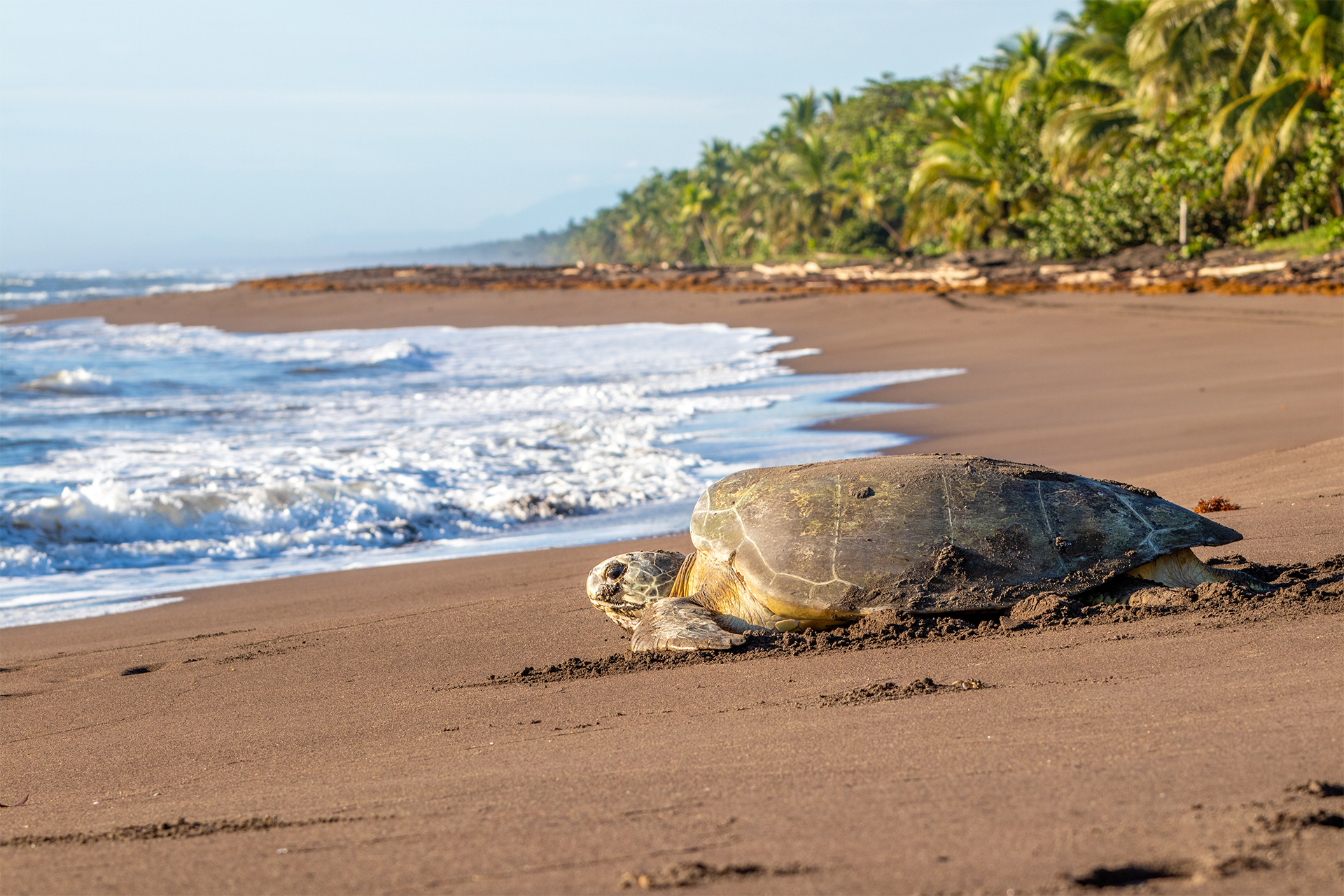
Green sea turtle nesting on Tortuguero Beach, Costa Rica.
In Brazil’s Atlantic Forest, the blue-winged macaw is reclaiming restored habitat, with nest boxes and community guards protecting chicks from poaching.
Along South Africa’s coast, three fish species—the Roman seabream, seventy-four seabream, and the Carpenter seabream (Argyrozona argyrozona)—have rebounded thanks to moratoriums, quotas, and well-enforced marine protected areas. Divers and conservation travelers exploring reefs off Cape Town and Durban are now seeing larger, older fish—an encouraging sign of ecosystem recovery.
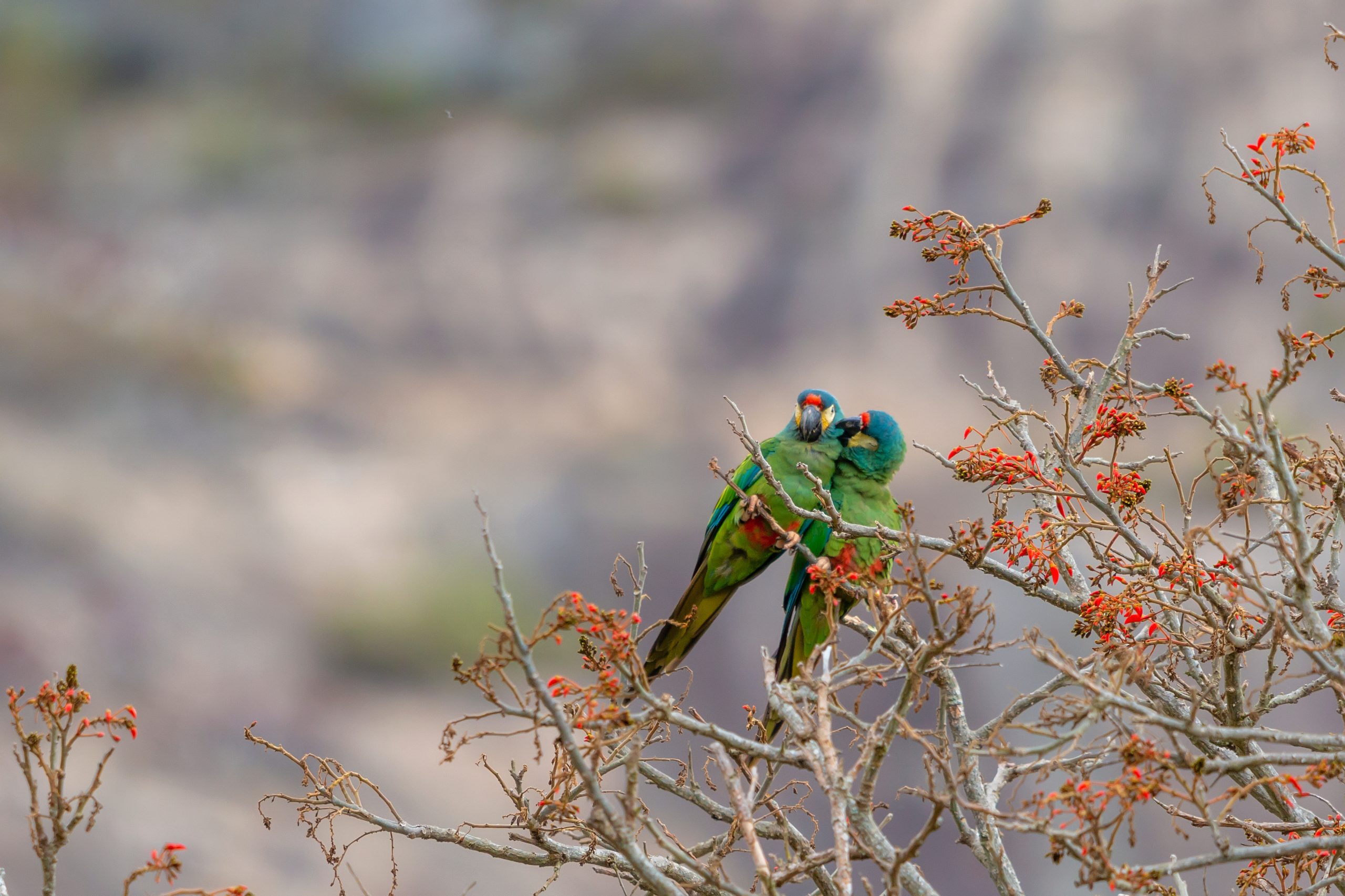
Pair of blue-winged macaws in Brazil.
Which Birds Are Returning to Healthier Habitats Worldwide?
In the northern hemisphere, several birds are also signaling recovery. The redwing, a thrush that breeds in Iceland, continues to thrive as wetland protection expands—an uplifting sight on Nat Hab’s Iceland expeditions.
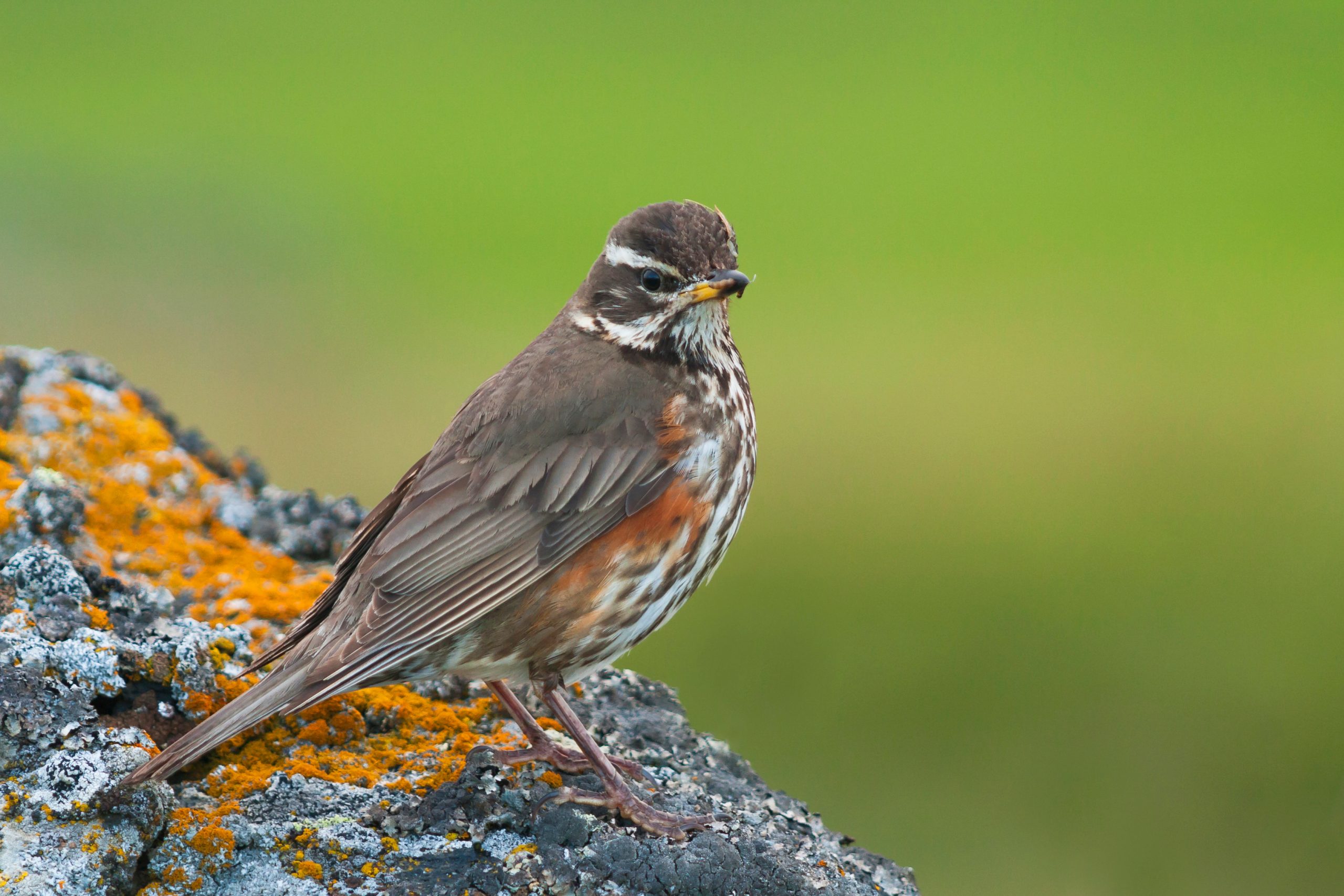
Redwing thrush, Iceland.
The Alexandrine parakeet, native to India and Nepal, is stabilizing due to stronger anti-poaching laws and nest-box programs, and can often be seen on Nat Hab’s India Tiger Quest Photo Expedition. In North America, the olive-sided flycatcher—a charismatic insect-eater—has rebounded slightly in Alaska and protected U.S. National Parks.
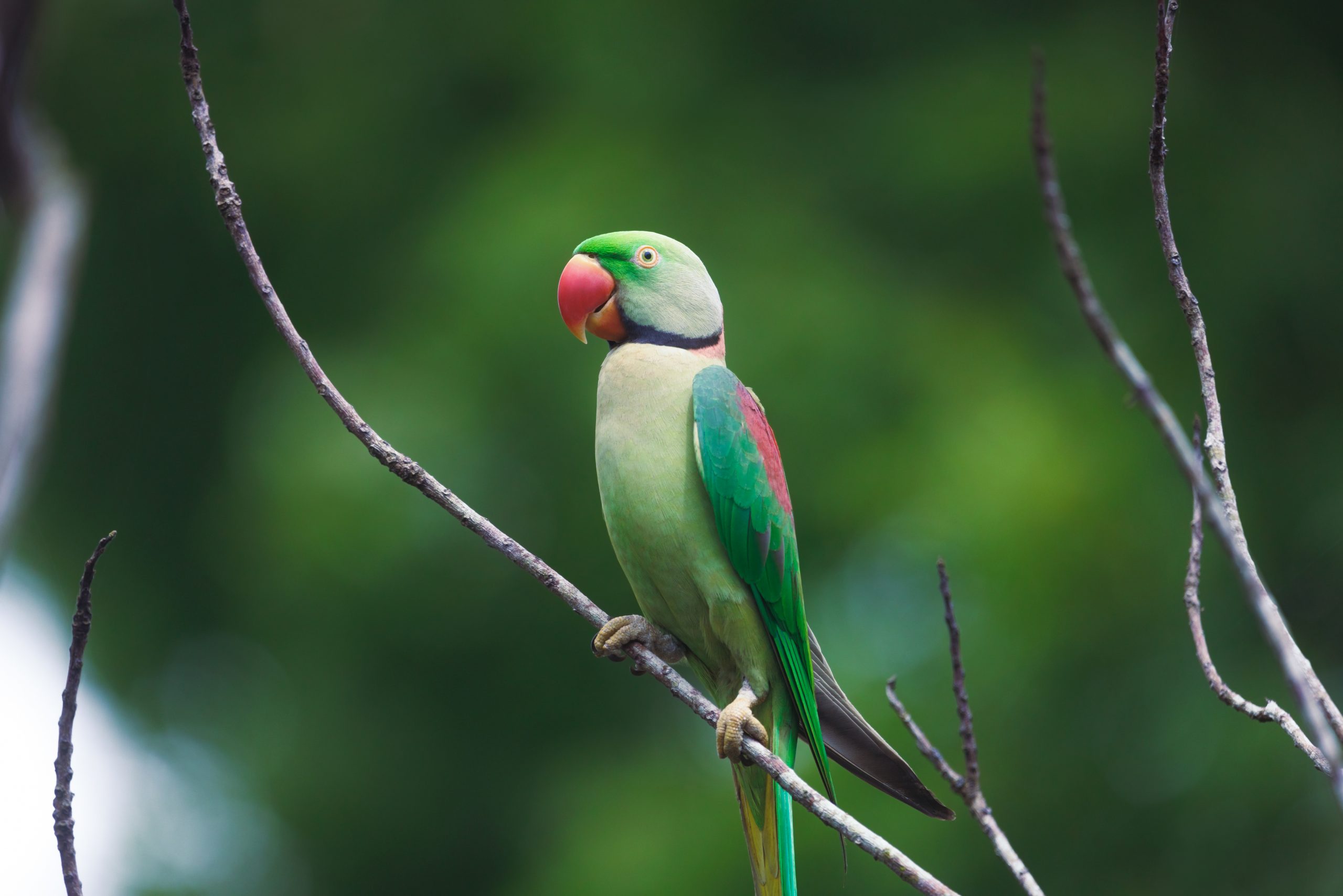
Alexandrine parakeet, India.
Elsewhere, small-island endemics like Lidth’s jay and the Amami woodcock in Japan, or the Guadalupe junco in Mexico, are benefiting from forest protection measures. Collectively, these bird comebacks reinforce that local stewardship can ripple across flyways.
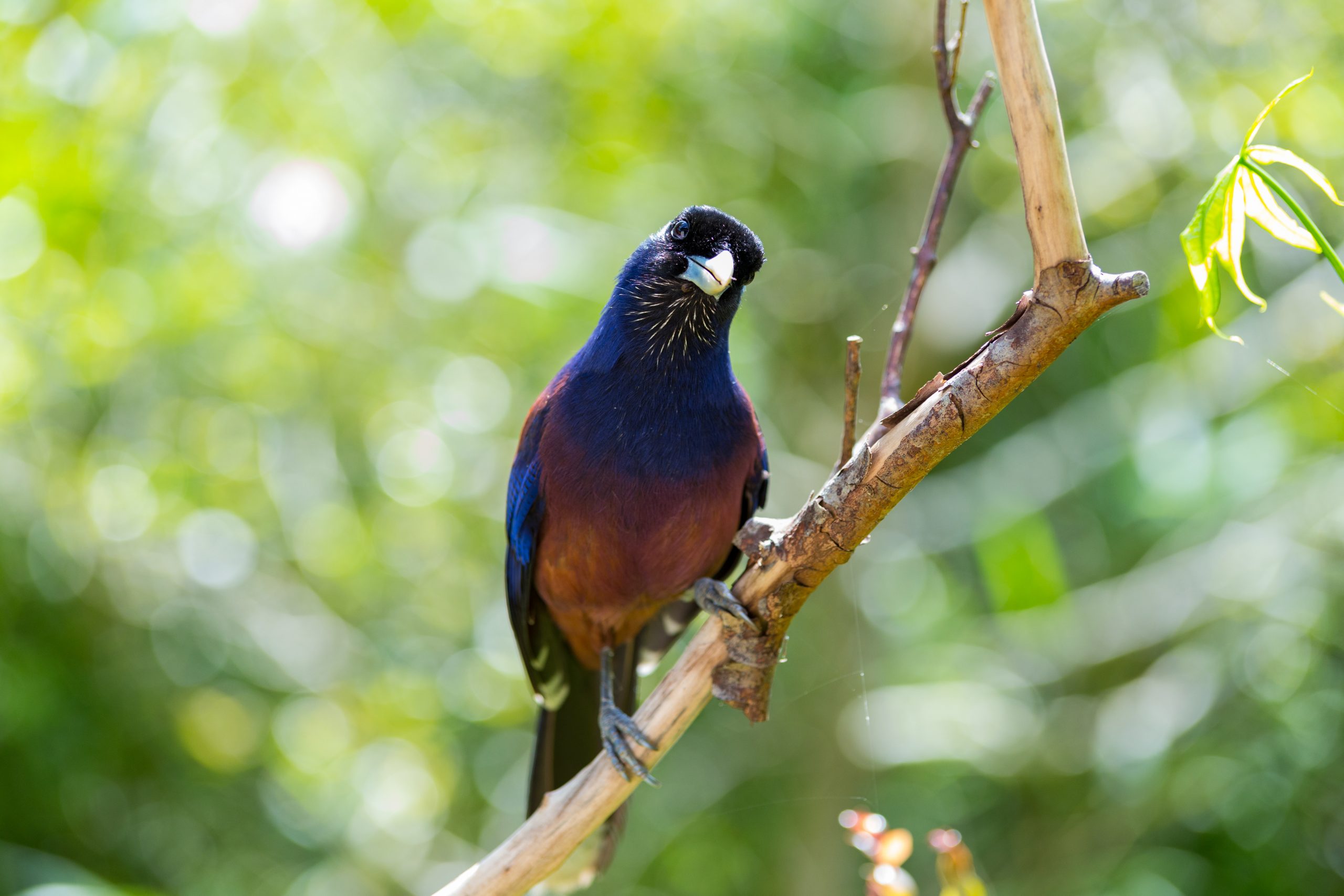
Lidth’s jay, Japan.
Where Is Conservation Travel Making a Difference?
Island restoration has emerged as one of the most effective conservation strategies worldwide. On Rodrigues Island in the Indian Ocean, both the Rodrigues warbler and Rodrigues fody rebounded after decades of reforestation and the removal of invasive rats and cats. Their success mirrors that of other island species rescued through hands-on management.
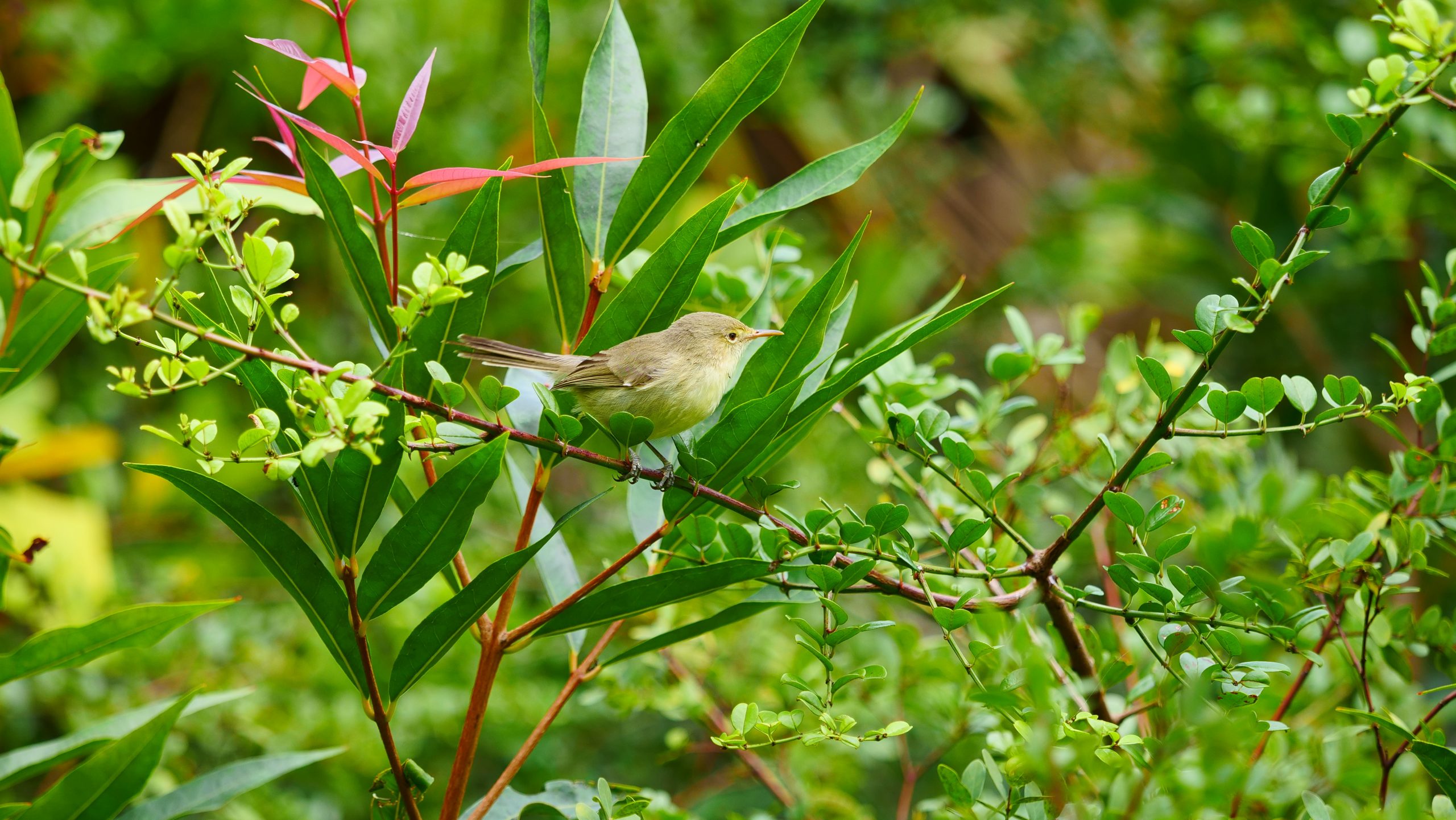
Rodrigues warbler, Rodrigues Island.
In Western Australia, the Shark Bay bandicoot—once extinct on the mainland—now thrives on Bernier and Dorre Islands, thanks to predator eradication and reintroduction programs. Populations have since expanded to fenced mainland reserves, providing a template for small-mammal recovery elsewhere in Australia.
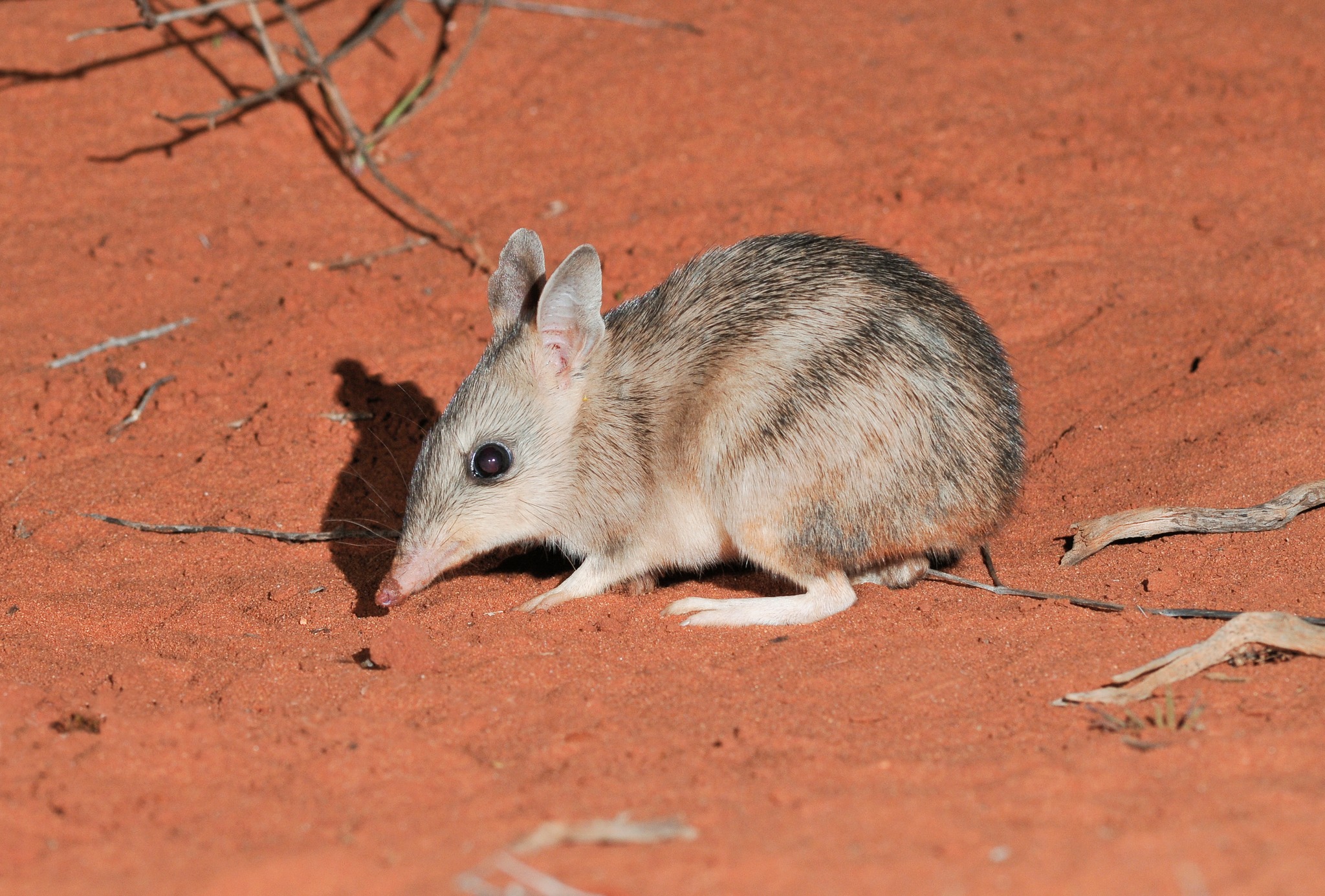
Western Barred Bandicoot, Shark Bay, Australia. Photo courtesy of the Australian Wildlife Conservancy © W Lawler
Travelers on Nat Hab’s Australia nature expeditions encounter the same restored landscapes where conservationists are rewilding island ecosystems. In these places, visitor fees help sustain the rangers, researchers, and Indigenous land managers who make such recoveries possible.
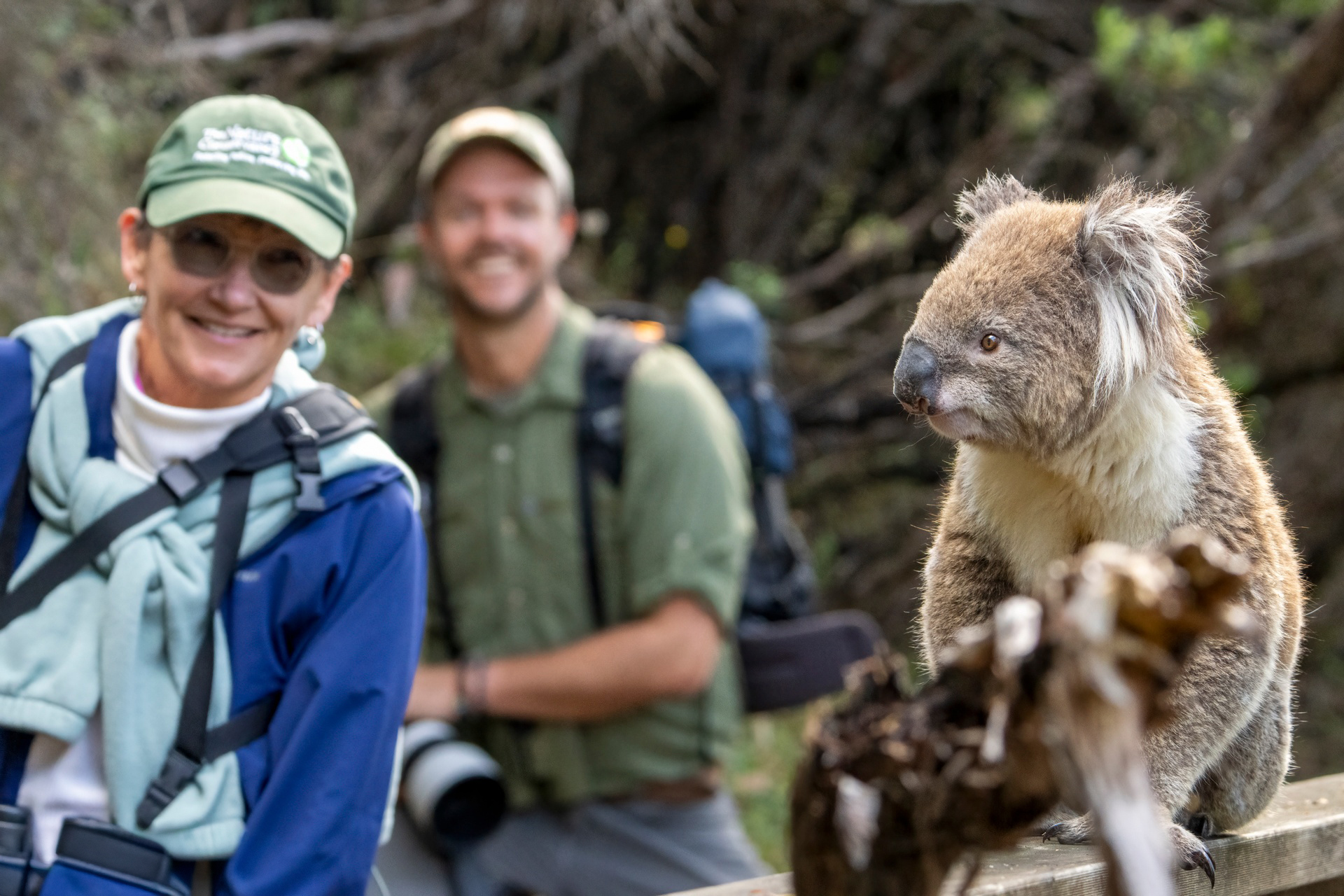
Nat Hab travelers on safari in Australia. Photographed by Nat Hab Guest © Greg Boreham
Why These Recoveries Matter—And Why the Work Isn’t Done
For every species improving, dozens more are sliding toward extinction. The IUCN lists over 48,000 species still threatened worldwide, and global wildlife populations have declined by an estimated 69% since 1970.
The 20 species highlighted here are exceptions—proof that recovery is possible when we stay the course. Each species that steps back from the edge underscores that hope, in Goodall’s sense, is a discipline, the daily work of saving what can be saved.
For travelers, witnessing these recoveries firsthand is a chance to support that hope in action. Join a Nat Hab conservation travel experience—from the turtle beaches of Costa Rica to the island sanctuaries of Australia, to a custom Southern Africa adventure or the otherworldly landscapes of Iceland—and see how protecting the planet’s wildest places sustains life for us all.
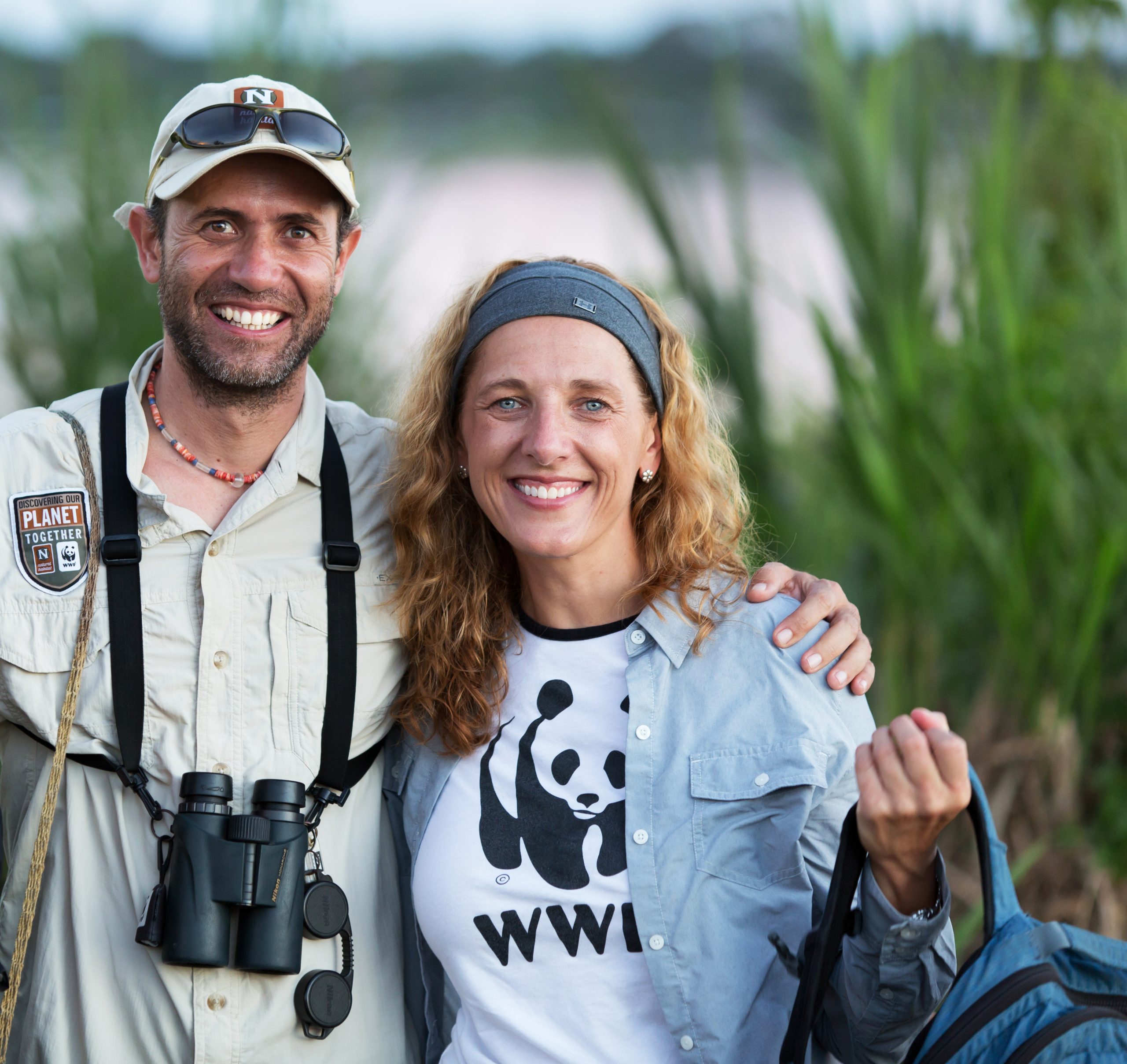
Nat Hab Expedition Leader & WWF Expert © JJ Huckin
BONUS EXTRAS!
A 2025 IUCN Red List update: 20 Species Moving Back from the Brink
| Group | Species | Where Found | Reason for Recovery / Conservation Focus |
| 🐦 Birds (12) | Rodrigues warbler(Acrocephalus rodericanus) | Rodrigues Island, Mauritius | Habitat restoration and invasive-species removal |
| Rodrigues fody (Foudia flavicans) | Rodrigues Island, Mauritius | Reforestation and predator control | |
| Olive-sided flycatcher(Contopus cooperi) | Alaska, Canada, U.S. West | Forest protection and migratory corridor management | |
| Rustic bunting (Emberiza rustica) | Northern Eurasia | Improved breeding-site protection | |
| Lidth’s jay (Garrulus lidthi) | Amami Islands, Japan | Forest reserve expansion | |
| Guadalupe junco (Junco insularis) | Guadalupe Island, Mexico | Invasive-species eradication | |
| Okinawa robin (Larvivora namiyei) | Okinawa, Japan | Forest conservation | |
| Alexandrine parakeet(Palaeornis eupatria) | India, Nepal, SE Asia | Anti-poaching laws, nest-box programs | |
| Black-faced spoonbill(Platalea minor) | East Asia (Korea–Taiwan–Vietnam) | Wetland restoration, international protection | |
| Blue-winged macaw(Primolius maracana) | Brazil, Paraguay | Forest restoration, nest protection | |
| Amami woodcock (Scolopax mira) | Ryukyu Islands, Japan | Old-growth forest protection | |
| Redwing (Turdus iliacus) | Iceland, N. Europe | Wetland restoration, climate resilience | |
| 🐌 Snails (3) | Conus felitae | Sal Island, Cape Verde | Protected marine microhabitats |
| Conus regonae | Sal Island, Cape Verde | Marine reserve management | |
| Idiomela subplicata | Porto Santo Islet, Madeira | Habitat protection on predator-free island | |
| 🦝 Mammal (1) | Shark Bay bandicoot(Perameles bougainville) | Western Australia | Predator removal, island reintroductions |
| 🐟 Fish (3) | Roman seabream(Chrysoblephus laticeps) | South Africa | Fisheries reform, MPAs |
| Seventy-four seabream(Polysteganus undulosus) | South Africa | Fishing moratorium, population recovery | |
| Argyrozona argyrozona | South Africa | Marine protected areas | |
| 🐢 Reptile (1) | Green sea turtle (Chelonia mydas) | Global tropics (Costa Rica, Galápagos, Brazil, Australia) | Nesting protection, bycatch reduction, community conservation |