

At Natural Habitat Adventures, conservation isn’t just a mission statement—it’s the guiding principle behind every journey we design. On our Secluded South Africa safari, guests explore protected national parks and private reserves where wildlife roams freely and tourism supports vital conservation initiatives aimed at protecting these landscapes for generations to come.
Protecting Africa’s Big Five
South Africa is home to the Big Five: rhino, elephant, leopard, lion and Cape buffalo. Of these, all but one are listed as endangered or vulnerable by the International Union for Conservation of Nature (IUCN). Conservation travel plays a critical role in safeguarding these iconic species and the wild ecosystems they inhabit. Nat Hab’s collaboration with World Wildlife Fund places travelers on the front lines of conservation efforts, with daily excursions that explore the challenges—and victories—of species protection.
During our Secluded South Africa safari, guests often see both black and white rhinos, animals whose futures remain uncertain. By around 1960, Africa’s black rhino population was estimated at about 100,000. By the end of 2024, an estimated 6,788 black rhinos remained. Southern white rhinos, once thought extinct, were rediscovered in 1895, and by the end of 2024 there were an estimated 15,752 white rhinos in Africa.
Their modest recovery reflects decades of intensive protection in well-managed reserves, including targeted anti-poaching and other hands-on conservation measures. In many places, safari tourism helps fund protected-area management and security. Even with progress, black rhinos remain Critically Endangered and white rhinos are Near Threatened.
Elephants, leopards and lions also face immense pressures from habitat loss, poaching and human-wildlife conflict. Each encounter on safari becomes an opportunity to understand and support conservation at work.

Black Rhinos in the Marataba Private Reserve
Marataba Private Reserve, once little known, began as a partnership between the South African government and Dutch philanthropist Paul Fentener van Vlissingen at the request of President Nelson Mandela. Their goal: expand protection within the Marakele National Park.
Today, South Africa holds about two-thirds of Africa’s rhinos and is home to around 80% of the world’s white rhinos. Black rhinos fell to fewer than 2,500 across Africa by the mid-1990s, but by the end of 2024 there were an estimated 6,788 black rhinos on the continent, including about 2,056 in South Africa.
WWF South Africa’s Black Rhino Range Expansion Project establishes new breeding populations by moving rhinos from well-managed areas to suitable habitat. WWF reports that since 2003, the project has helped create 17 new black rhino populations, translocated 270 black rhinos and recorded more than 200 surviving calves on project sites.
Marataba Safari Lodge offers exceptional comfort amid a pristine wilderness setting, with just one guest bed for every 1,000 acres. Black and white rhinos thrive here, often seen on foot during guided bushwalks. Other frequent visitors include giraffes, zebras, wildebeests and hundreds of bird species. Elephants are known to swim in nearby waterholes, and leopards occasionally pass through camp.
With strict limits on vehicles, Marataba offers a low-density safari experience focused on space and solitude. The only other vehicles you’re likely to encounter belong to conservation or anti-poaching teams on patrol. The Marataba concession is described as roughly 52,000 acres.

© Mark Hickey
Elephants and Leopards in the Private Madikwe Game Reserve
Madikwe Game Reserve, established in 1991 on reclaimed farmland, is one of South Africa’s great conservation success stories. Hundreds of miles of fencing were removed, and more than 8,000 animals were reintroduced during Operation Phoenix—the largest wildlife relocation in history. Species including lions, elephants, giraffes, African wild dogs and hyenas now thrive in the 185,000-acre reserve.
Madikwe’s model benefits both wildlife and the surrounding communities. A share of tourism revenue supports neighboring villages, and the reserve prioritizes local employment.
Madikwe’s elephant population has grown from roughly 219 introduced animals in the early 1990s to more than 1,200 today, giving the reserve one of the highest elephant densities among South Africa’s enclosed reserves.
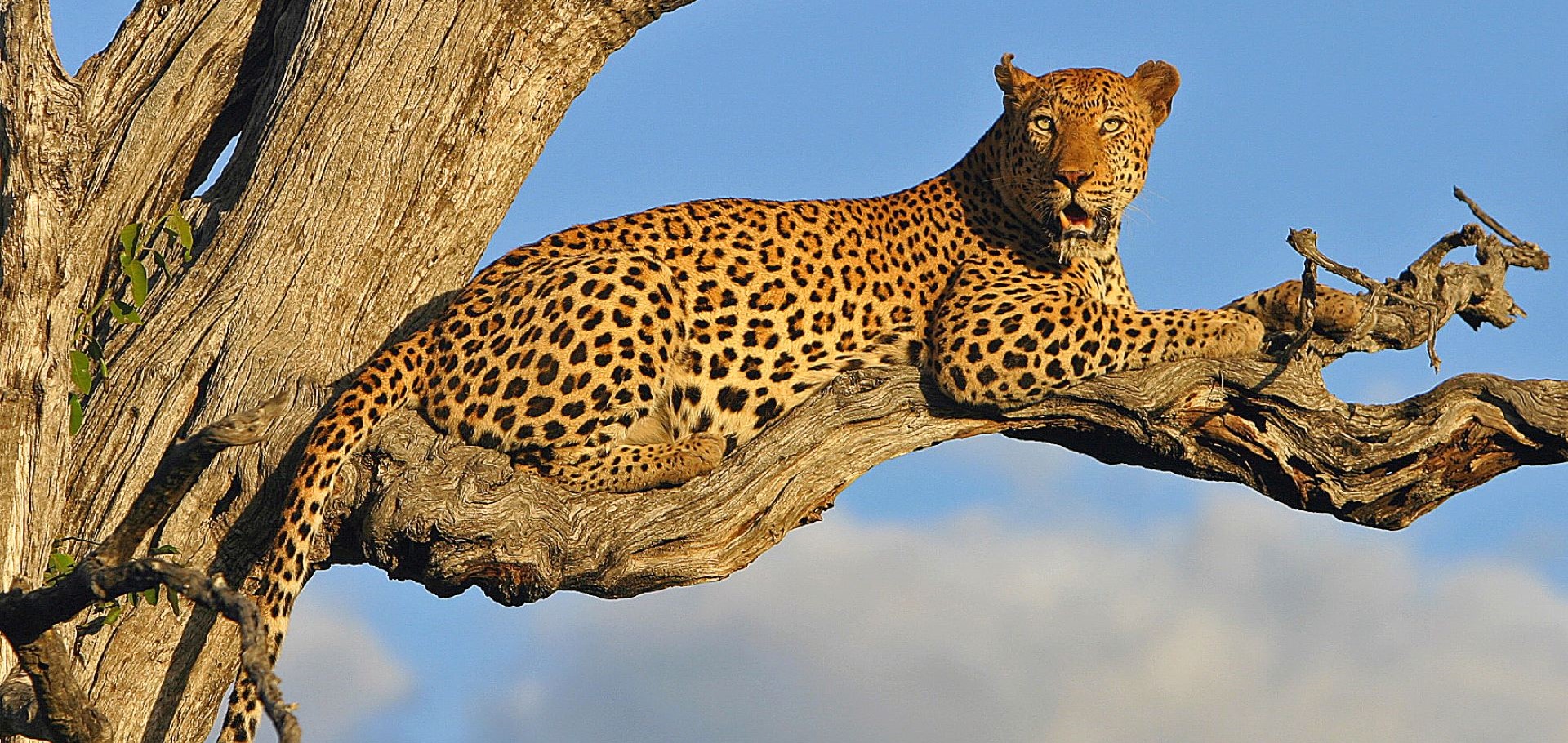
Madikwe is also a stronghold for African leopards, the most elusive member of the Big Five. While still difficult to spot, leopards here are less wary of vehicles than in busier parks, making sightings more likely. African leopards have lost 67% of their historical range, but Madikwe—once farmland—now offers them safe refuge.
Other highlights include a growing cheetah population, hundreds of giraffes and endangered African wild dogs, also known as “painted wolves” for their uniquely patterned coats.

Lions and Cape Buffalo in the MalaMala Game Reserve
MalaMala is one of South Africa’s oldest and largest game reserves. Its fenceless boundary with Kruger National Park creates a vast expanse of protected wilderness for lions, Cape buffalo and more to roam freely.
Currently, four lion prides and several male coalitions are commonly sighted in MalaMala. Males defend territories and females raise cubs in the safety of these groups. Guests staying at MalaMala Main Camp, along the Sand River, often witness the drama of daily life—whether it’s lions drinking, hunting or challenging rivals.
Lions have vanished from much of their historic range, with the IUCN citing an estimated ~36% decline over three generations. Today, estimates commonly place Africa’s wild lion population at around 20,000–25,000, though figures vary by source and survey coverage.
Cape buffalo, while not endangered, are anything but tame. Weighing up to 1,900 pounds and capable of charging at 35 mph, these formidable animals are a key member of the Big Five. MalaMala’s buffalo herds can be huge—the largest recorded on the reserve is estimated at about 1,200+ animals, often seen at dams or wallowing in mud.

Travel with Purpose: Conservation-Focused Safari Experiences
Nat Hab’s Secluded South Africa safari offers more than spectacular wildlife—it delivers a profound connection to the land and its conservation story. These are wild places where nature leads, and the presence of guests directly supports their preservation.
From rhino reintroduction in Marataba to elephant corridors in Madikwe and lion research in MalaMala, our safaris immerse travelers in living conservation success stories. Each reserve tells a unique tale of resilience, and your presence helps write the next chapter.