


A fun update from Australia—and one that speaks directly to the heart of Nat Hab’s Ultimate Australia Safari.
Thanks to the recommendation of several Expedition Leaders and Senior Marketing Project Manager Maya Krause, who recently traveled on an Australia departure, Natural Habitat Adventures has sponsored Atlas, a 2-year-old male Tasmanian devil, at the Devils@Cradle sanctuary in Tasmania.
Devils@Cradle is a world-class conservation facility dedicated to ensuring the survival of Tasmania’s most distinctive species. Our sponsorship helps cover the costs of caring for Atlas as part of Australia’s nationwide Captive Breeding Program, known as the Insurance Population. This program is managed by the Zoological and Aquariums Association in coordination with the Tasmanian Government’s Save the Tasmanian Devil Program and plays a critical role in protecting genetic diversity across Australian institutions and securing the species’ future.
A plaque at the sanctuary will acknowledge Nat Hab’s support, helping guests feel a deeper connection between their journey and the conservation efforts they make possible by traveling with us. It’s a tangible reminder that this safari is not only about seeing Australia’s rare wildlife but also about supporting the work required to protect it.
That conservation-first approach is not incidental to the itinerary. As Maya discovered firsthand, it is one of the defining threads that runs through our Ultimate Australia Safari.
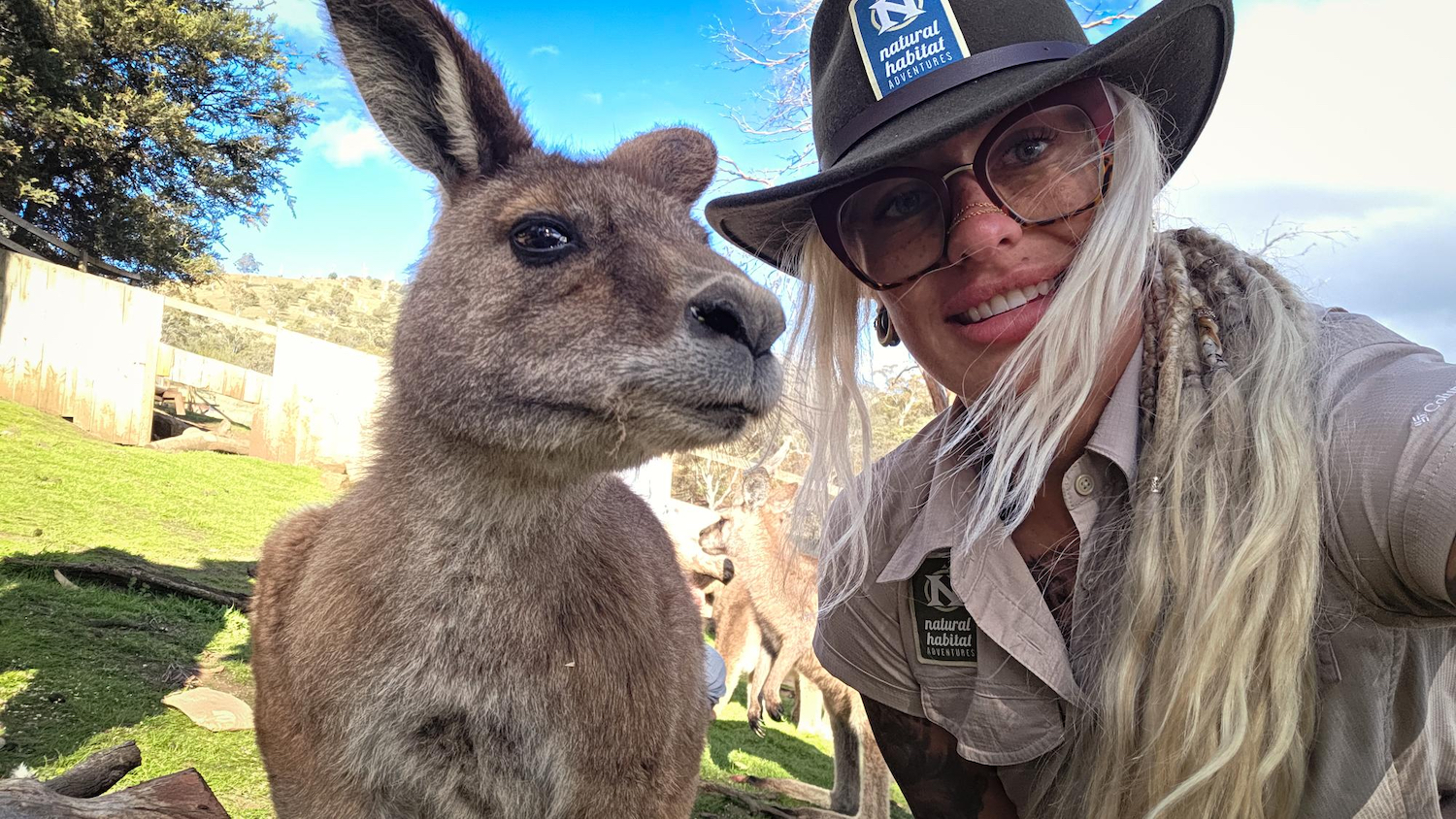
Maya’s Experience on Nat Hab’s Ultimate Australia Safari
Picking a single “favorite” from my Ultimate Australia Safari feels like trying to name your favorite chapter in a book that only works as a whole. What I loved most wasn’t one sighting or one landscape, it was the accumulating proof, day after day, that Australia is not merely different but assembled differently: a continent that has been left alone long enough to become strange in precise evolutionary ways and then fragile in the way that all rarities are.
If I had to name the part that stayed with me most, I’d call it this: the conservation thread that runs through the trip—not as a side visit or a charitable add-on but as an honest accounting of what it takes to keep a place like this intact.
On other journeys, you catch glimpses of protection: private reserves, sustainability-driven communities and a general awareness of the importance of wildlife. In Australia, we walked into the work itself. We met the people doing the unglamorous daily labor of repair: rehabilitating, rewilding, keeping genetic lines from narrowing and keeping habitat from becoming an afterthought. Seeing those nonprofits in action changed the feel of the itinerary. It turned the trip from a tour of wonders into a conversation with responsibility. It’s easy to admire wildlife when it appears on schedule and in good light. It’s different to watch the scaffolding behind that miracle and realize how much of it is human effort keeping pace with human damage.
And maybe that’s why Australia hits the mind the way it does. The continent’s long isolation, broken off since the old supercontinents, has written a library of oddities into its living things. You don’t just see animals and plants; you meet solutions to problems you didn’t know nature could solve. Ancient lineages persist in pockets of rainforest. Hardy life makes a hard living in the Outback. The reef gathers a city of color, teeth and quiet industry at the edge of the continent. The whole country feels like an argument against complacency. You can’t assume you know what’s next here because the next thing may be a creature you’ve never heard of, perfectly adapted to a niche you didn’t realize existed.
What surprised me, over and over, was how quickly that wonder widened into respect. These are not simply “unique” ecosystems. They are systems with long memory—plants that feel like relics until you understand they’re survivors, animals shaped by isolation into forms that look improvised until you notice the exactness of them. Australia gives you novelty, yes, but it also gives you context. It reminds you that biodiversity isn’t decoration; it’s a record of time, contingency and stubborn endurance.
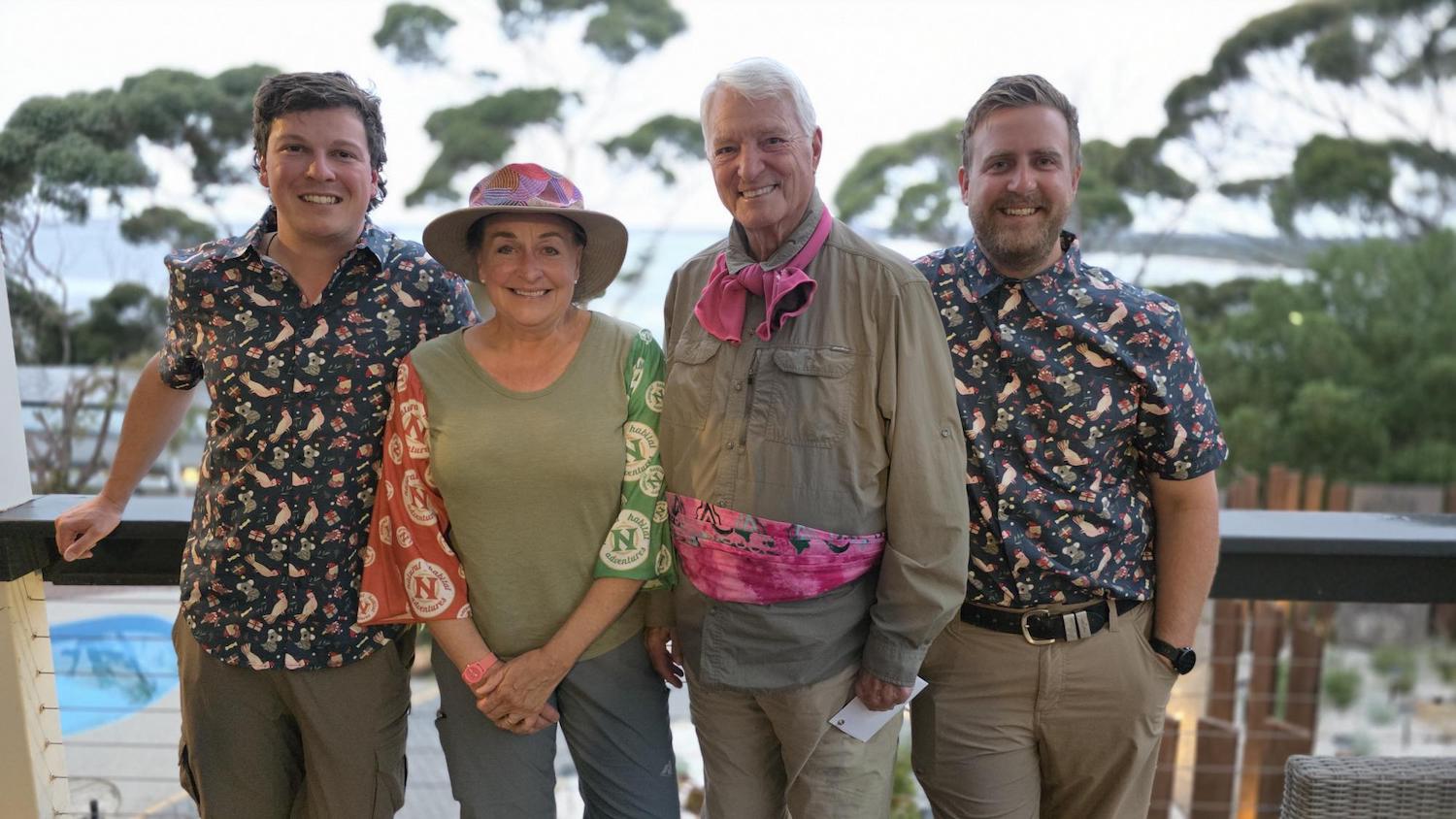
Nat Hab travelers on our Ultimate Australia Safari
And then there are the people. The ones who live close enough to the land to read it with the same seriousness others reserve for maps. That connection isn’t romantic; it’s practical, lived and often political. The land here isn’t a backdrop. It’s a force that dictates the terms. You feel that in the way knowledge gets shared…what grows where, what survives drought, what returns after fire, how seasons announce themselves in changes most visitors would miss. The trip doesn’t just show you Australia; it keeps telling you, in a dozen different dialects, that the place is the teacher if you let it be.
A huge part of why all of this cohered, why it didn’t feel like a checklist pinned across a continent, was thanks to our stellar Expedition Leaders. They didn’t just move us through an itinerary; they guided our attention. They made room for curiosity, for questions that don’t fit neatly into a schedule and for the small moments that become the real substance of travel: a pause that turns into a lesson, a roadside stop that becomes a story about adaptation, a quiet conversation that reframes what you thought you were looking at. The result was a trip that felt both comprehensive and personal: big in geography but intimate in understanding.
So if I’m writing about my favorite part, I’m writing about a kind of seeing that built over three weeks: wonder sharpened by knowledge, beauty grounded by consequence, wildlife paired with the human hands trying to give it a future. Australia is rich because it was once isolated. Now it’s rich in another way, too: in the network of people and organizations working to keep that old strangeness alive.
That’s the part I can’t choose between…because it isn’t one thing. It’s the way rainforest, Outback, reef and conservation work all insist on the same conclusion: this place is worth more than our admiration. It’s worth our participation.