

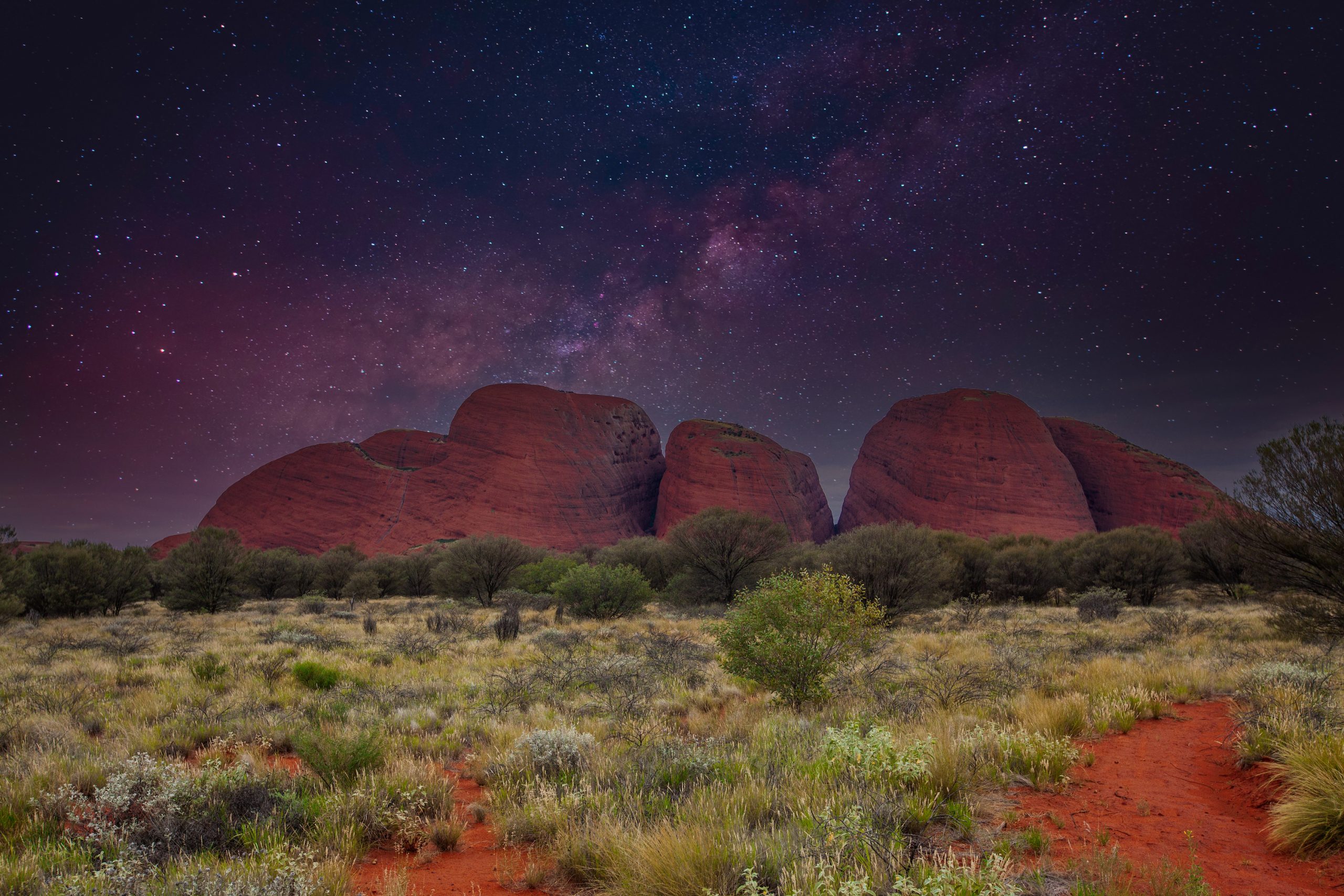
Astronomy has been practiced in Australia for the last 65,000 years, guiding, governing and connecting Indigenous people across Australia’s vast interior. At Uluru-Kata Tjuta National Park, the night sky is a remarkable sight to behold (and capture in astrophotography!) and a source of guidance and wisdom passed down through generations. Reading Country in the sky is a way of living.
In Aboriginal Australian culture, Country refers not just to land, but to the whole living environment. It includes people, animals, plants, ancestral beings and celestial bodies—sky and stars among them.
Country is both a place and a relationship, where everything is connected through story, responsibility and spirit. Reading or caring for Country describes a reciprocal relationship with a living system that sustains and guides us.
Aboriginal Astronomy in Central Australia
Reading the dark sky at night is part of reading Country. The night sky has traditionally held and guided practical knowledge: when to travel, where to hunt, when to hold ceremonies and how to care for land and kin.
At Uluru (Ayers Rock) and throughout Australia’s interior, Aboriginal astronomy serves many functions:
—Seasonal calendars: The appearance of certain constellations signals environmental shifts. When the Emu in the Sky rises in the early evening, for example, it’s nesting season. When it stands tall overhead, it’s time to collect emu eggs.
—Navigation: Constellations such as the Southern Cross can be used to navigate across deserts and open country, guiding movement and orientation.
—Land and resource management: Star positions are linked to ecological events—animal migrations, plant cycles and weather changes—providing critical information for harvesting and ceremonial timing.
—Cultural law and ethics: Many stories encode moral frameworks, such as the tale of Wati Nyiru and the Seven Sisters, which emphasizes themes of consent, social boundaries and kinship obligations.
Unlike Western astronomy, Aboriginal astronomy does not separate science from stories. The night sky holds a record of how to live in harmony with land, people and spirit. This knowledge is passed down to ensure each generation continues to read Country in the sky.
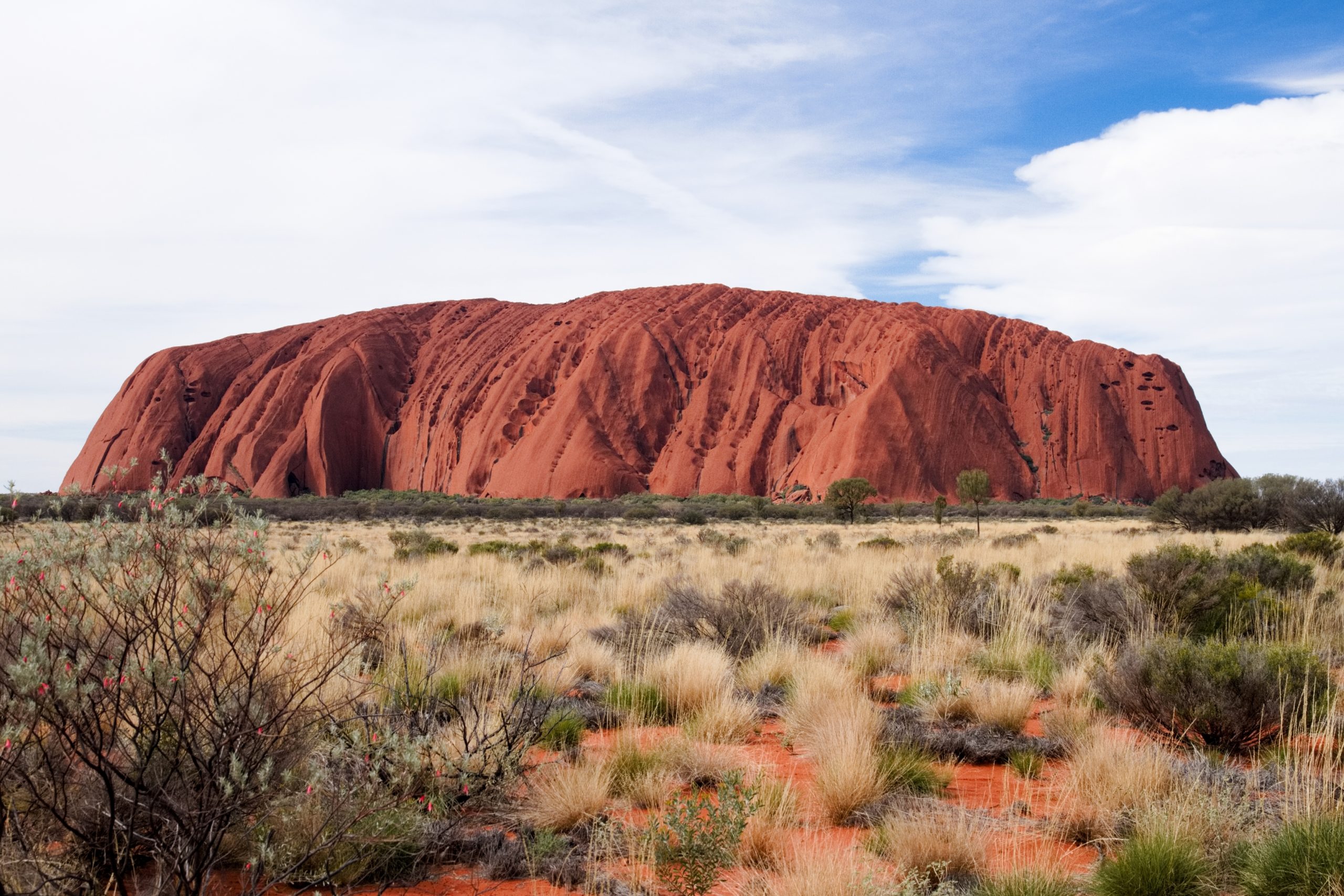
Uluru, Uluru-Kata Tjuta National Park, Australia
Astrophotography and Stargazing in Uluru–Kata Tjuta National Park
Upon arrival at Uluru, roughly 1,000 miles inland and over 200 miles from Alice Springs, visitors settle into accommodations in Yulara, the small township just outside the park and experience guided walks, cultural talks and traditional performances that deepen their understanding of the landscape.
As the sun sets, the astroshow begins. Stargazing and night sky travel in this region is not just about visual beauty—it’s also about immersion in a knowledge system shaped by millennia of observation.
The dark skies of Australia’s interior, often classified as Bortle Class 1–2, provide a uniquely clear window into this celestial tradition. Extremely low levels of artificial light and atmospheric moisture mean the stars appear with exceptional clarity.
Under these conditions:
—The Milky Way stretches across the sky in bold contrast.
—Zodiacal light, airglow and distant galaxies like M33 can be seen with the naked eye.
—Dark constellations, such as the Emu in the Sky, form from the absence of stars, outlines in the cosmic dust lanes.
Travel to Australia’s North: Kakadu, Kimberley & the Outback to witness sunset over Uluru; enjoy an evening inside Uluru–Kata Tjuta National Park and stargazing with a local expert.
Learn how Indigenous peoples read these celestial patterns to understand life—how the sky reflects land, behavior and spiritual continuity. In these moments, astrophotography becomes more than a technical exercise—and becomes a way to witness and record a living knowledge system.
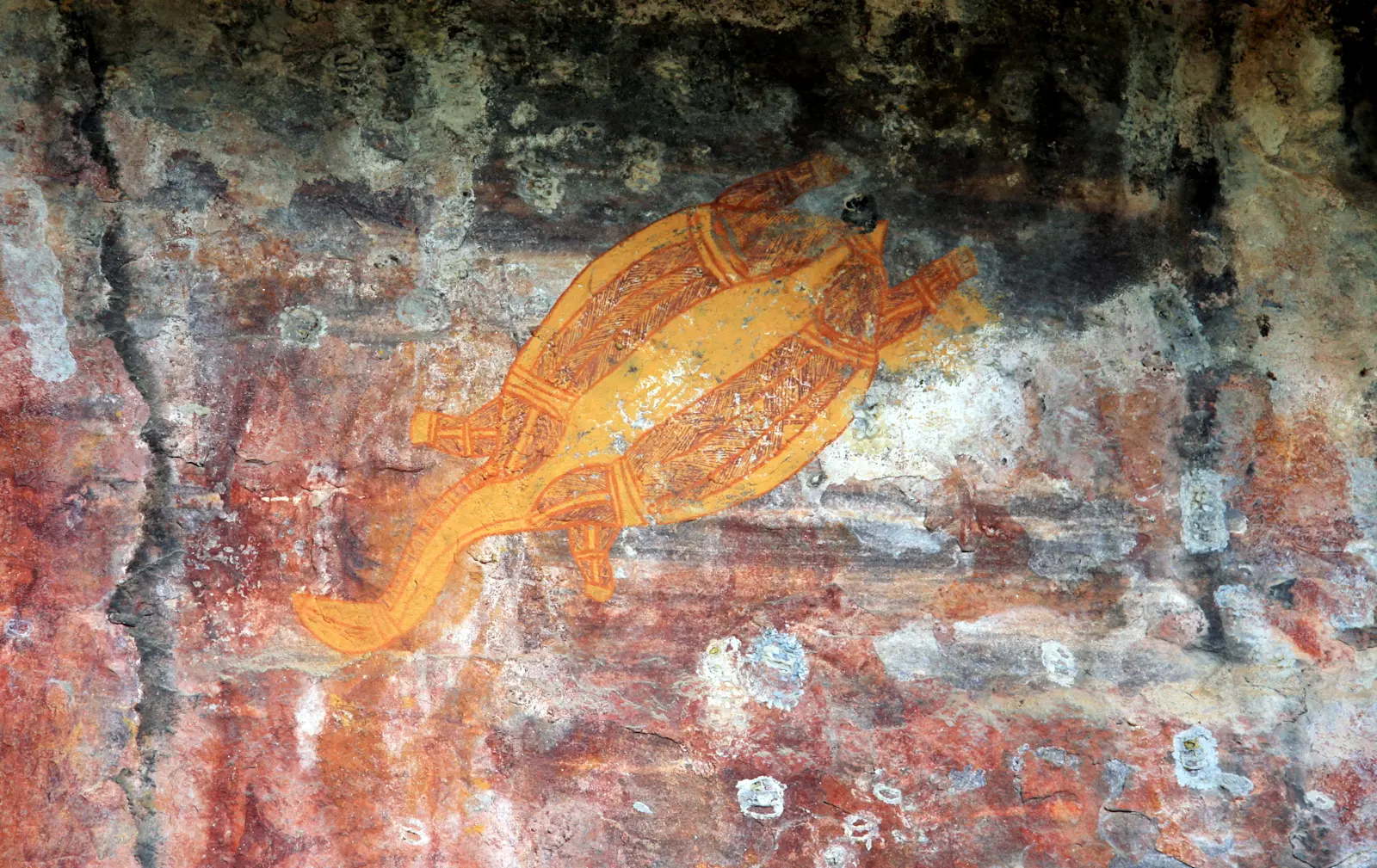
Ubirr rock art, Kakadu National Park, Australia
Aboriginal Sky Stories and Dark Constellations
Western astronomy groups stars into constellations based on their brightness and proximity. Aboriginal astronomy often interprets the dark spaces between stars as shapes, spaces and entities.
—Emu in the Sky: One of the most well-known Indigenous constellations, the emu’s head is formed by the Coalsack Nebula near the Southern Cross; its body stretches through the Milky Way toward Scorpius. The emu’s orientation signals key seasonal events, guiding food gathering and ceremonies.
—Seven Sisters and Wati Nyiru: This widespread story links the Pleiades star cluster (the sisters) and Orion’s Belt (Wati Nyiru, the pursuer). The tale maps relationships and responsibilities onto the sky, warning of inappropriate pursuit and honoring sisterhood, resilience and escape.
—Milky Way River: Called Wodliparri by the Kaurna people, the Milky Way is viewed as a river in the sky. Among the Arrernte, it divides sky country, mirroring terrestrial boundaries and offering insight into ancestral journeys.
These stories are not only guides to behavior and resource management, but also affirmations of identity and belonging. To read Country in the sky is to understand and navigate one’s place in the world.
Indigenous Stargazing in the Northern Territory
Aboriginal astronomy is not a relic of history; it is a living, evolving practice. Indigenous educators and researchers work to document, share and revitalize sky stories in ways that preserve cultural integrity and contribute to broader scientific understanding.
Modern applications include:
—School and university programs teach students to see the sky through both Western and Indigenous lenses.
—Community-led astrotourism initiatives in Uluru, Arnhem Land and Kakadu that generate opportunity while sharing and preserving local knowledge.
—Collaborative research on celestial events such as eclipses, meteorite impacts and variable stars.
—Hear the creation story of how Toonku was turned into the Moon on this National Museum of Australia Sky Stories
These types of initiatives help pass on the ability to read Country, so traditional knowledge continues to shape how people care for land, tell stories and relate to one another.
How Travelers Can Support Indigenous Sky Knowledge
As light pollution increases in many parts of the world, protecting dark sky regions like those in Australia’s interior is not just about preserving natural beauty; it’s about safeguarding access to an ancestral library of ecological and moral knowledge. The visibility of dark constellations, eclipses and planetary motion remains essential to cultural practices that depend on accurate sky reading.
Visitors to Australia’s Red Center can take meaningful steps to support the continued vitality of Aboriginal astronomy:
—Use low-impact lighting: Opt for red-light headlamps instead of bright white torches to preserve dark-sky conditions.
—Follow park guidelines: Respect restrictions on photography and access, especially around sacred sites like Uluru and Kata Tjuta.
—Join Indigenous-led programs: Participate in stargazing or cultural interpretation experiences led by Traditional Owners.
—Minimize light pollution: Turn off unnecessary lights at night and encourage accommodations to support dark-sky practices.
These actions help protect the conditions necessary for reading Country in the sky and ensure that this knowledge system continues to thrive for future generations.
Why Aboriginal Astronomy Matters Today
The night sky above Uluru invokes awe and invites understanding. Aboriginal astronomy reveals how generations have watched, interpreted and lived in rhythm with the stars. They provide:
—A navigational system rooted in observation and experience
—A calendar attuned to seasonal and ecological changes
—A moral and legal framework encoded in story
—A worldview that unites land, sky and people in a single continuum
To read Country in the sky is to acknowledge the continuity between past, present and future. In Australia’s interior, under some of the darkest skies on Earth, that continuum remains visible. It continues to guide, to teach and to inspire. For those who visit, it still has much to say.
Preparing for a trip to Australia? Check out our Australia Know Before You Go pages for resources on wildlife, weather, packing and a reading list.